


“Armenia 🇦🇲 ~Noratus Khachka Medieval Cemetery”
By the afternoon, after spending the morning driving to very far from the area, to get to a crater lake; which we had no luck getting too, due to road conditions, we turned around and headed to the most amazing Medieval Cemetery in Armenia. I have wanted to see this, since we arrived in Armenia! THIS is ahistorical and mysterious place!
It may seem a a bit weird to visit the cemetery, to some people, but if you have followed us, you know I love ancient cemeteries! Aside from that fact, Noratus is not just a standard cemetery, it has an amazing cultural and historical component in it.
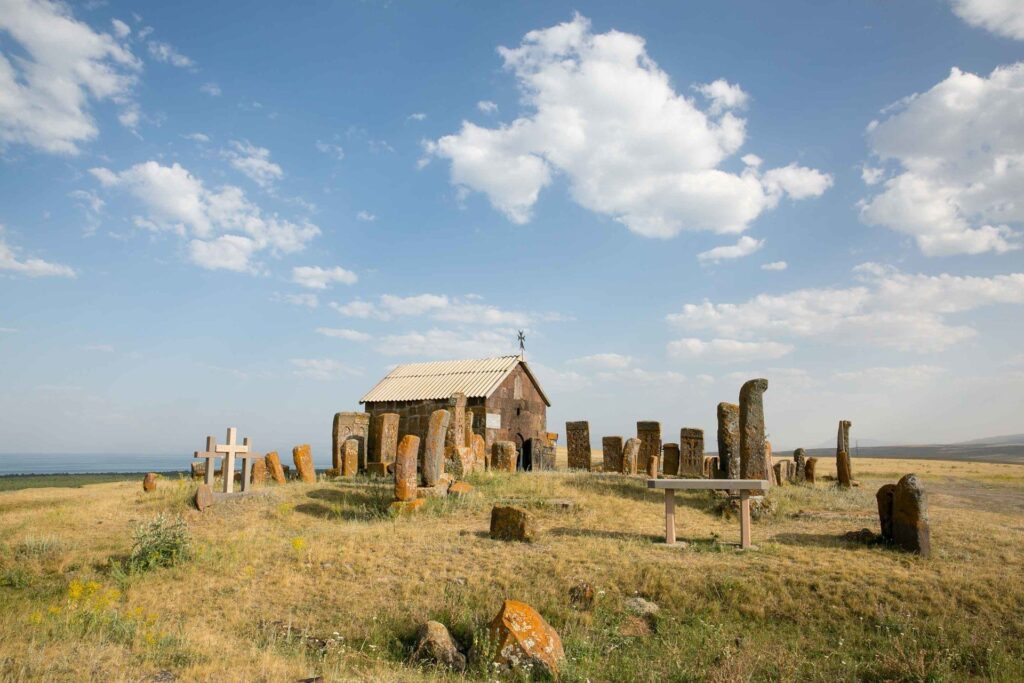
After driving around the large cemetery, we finally found the medieval section of the cemetery. I parked the car and went for a long walk amongst the stone markers. There is no driving through the medeival cemetery, obviously. Wow! Incredible!
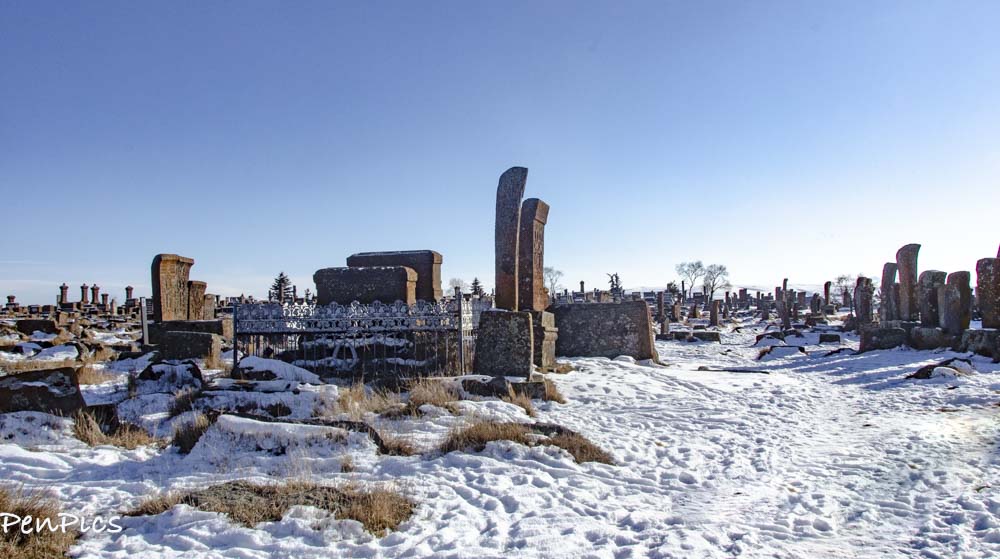
This area has a lot of history with numerous Bronze and Iron Age monuments. What makes this site so unique is that it has the highest concentration of khachkars (cross stones) and gravestones carved between the 9th to 17th century in Armenia and the world.
There are nearly 900 khachkars here and one can see the how the styles of khachkars have changed throughout Armenia’s history. Although it’s a cemetery, it’s also a museum for these stunning pieces of Armenian craftsmanship.
Khachkars have a special place in Armenian culture, since it’s the only Christian nation that erects these types of monuments for their faith. They come in numerous sizes and shapes, are made from various types of stones, and the patterns used are a true work of art.
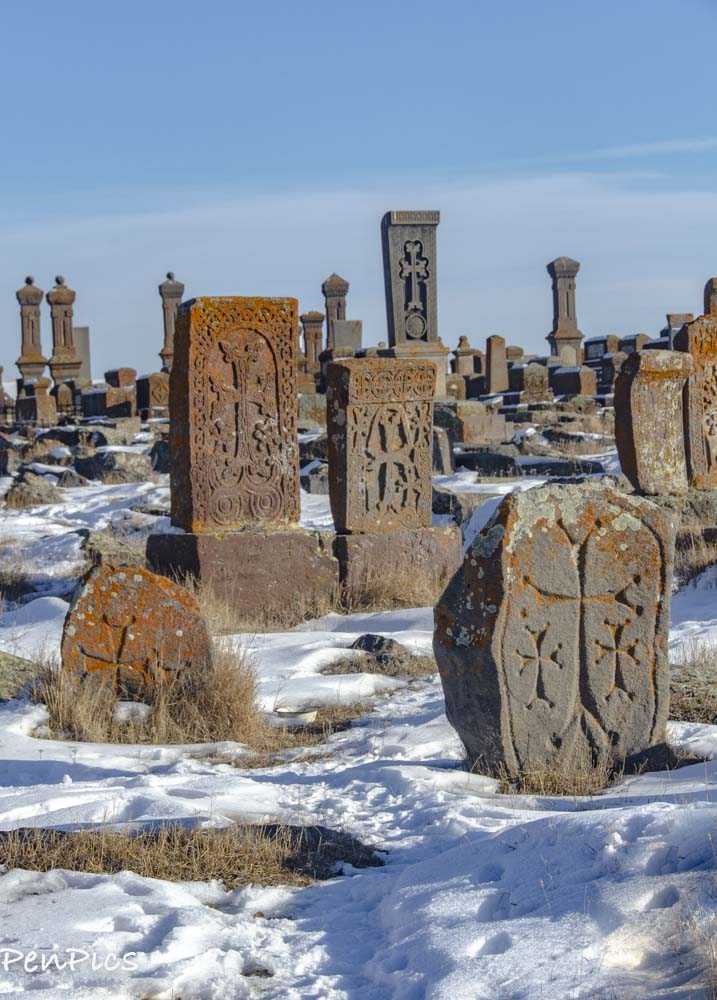
This one describes the invasion of Mongol Tatars against the Armenian Prince Gegham. Lacking in a large number of soldiers against an overwhelming force of the Mongols, the Prince ordered his subjects to put coats and uniforms on the khachkars in the cemetery to make his troops seem larger from a distance. The deception worked and the enemy forces retreated and allowed the Prince’s troop to attack and eventually defeat the retreating forces.
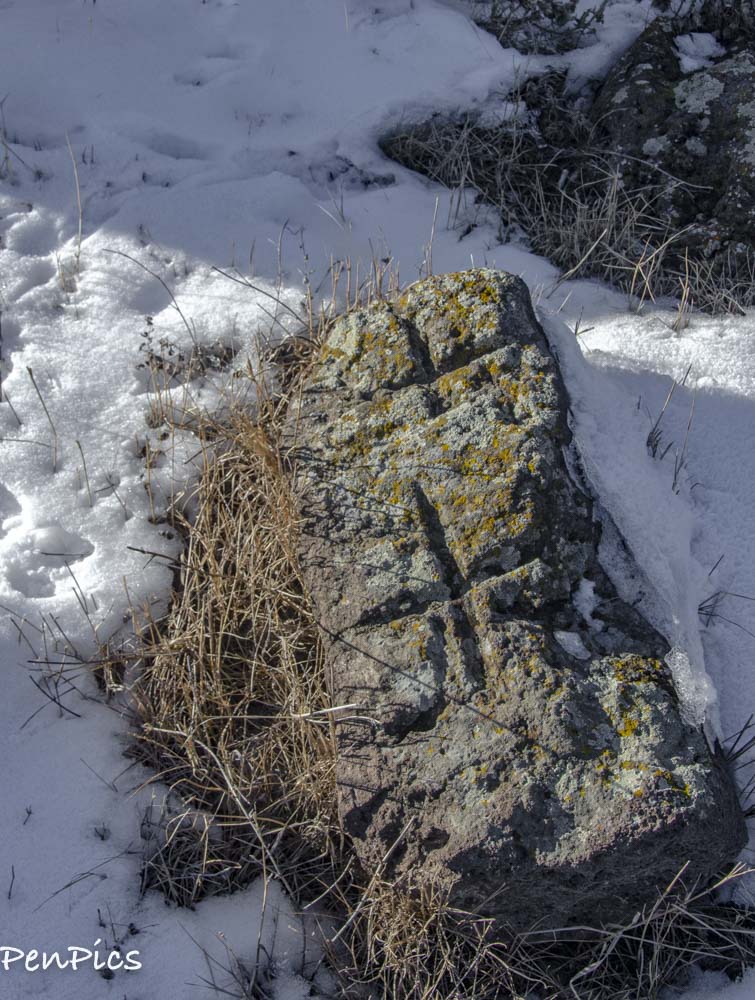
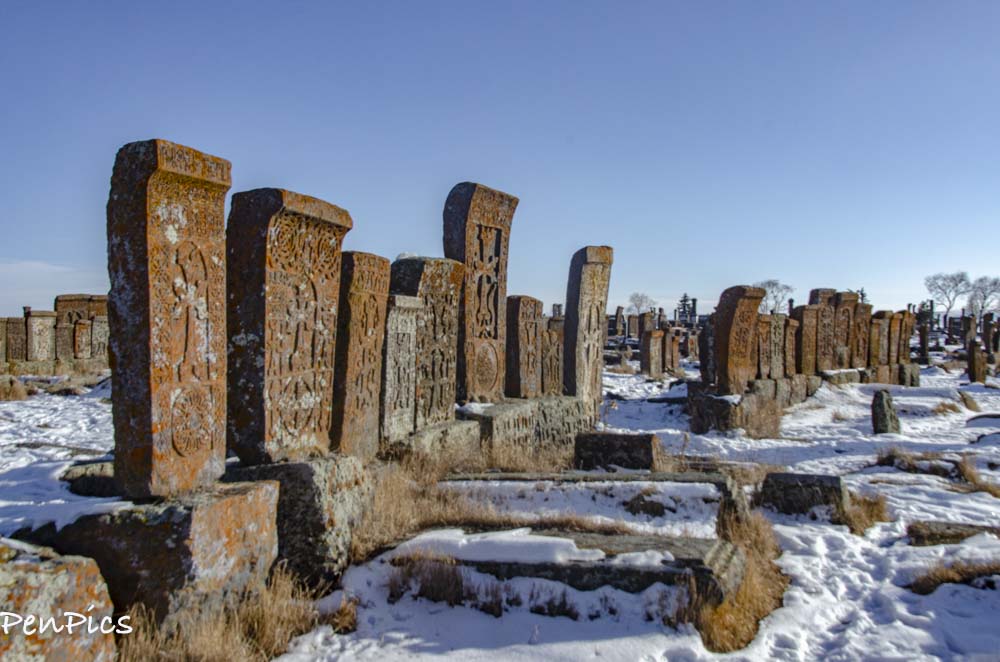
khachkars are resilient and have stood the test of time.
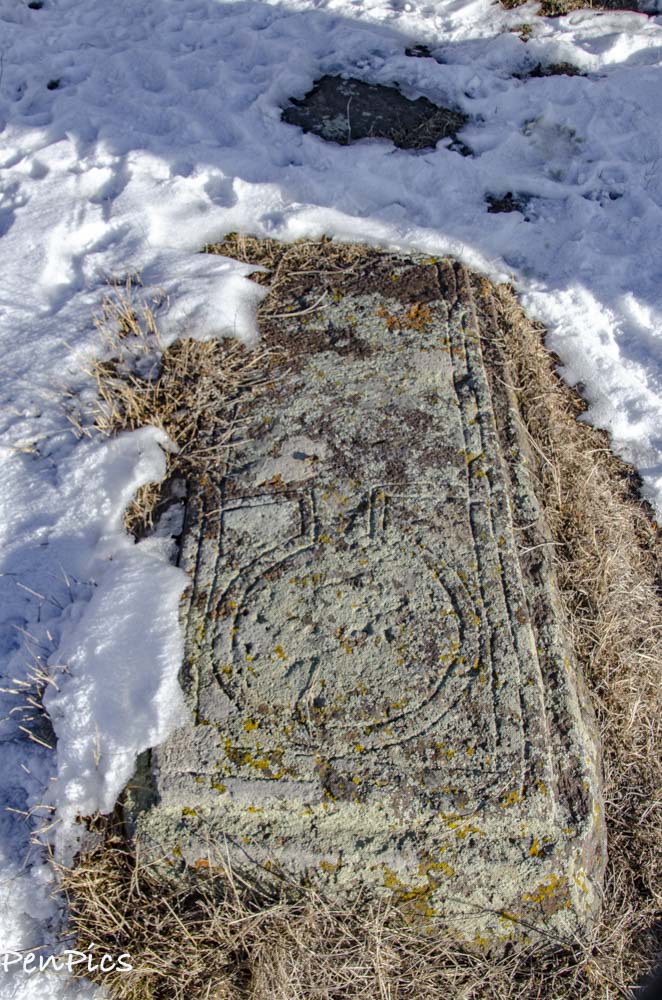
Based on ancient traditions of obelisk art, the rise of the khachkar began in the early Christina era and reached its zenith in the Middle Ages. Noratus has many fine examples from each period of their development.
The origins of the khachkar date to the pre-Christian period, to carved monumental water-worship idols erected at sources of water, known as vishaps (dragon stones). They are found on the Geghama mountain range, on Mt. Aragats, in Vayots Dzor, and other places. Later, Urartian kings erected obelisks on pedestals for inscriptions and proclamations (8th-7th cc BCE) which are considered archetypes of the khachkar form. Some of the most famous obelisks are at Zvartnots (King Rusa II), Garni (Argishti) and Van (present-day Turkey). Obelisks and steles from the Hellenistic period can be found at Pagan worship sites and on roads linking communities.
The substitution of stone for wood is traced to the 5th-7th cc when open wing crosses were carved. The wing cross was the foundation for the new Armenian art form, the Khachkar, which obtained its final shape in 9th century.
In the 9th-10th centuries, following Arab rule, the country began to flourish, and the cities of Ani, Lori, Kars and Van became centers of wealth and patronage, and it is in this period that the Khachkar proper emerged.

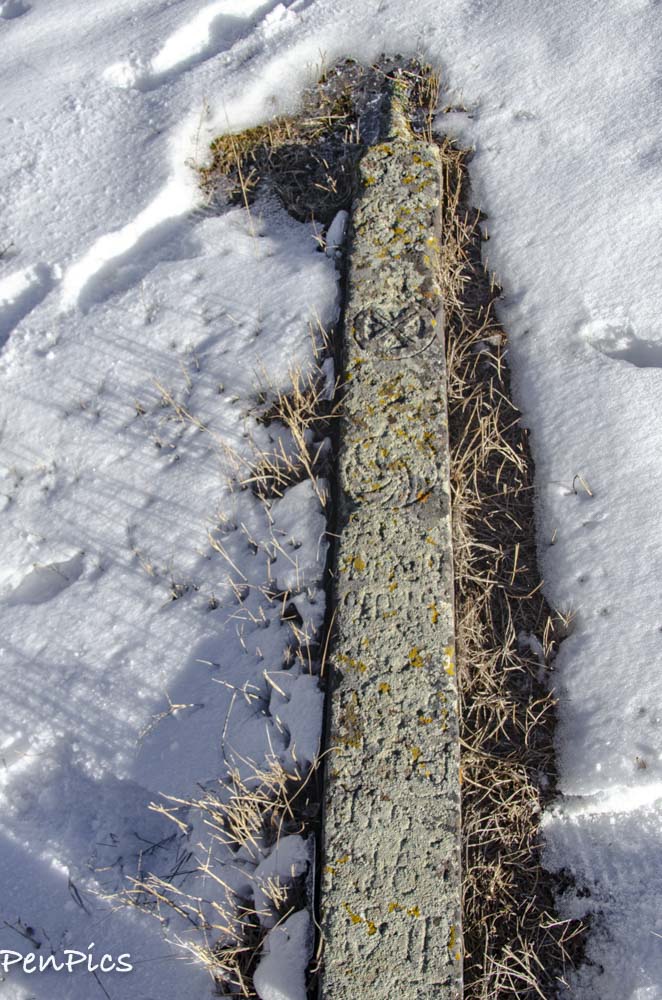

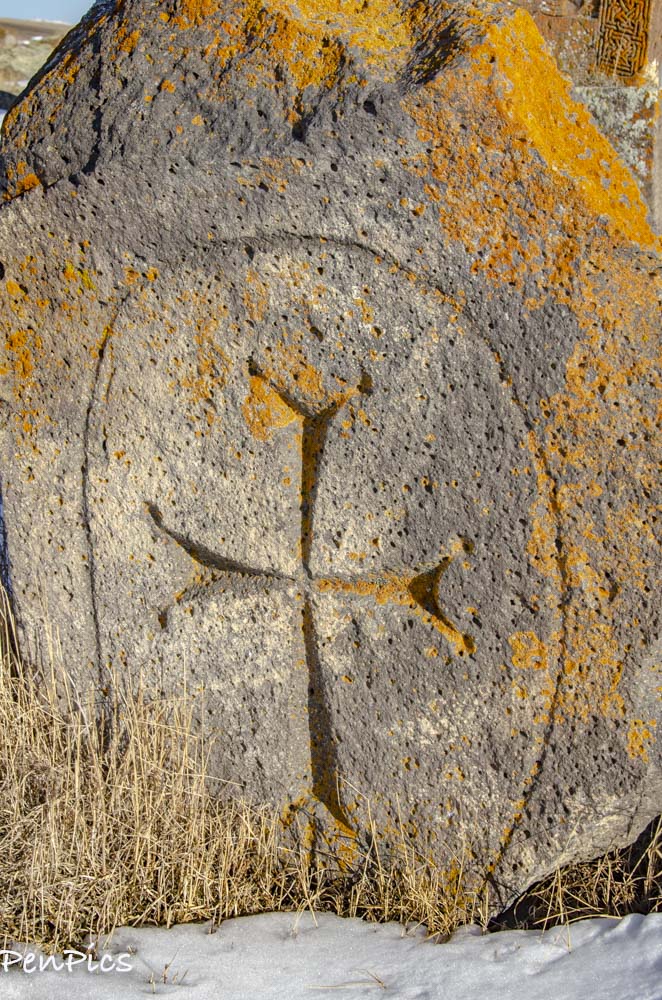
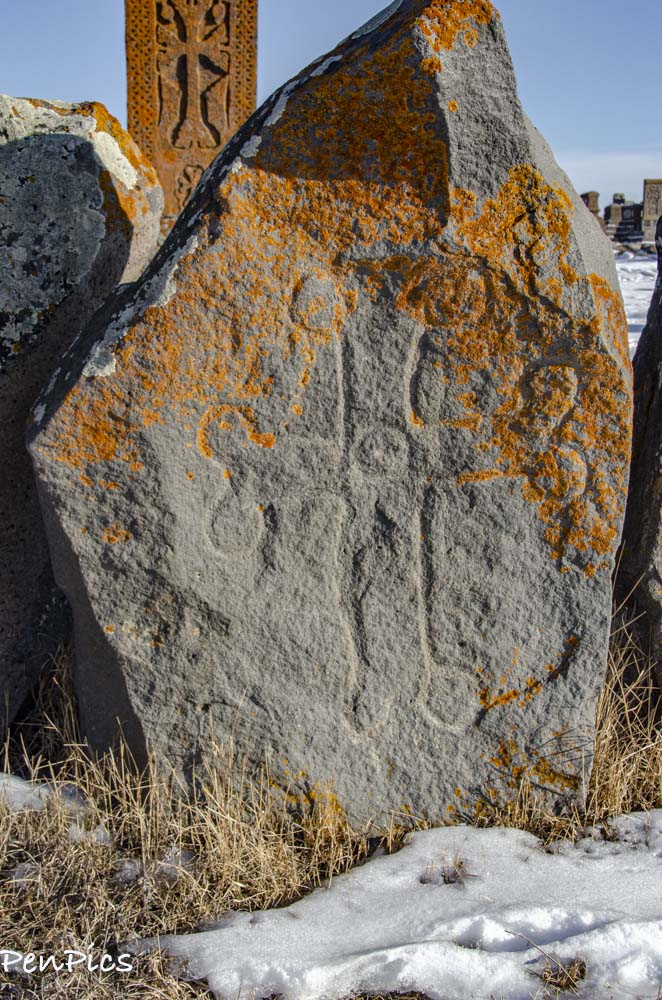
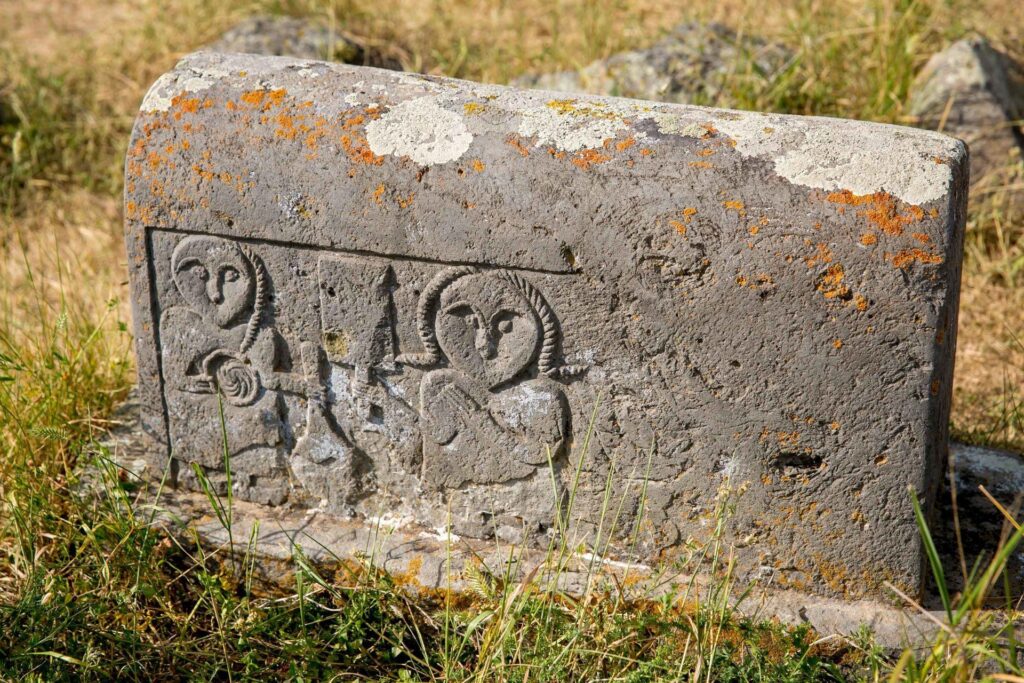
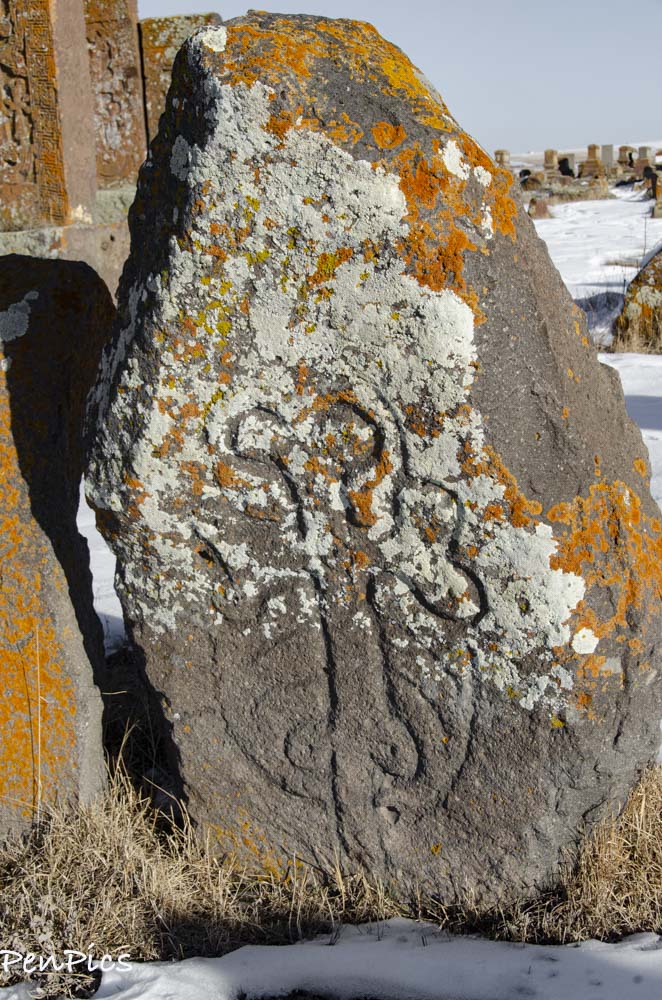
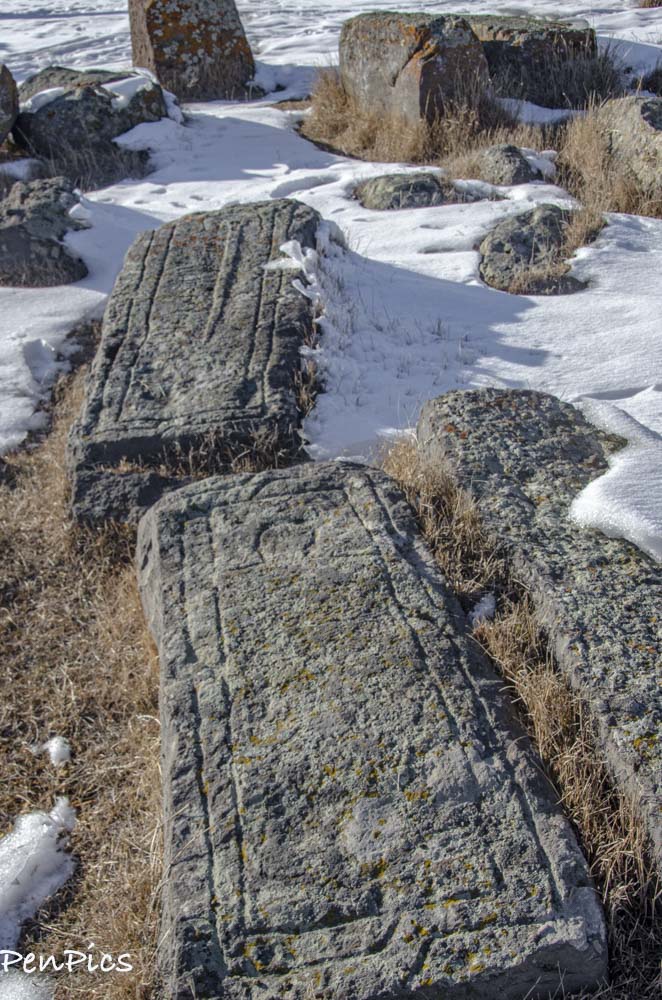
In the early Medieval period (5th-7th) they became upright with pointed tops bearing inscriptions (Dvin, Vagharshapat, Aparan, etc.). In the following centuries, pedestals were added along with more prominent angles to the pointed tops.
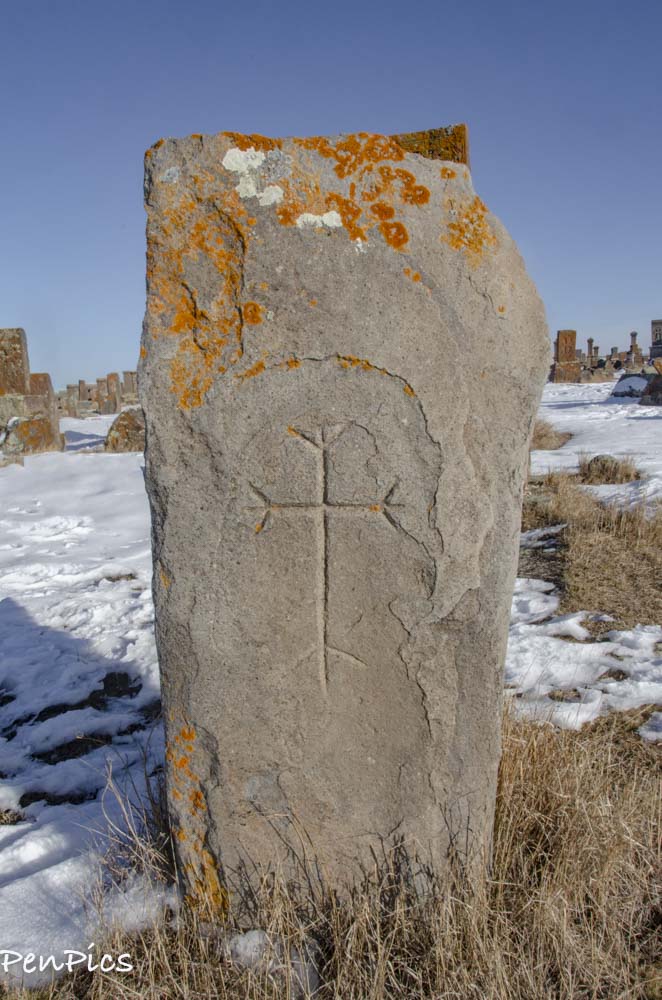
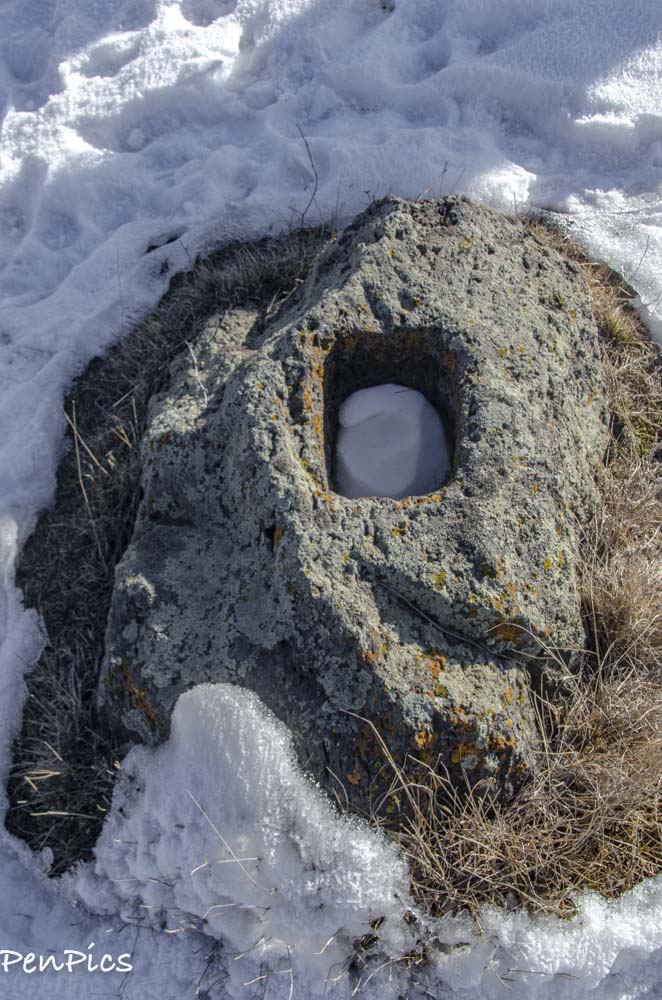
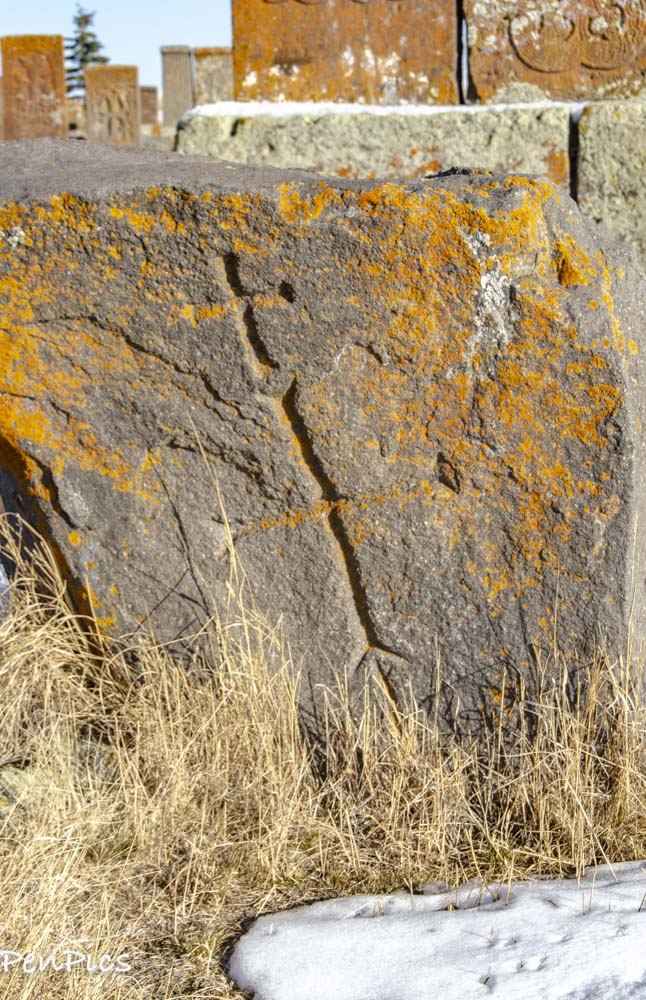
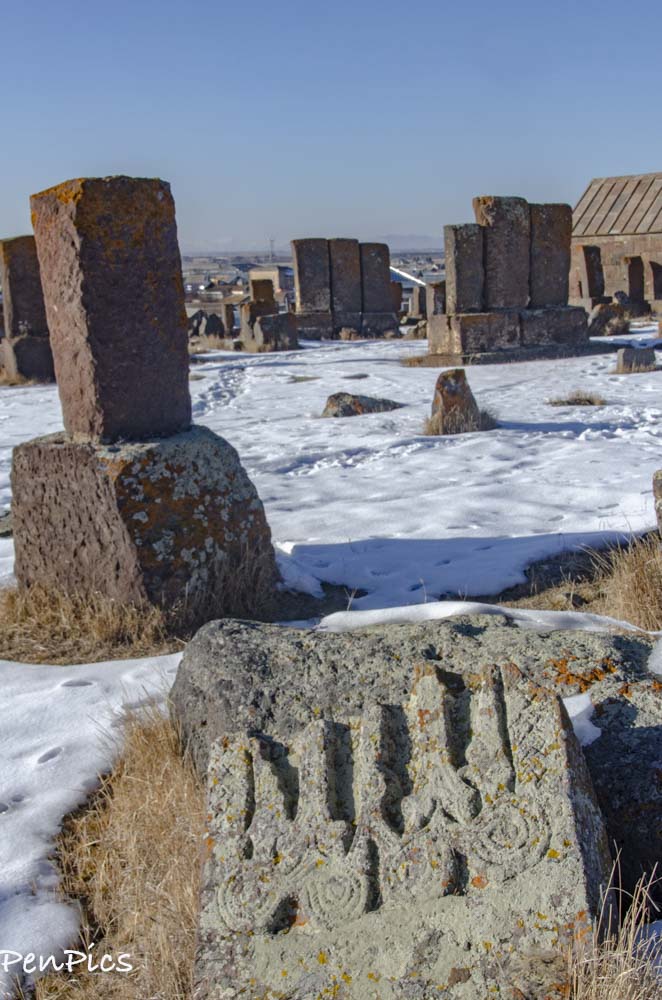
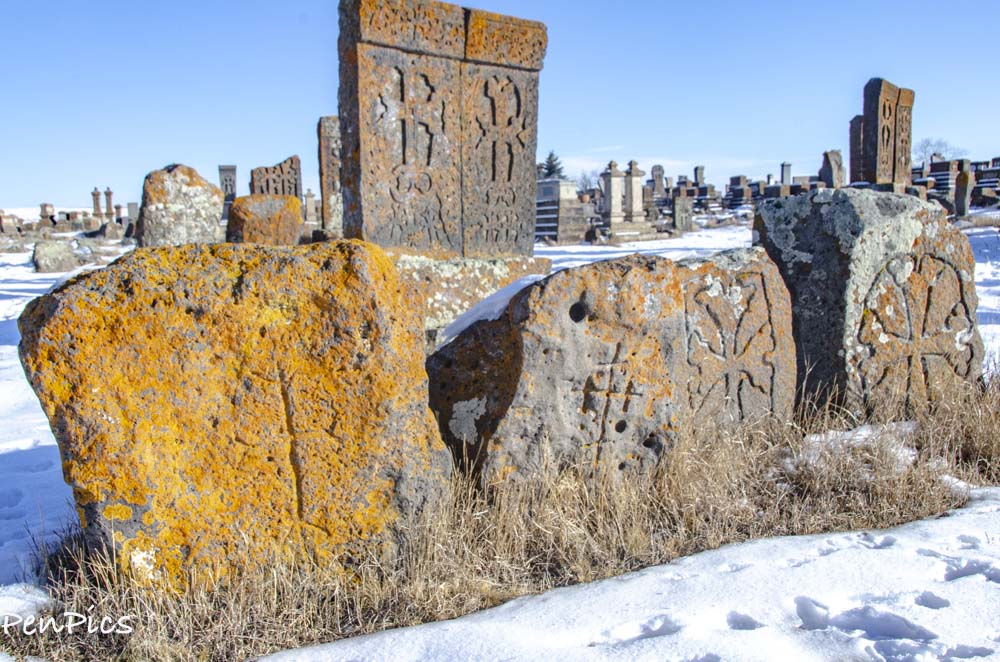
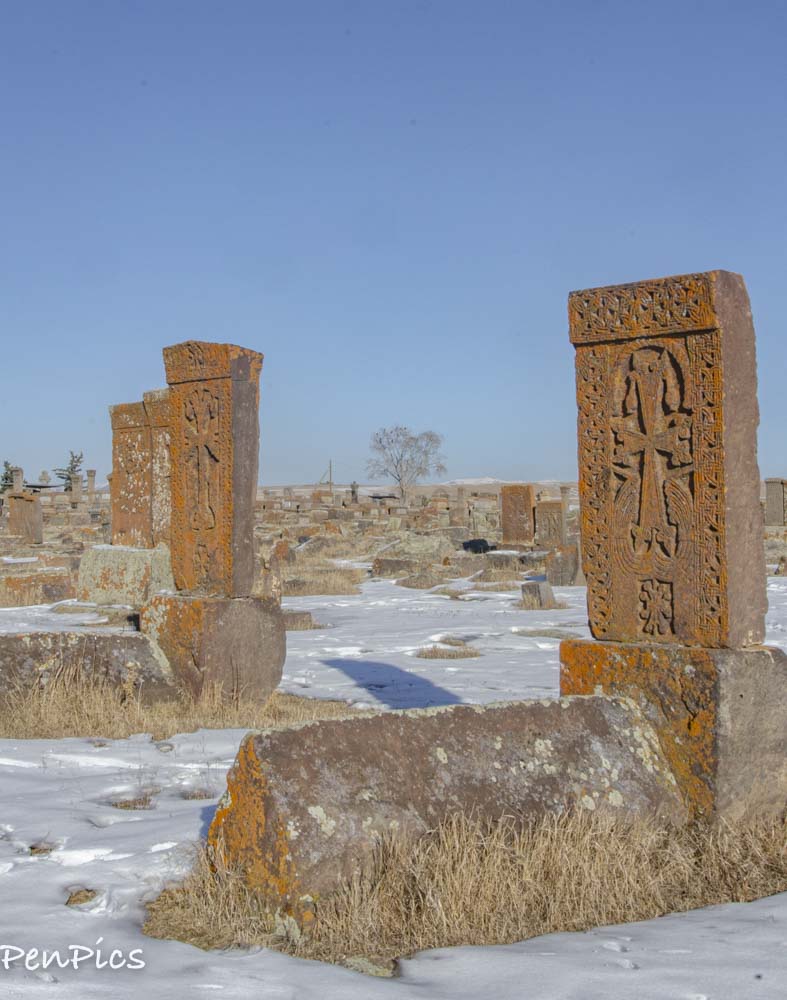
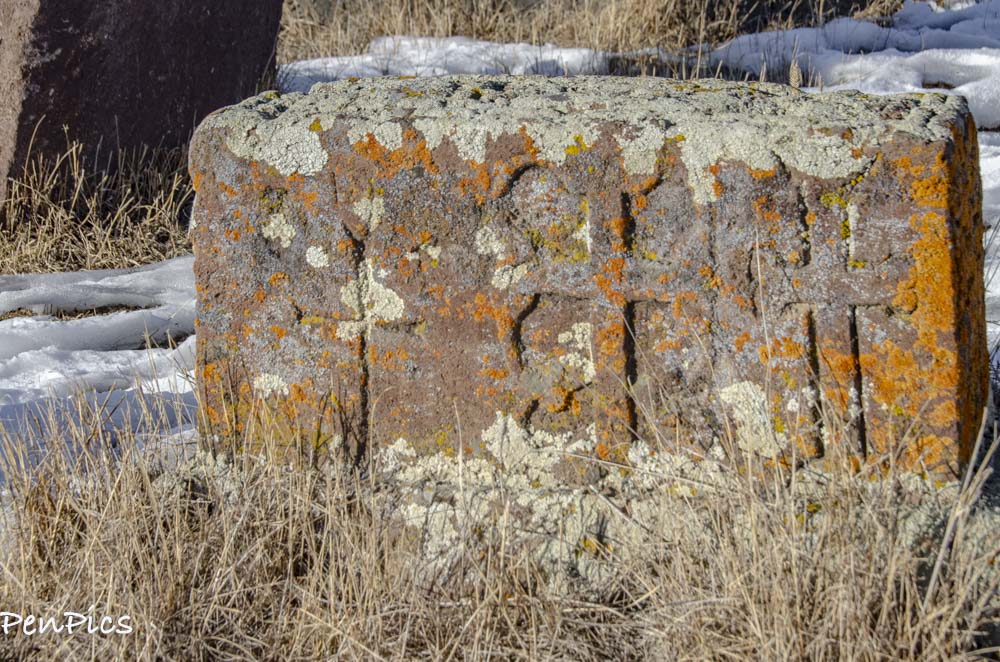
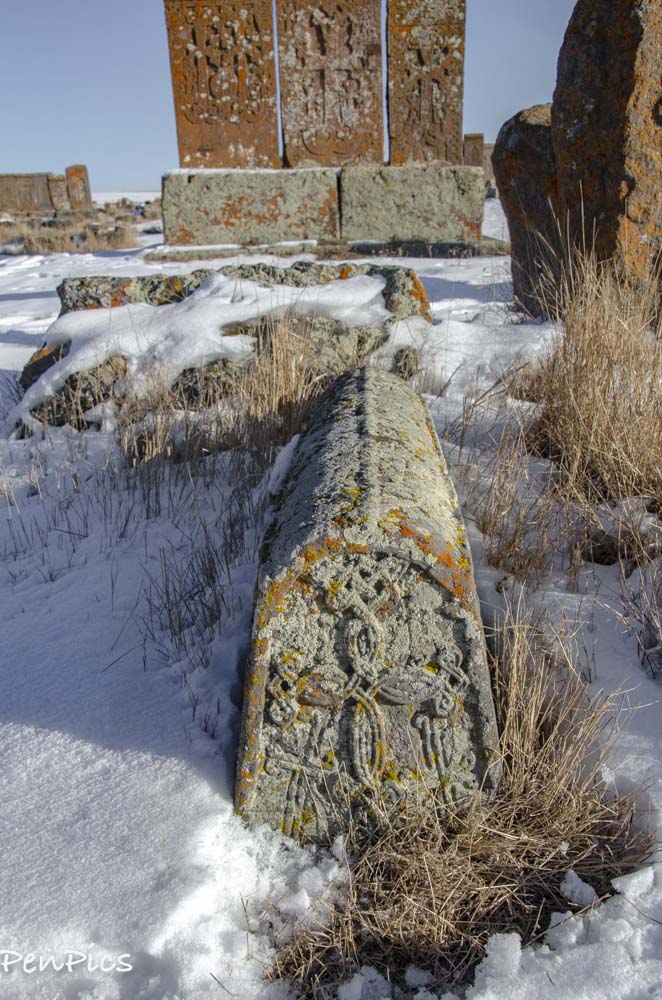
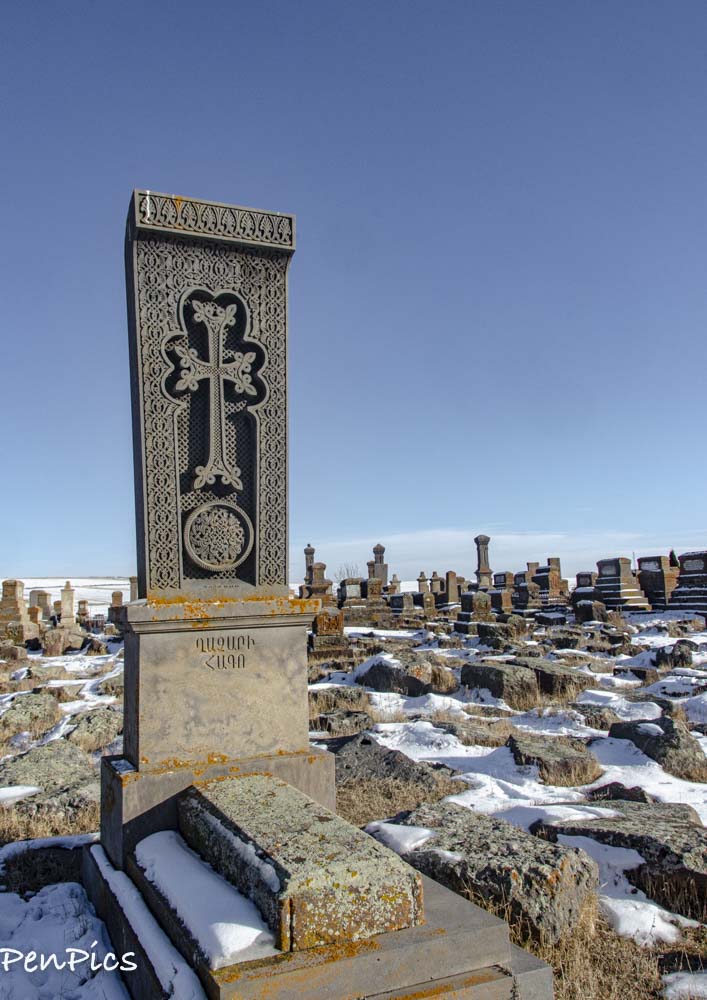
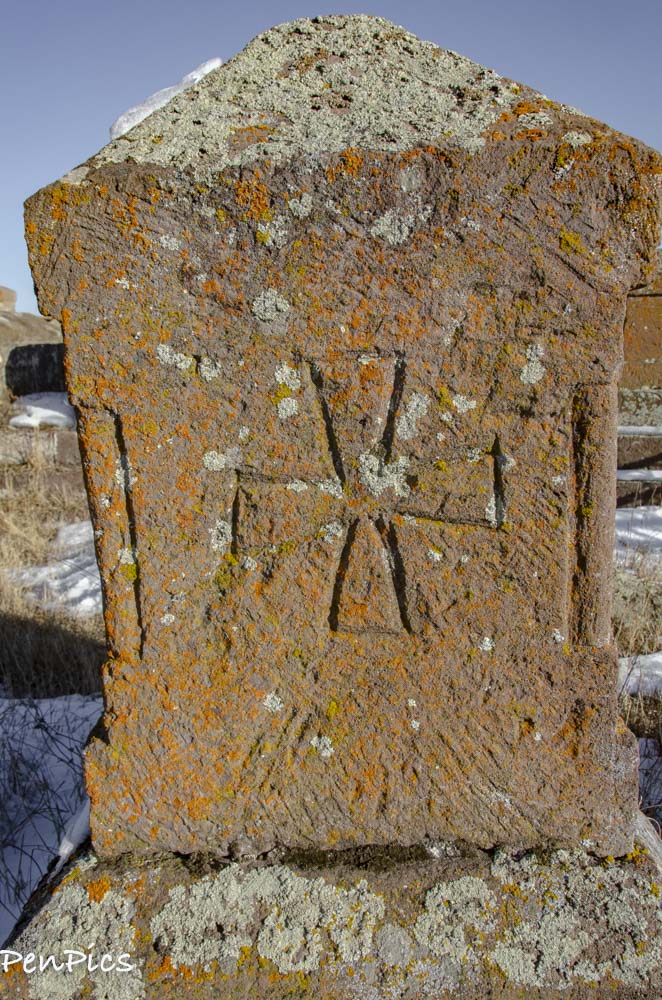
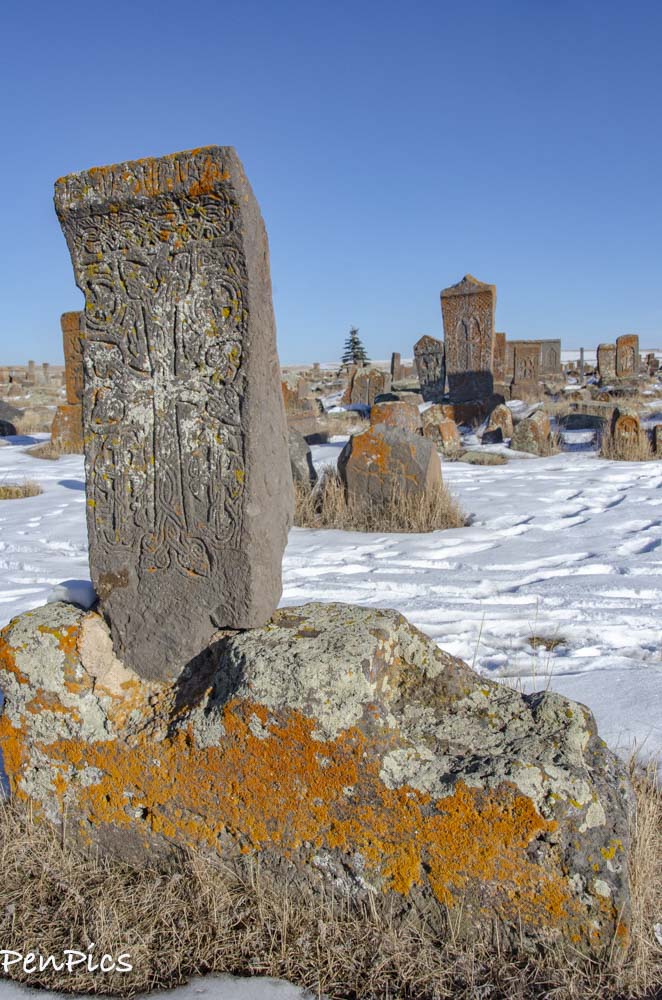
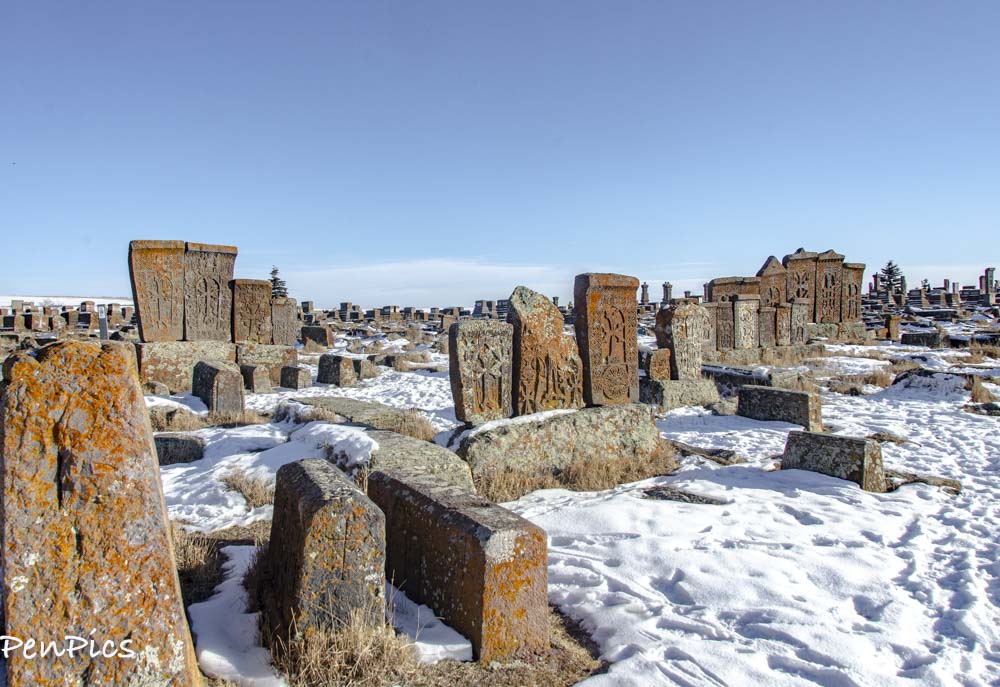
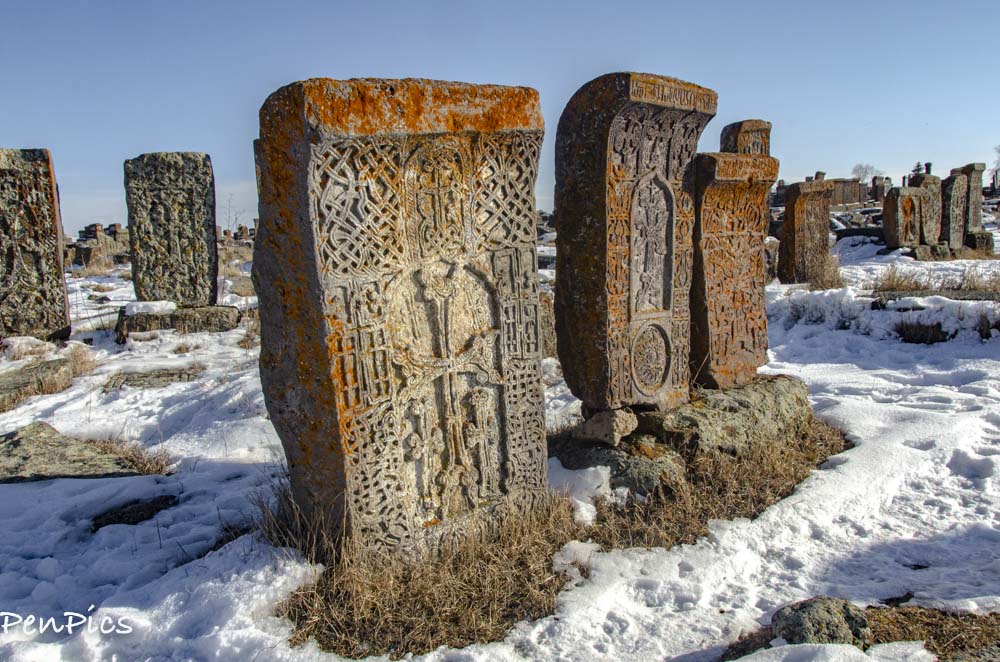
This cemetery is so huge, one could spend hours walking around it. It was late in the afternoon, so I focused on my favorite part of any cemetery visit; on the ancient graves. Noratus Cemetery goes way back in time, but it is still being used, to bury loved ones, currently.
When we first arrived, we drove around to get our bearings. Right away we found the newer to older part of the cemetery (photos below) and took a few photos. Newer, meaning, very recent, back to the early 1800’s.
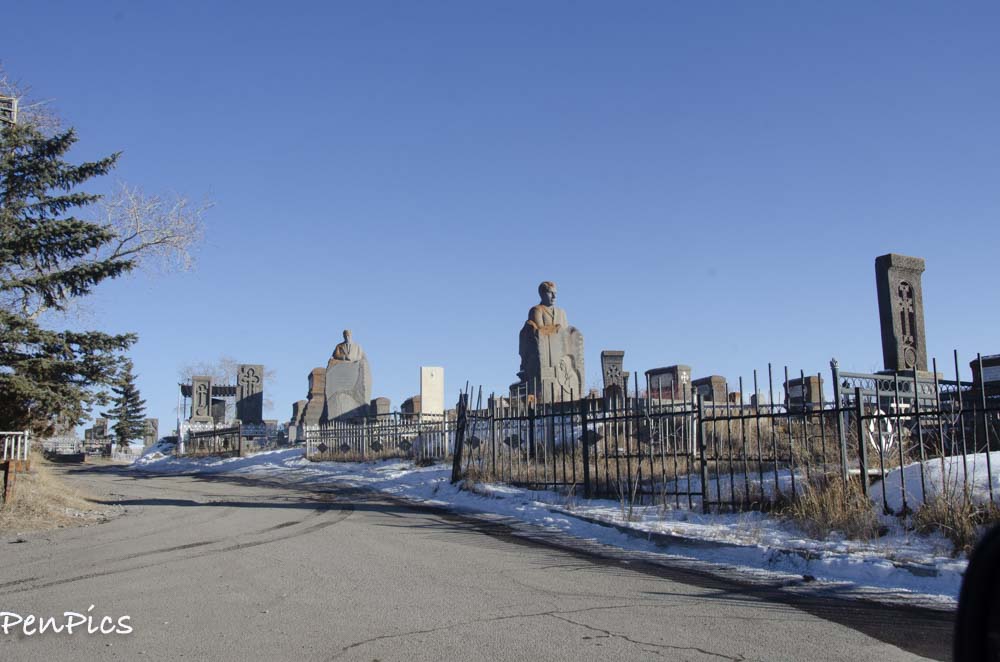

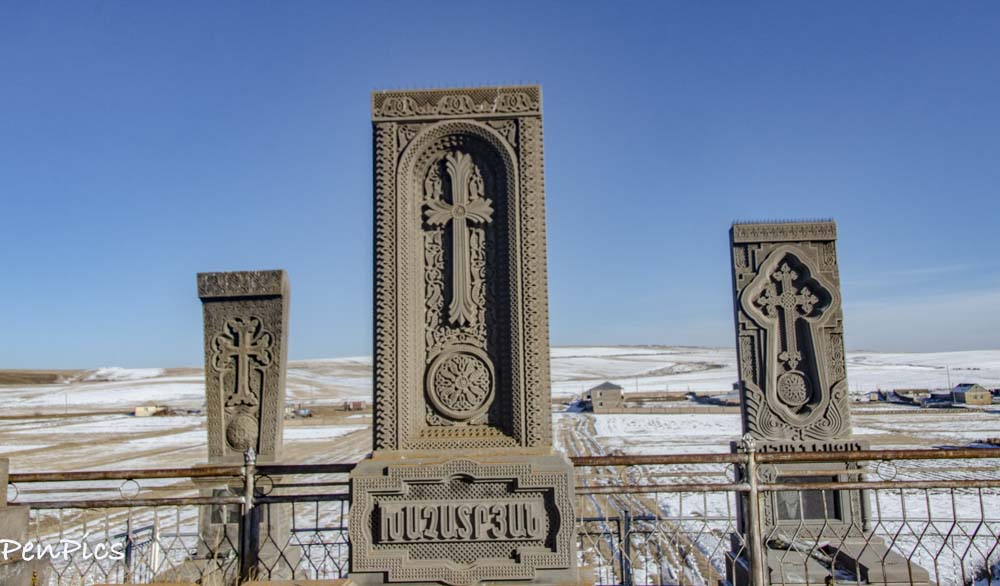
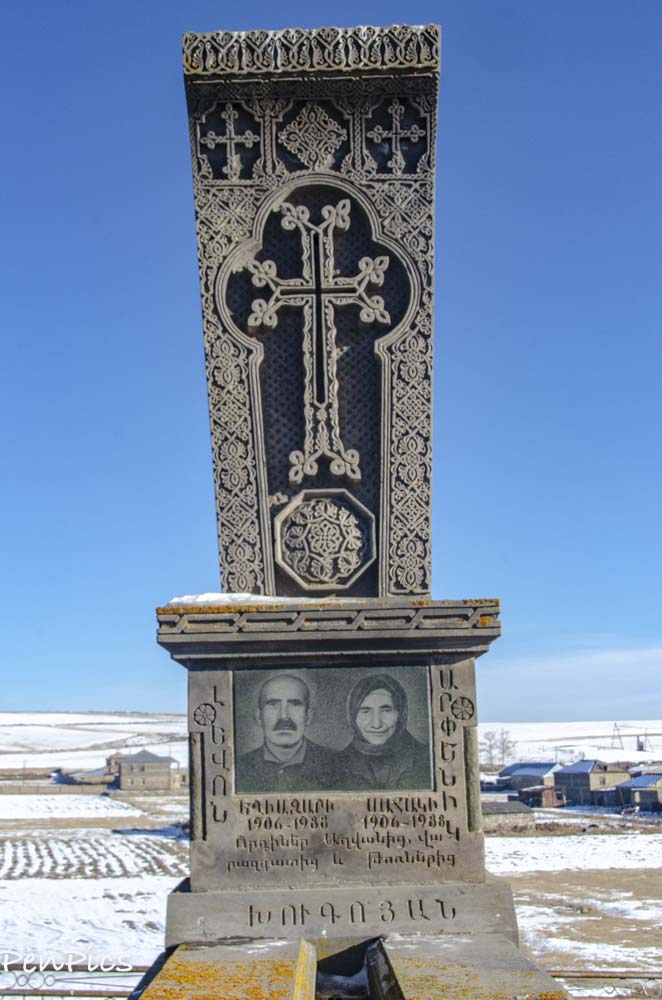
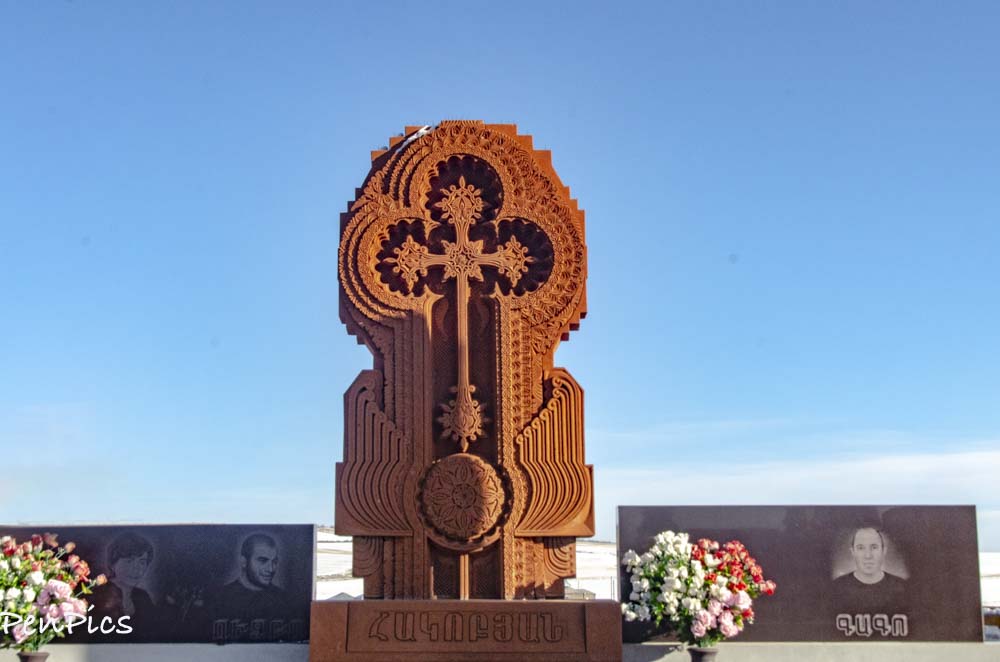
The khachkars are in their original positions facing west, so if you want to take good pictures it’s best to go in the afternoon so you don’t have as many shadows. This place is really big, so be strategic in how you want to go. The newer cemetery with newer headstones and other monuments surround the old cemetery with the vintage khachkars.
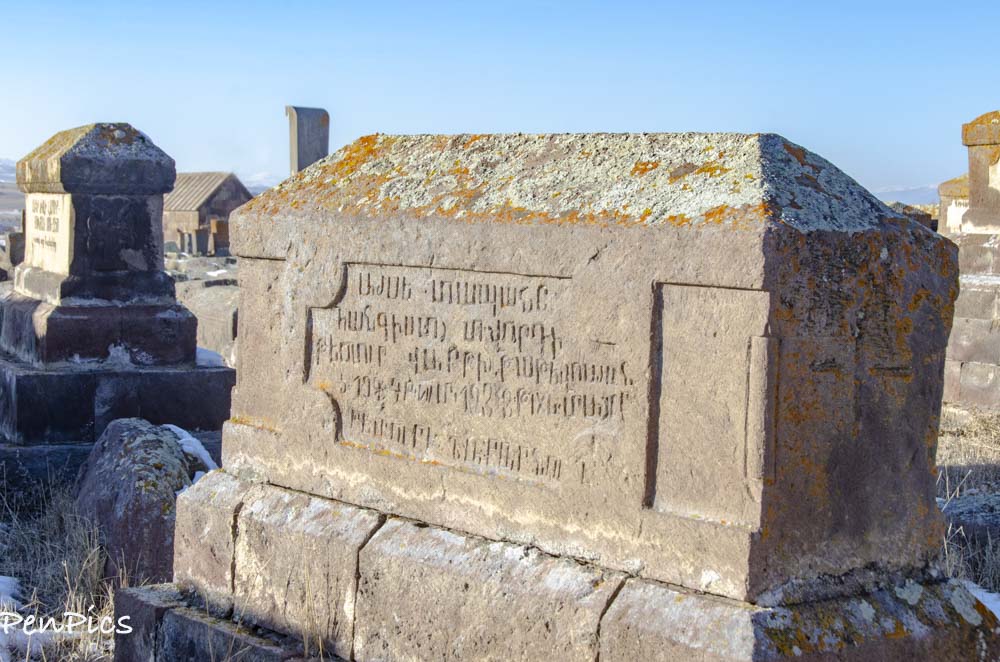
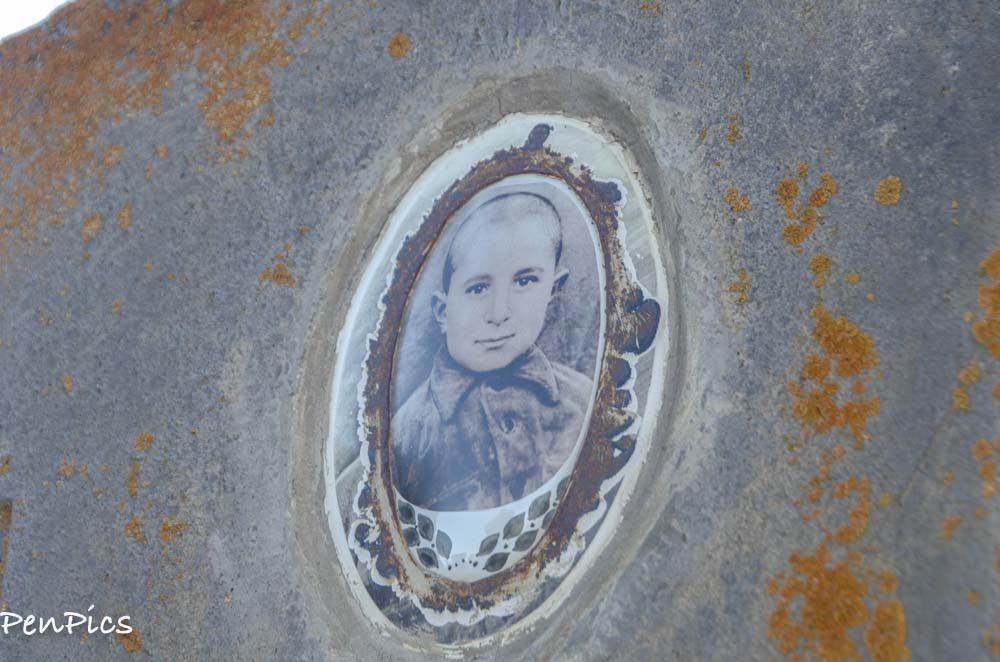
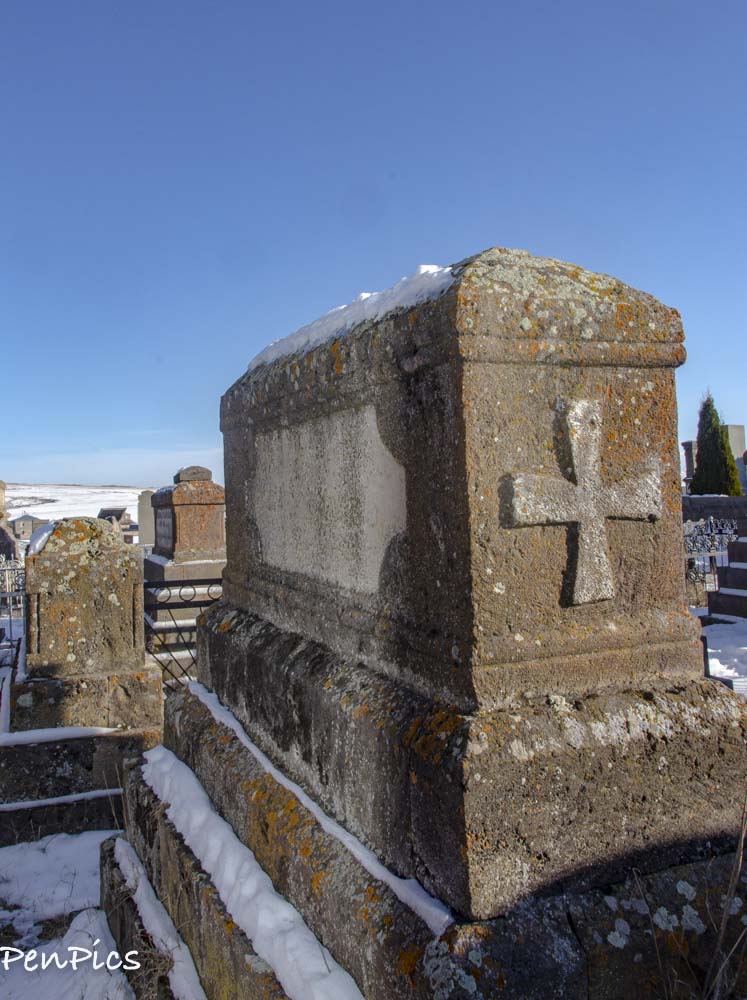
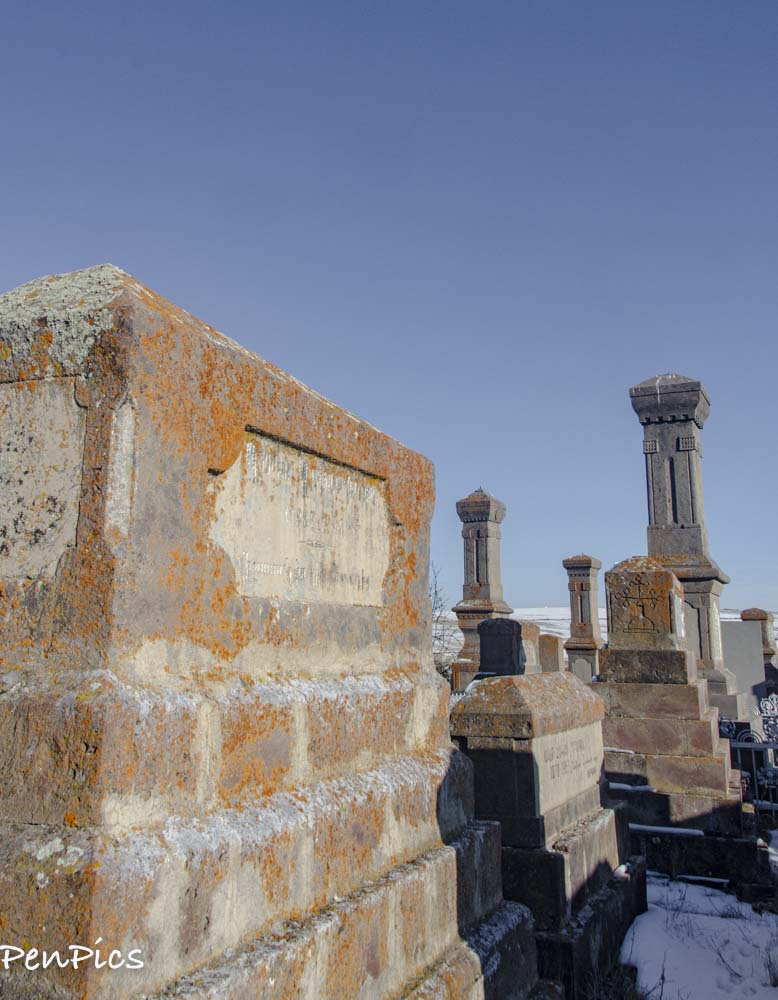
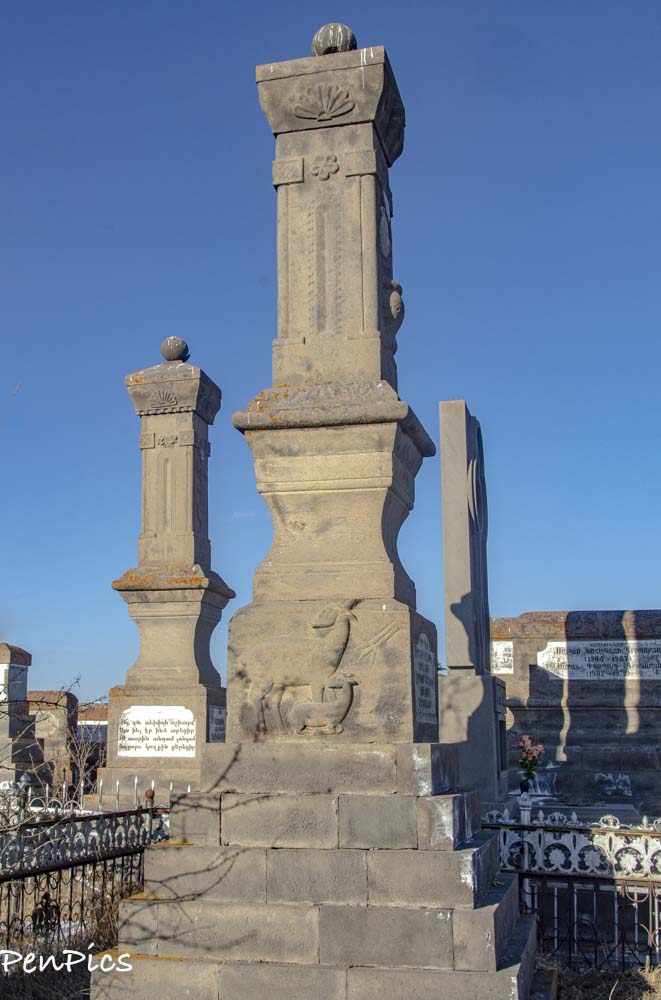
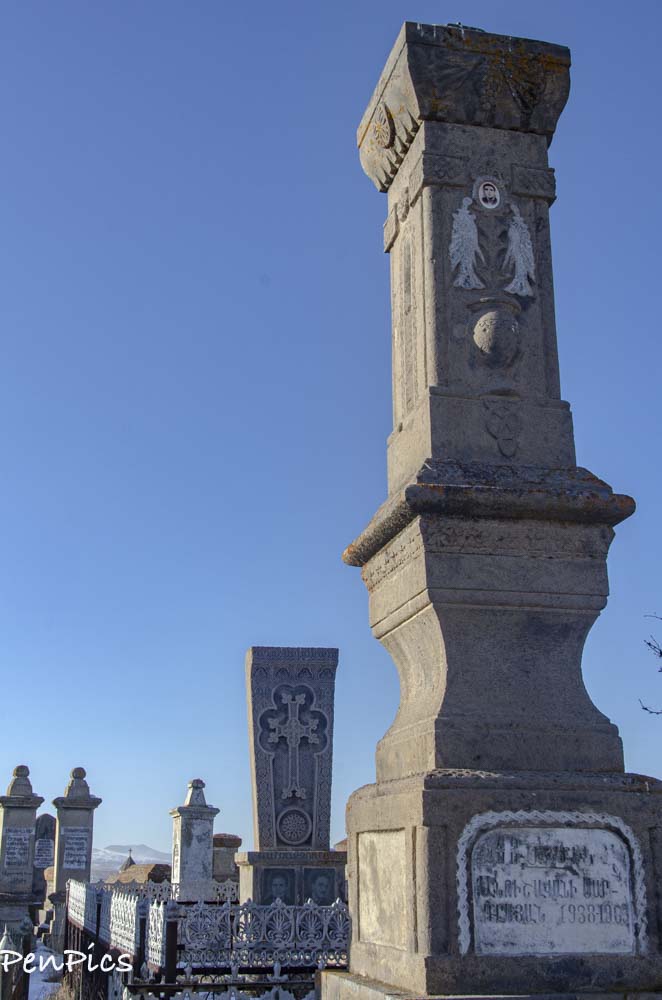
I enjoyed walking around and taking photo after photo. The light was so good, as the sun was setting lower, and the partial snow cover made for a pretty scene. The history of this cemetery and its nearby village is fascinating.
About Us

About Us
Hello and Welcome to our Travel Blog Website, We enjoy writing about our experiences and taking photos of our adventuring along the way. Our names are: Daryl and Pen, but Daryl calls me “Bunny.” We met, quite randomly, whilst both traveling in Thailand with friends. We happened to be in the same travel group, and […]