


“Romania 🇷🇴 ~Corvin’s Castle in Hunedoara”
This Medieval Castle was a mighty impressive sight to see, as we came around the corner in the town of Hunedoara!
Our goal was to get to the Castle early enough to beat the crowds, which we did pretty good with. BUT, the sun position in the morning did not offer good lighting for very many shots on the outside of the castle, as we were facing the sun for the pictures at the Castle. Later in the day, the sun would be shining directly on the castle, making the photos much better, but the amount of people would be greater, so either way its a challenge for the photographer.


is found in Hunedoara, and was built in the 14th century, on a cliff above the Zlasti River. It represents, by its greatness, the most important Gothic- style secular building in Transylvania.
The beautifully preserved structure features a sumptuous Knights’ Hall, an impressive drawbridge, high buttresses, inner courtyards, a chapel and some 50 rooms; some resplendent with medieval art. The castle is a large and imposing building, with tall and colored roof tiles; showing towers, turrets, windows and balconies, with intricate stone carvings.
This unique castle is representative for the 15th century military architecture in Southeast Europe, and it is a special place which shows the social and financial power of the Corvin family. This most spectacular Castle Corvin was built by the Anjou family on the site of a former Roman camp. The Castle served as a Fortress until the mid-14th century when it became the residence of Transylvania’s voivode, Iancu de Hunedoara (Ioannes Corvinus in Latin, Hunyadi in Hungarian).
Iancu upgraded the Fortress transforming it into a stunning Transylvania Castle.
Though the Castle was built in Gothic-style, it also has Baroque and Renaissance influences.
Regardless, we enjoyed the visit, and did the best we could with photos, and crowds. Mr Terrific picked this stop, because he read it was the best preserved Castle in in all of Romania. What is a fact is: Corvin Castle is the largest medieval Castle in Transylvania, surpassing in size, even the mysterious Bran Castle and the Royal Peles Castle.
We would wander around the Castle, and climb many levels. The furnishings were sparsely laid out, but then again, it is an enormous Castle, which includes a Palace, so filling it up would take many, many relics. It was a great visit, and we enjoyed seeing such a magnificent example of Romanias past, where Kins and Queens lived.


The castle’s courtyard features a 100-foot well dug through stone, in the 15th century.
Legend says the well was dug by three Turkish prisoners who were promised freedom when their j ob was done.It took them 15 years and 28 days to reach water.
The legend
The well, typical for Fortresses or Castles in the region of Transylvania, is also a famous execution place where Turkish pisoners were killed. The legend stated that the prisoners were promised freedom after they dug the well and found water.
The legend tale goes like this:
“For ten years the Turkish prisoners dug nearly 80 t0 100 feet through stone, to finally reach water, but instead of being released, they were beheaded.”
BUT, before being executed, it is said that one of the prisoners had carved in stone the following words;
“You have water, but you have no soul.”
These are the facts that have been discovered:
1.One of the prisoners, who was in fact the son of a vizier, carved on one of the stones from inside the wall of the well which he dug, together with two other prisoners.
2. Archaeologists have discovered inscriptions on the inside of the well from Turkish prisoners, Colvin’s Castle grounds
NOTE: The backside of the Colvin’s Castle was under renovations, so it was closed-off to visitors. Since we did not see a well on the grounds we were able to wander,, I looked it up and found this photo. It is not mine, but I always like to offer a visual, to go with the story.

FACT: On April 13, 1854 a fire caused by lightning have destroyed all the wooden parts of Corvin castle (the roof, wooden beams, stairs, ceilings and doors) except the five-hundred years old door of the dungeon.


The elaborate architecture was designed in a rich gothic-style that accentuates the already impressive structure. The castle was kept in regal condition during Hunyadi’s lifetime, but after he died, the castle fell into swift decline.
It was not until the 17th century that there was more interest in restoring this medieval castle. As the restoration work began, the workers redesigned the castle to reflect what they considered a gothic castle should look like, which explains much of its currently fanciful look.


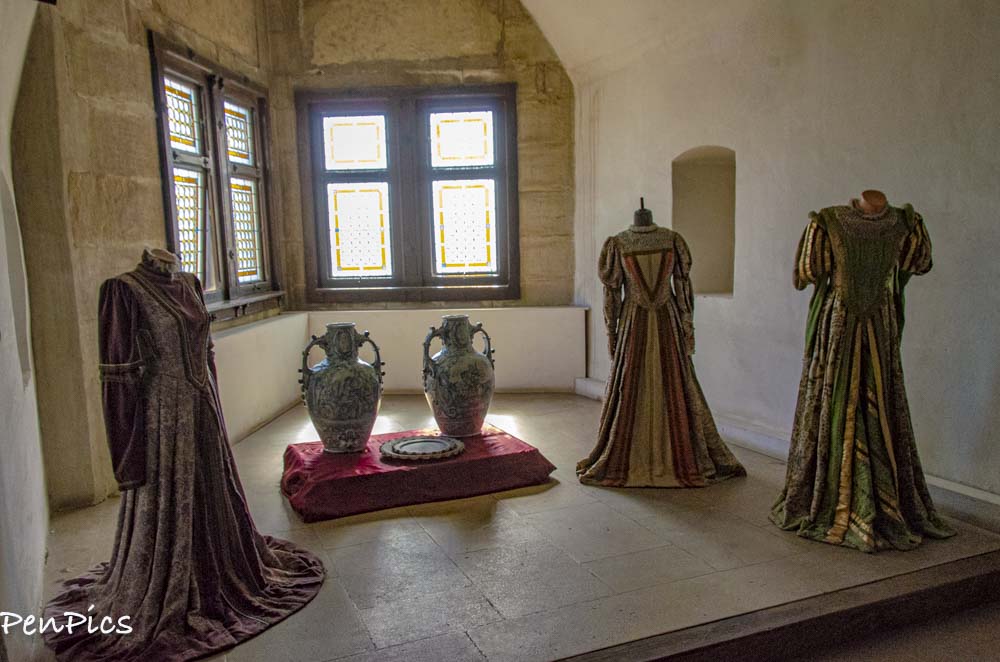


Built in a Gothic-style in two stages, the last one being finished during the reign of Iancu de Hunedoara.
The entrance door presents some decorations specific to the Renaissance period and the royal coat of arms of Matei Corvin, that is very different from the one used by Iancu of Hunedoara. The background represents a blue field, and on the front, a raven is represented resting on a branch and holding a golden ring in its beak.
With a Gothic ceiling and a Renaissance-inspired entrance, the interior of the church is built in a completely different style. Some say that it’s like a miniature of the Cathedral from Amiens, in France, where the French kings used to be crowned.


The legend says that during a trip, the family halted for lunch, but when they were not paying attention, a raven stole the ring, attracted by its sheen. That’s when John Hunyadi took a bow and shot the raven in order to get the ring back. When he heard the tale, the King was deeply impressed, so he decided that the family’s symbol will be a raven with a golden ring in its beak. Moreover, the name of the Corvin family comes from the Latin word “Corvus,” which means “Raven.”


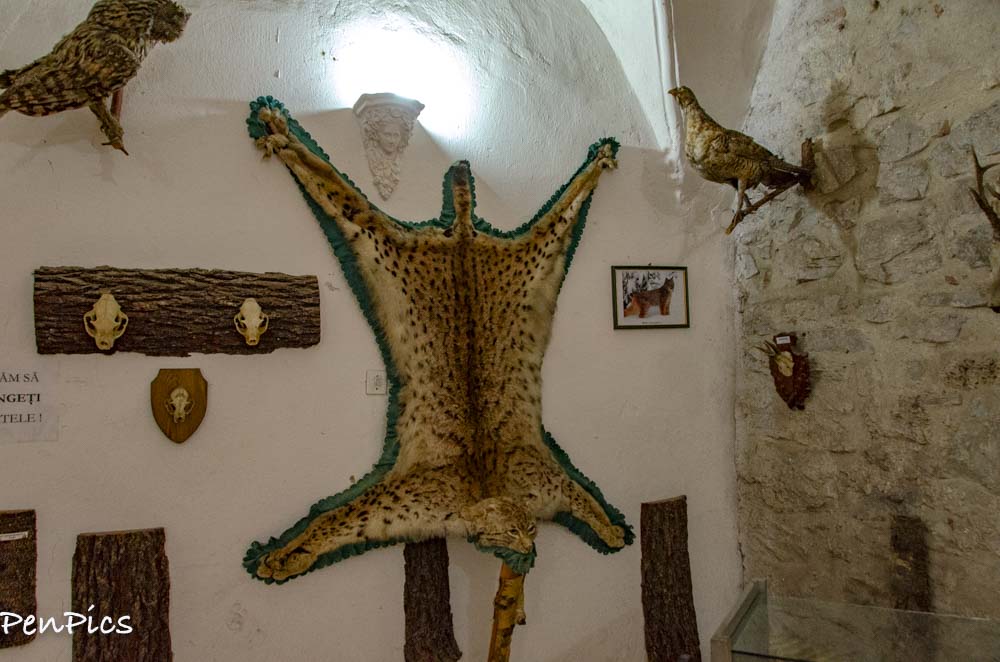


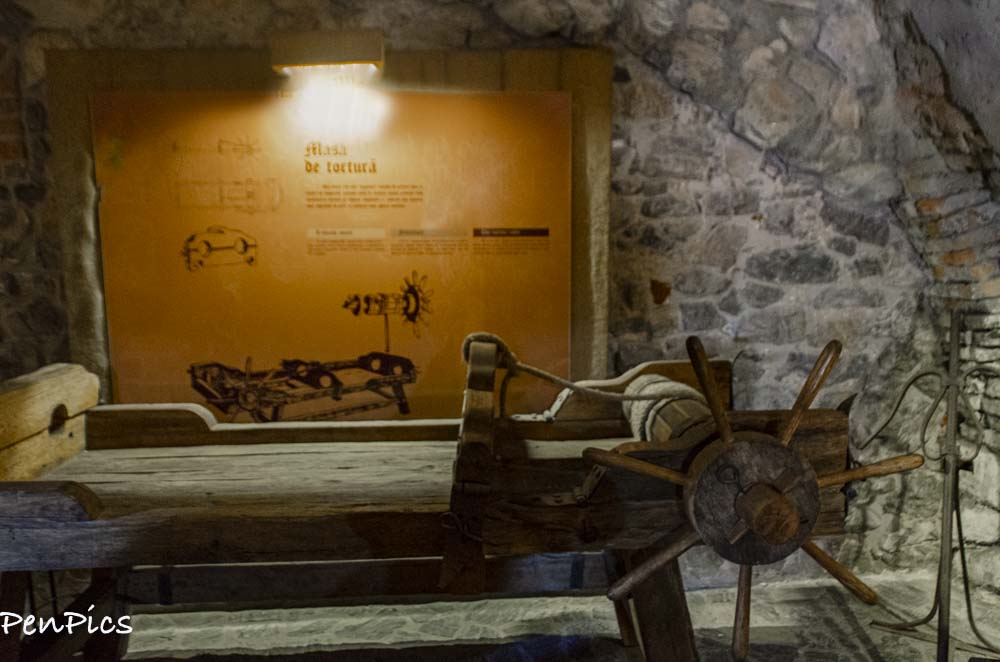


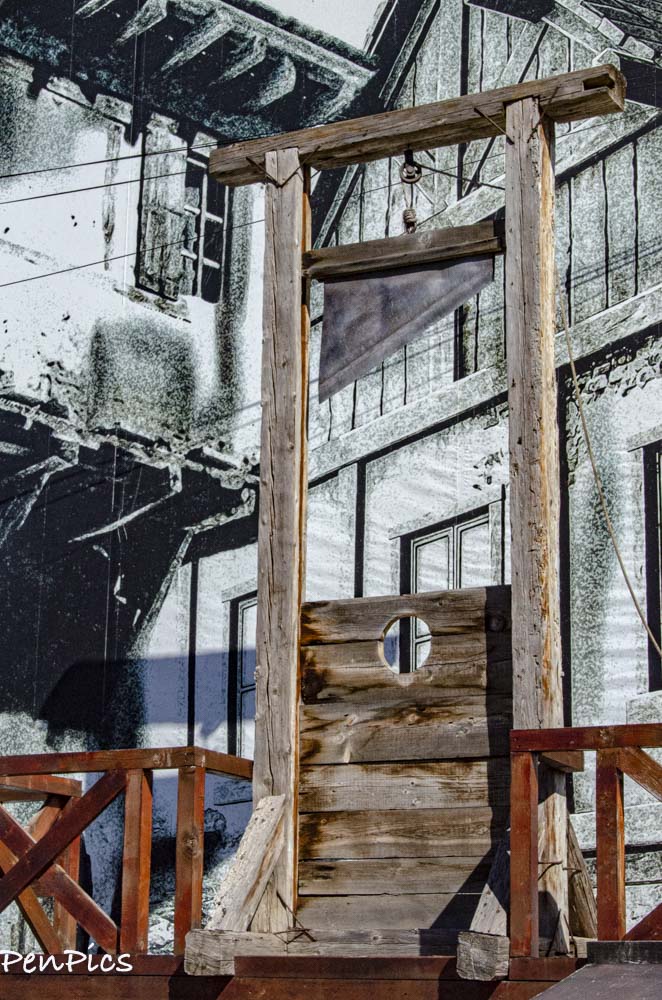
Corvin’s Castle is one in the same, where it is told, Vlad the Impaler; also known as Dracul (commonly known as Dracula; courtesy of Bram Stoker’s novel) was held prisoner for seven years, after being deposed in 1462. It is said his stay in prison resulted in his eventual madness. Rumors state, that while waiting for the council to convene, Vlad Tepes went insane because he was able to hear the screams of those who were sentenced to death and then thrown in the “Pit of Scythes” or in the “Pit of lions,” where there were actually hungry bears and wolves waiting to eat any person thrown in.


Leave a Reply to Pen n Daryl Cancel reply
Archive Blog Posts of Our Country Visits
About Us

About Us
Hello and Welcome to our Travel Blog Website, We enjoy writing about our experiences and taking photos of our adventuring along the way. Our names are: Daryl and Pen, but Daryl calls me “Bunny.” We met, quite randomly, whilst both… Read More
Very impressive, loved the visit
It was something to behold! I am so intrigued by Castles and Palaces (as you may have guessed) Just imagining living in these places gives me goosebumps. Hollywood romantics these places on the screen, but in reality, it would have been so hard..even for royalty. Cold, damp, etc….tough people! Well, tough for the peasants h=who served the royalty!