


“Greece 🇬🇷 ~Central Tinos Island’s Old Traditional Villages and Churches”
Today was a big day. We actually managed to visit eight traditional villages. Given how many little villages there are, spread far and wide across the island, this is just a drop in the bucket, but we were pleased with our efforts.
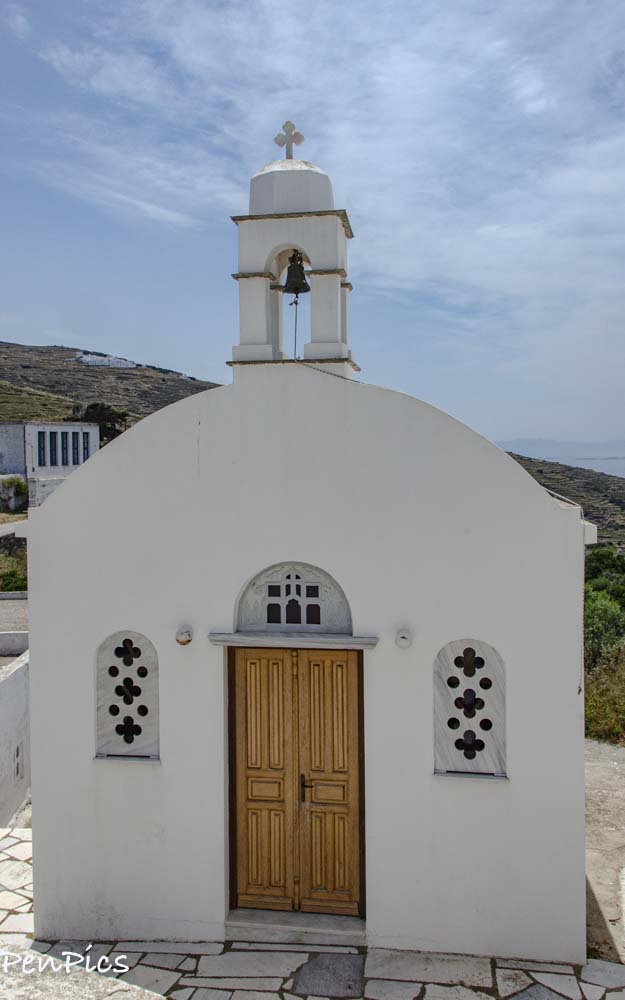
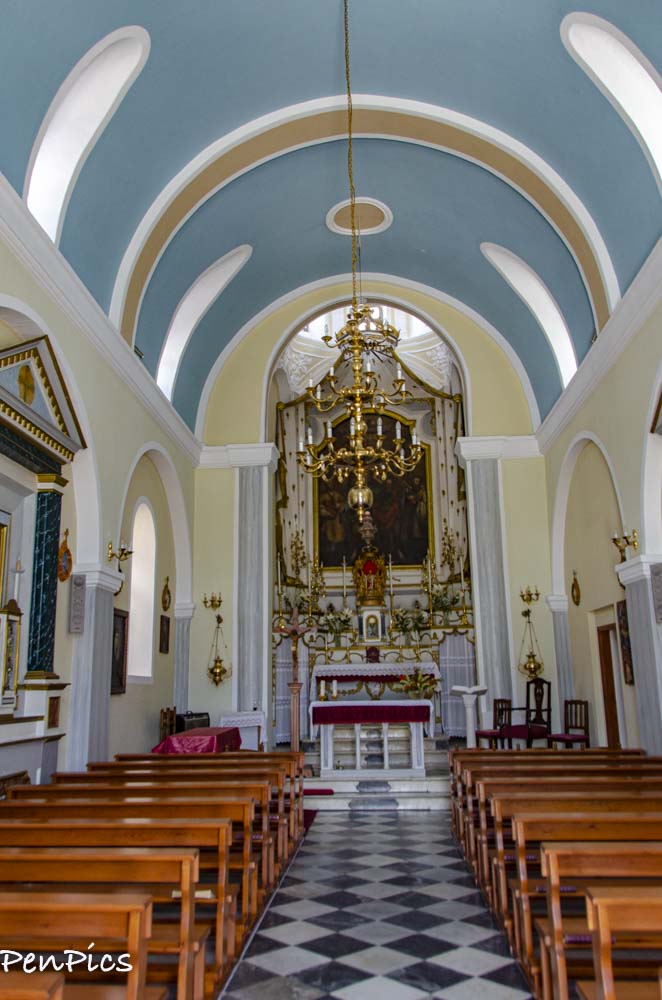
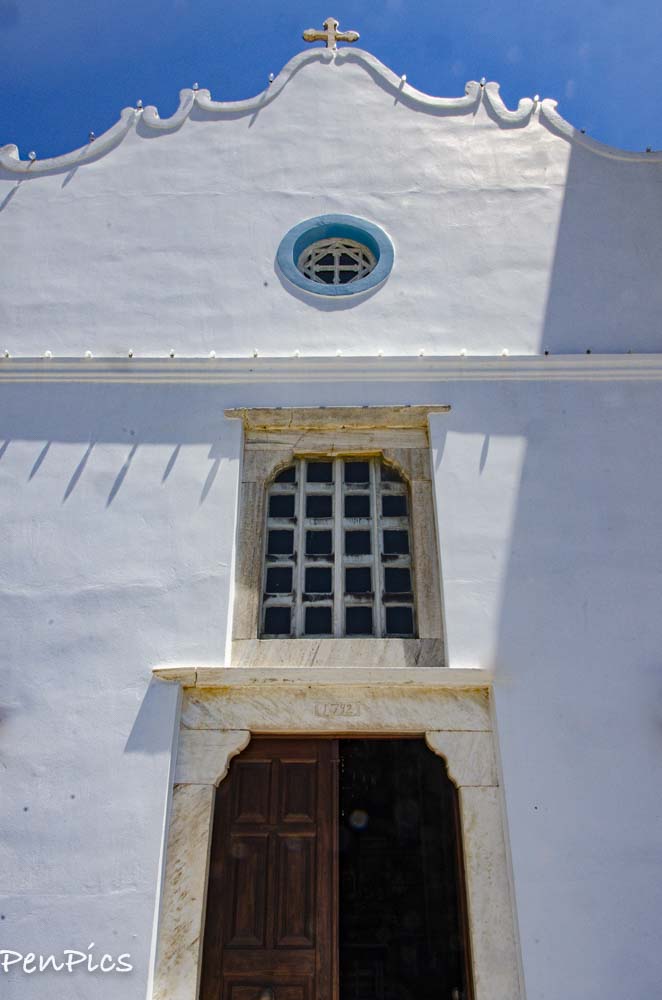
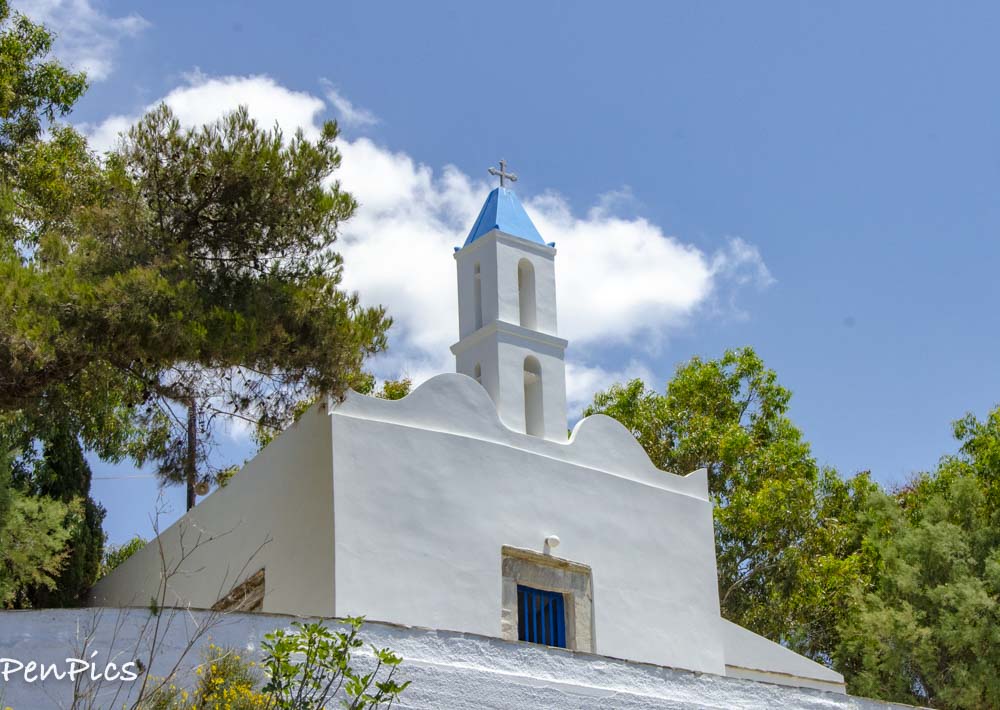
It was quite hot, today, but a beautiful day, just the same. We did not get to see so many churches on the inside, because they were closed, but we did get lucky in one village, when a gal was cleaning the outside of the church with a pressure washer. She needed electricity, so the front door of the church was open, for the power cord.
As I had mentioned before, on yesterdays post, much of what we find to explore has signs with Greek wording, so trying to figurer out the names of the villages was tough, unless we were lucky to see a sign in English. Regardless, we totally enjoyed driving around the mountainous region of the island and seeing all the old,Greek-style homes and churches. So many churches! It was very quiet, and we hardly saw a soul, all day long, but we saw lots of cats and a few dogs. We stopped for a bite to eat, and that was our only break for about five hours! We finally could not go anymore, and dragged ourselves back to home base, by the beach.
Today was Sunday, with much businesses a d activities closed down, so we saved a really exciting part of the island for tomorrow. We really hope the marble sculpting school is in session, so we can see what that’s all about. We will rest up tonight, and go right back at it, again, in the morning.
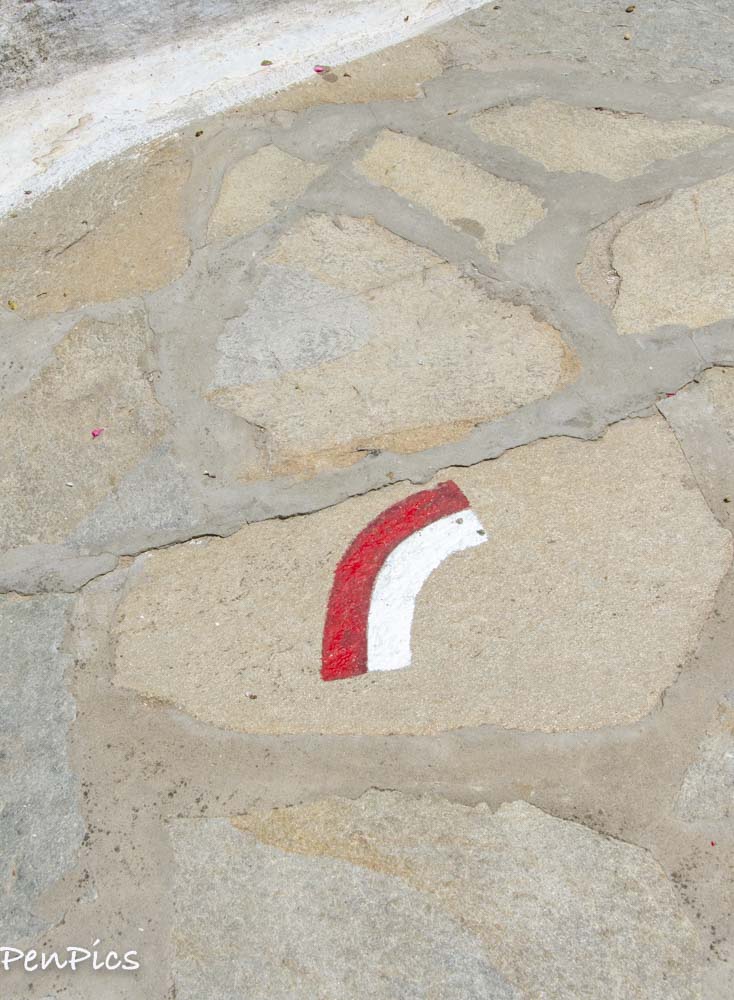
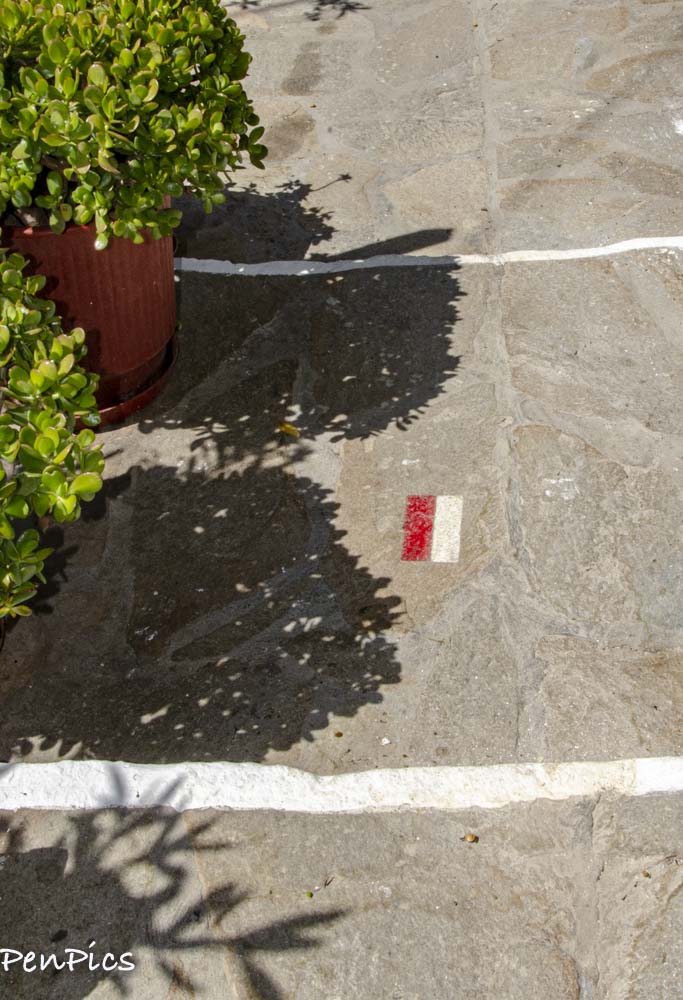
Tinos Island was a very good choice for us to visit. We love history and the island is pretty good size, with lots to see. The pilgrimage trails for the many churches are well marked with a red and white stripe; painted on the walkways or on a pile of stone. What we learned, after a few errors, is the markers are on walkways, and they are not meant for cars. We have come to a set of stairs more than once, driving along what we thought was a roadway. Now we know!
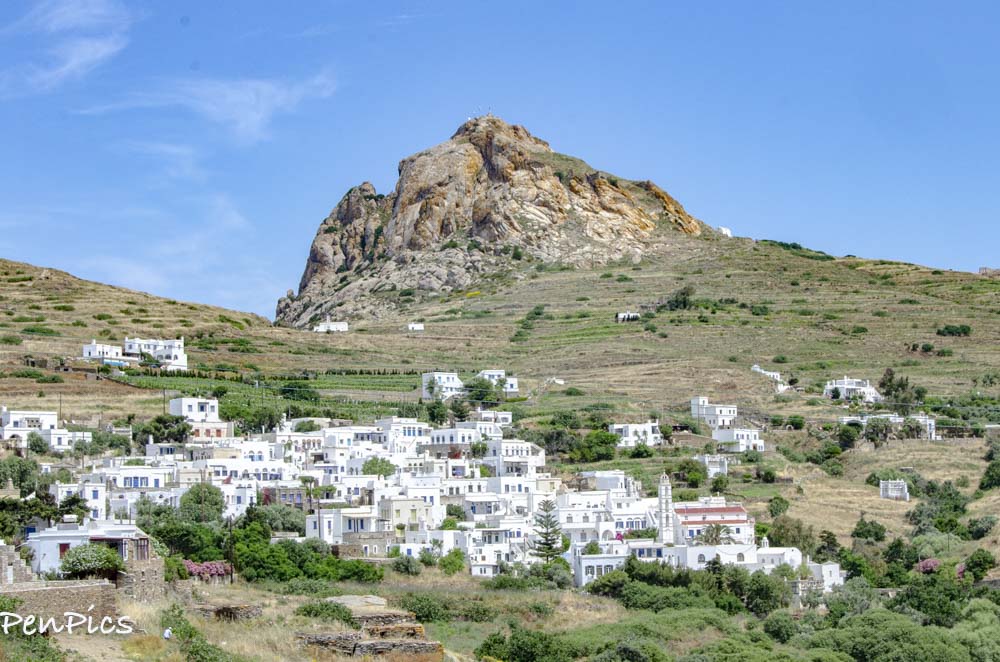
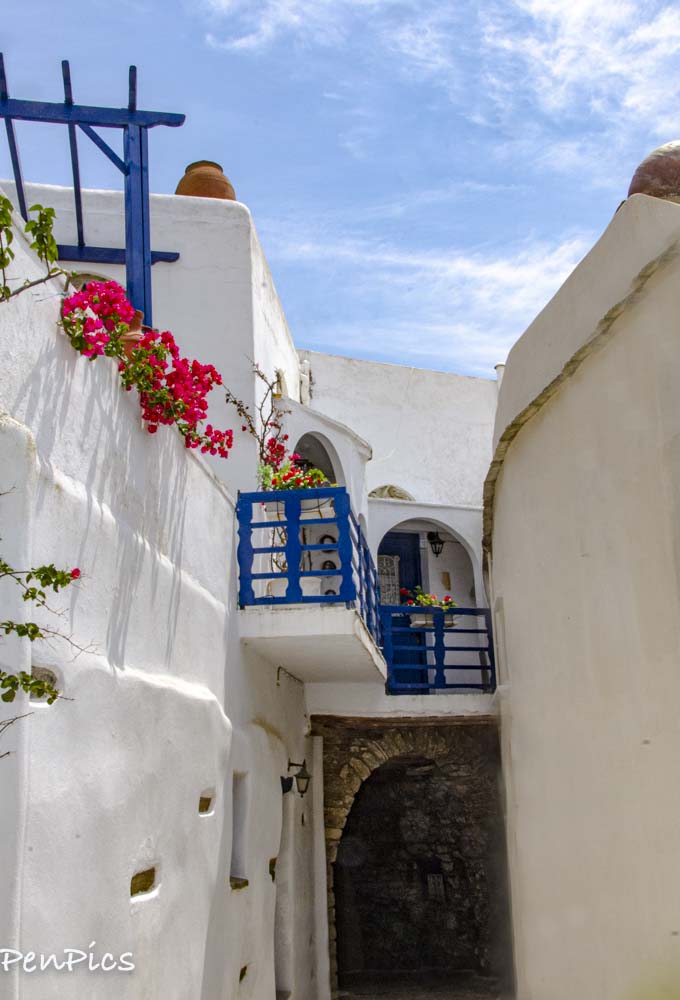
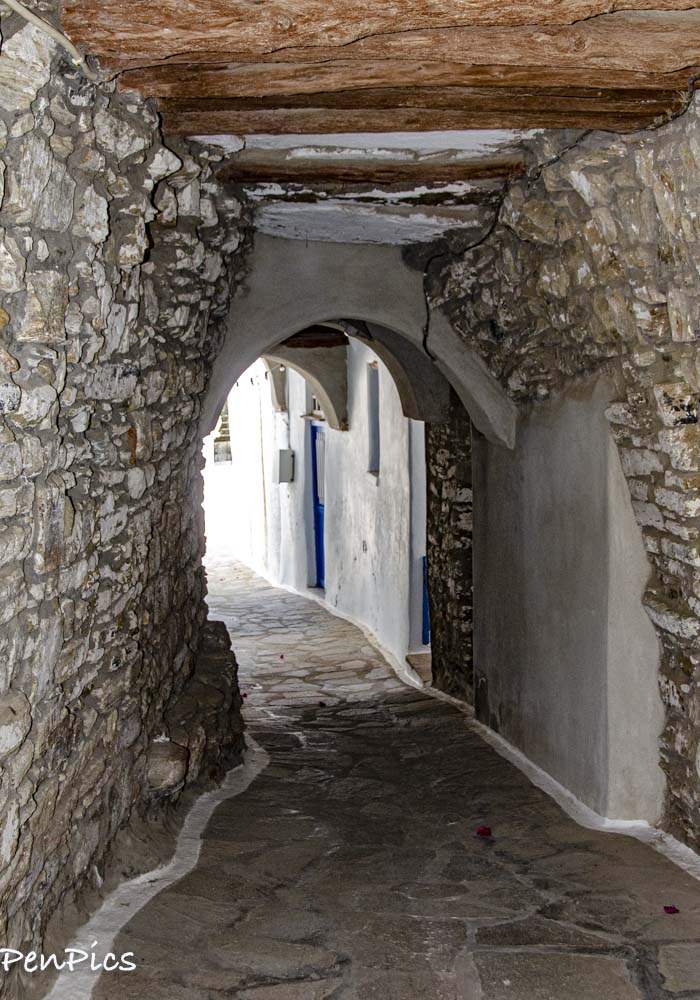
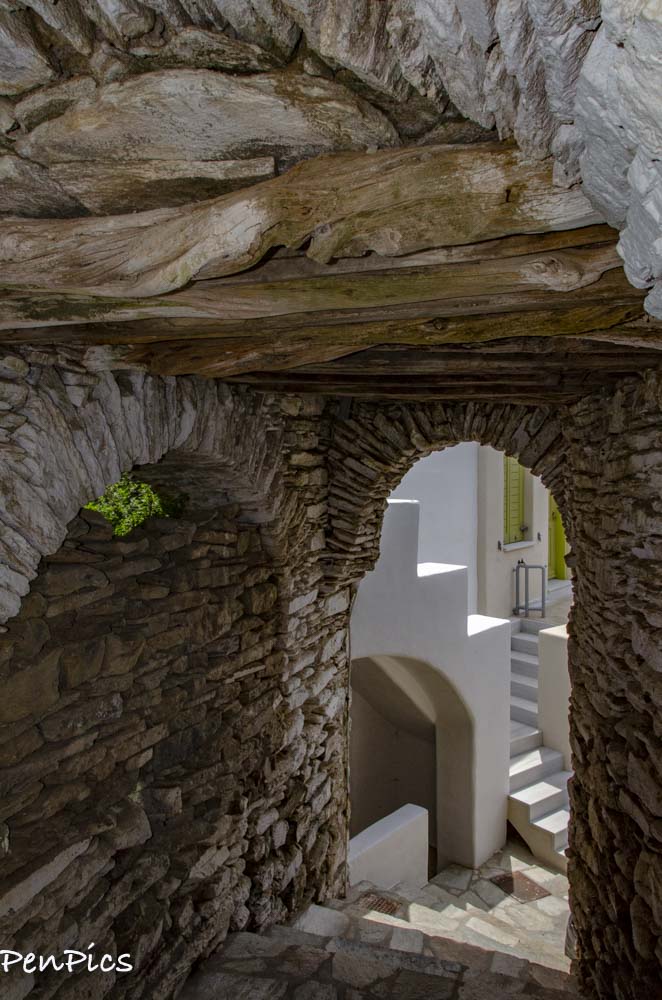
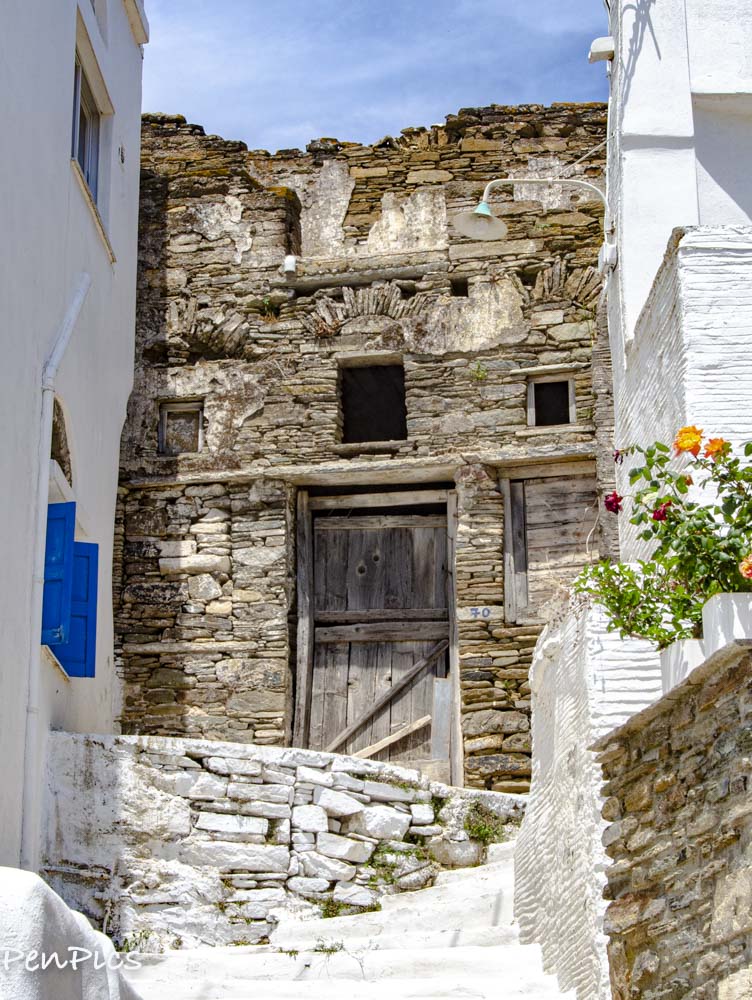
In terms of architecture, Tripotamos village has the design of a fortified city, with access entrances facing west, north, and east. It is a maze of stone buildings, which are the work of patient human hands, of covered vaulted alleys and crossroads, with the buildings’ anogia (first floors) slightly rising above it all, giving no hint that, below, there lives and breathes an entire village. It is this invisibility that helped Tripotamos and its inhabitants weather the pirate raids of past centuries in Tinos Island. The main road, the village’s spine, moving from east to west, cuts through the village and meets with the tightly built tiered alleys and vaulted arcades, all part of Tripotamos’ cohesive tissue that is devoid of gaps or open spaces.
Tripotamos takes its name from its position since it is built among three rivers.
It is one of the oldest villages of the island. Within walking distance of the village are the ruins of the medieval town but there are also findings dating back to the Prehistoric and Geometric period.
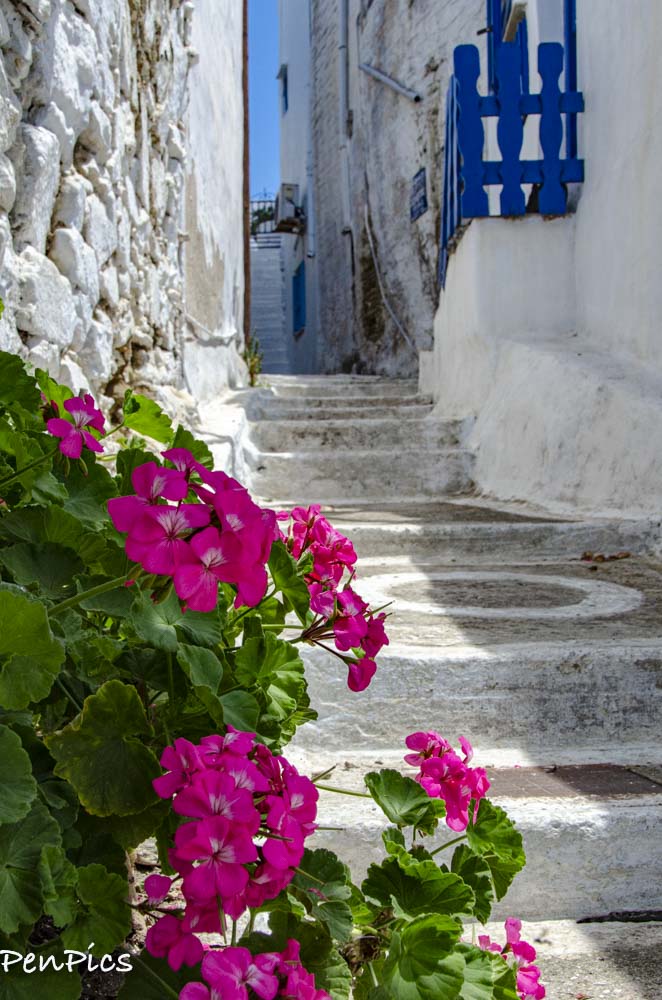
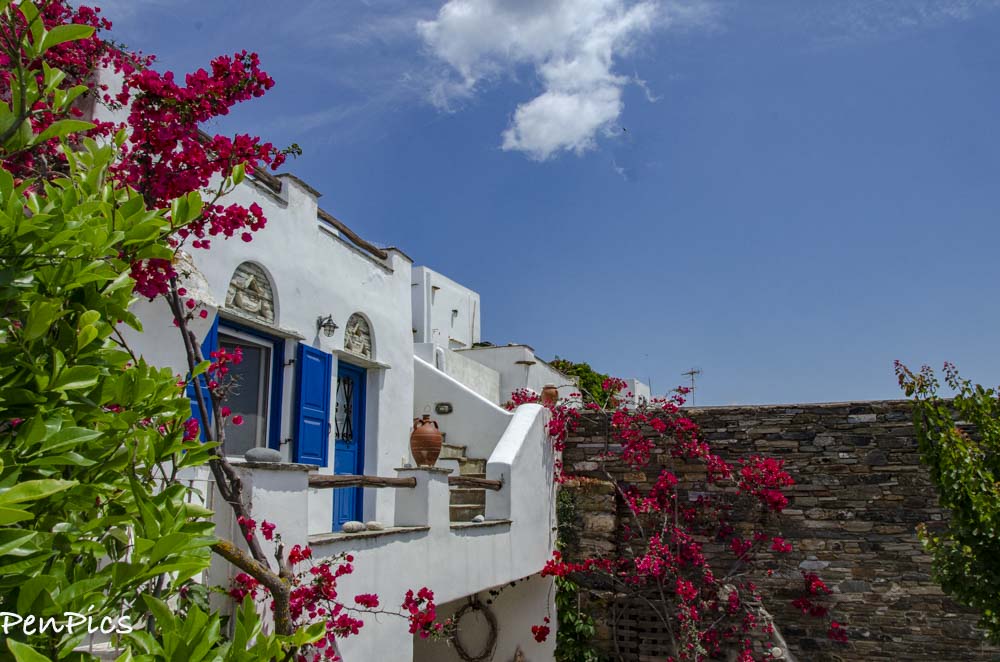
The village is of great architectural interest. It looks like a castle consisting of houses built very close to each other fully preserving the traditional character. Get lost in the “maze”, the picturesque cobbled streets are forming.
Walking through the village you will find the parish church of the Virgin Mary. On November the 21st, date of celebration, a festival takes place during which all the village houses are “open” to visitors.
The neighboring village that stands as a continuation of Tripotamos is Sperados.
The parochial church of Virgin Mary stands out and, on the day of its celebration, the villagers, keeping the tradition alive, organize parties in their houses inviting all guests and worshipers. Here, the custom of “The Birth of Jesus” (Kavos) is celebrated during Christmas, following local mediaeval New Year traditions. Close by, there is the cheese dairy factory of the island, as well as pottery and confectionery workshops. “Sperados” is a small thorp that belongs to Tripotamos. The delicate houses give it a picturesque aspect, while a traditional path connects it with “Tripotamos.” In the middle of it, you can encounter the old elementary school. Those two thorps are “birthplaces” of many professors, such as the Greek Academy member “Markos Siotos,” artists of the figurative arts like G. Paraskevas (Icon painter and teacher), “Fr. Desypris” (Icon painter), “D. Desypris” (painter), while the modern time philosopher Cornelius Kastoriadis also lived here.

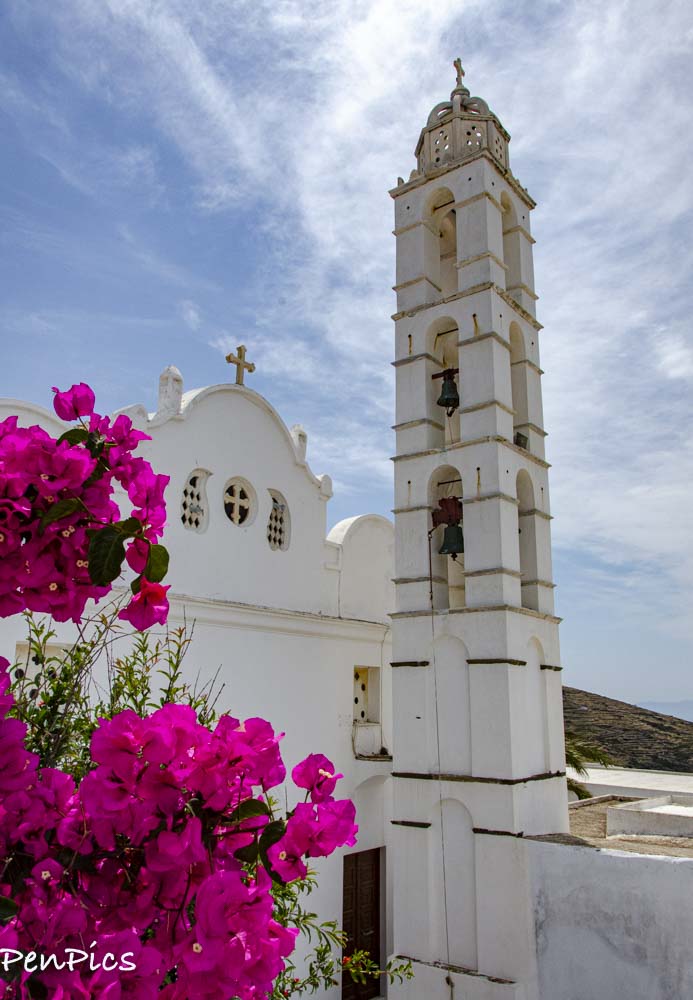
Panagia Rodariou (1860-1870), at one time the Cathedral of the Catholic Diocese of Tinos
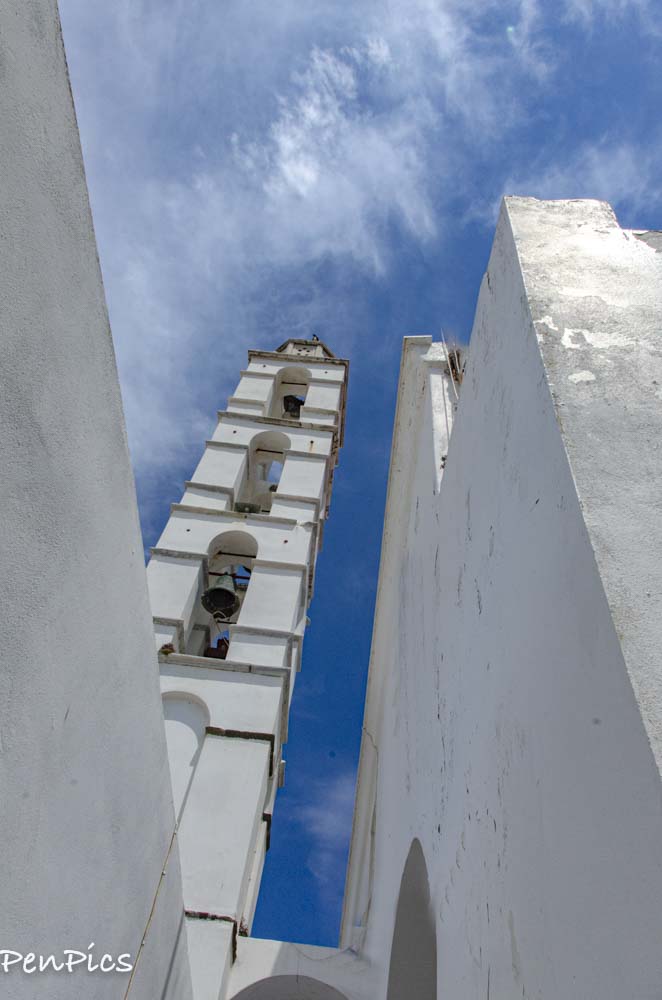
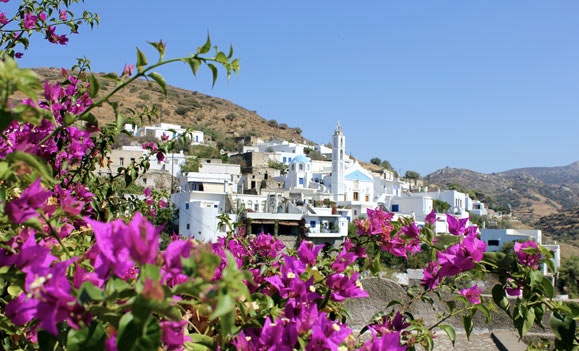
Agapi village is one of the oldest villages of the island. In the Middle Ages it was called “Passage”, since passing through the village, the road was leading to the capital of the island, those days.The parish church of Our Lady was renamed in the 18th century to church of St Agapitou and gave his name to the village.
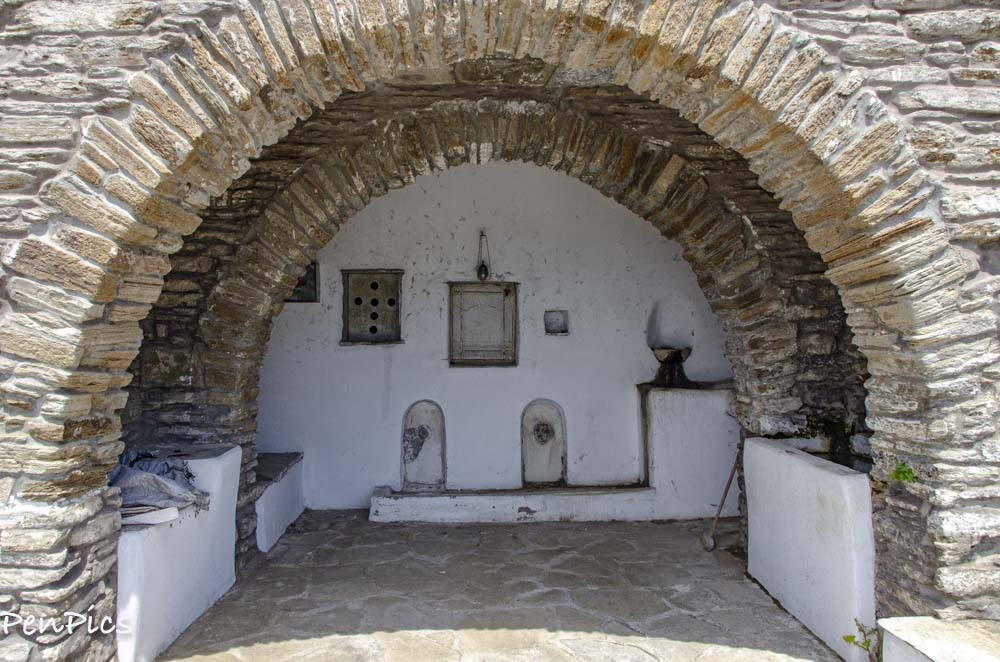
The architecture is of particular interest: The houses that retain traditional elements, labyrinthine alleys with characteristic arches, natural springs, wells with laundry room, forming a picturesque village, representative of the aesthetics of the island.
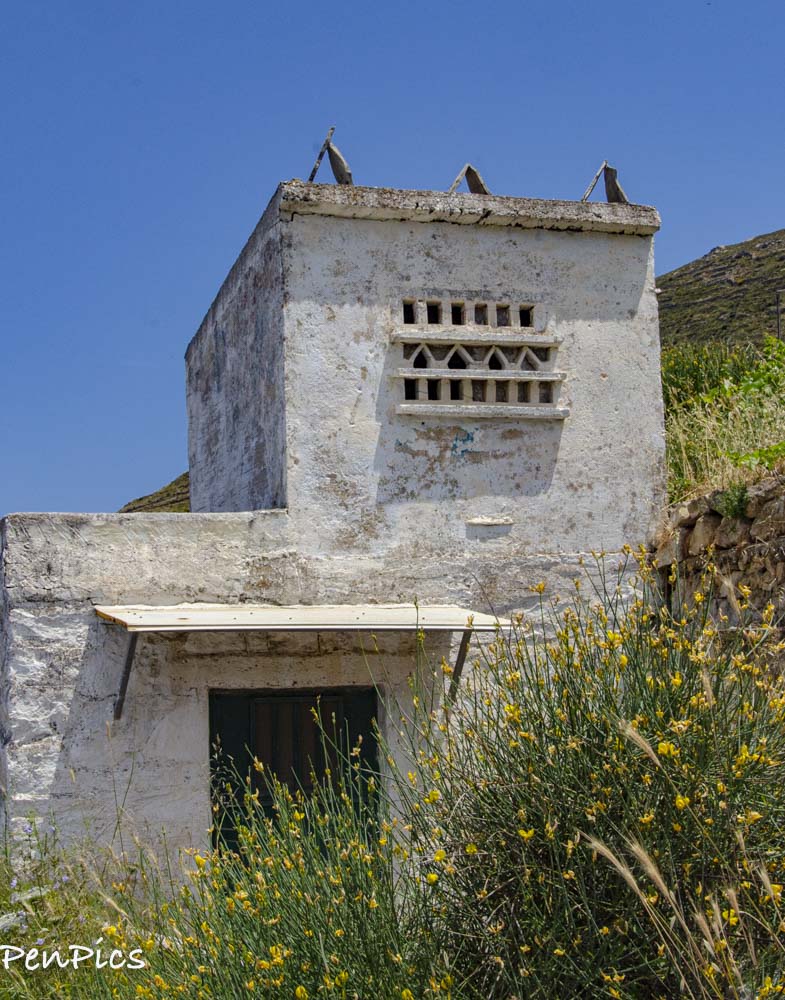
The valley ,starting from Agapi and leading to the plain of Komi and the brook running through it, in older times, was one of the biggest rivers of the island. Take a walk to Griza where running waters, green countryside and pigeon houses create
a unique landscape.
Near the village is the Shrine of Our Lady of Vourniotissa. According to tradition, the fishermen of Sklavochorio found the icon on 8 September 1670, the celebration day of the church
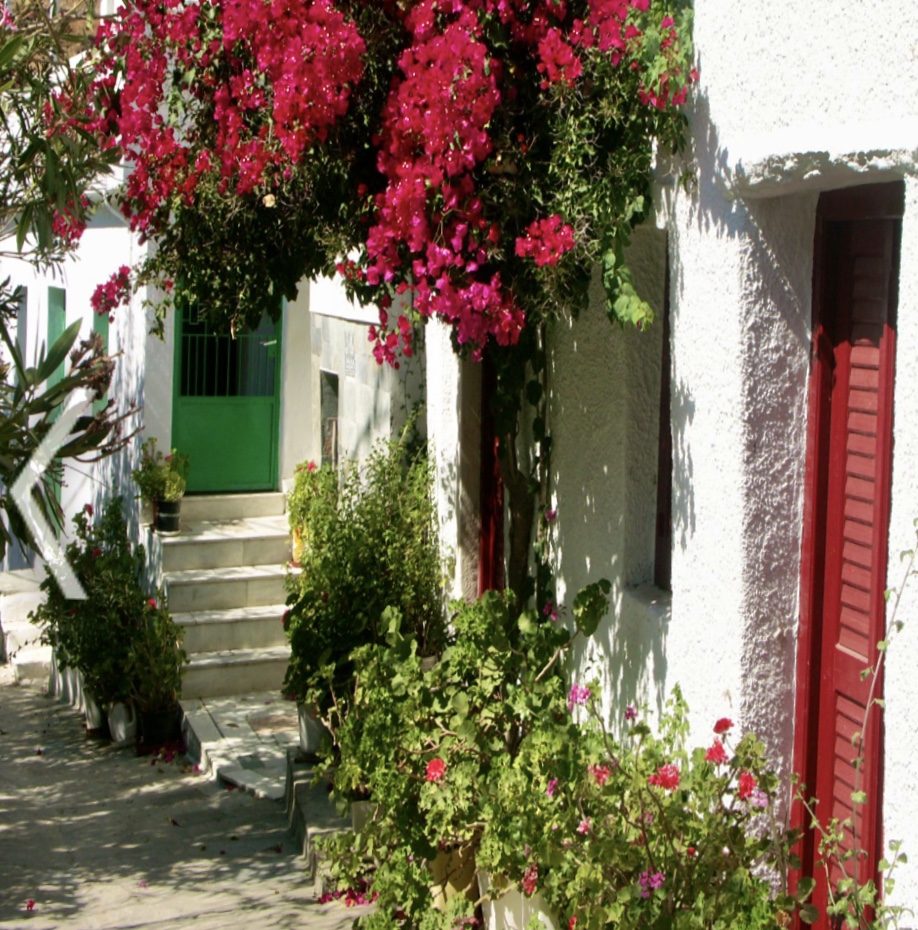
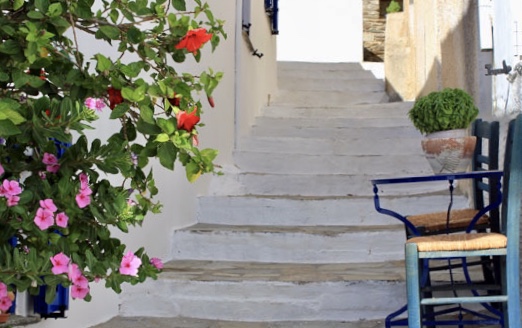
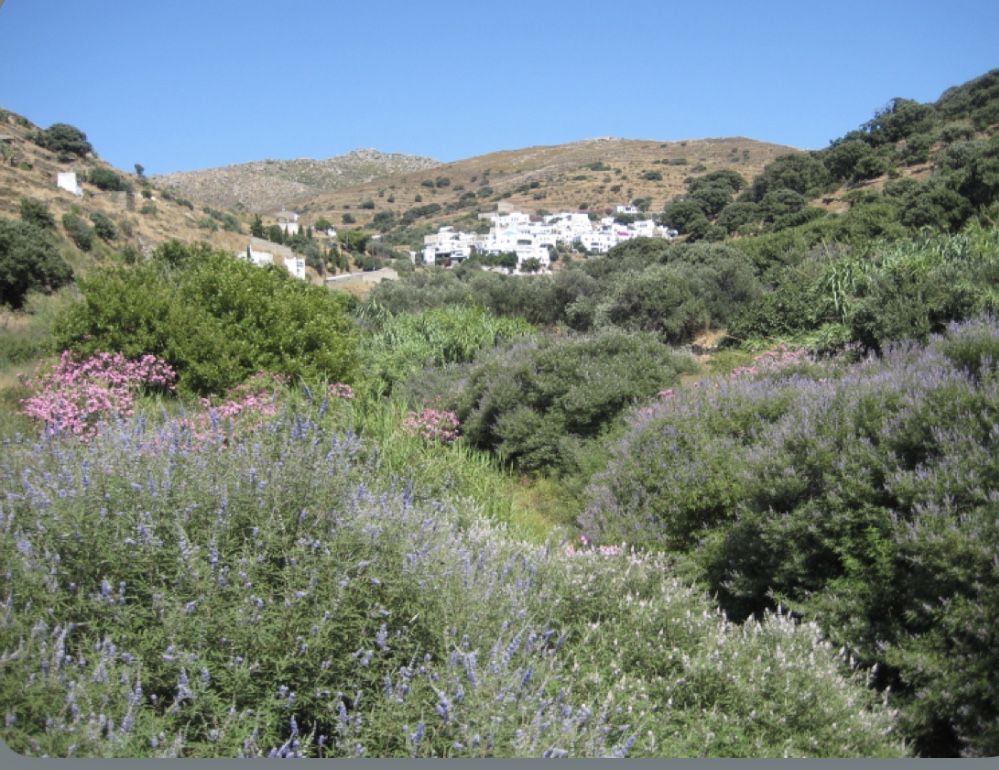
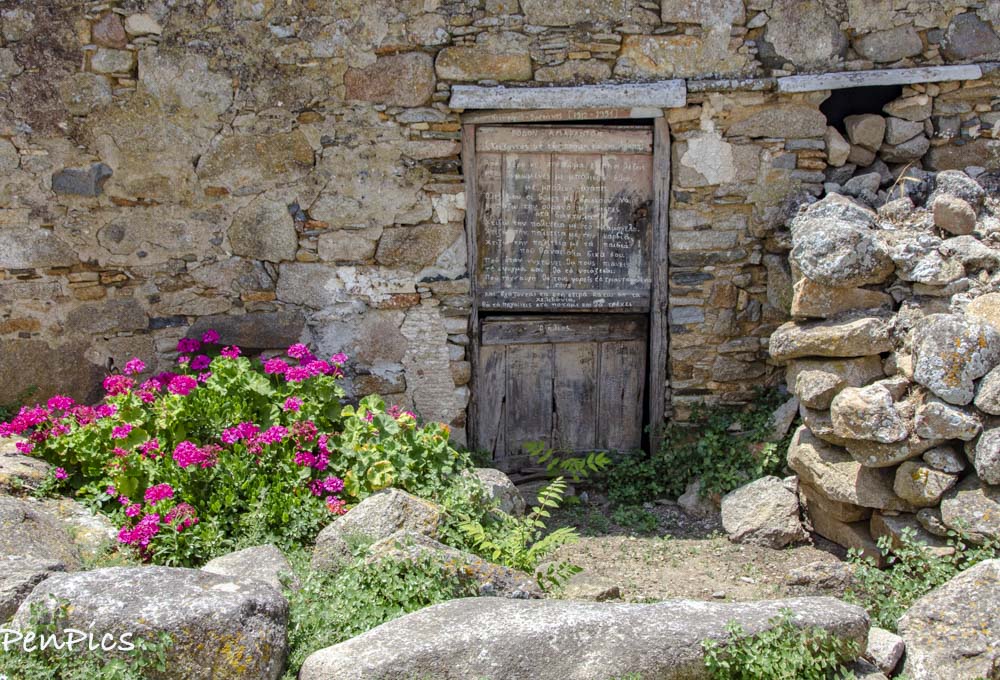
Volax village is located in a strange and unique site full of huge granite boulder formations, reminders of a volcanic eruption that took place some thousands of years ago. Those natural monoliths have different shapes and give to the landscape a unique natural charm; the white houses of the village contrast with the profound red of the rocks
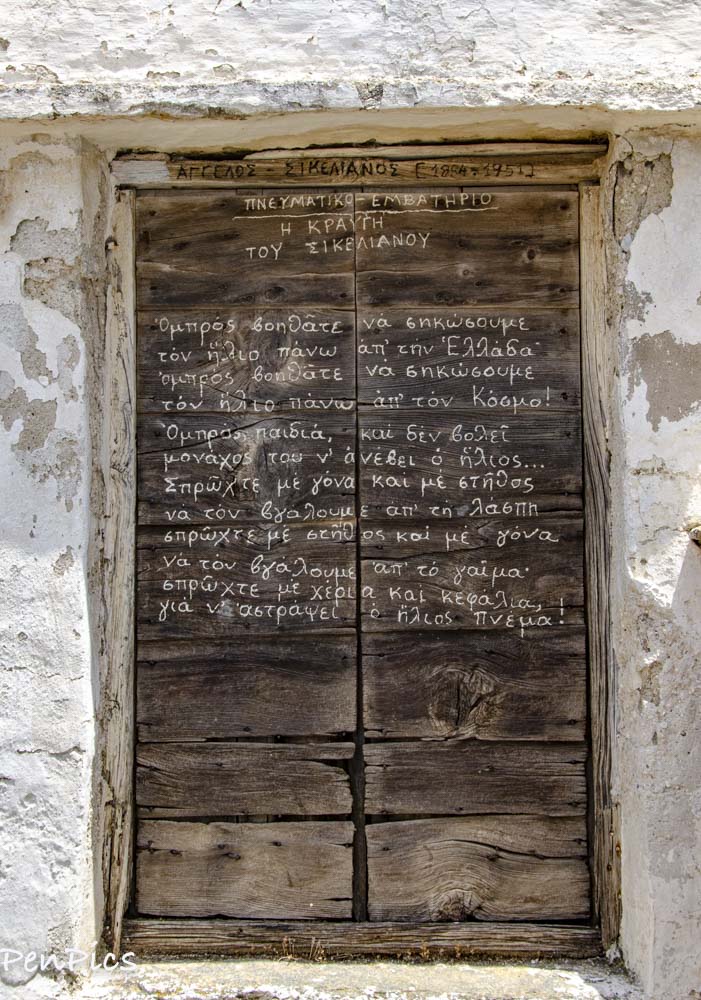
For more information a bout the poems by Greek writers:
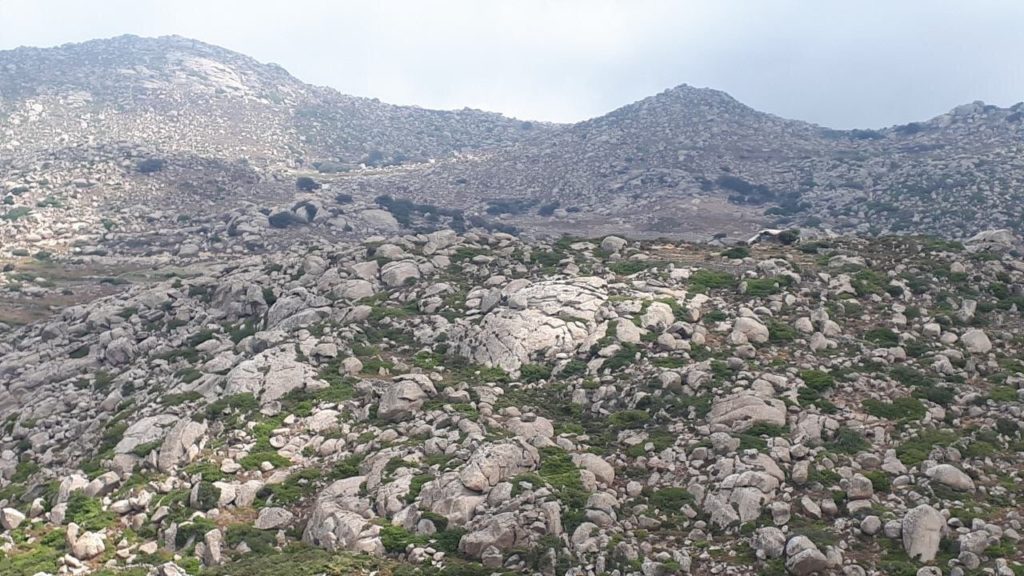
Legends and myths accompany the moon-like landscape of Volax and the famous round granite rocks. It is said that it they are the remnants of a mythical battle between gods and giants, that the volakes (large cannonballs) took their shape from the sea that at some point surrounded the area, or that they came from a meteor shower. According to geologists, they are granite rocks that were formed 15-25 million years ago and with the changes in temperature, in humidity, as well as the friction caused by the wind, they eroded and developed a spherical shape
To learn more about the poems written by Greek writers:
http://volax.gr/
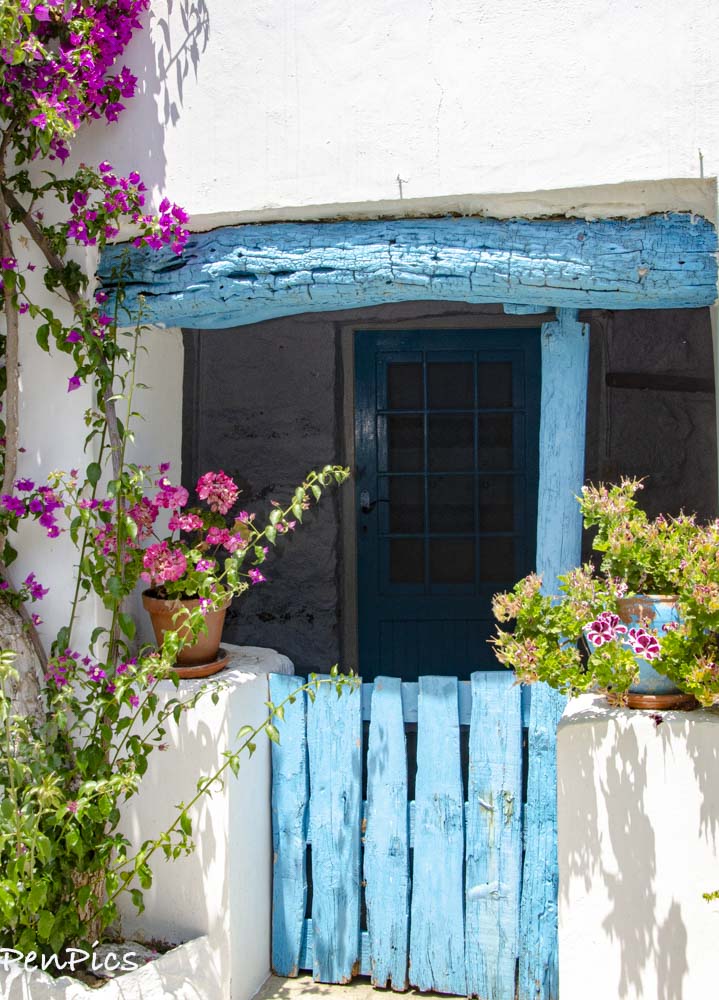
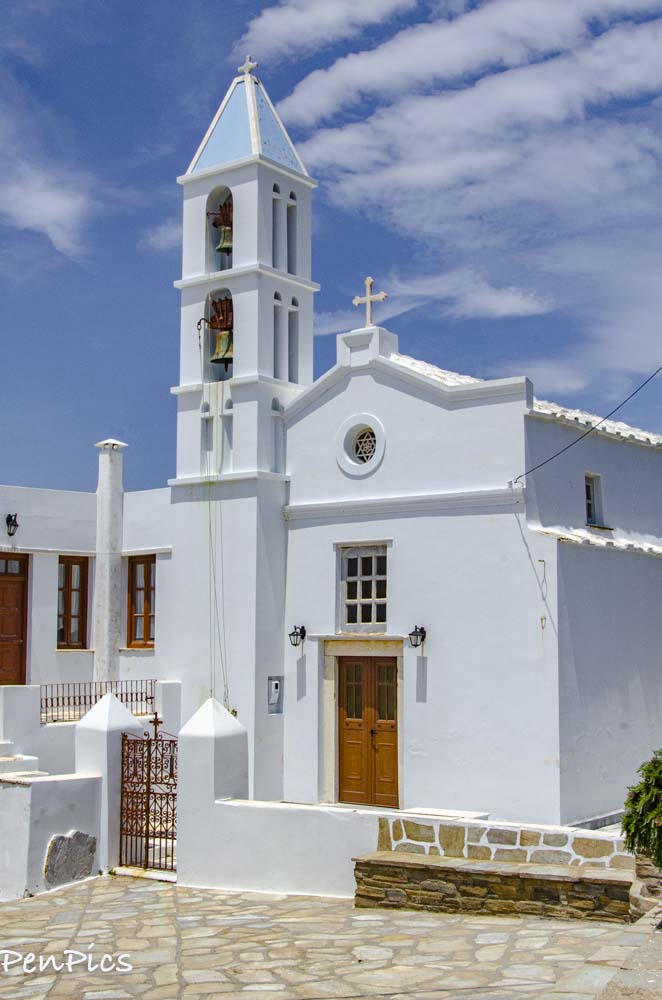
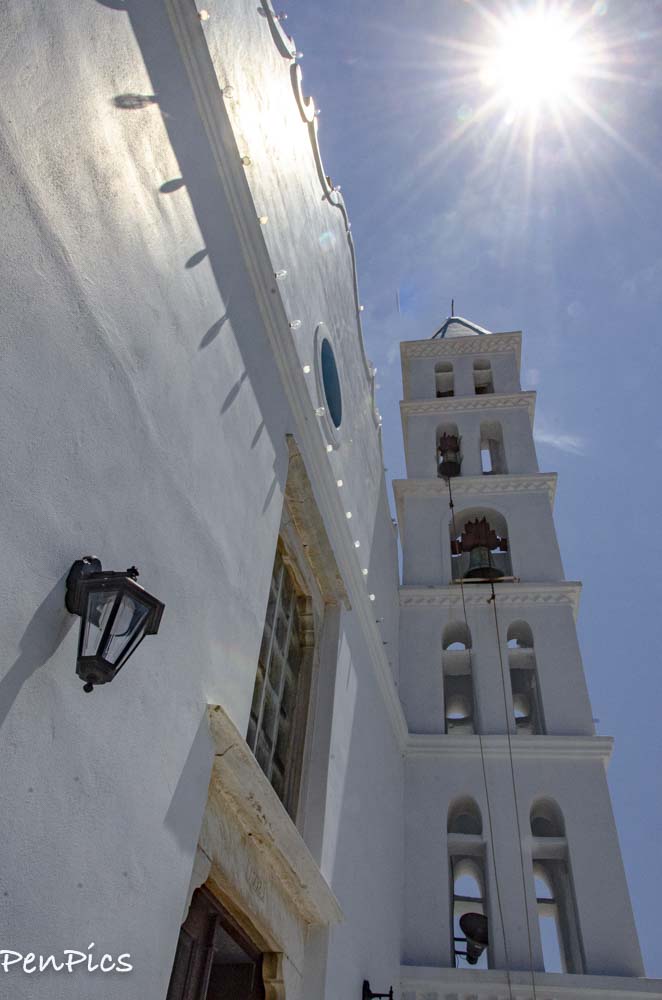
The village is built on the mountain slope with innumerable steps and a marvelous view to the villages around it. It combines both traditional and modern architecture
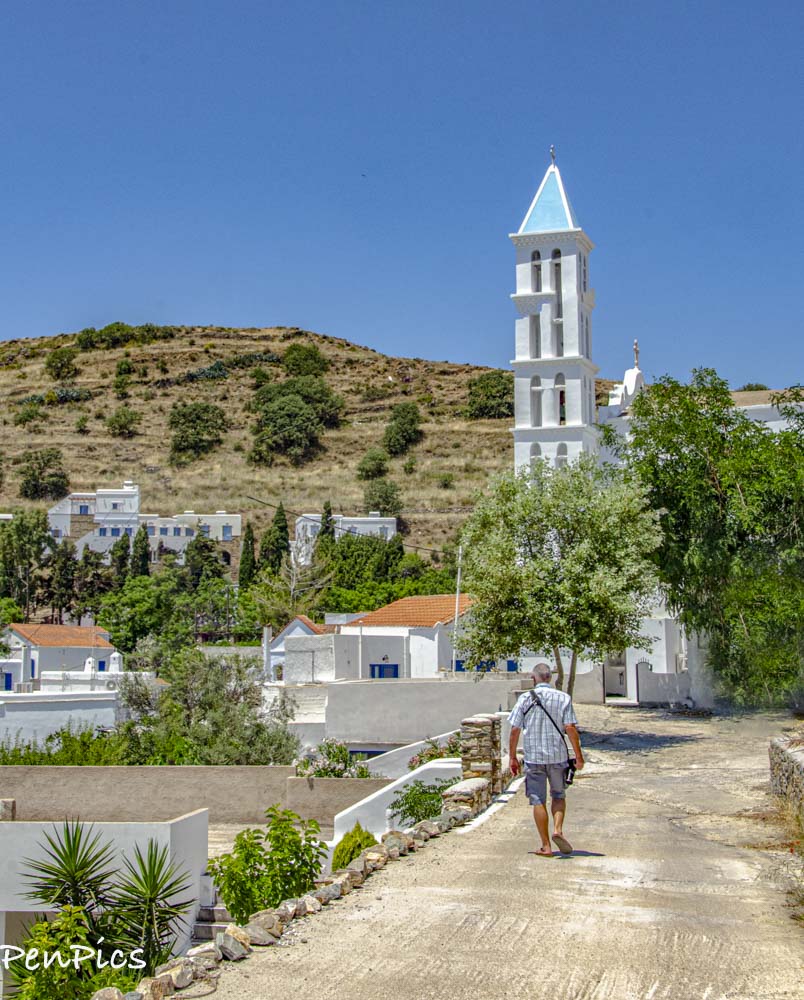
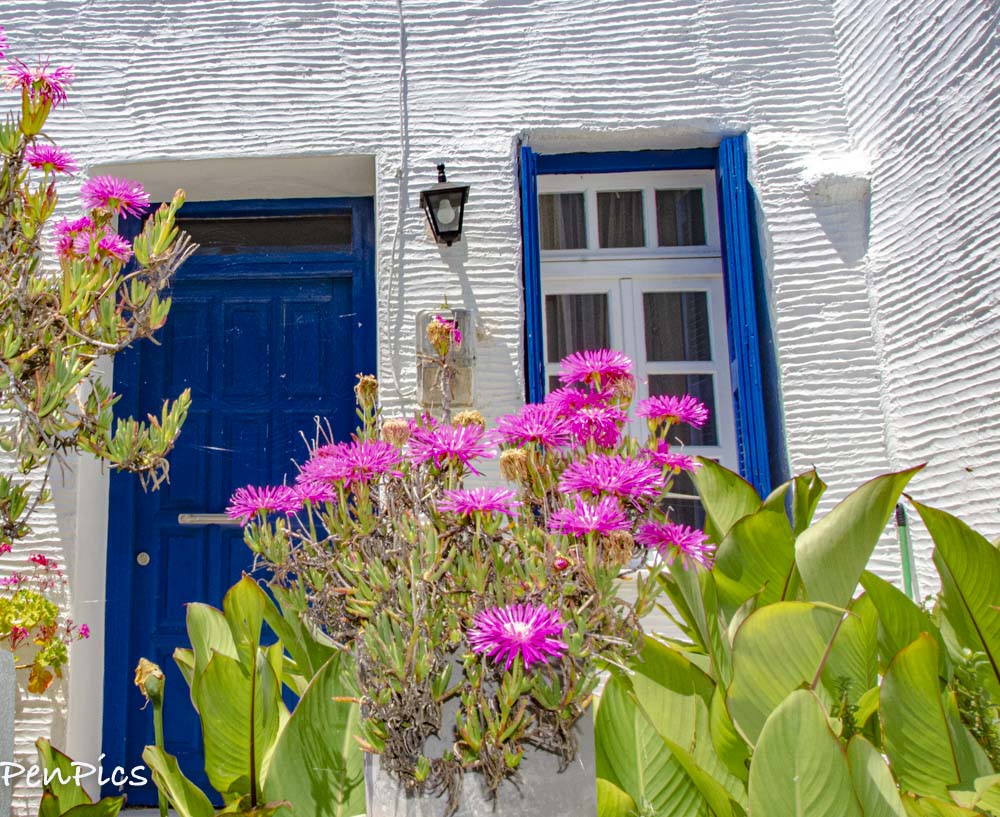
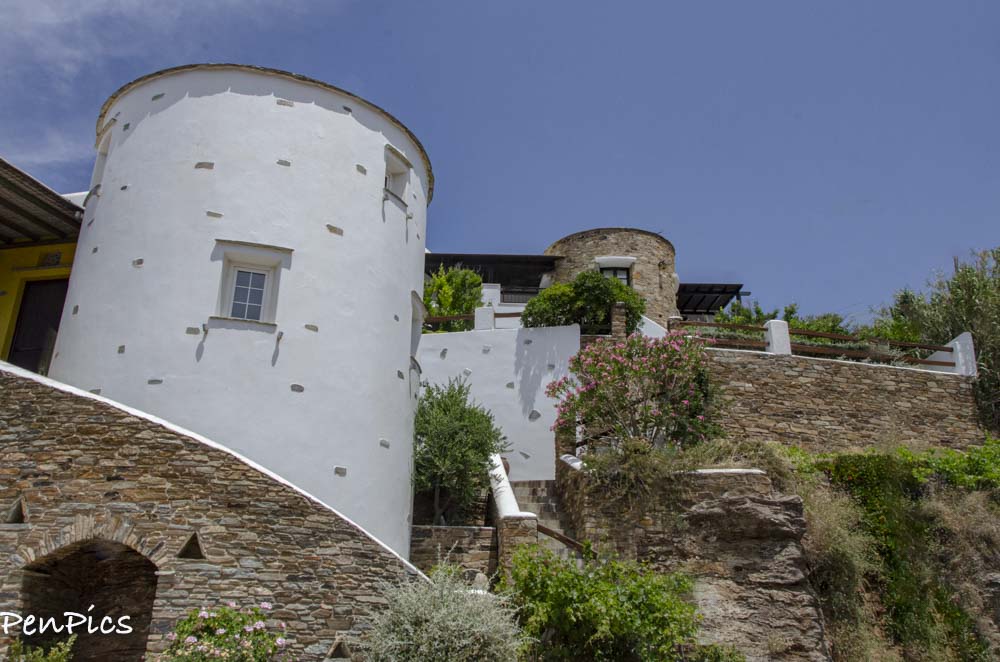
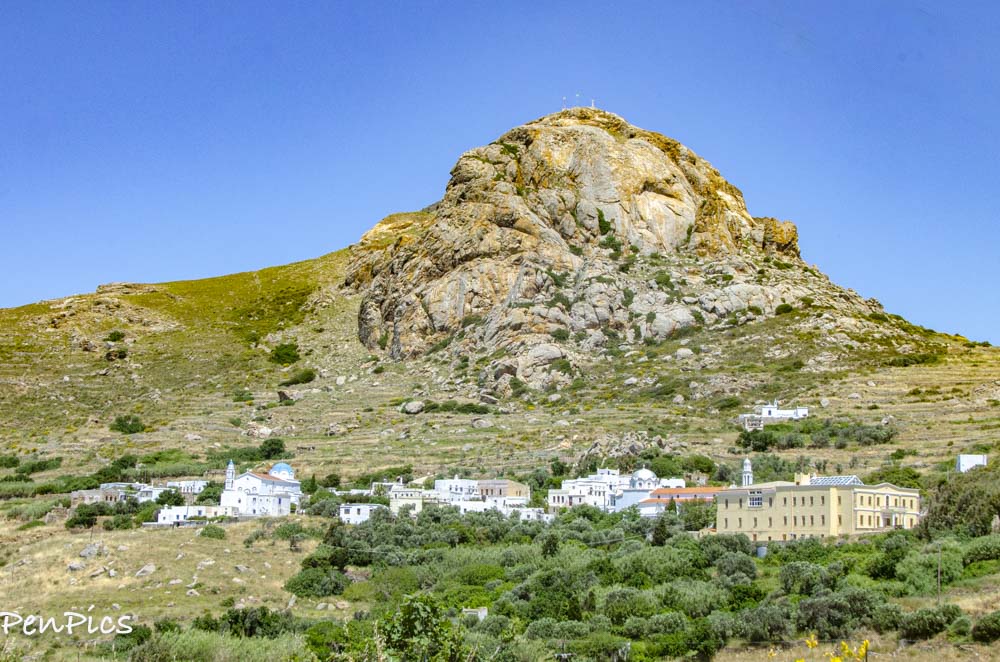
Xinara is built at the foot of Xombourgo and dates back to the 19th century. In medieval times, it was a cultural and commercial center of the island. Most handicrafts of the island were represented here
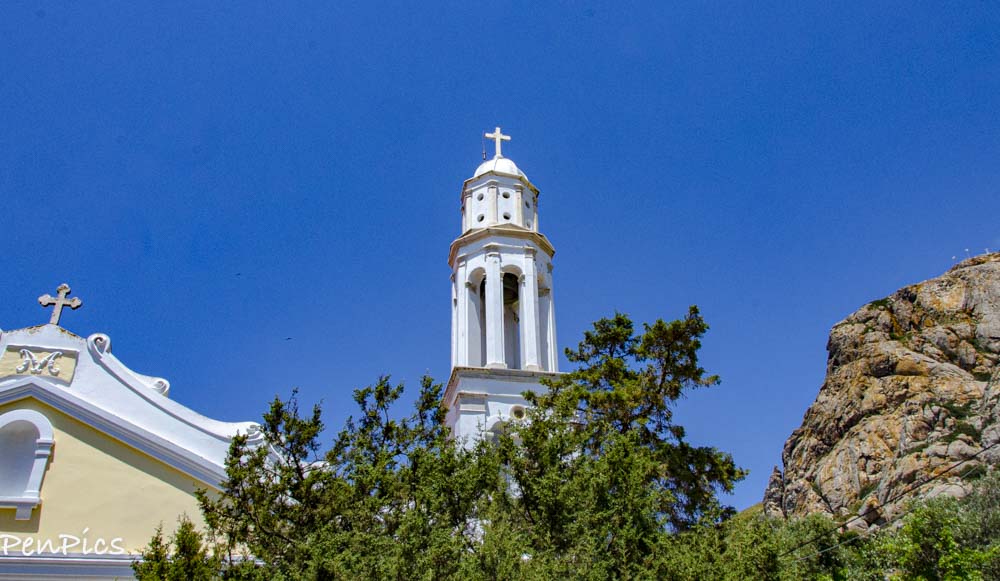
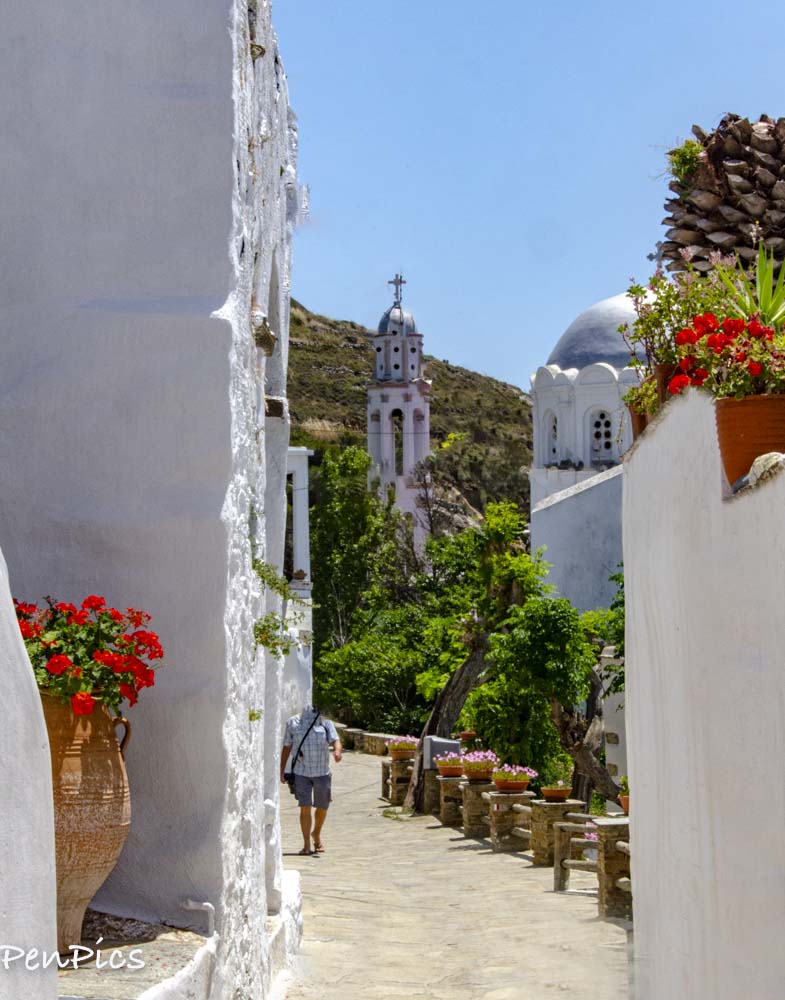
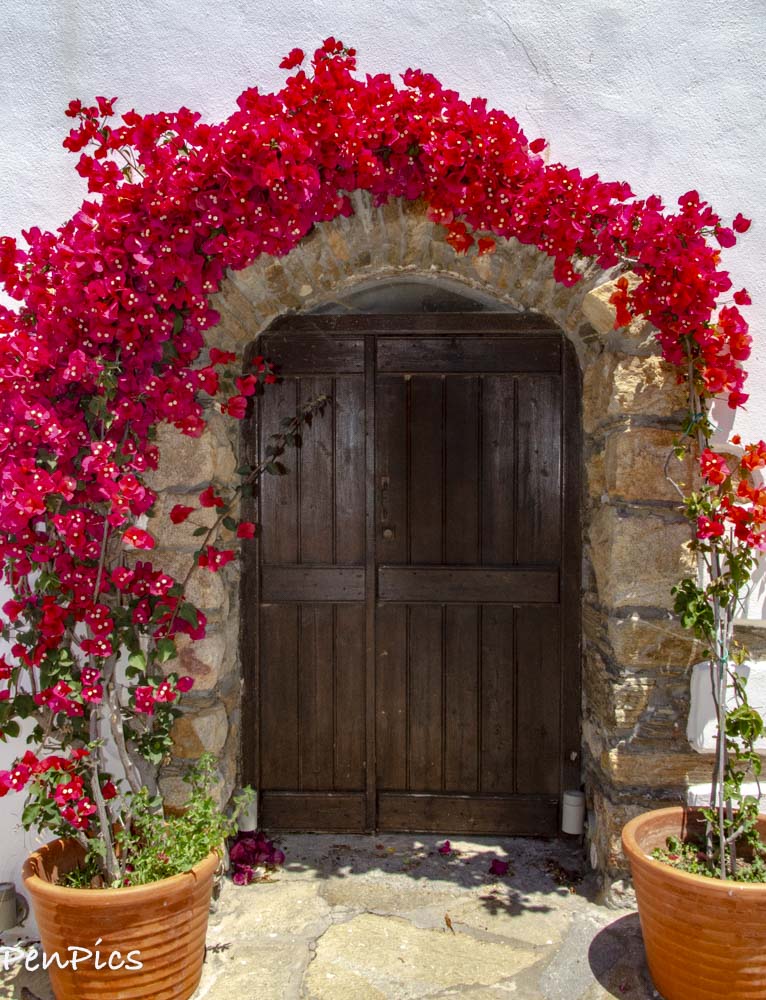
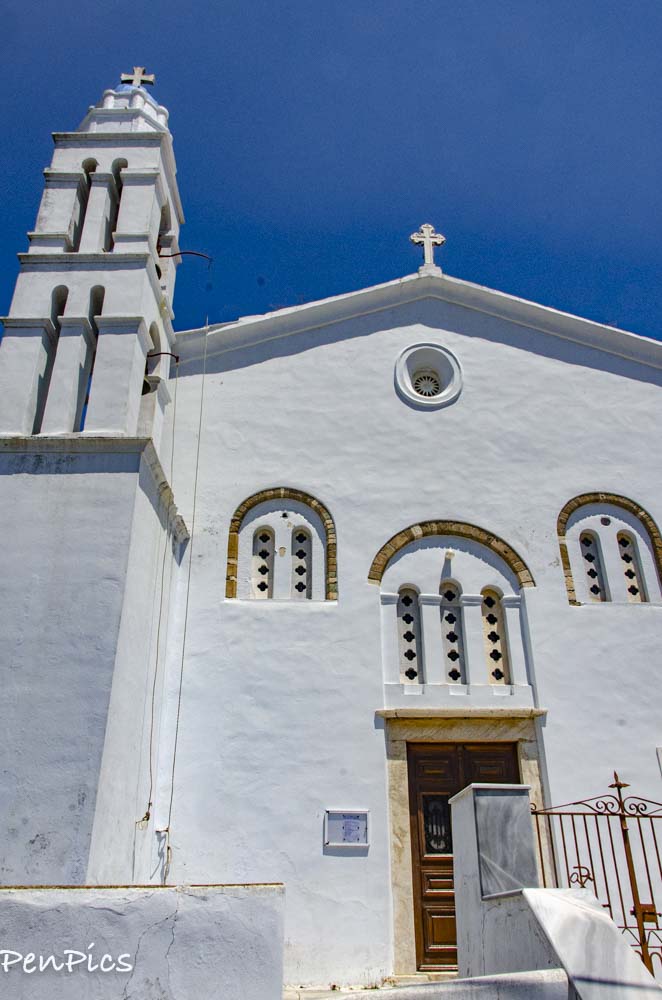
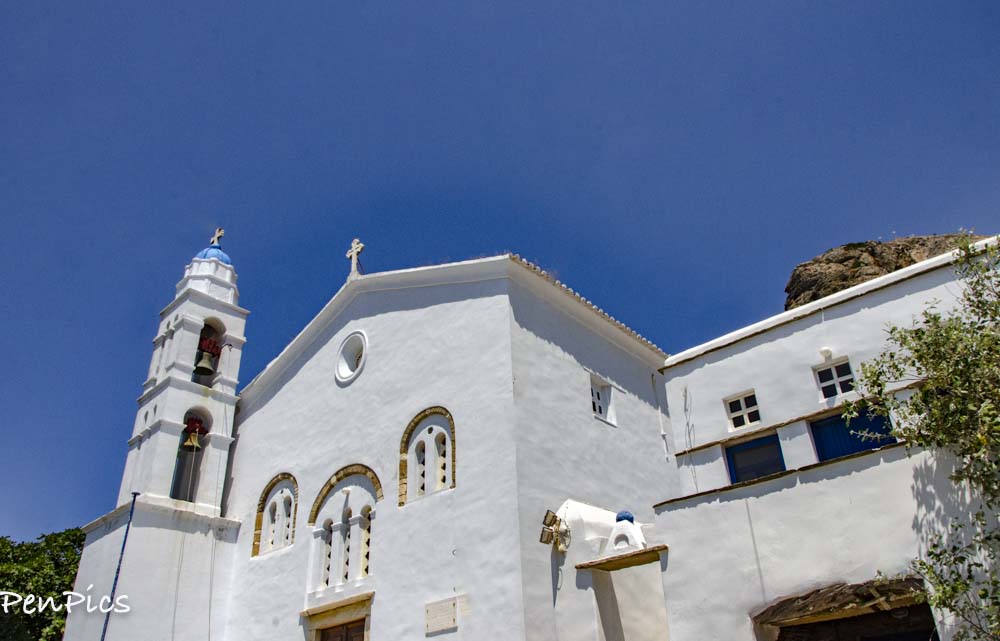
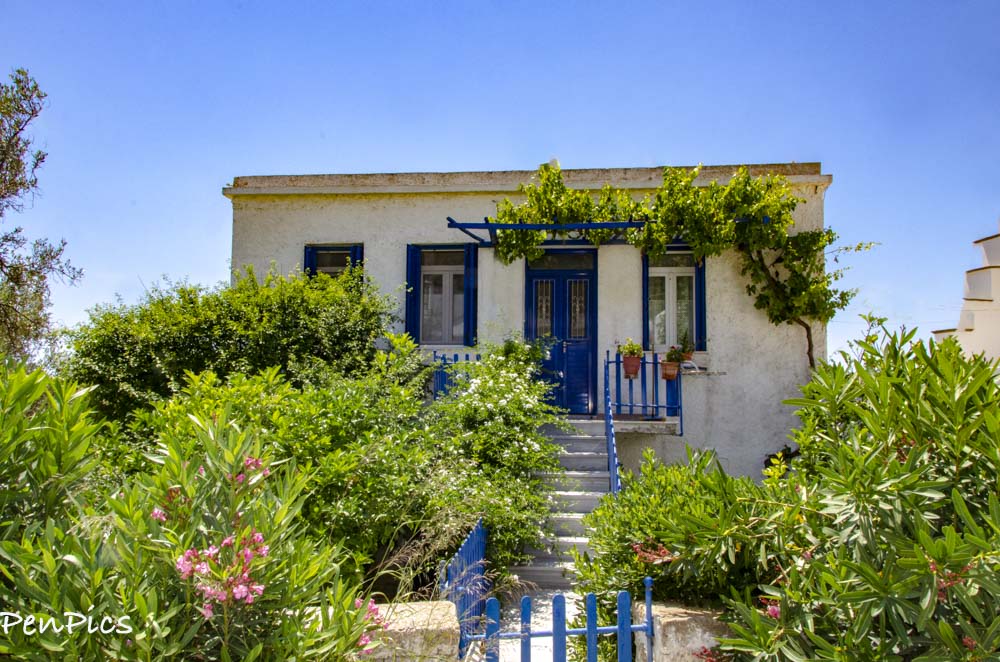

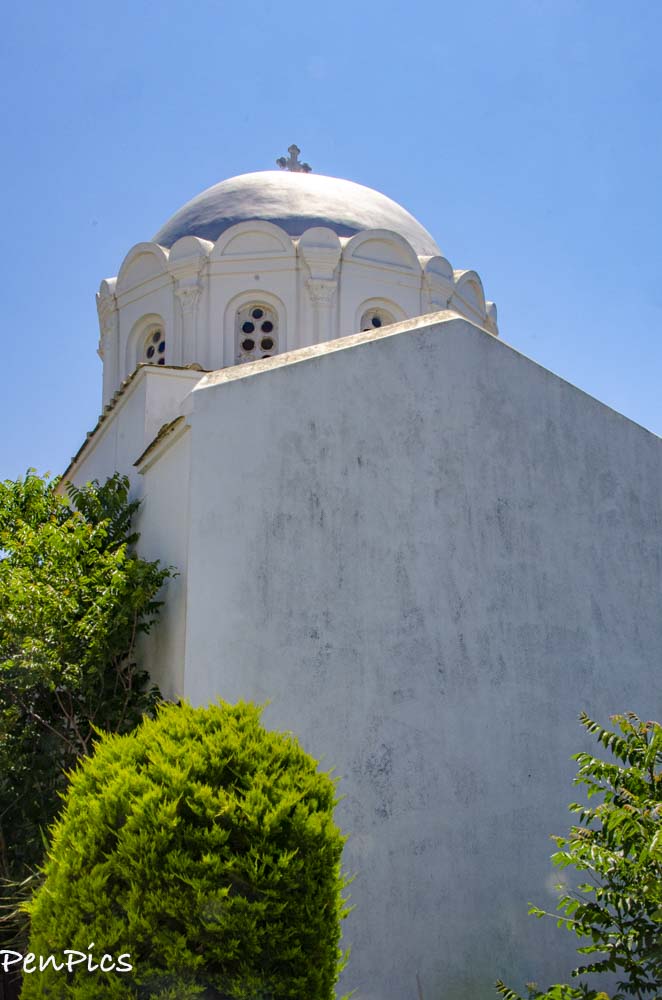
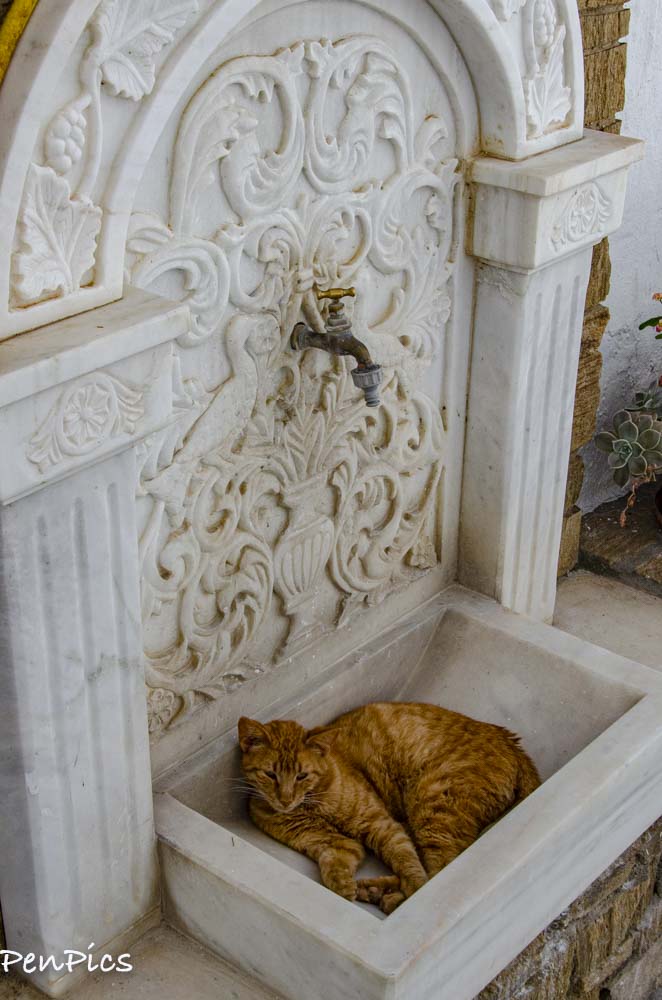
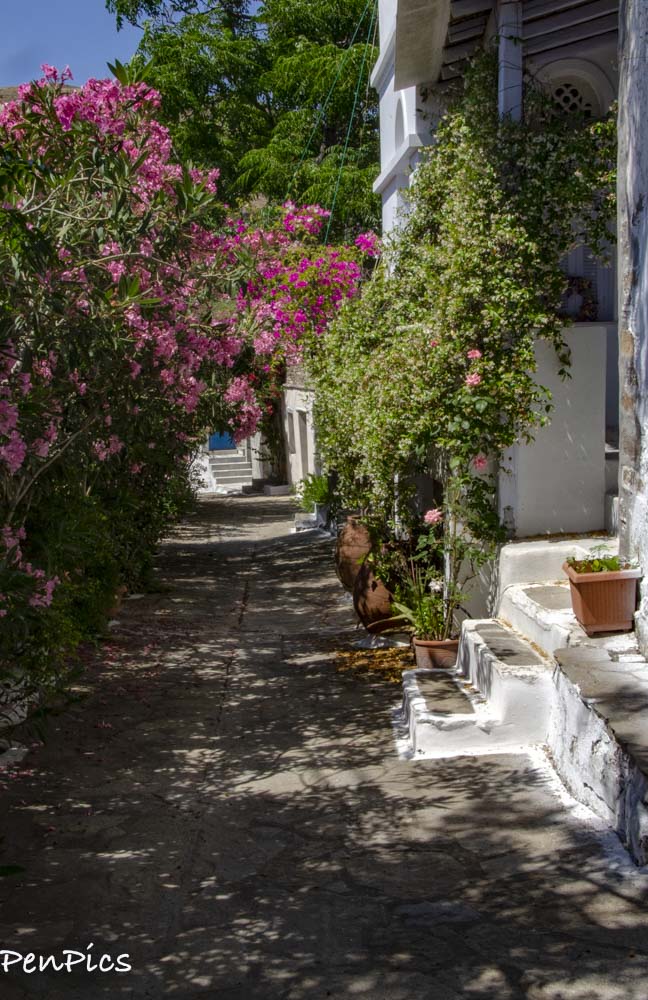
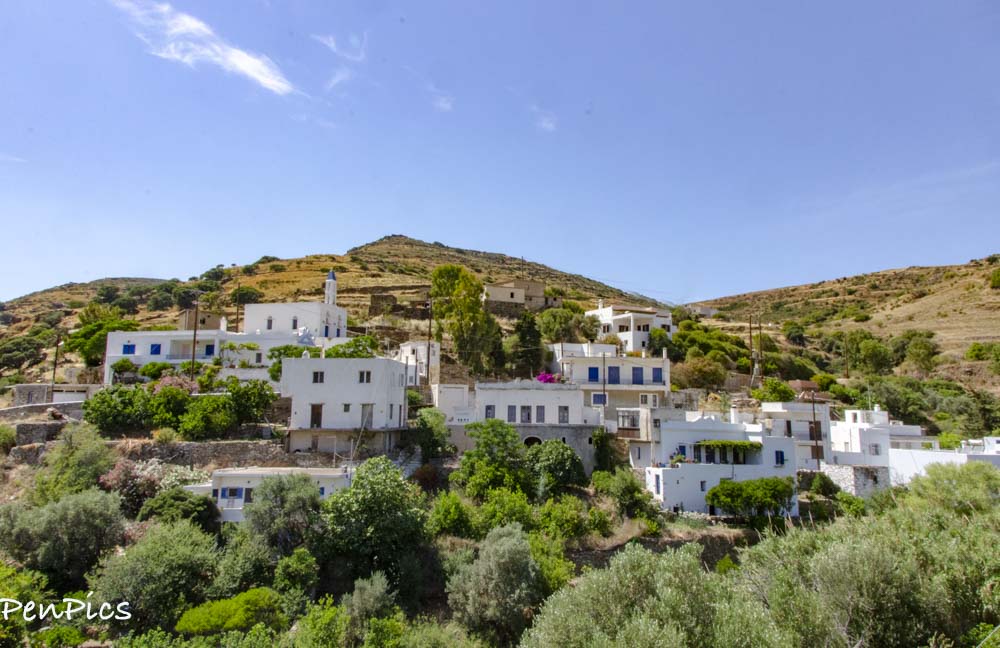
Skalados is built on a hillside, in the NW of Loutra.
Walking up the picturesque cobbled streets, you will find the apparent origin of its name, as “skala” in Greek means “stairs”. According to another version, its name is due to the many fig trees in the area as fig=syka in Greek (S(y)kalados).
The history of the village probably started in the early 13th century.
It is the imaginary boundary of the Upper and Lower parts of Tinos (informal geographical division by the locals).
It is a live and flourishing village. In summer, cultural events take place in the yard of the old primary school.
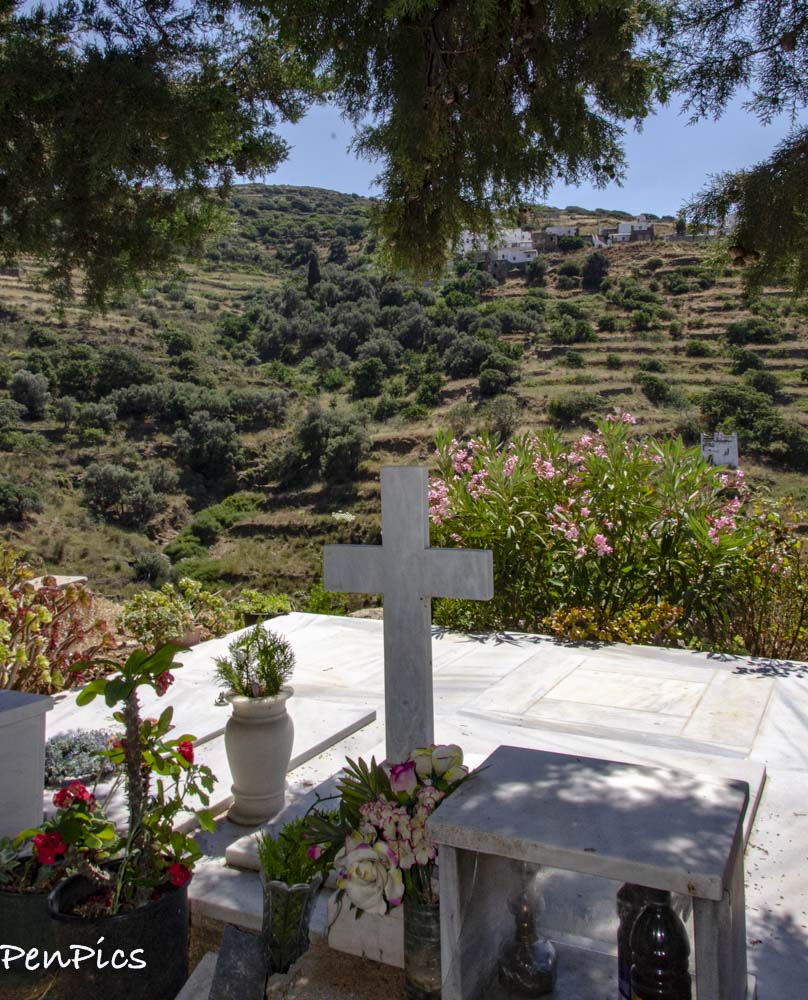
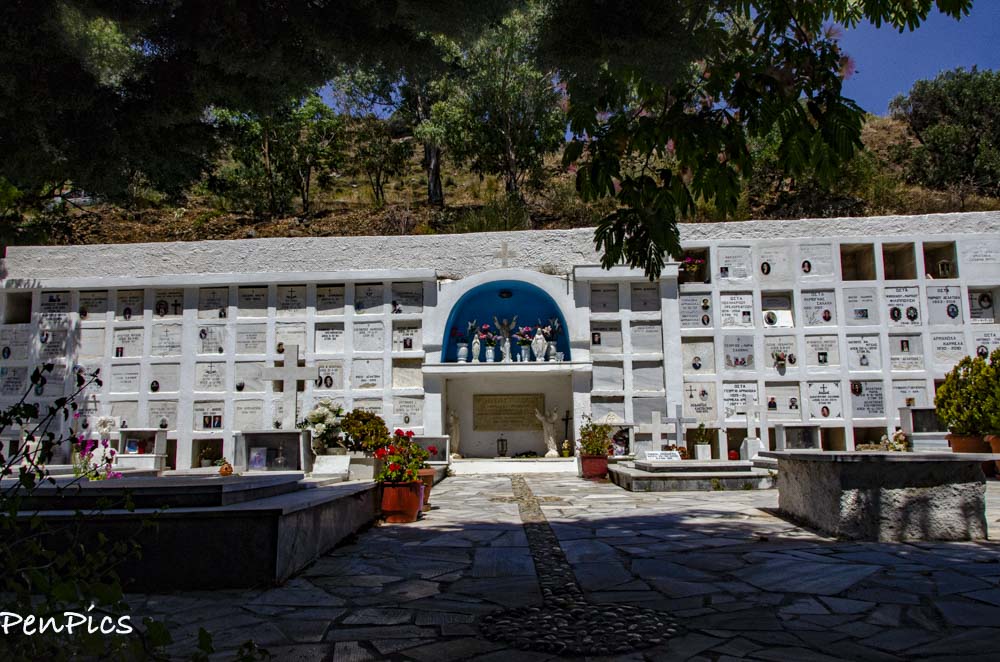
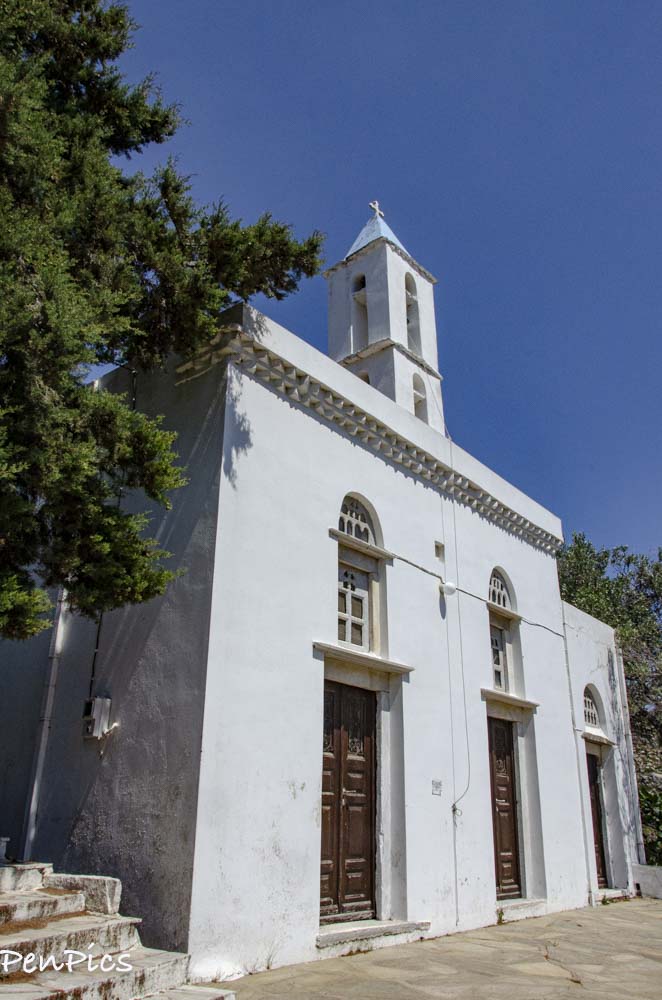
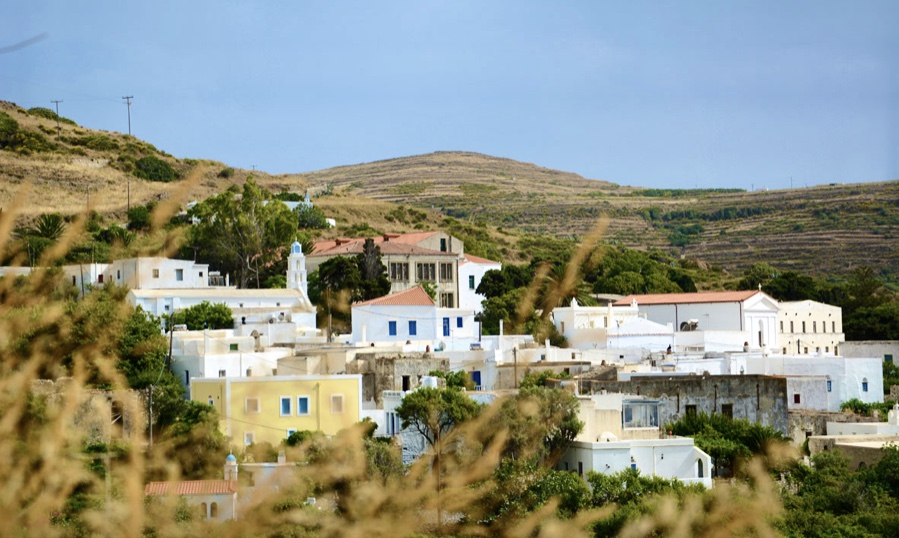
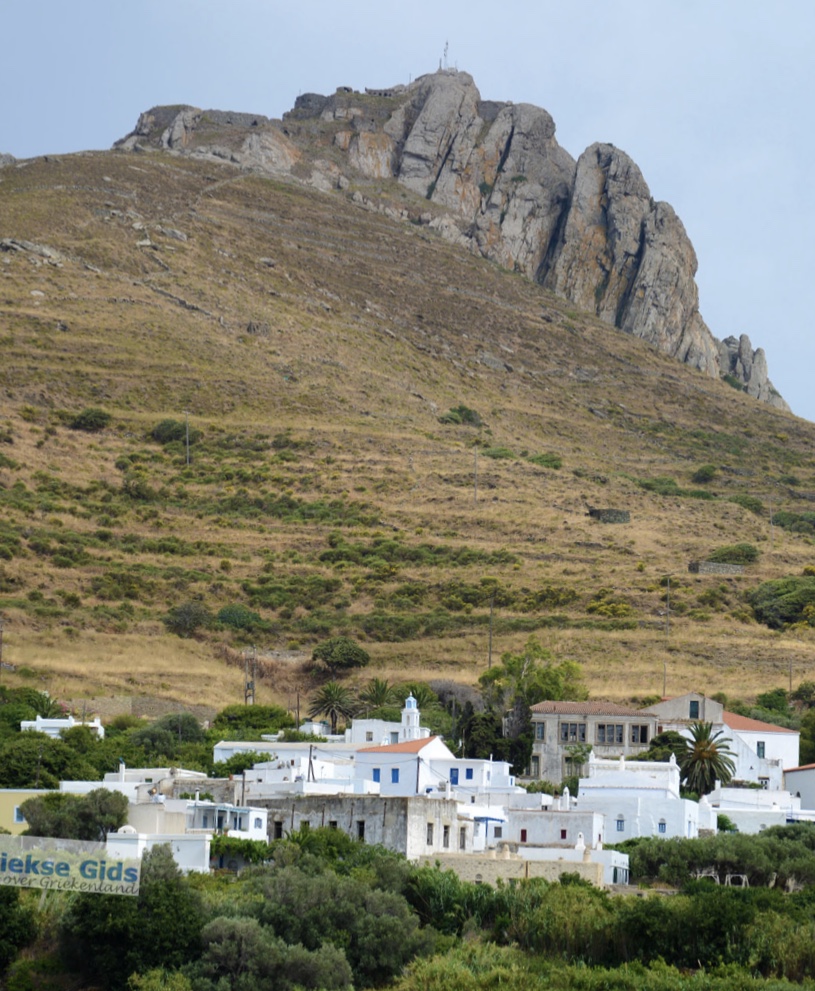
Loutra is a traditional village on the island of Tinos, set in a lush and fertile area filled with citrus plantations. It is located above sea level on the slopes of a mountain in the heart of Tinos. East of the village, the high rock of Exomvourgo looms above it.
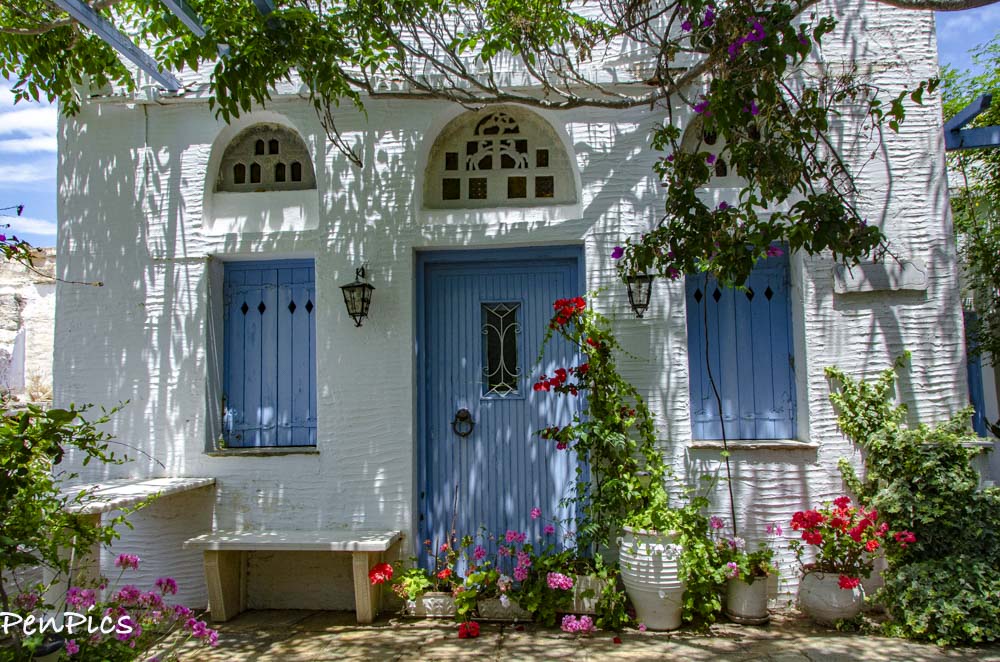
No more than 40 people live in the village nowadays. It is nearly uninhabited. Yet a walk through the narrow streets of the whitewashed village is very nice. Most of the houses have two floors and on the outside are stairs leading to the upper floor.
Loutra is of historical importance because here, in the 19th century, the Jesuits and Ursulines settled and built impressive monasteries. In the year 1862, the Ursuline monastery (nunnery) was founded. Today, it is a museum, which displays all kinds of objects that were used in everyday life. In the monastery of the Jesuits is the church of St. Joseph with intricate interior decor, beautiful murals and wooden pulpit. Beside the church is a museum where religious relics, agricultural implements and other objects from the past are exhibited. Beautiful villages near Loutra are Skalados and Koumaros. These villages are within walking distance, and a visit to these villages is more than worth the effort.
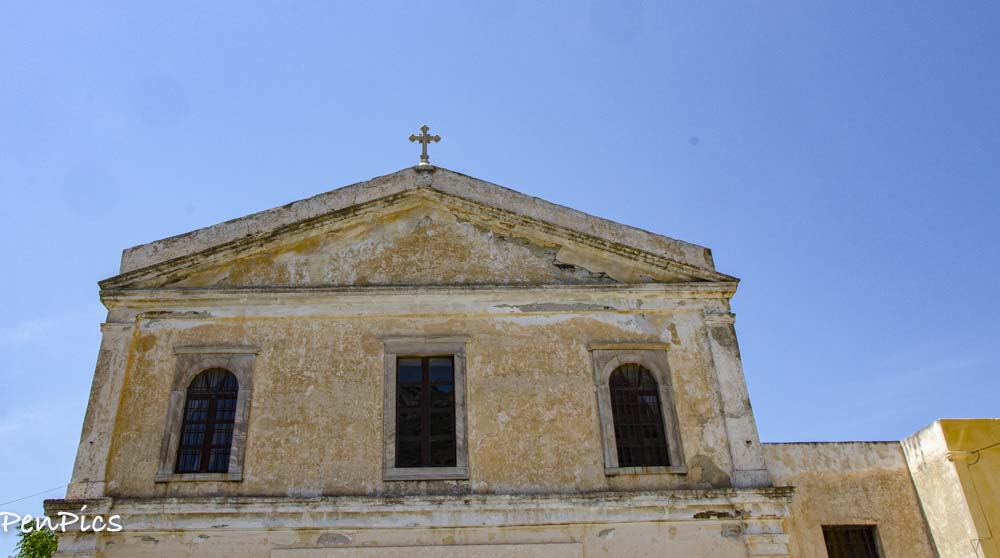
It was founded in Loutra in 1862 by a nun of the Ursuline order. It started with bright perspectives and it was meant to house an orphanage, a boarding school, a French high-school, a university, a Greek elementary school and a carpet making school. It reached its peak at the end of the 19th century, while in the beginning of the 20th century it had over 300 board students from all over Greece. During World War II, the school closed down and when it reopened it limited its operation to the elementary school, which closed down around 1980, while the carpet making school operated until 1990. Today, the building comprises the landmark of the village and it is somehow preserved even though it is abandoned as a teaching institution
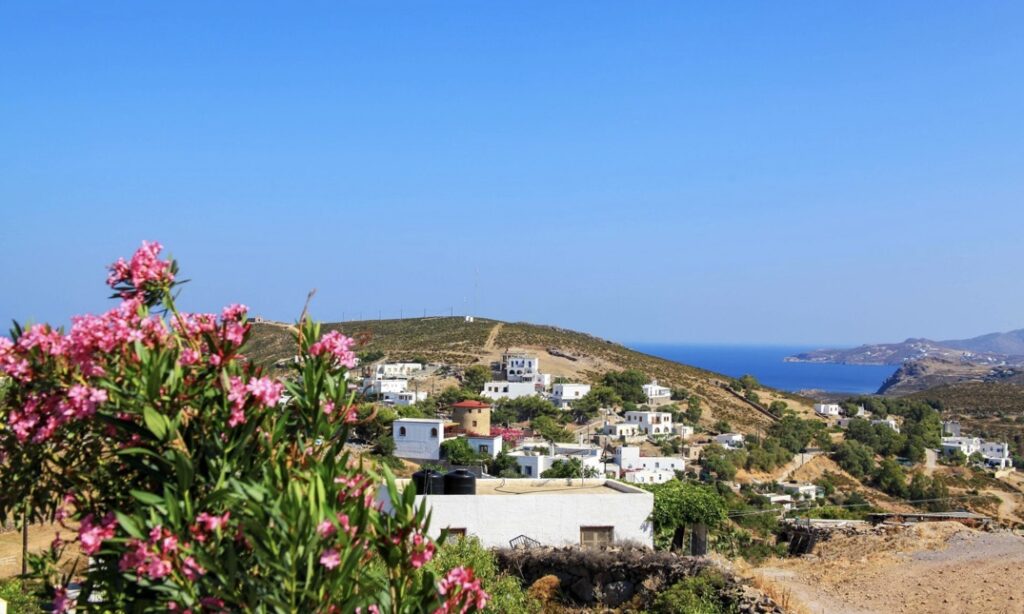
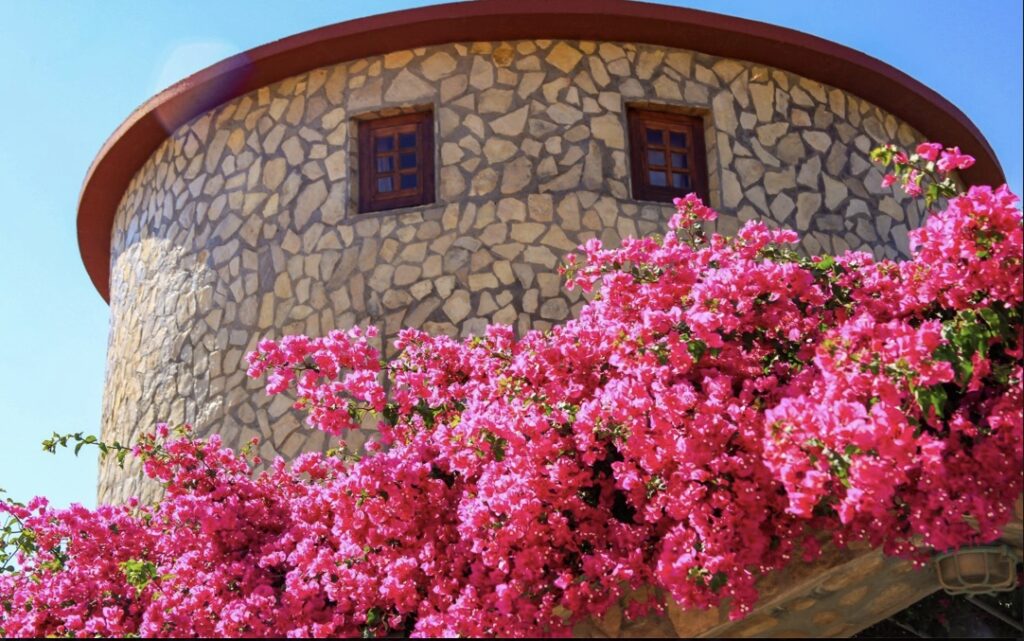
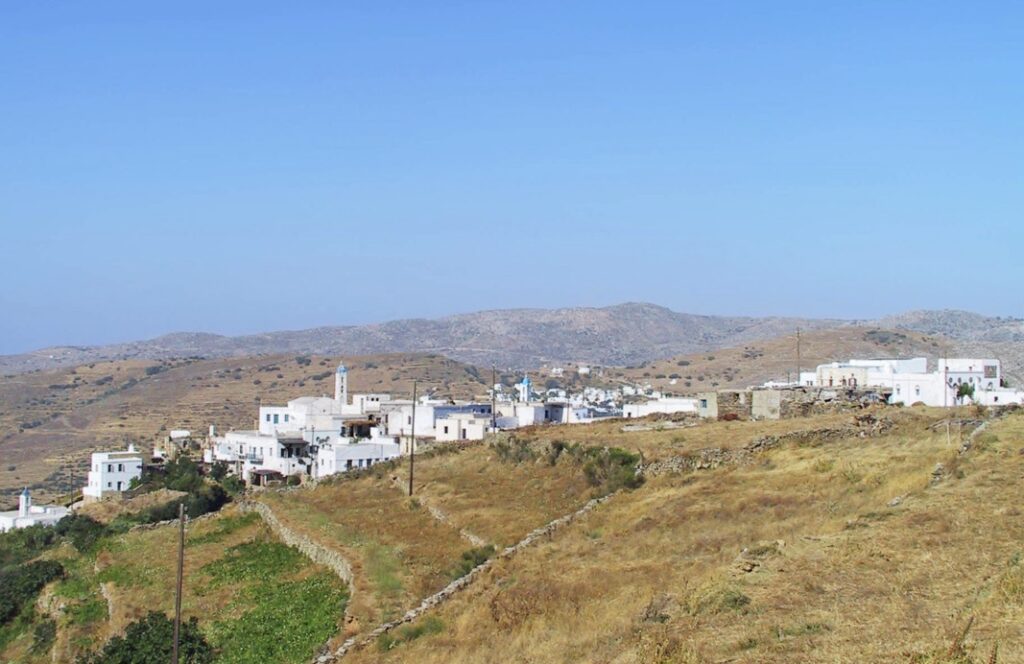
Kambos is a lovely traditional village. This village was the homeland of Saint Pelagia, who led with her visions in finding the miraculous icon of Virgin Mary, that is now considered the protector of the island and the entire country. Kambos is a flat village which lies in a green valley.
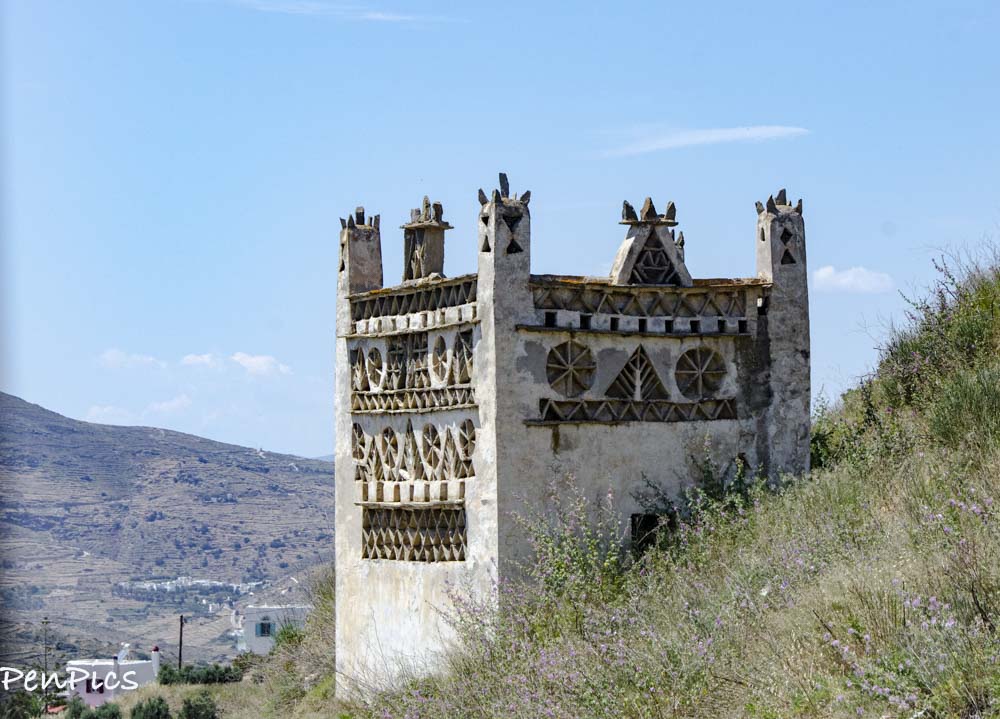
In close distance, there is the village of Tarabados with the lovely dovecotes, the characteristic of the island. Kambos offers a magnificent view to Xombourgo hill, an impressive rock where the ancient town of Tinos was built. The recent excavations in the area have brought to light important findings from the ancient sanctuaries of Demeter and Persephone.
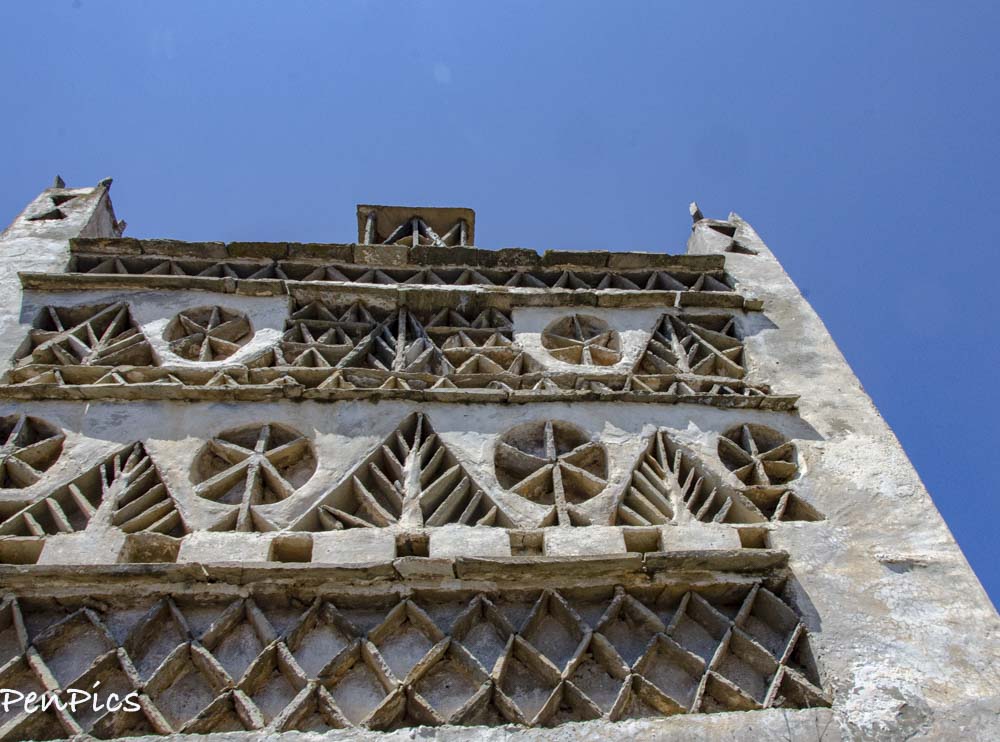
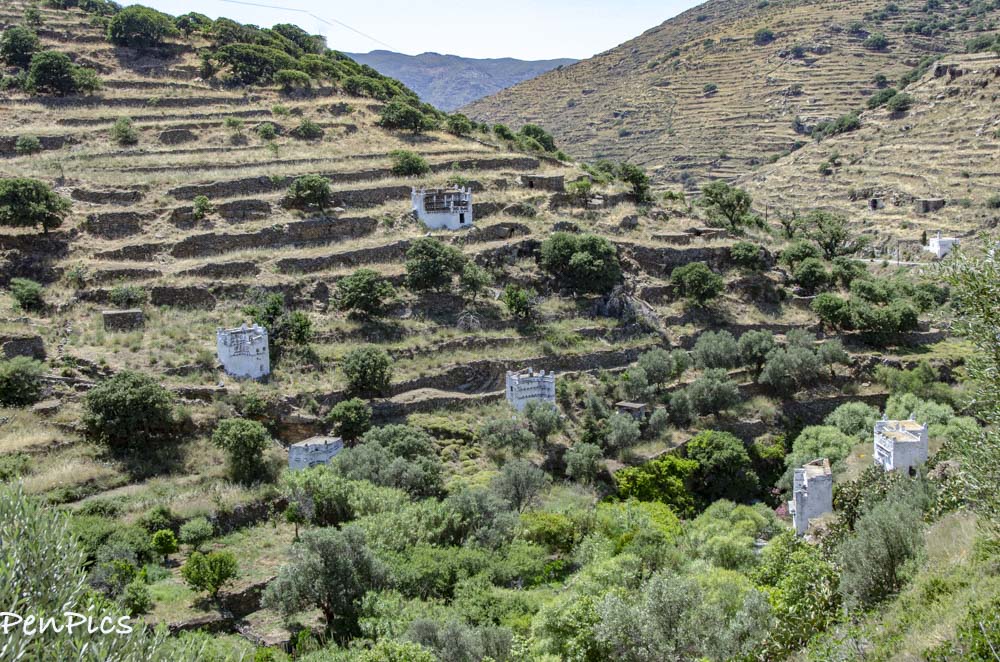
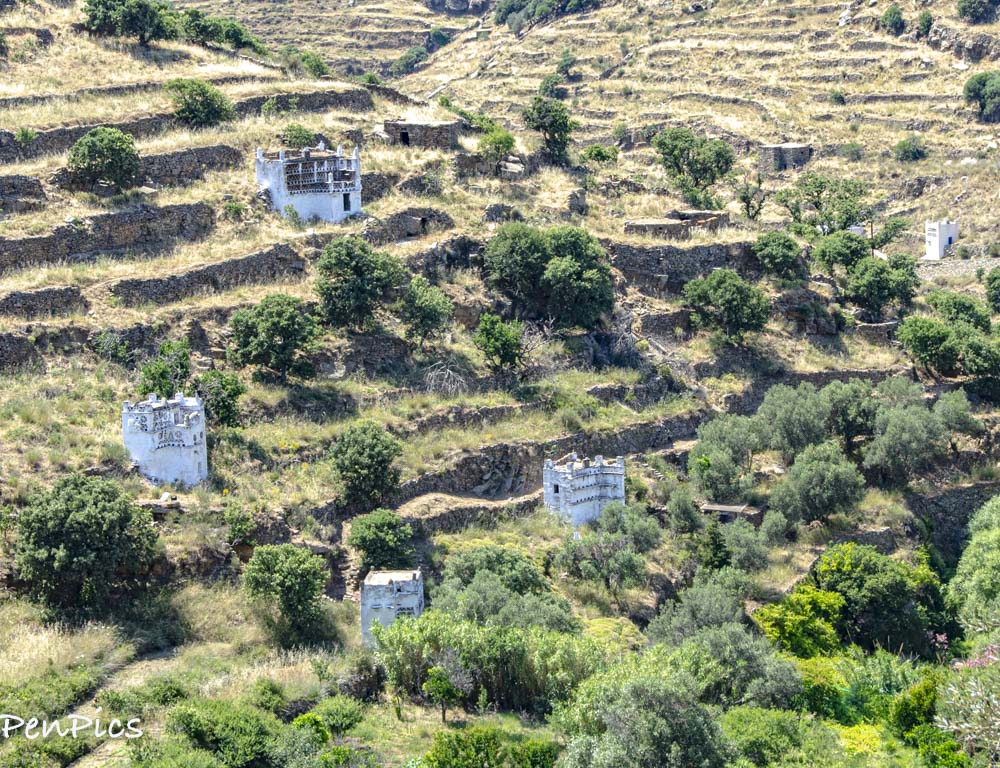
Most of these structures are found in the eastern and central parts of Tinos and the oldest ones are believed to be from the 18th and the 19th Century. It was the Venetians who first started systematic breeding of pigeons after discovering that their meat was excellent tasting and those pigeon droppings are made for some high-quality manure.
This is probably the reason that Tinos is one of the most fertile areas in Greece. In fact, even as far back as 1701, the traveler Piton de Tournefort wrote that Tinos was “the best-cultivated island” in the Aegean.
Once the Venetians came up with a plan to attract and breed pigeons, all that was left to do was to implement this idea. The Venetians already had skilled craftsmen who immediately extended their ability to build artistic houses, chapels, windmills, and elaborate dovecotes. The right to raise pigeons was reserved to Venetian nobles till they finally left the island after which the locals carried on this unique practice and continue to date.
As opposed to dovecotes in other parts of Greece, the ones in Tinos are much more than just simple wooden boxes set on poles. These dovecotes are usually built in the countryside at specific locations near cultivated areas and where water is easily available. They are mainly built on slopes at a certain angle keeping the wind and the surroundings in mind to make the takeoffs and landings easier for the doves. The dove nests are square holes in single or double rows in the wall of the dovecote. Small stone slabs that protrude under the homes create a perch for the birds.
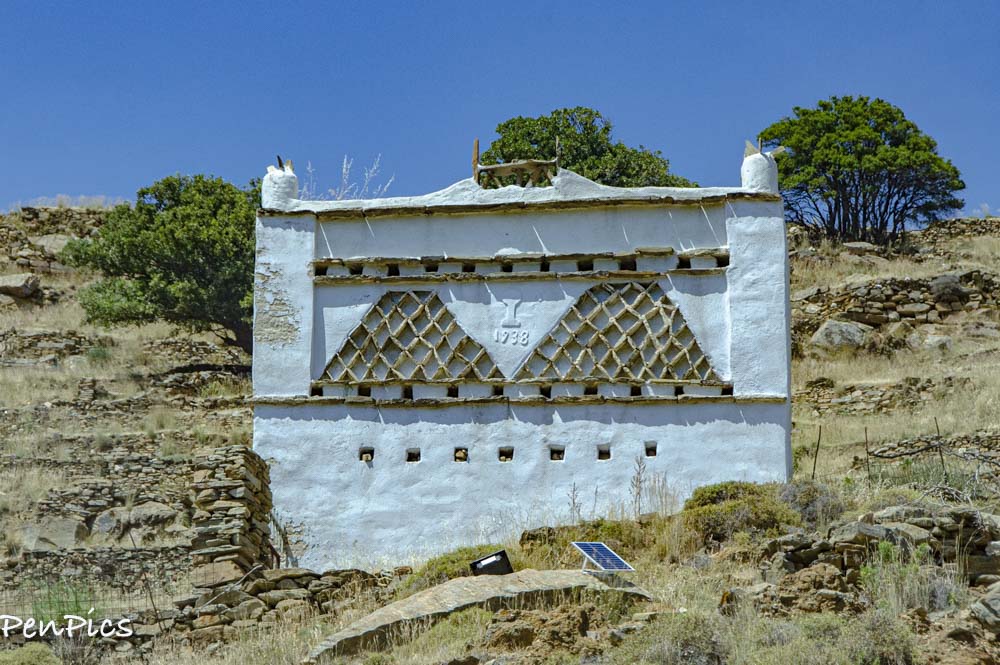
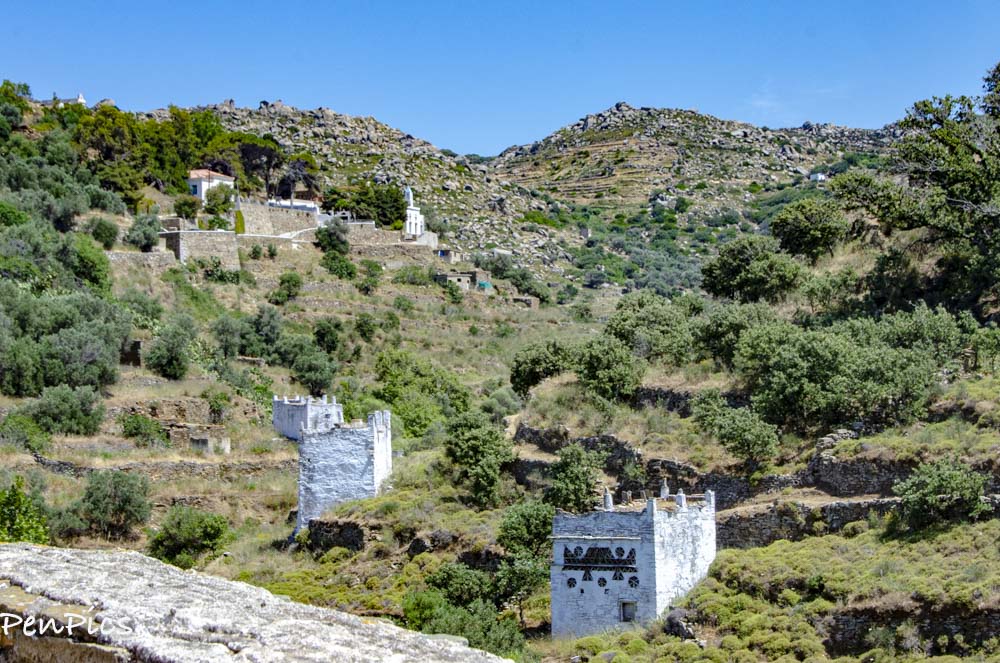
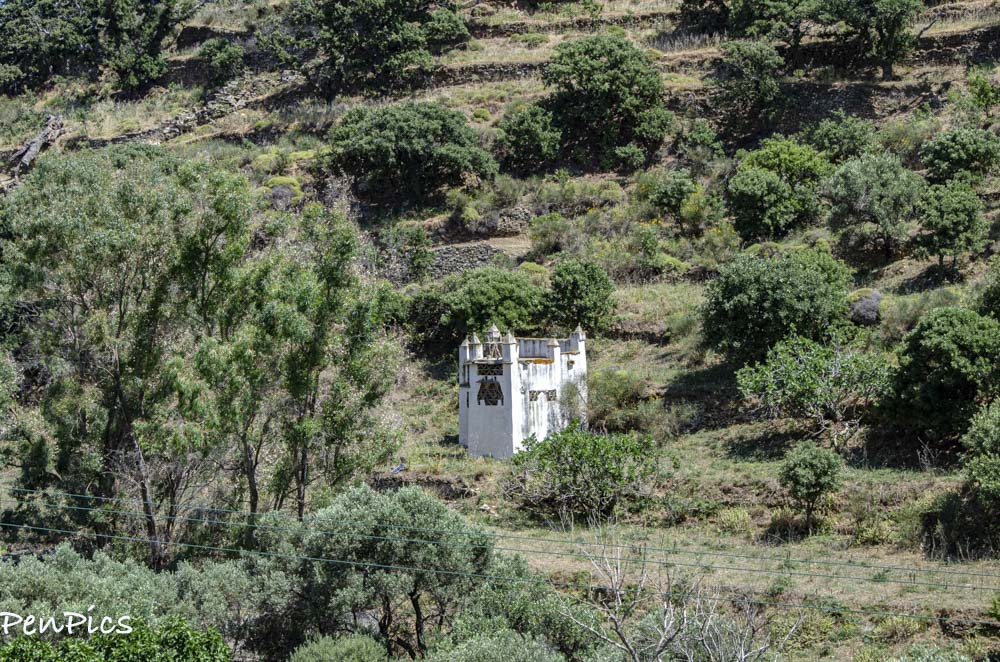
Virgin Mary of “Vrissi” comprises the largest Catholic pilgrimage on the island. The church and its building compound are built beside the road to “Exo Meri” of Tinos, near the crossroads of Saint Marina, leading to the sea. It is built in a green meadow, among olive trees, aspens, cypresses and eucalyptuses. There, a natural water source can be found, which possibly gave its name to the village “Vrissi”(Tap). Others believe that the name “Vrissi” comes from the word “Vresi”, a folk version of the word “Evresi”
The icon of Virgin Mary of “Vrissi” (representing the child-holding Madonna) was discovered at the beginning of the 17th century, but the icon itself is dated during the 15th century. A Franciscan order nun, who lived in “Tarambados”, dreamt of Virgin Mary, who indicated the place where they should dig to find her Icon. After repeated tries, the nun convinced the locals to search and, at last, the icon was found under a heap of reeds, according to what Virgin Mary hinted. It was transferred to the church of Tarambados, but although they had decided to place it there, the icon returned to the place it was found. Finally, they built a small chapel on that site, dedicated to Virgin Mary of “Vrissi.”
Today the Icon is kept in the Cathedral of Tarambados and on the eve of its celebration (8/14) it is transferred to “Vrissi”. There, a great festival takes place, with the reunion of the Catholic priests and believers from Tinos and elsewhere. The second big celebration takes place in “Vrissi” on the second Sunday of May. The once small chapel has been rebuilt as an expanded version, so as to satisfy the needs of the crowds of pilgrims. According to a folk tradition, the Icon has passed some adventurous moments. After it was transferred to Constantinople to cure a patient, he sent back to Tinos an identical copy, after his recovery, instead of the original icon. Only after his death this fraud was discovered and the real icon returned to its base. Today”, the copy is kept in “Vrissi, as well.
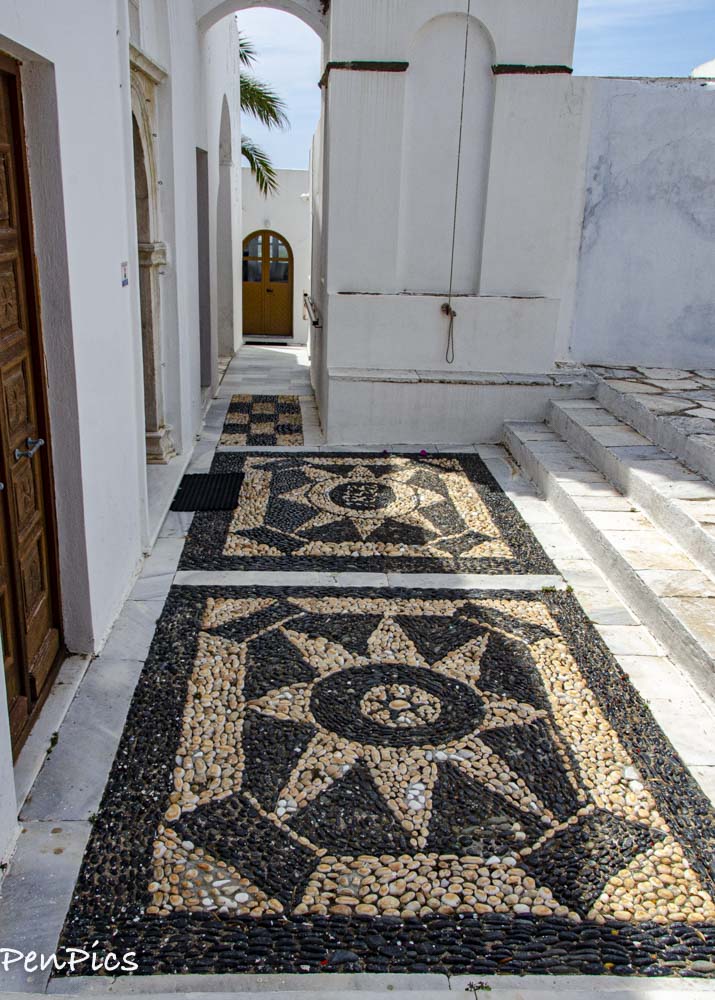
It is placed in the center of the island, in the fertile valley of the Tinian hinterland. The church of Saint Catherine in the village (Orthodox) is a remnant of the brief Russian dominance on the island, with a remarkable carved chancel screen. It was built in 1771, in honor of the empress Catherine the Great, of Russia, under the supervision of G. Dorizas and the chief of the Russian fleet, and was financed by Admiral Orlof. The second church, the Trinity (Catholic), stands out for its beautiful pebble-paved front yard. Nun Pelaghia (later declared as a Saint), who dreamt of the Virgin Mary Icon, was born here. At the edge of the village, there is the old elementary school, which was conceded by the borough of Xomburgo, so as to be transformed into the museum of the painter “Costas Tsoklis”. It is the only museum of this modern artist and comprises an attraction for the village’s visitors and Tinos, in general. Until recently the last windmill was functioning near the village of “Kambos” and it is considered the best preserved windmill on the island.
About Us

About Us
Hello and Welcome to our Travel Blog Website, We enjoy writing about our experiences and taking photos of our adventuring along the way. Our names are: Daryl and Pen, but Daryl calls me “Bunny.” We met, quite randomly, whilst both traveling in Thailand with friends. We happened to be in the same travel group, and […]