


“Greece 🇬🇷 ~First Full Day on Tinos Island”
We woke to another beautiful day, and we were more than ready to get at least a half a day in, touring the island. We have several days to see everything we want to see on Tinos, and we have learned to pace ourselves, to give us time to process photos and do our writing; especially when traveling in foreign lands where the English language is not spoken or written very often. This makes identifying interesting sites, much more challenging. To add to the challenge, we also notice one site may be called several different names, not to mention, just as many different spellings. When this happens, I just try to stay consistent, the best I can.
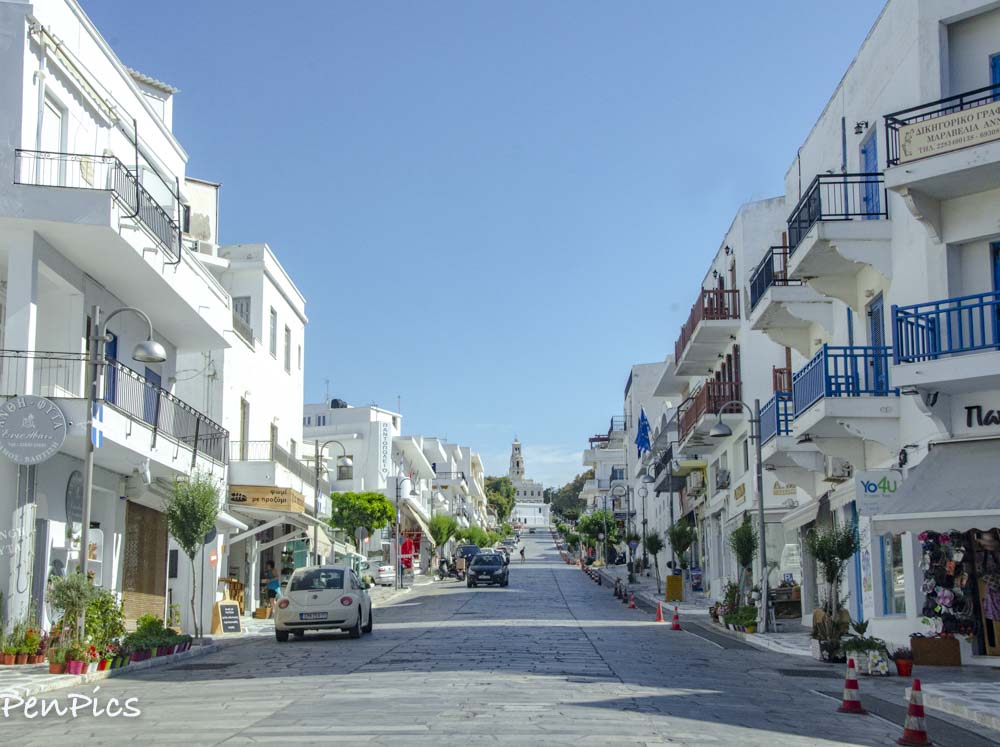
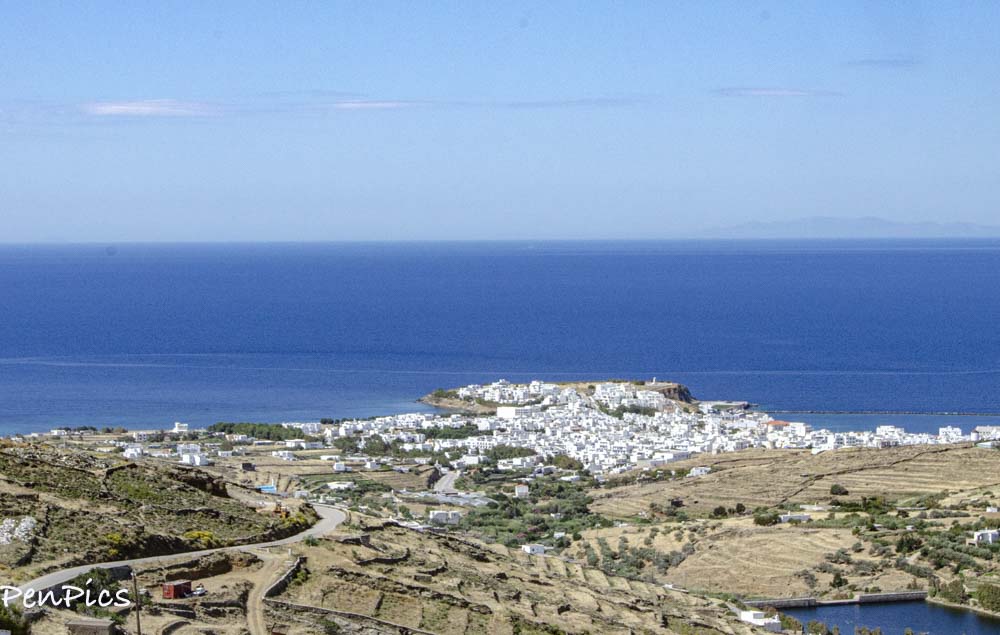
Today, on this first full day, we had to pick up our laundry by noon, or it would be three days before the laundry service would be open again. Saturday and Sunday’s in Greece, businesses are typically closed, or do half days on Saturdays. So, we toured around Chora; the port city, and picked one old village to get to, up on the hill. “As the crow flies,” the villages might be 6-7 miles away, but the roads are, narrow, twisty and curvey. We take our time, often stopping for photos.
Today We found beautiful churches, monasteries, and an archeological site.
We had a great time, and look forward to several more days of seeing and learning what this “Island of Miracles” is all about.
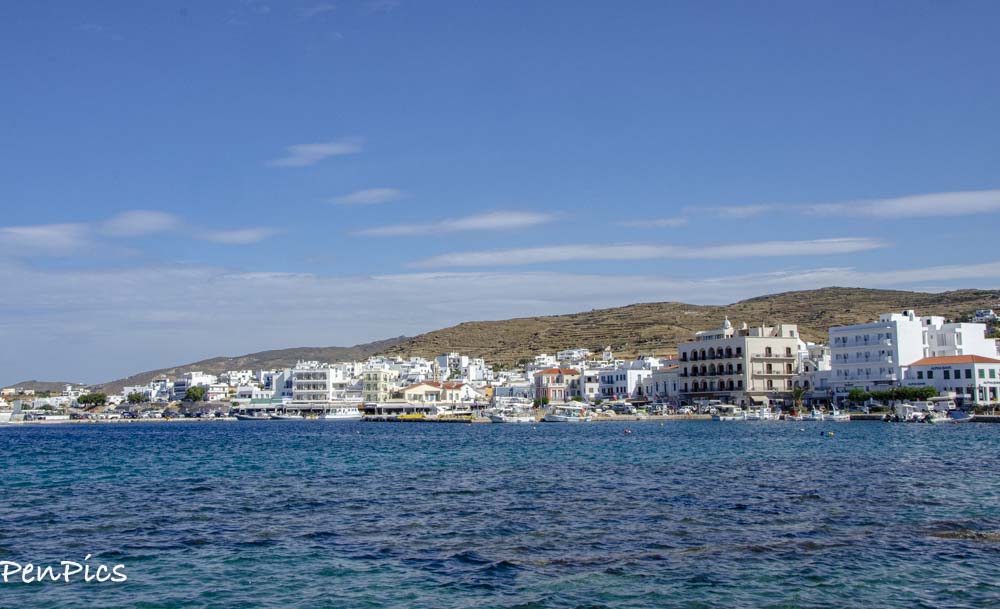
The ancient name of Tinos was Offiussa based in the fact that the island was full of snakes. One Greek myth describes how Poseidon sent a flock of storks to Tinos to free the island of the snakes. As a sign of gratitude the islanders ancient ancestors worshiped Poseidon and his wife- nymph Amphitrite and honored them as the patron saints of Tinos.
The first historically proven inhabitants of Tinos were the Mycenean. After the Mycenean came the Phrygians. Tinos was also populated by the Ionians. In the year 479 BC, a significant number of soldiers from Tinos fought against the Persians an the famous battle of Plataea. Also in 480 BC, fighters from Tinos participated in the sea battle of Salamina and in 490 BC, in the battle of Marathon.
After the death of Alexander the Great, Tinos fell under the control of Macedonians. During that period, the Temple of Poseidon at Kionia was an important religious center and many pilgrims spent a ritual cleansing time at the Temple. In the year 146 BC, Tinos and all Greece became part of Roman Empire and after the christianization of the island the pagan shrines gradually fell into oblivion.
In 1207 AD, Tinos and the other Cycladic islands were conquered by the Venetians. The Venetians built a characteristic castle on Mount Xomburgo. Up until 1715 AD, Tinos was subject to Venetian control and remained the only Christian enclave in what had become a Turkish occupied region. During the following more than one hundred year long Ottoman occupation, Tinos enjoyed a large number of special rights and developed into an important Aegean economic center.
The Modern Age began on Tinos on March of 1821, in the village of Pirgos; when, for the first time in the Cyclades, insurrection against Ottoman rule was proclaimed. It has been estimated that 5.000 islanders left Tinos and took part in the Greek War of Independence. Tinos also played an influential role in the coordination of the resistance.
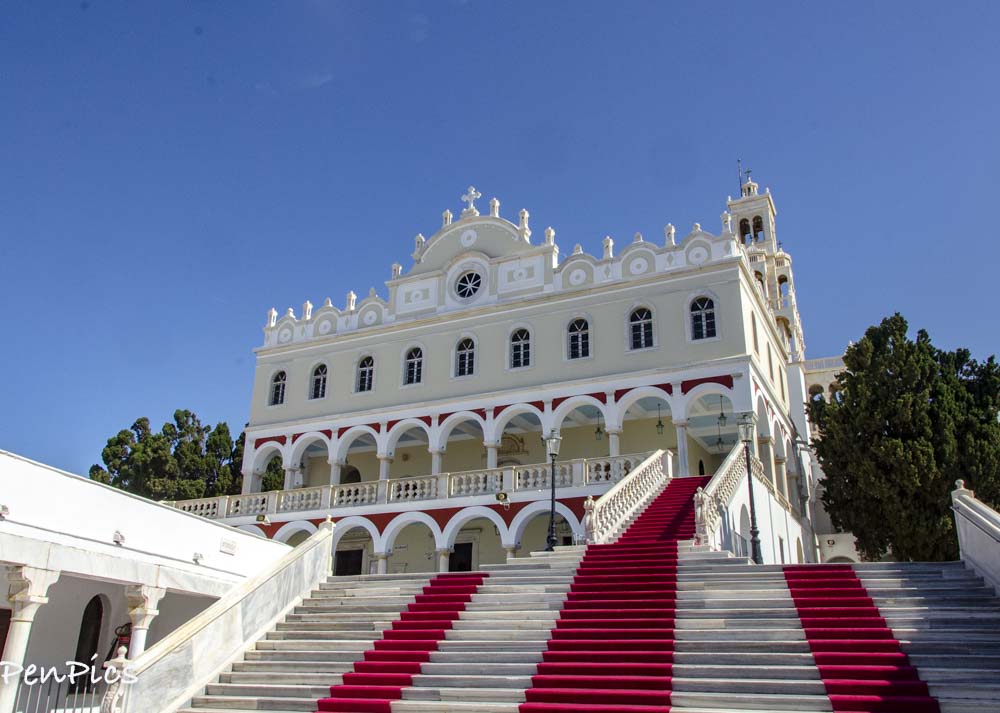
The Church of Panagia Megalochari in Tinos, Cyclades: The church of Panagia (Virgin Mary) Megalochari is not only the patron saint of Tinos, but it is also considered as the saint protector of Greece. The name (Megalochari) means “with all graces” and is one of the names given to describe Virgin Mary. The church is actually dedicated to the Annunciation of the Virgin Mary and is also the most popular pilgrimage in Greece.
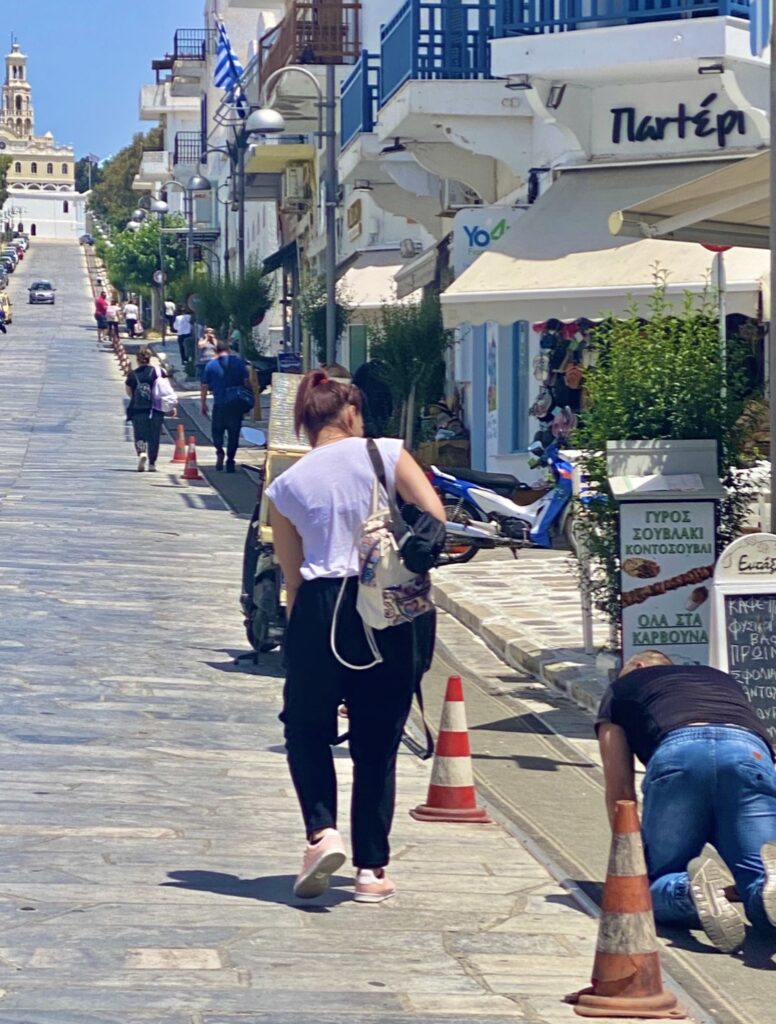
The church of Panagia Megalochari is located on a hill above Chora, the capital of Tinos. Many pilgrims cover this distance on their knees, from the port to the church, those who keep a solemn promise to the Virgin Mary. As the path is very rough and their knees can get injured, a long red carpet has been laid from the entrance of the church to the port, only for this reason.
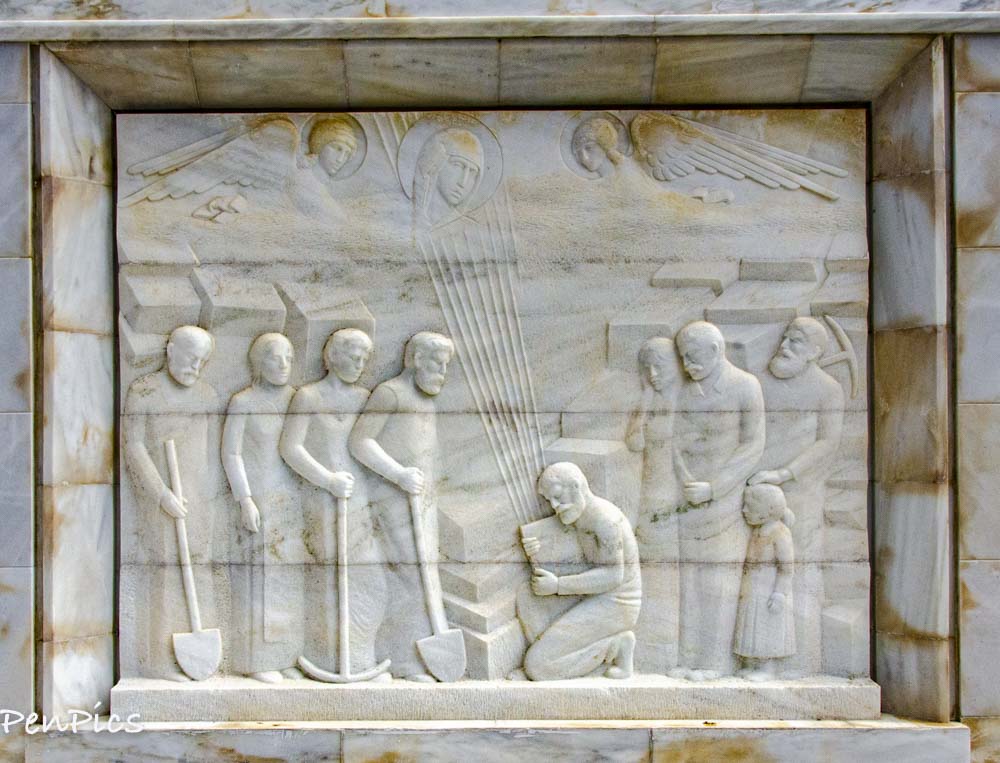
According to the tradition, the church was built following the dream of a local nun from the Monastery of Kechrovouni in Tinos who later became a saint, Pelagia. The nun used to have frequent dreams of the Virgin Mary telling her to find her home and showing a particular place. When the nun dug in that place, on January 30th, 1823, she found an icon depicting Virgin Mary, praying.
This icon was considered miraculous and today it is put inside the church. Pilgrims leave their offerings on that icon which actually represent their wishes, usually for good health. This icon is adorned with many offerings and one can hardly see it. However, there is a copy of that icon in the chapel on the ground floor.
Historians date the icon from the 7th century AD, therefore, it belongs to the Byzantine period. When the icon was found in 1823, the Greek Revolution against the Turks had just started and this was considered a good sign. In fact, many Greek leaders came to Tinos to pray to the icon, such as Karaiskakis, Kolokotronis, and Markygiannis.
The Church of Panagia Megalochari in Tinos is actually a monastery complex. It was originally built on the site of an early-Byzantine church dedicated to Saint John, which was actually built on the site of an ancient temple of Dionysus, as excavations have shown. On the ground floor, there is the Chapel of the Apocalypse. This chapel started to be built in 1823 when the holy icon was found.
On top of the small chapel, the whole monastery was built. Right next to the copy of the holy icon, there is a fountain from where you can take holy water. There are also two rooms where baptisms take place.
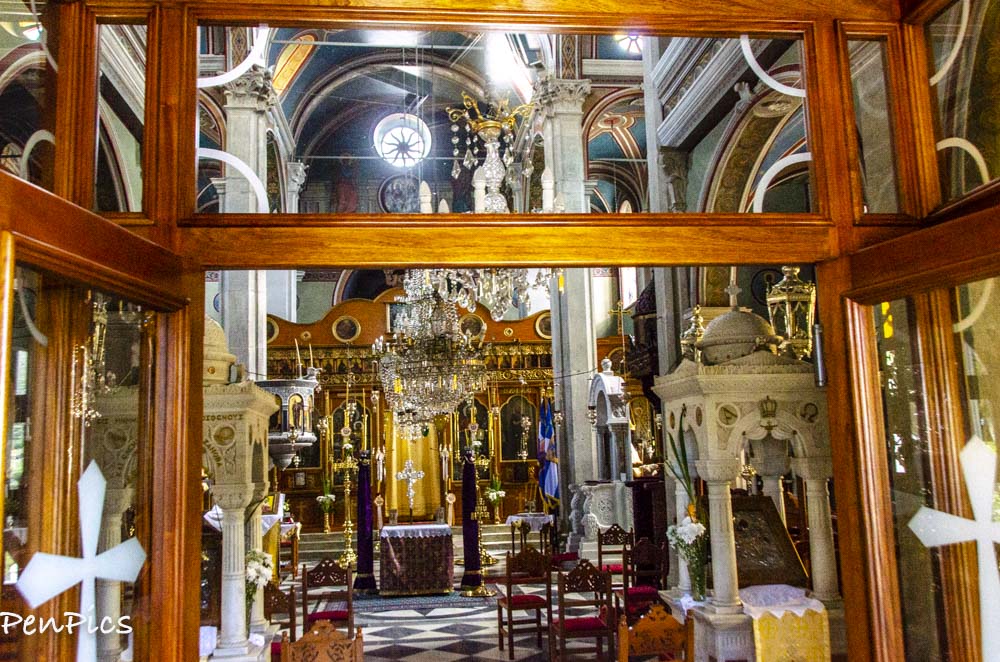
Once you climb up a small stair, you will see the main church, an impressive building all made of marble. This white marble is from Tinos and the church was constructed by local artisans. A beautiful bell tower stands by the church and a lot of stairs lead to the entrance. The atmosphere inside is solemn and peaceful. Services are performed every day. A date on the wooden iconostasis informs visitors that the church opened in 1825.
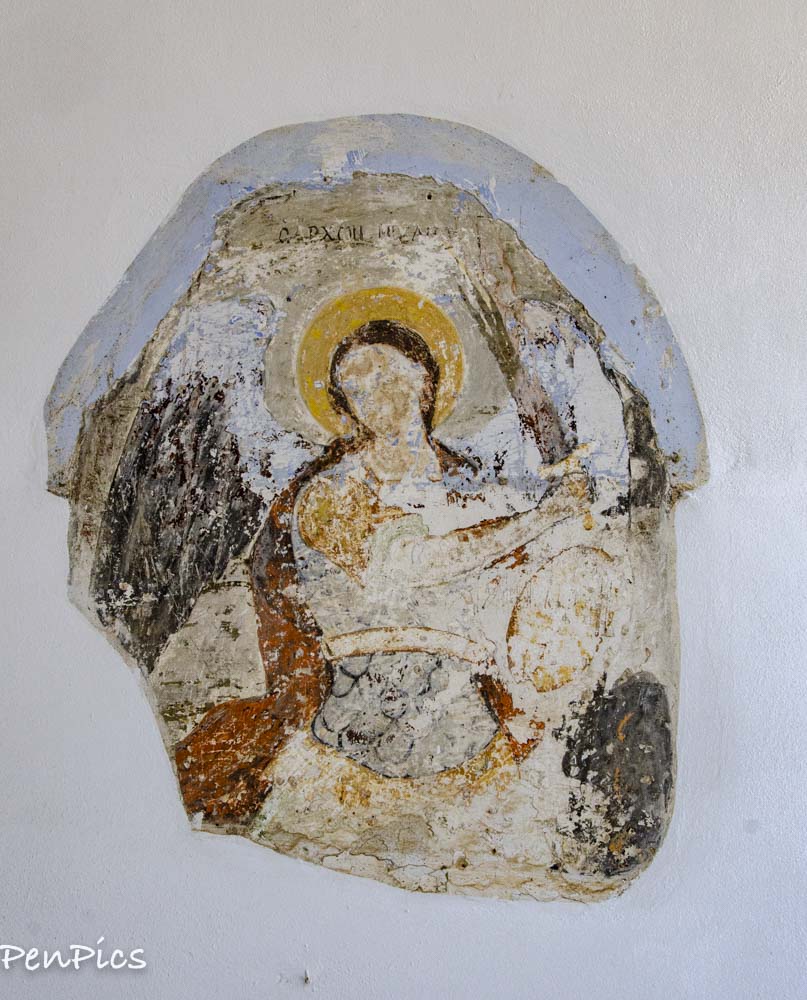
The Church is also known as The Virgin Mary Church in Tinos
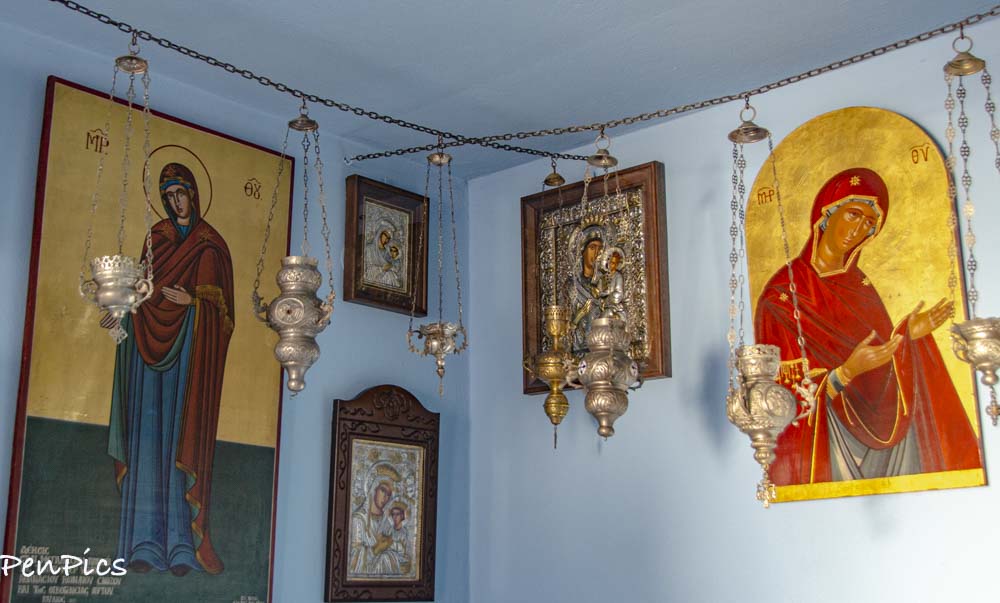
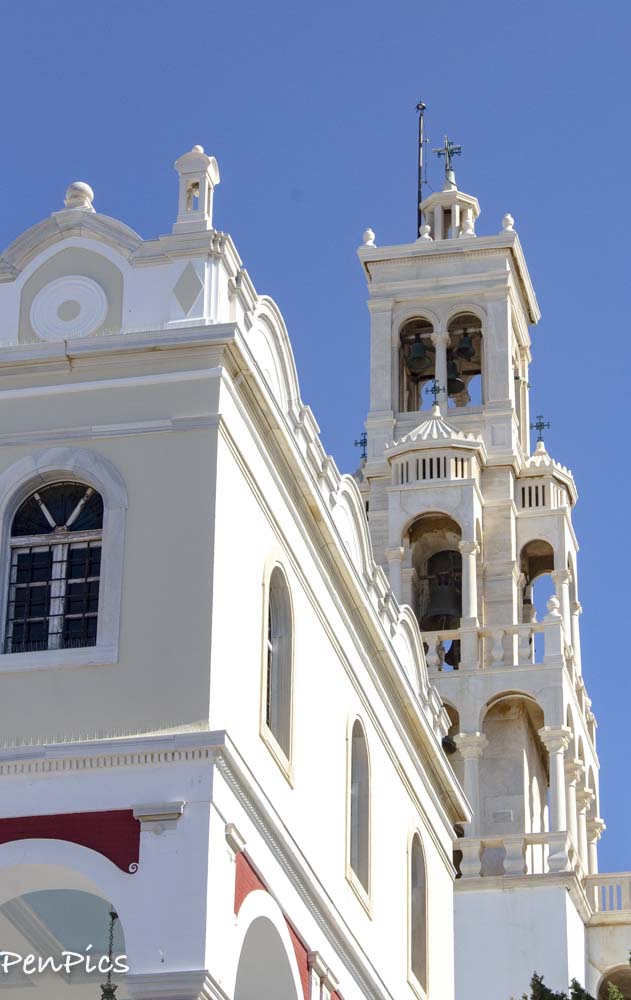
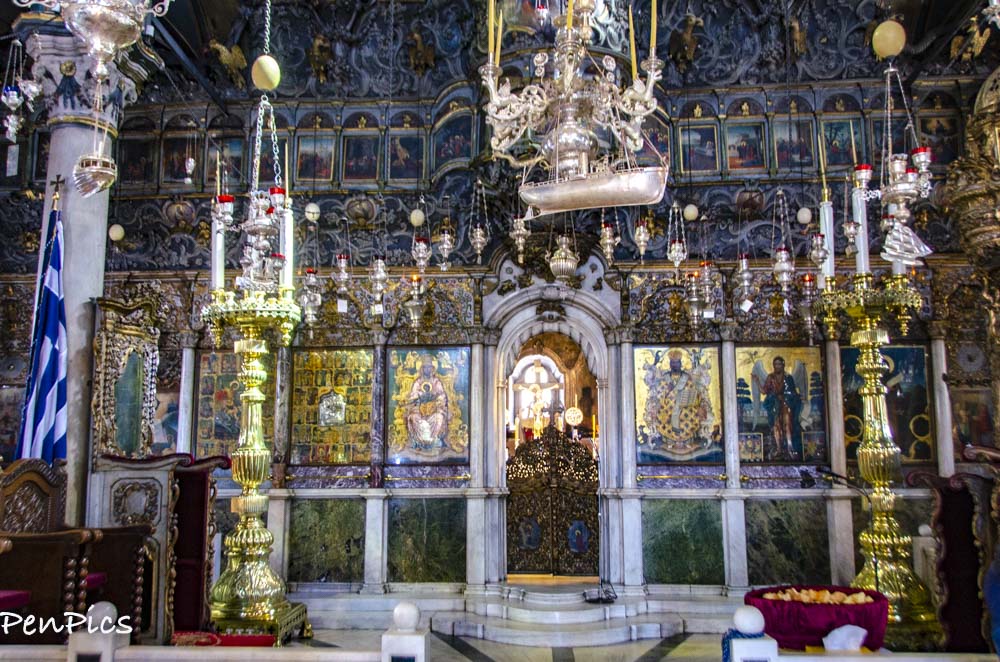
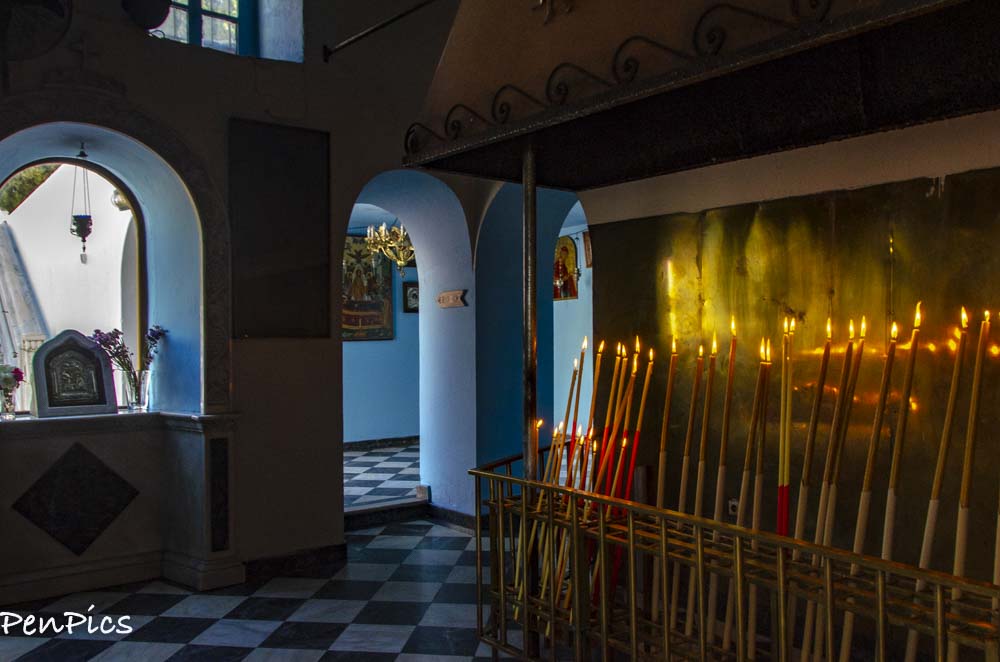
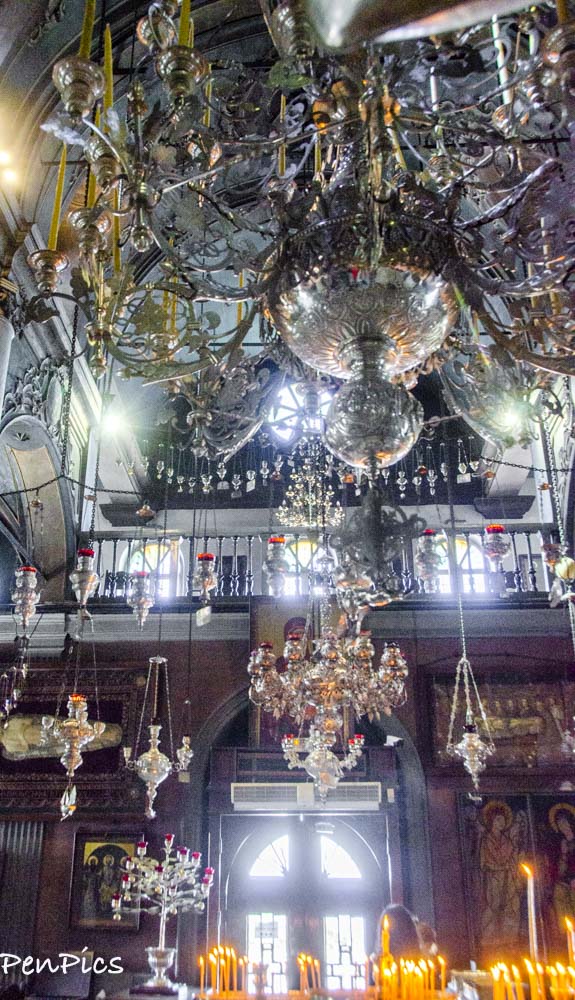
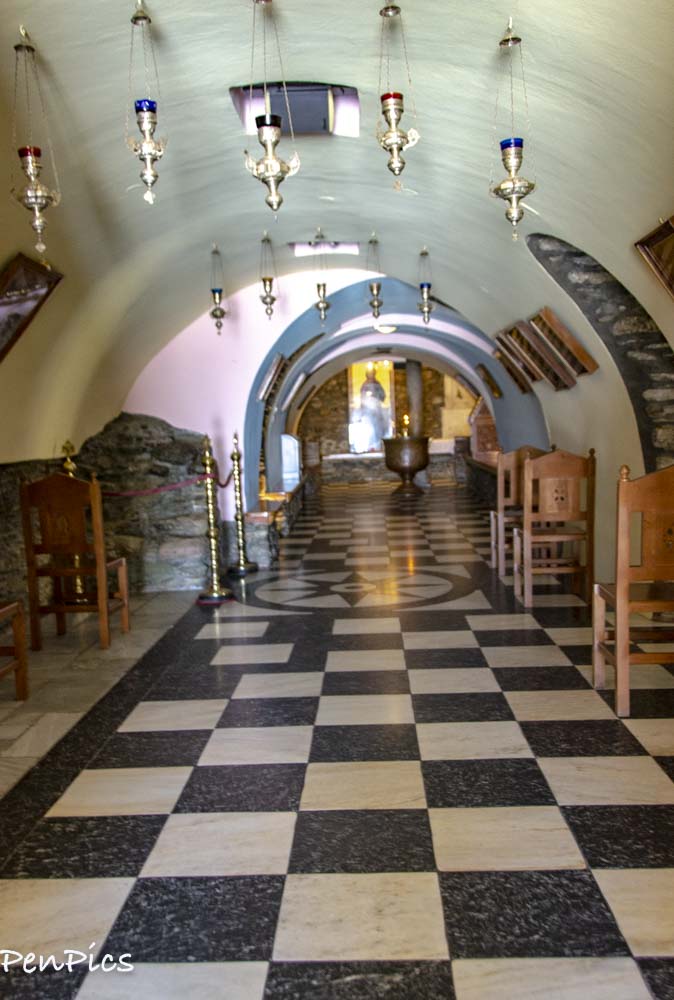

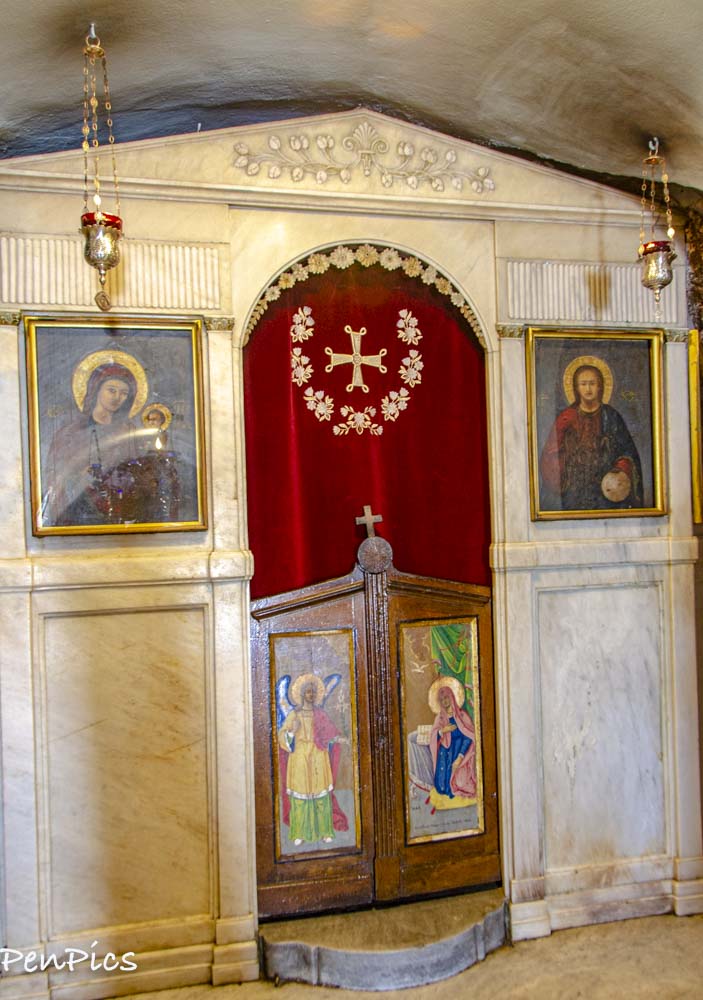
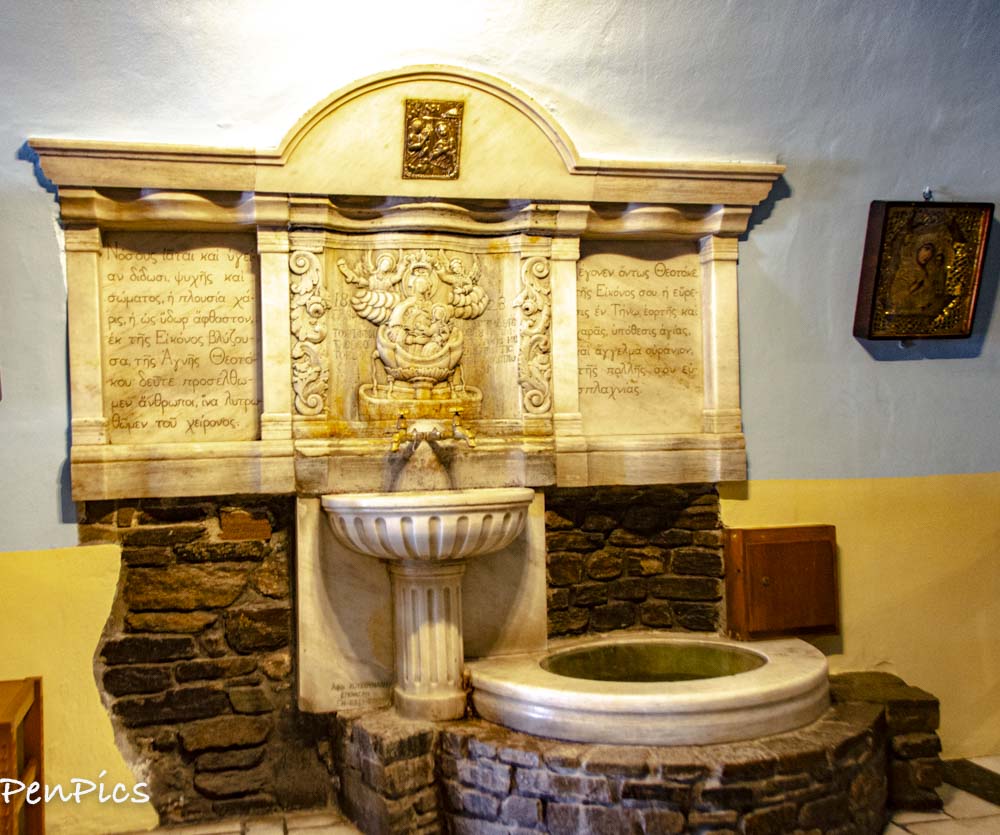
In Greece, springs in caves have long played a central role in religious beliefs and practices. In ancient times springs, represented water nymphs.
Today springs are dedicated to the Virgin Mary (Panagia) under her attribute of the Life-giving Spring (Zōodochos Pēgē). Both ancient and Christian believers have expressed their beliefs in rituals connected to purity and water by fetching holy water from the caves dedicated to these female divinities.
The water is thought to be particularly healing and purifying during the festivals dedicated to the goddesses and saints. These beliefs are reflected in the modern festival of the Life-giving Spring, which is celebrated on the first Friday after Easter Sunday, the Resurrection of Christ. Duringthis festival, Athenians visit the Virgin Mary’s chapel inside a circular Spring House, hewn in the rock on the southern slope of the Acropolis to obtain life-giving water.
The Sacred Spring is situated inside a caveover which is constructed a church.
Many believers underscore the importance of being baptised in water from one of the many sacred springs, which are dedicated to the Virgin. Cults dedicated to the sacred and healing spring-water, have also been important for political purposes both in ancient and modern Greece.
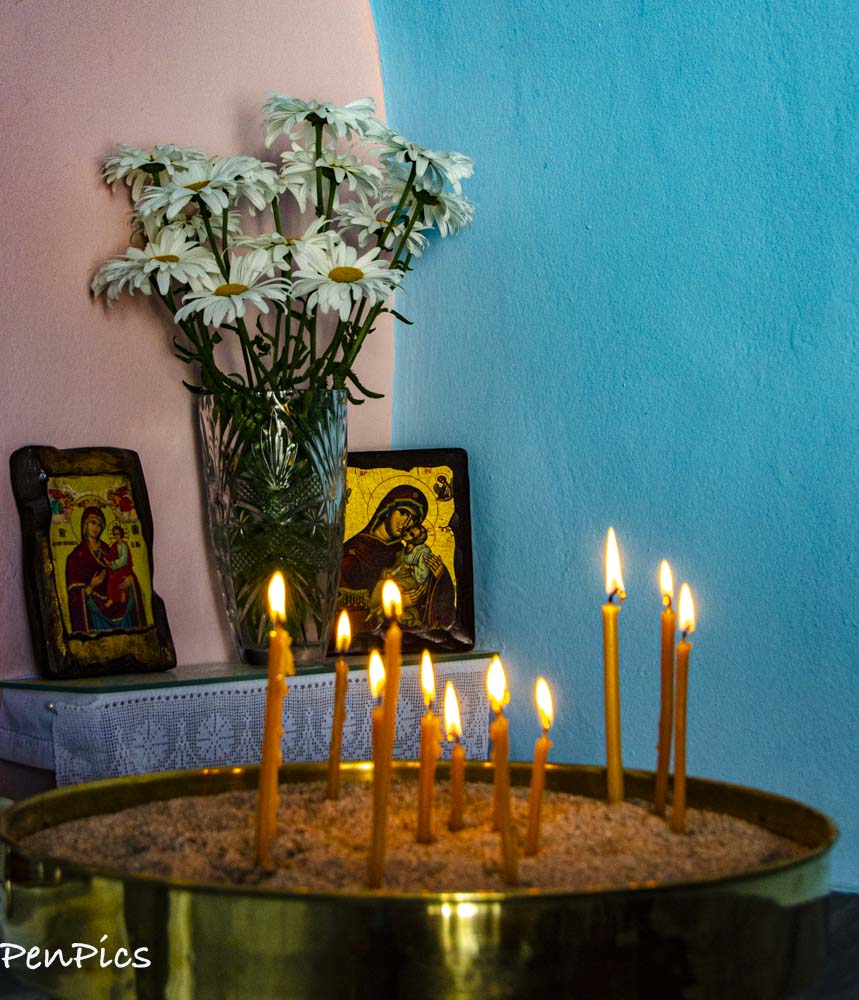
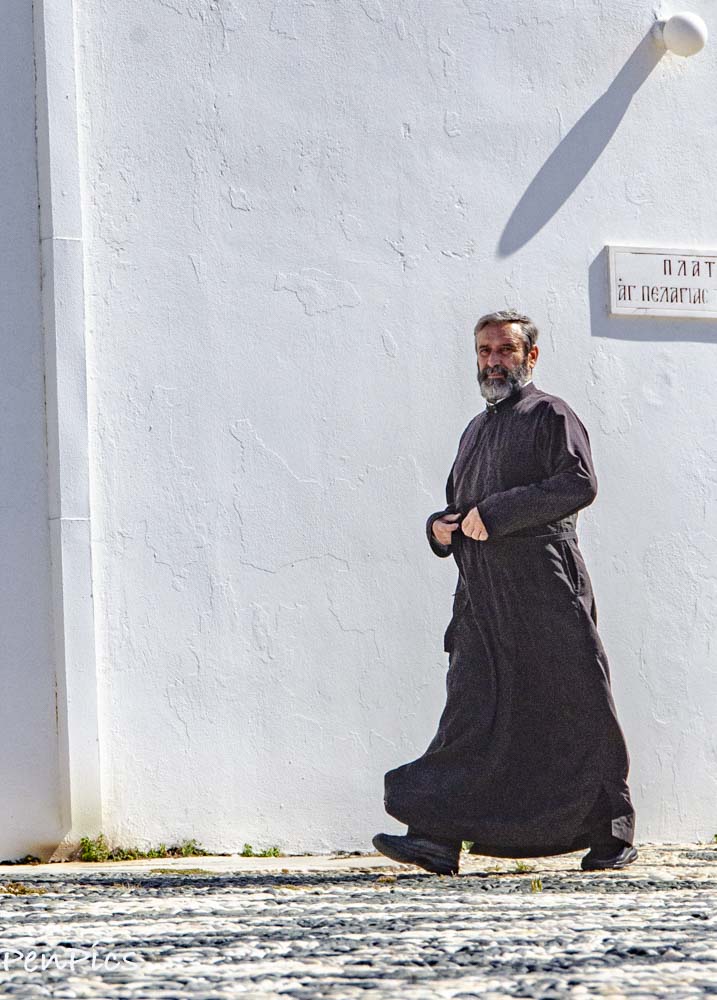
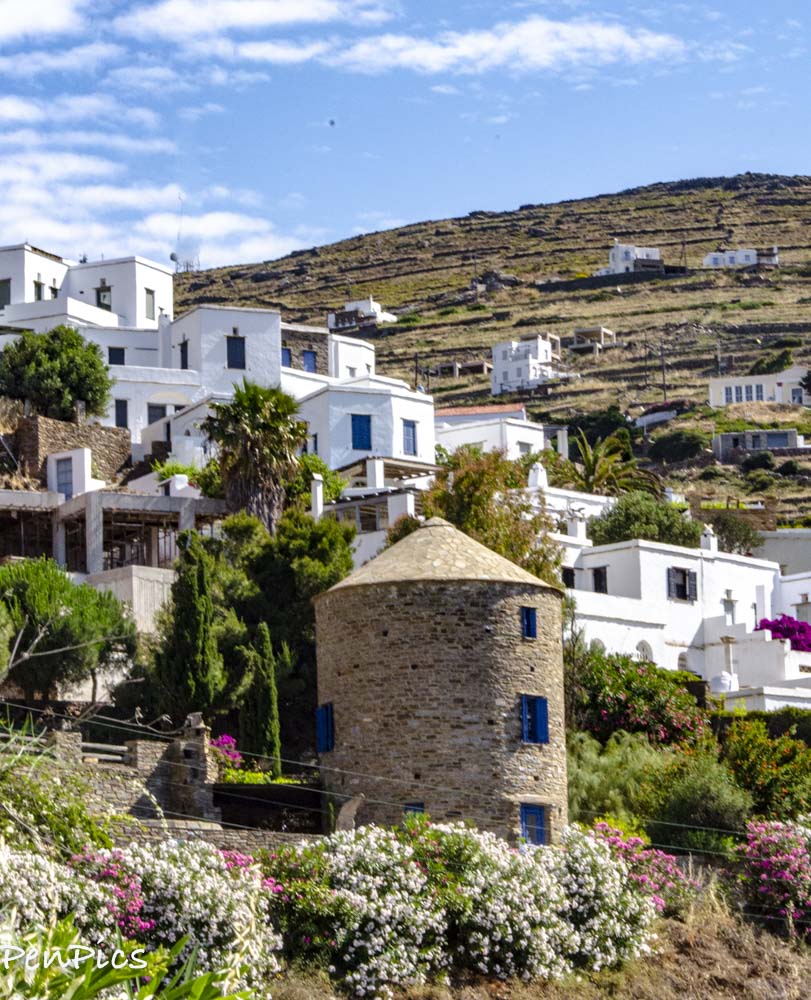

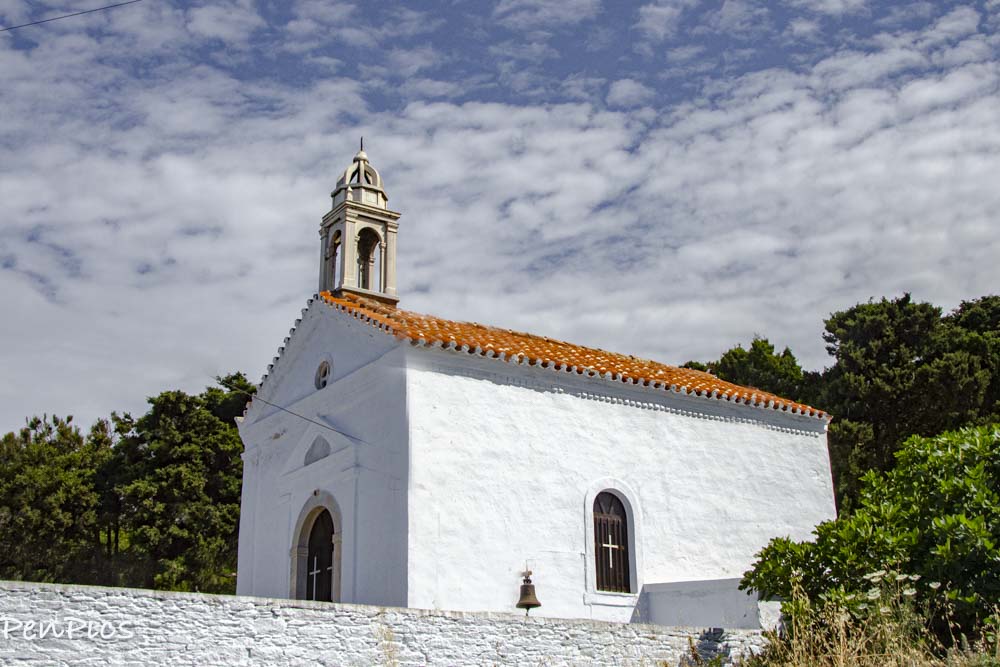
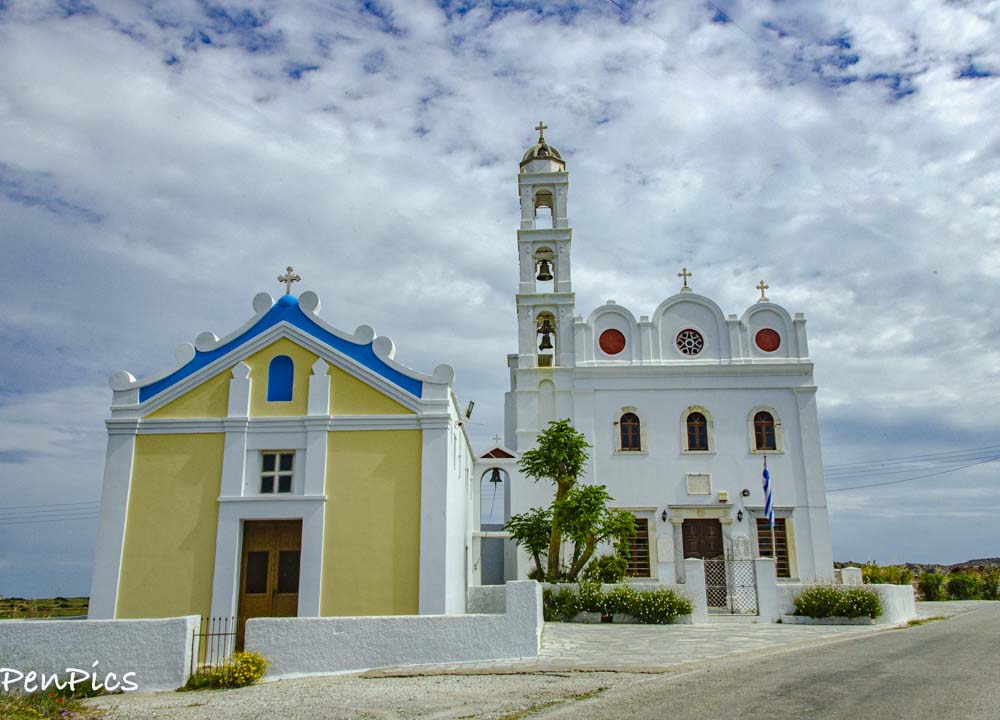

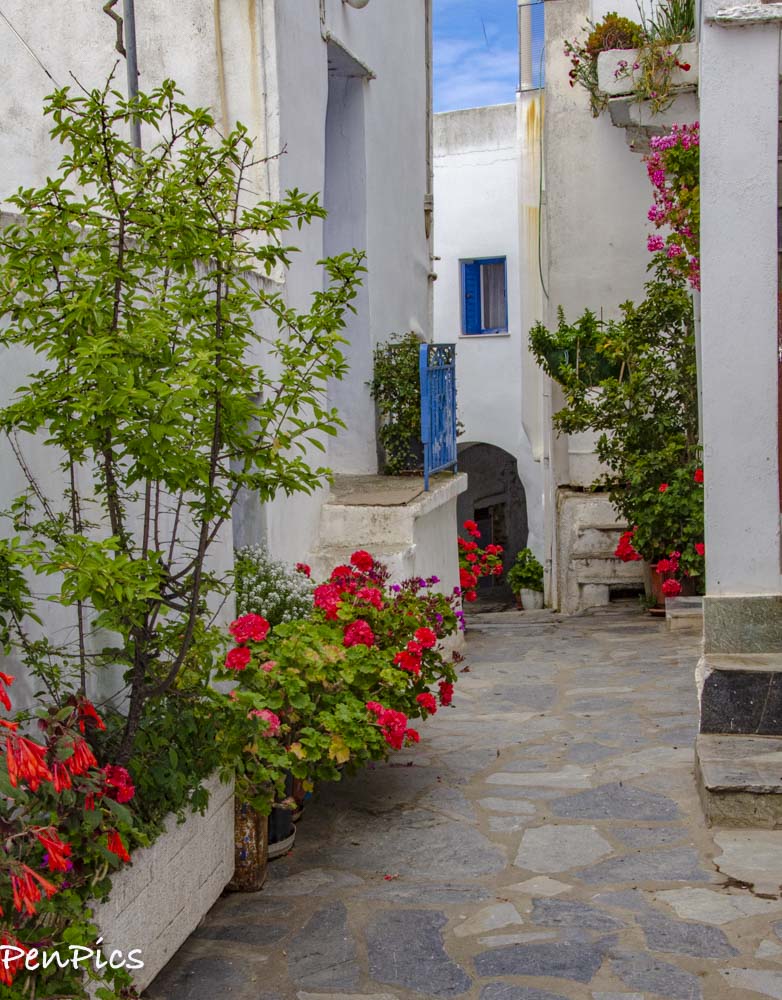
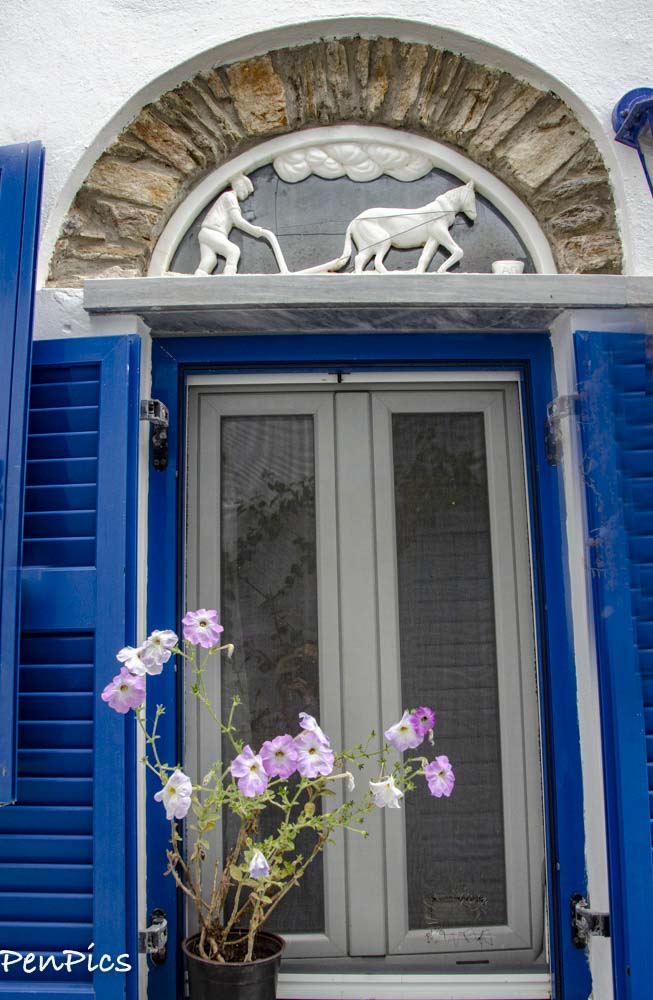
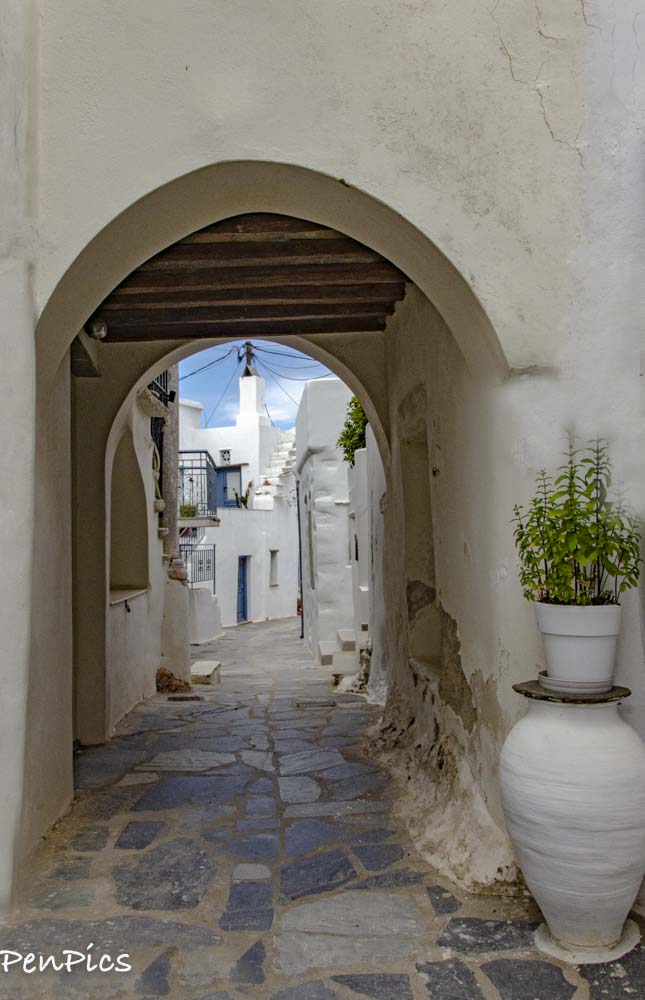
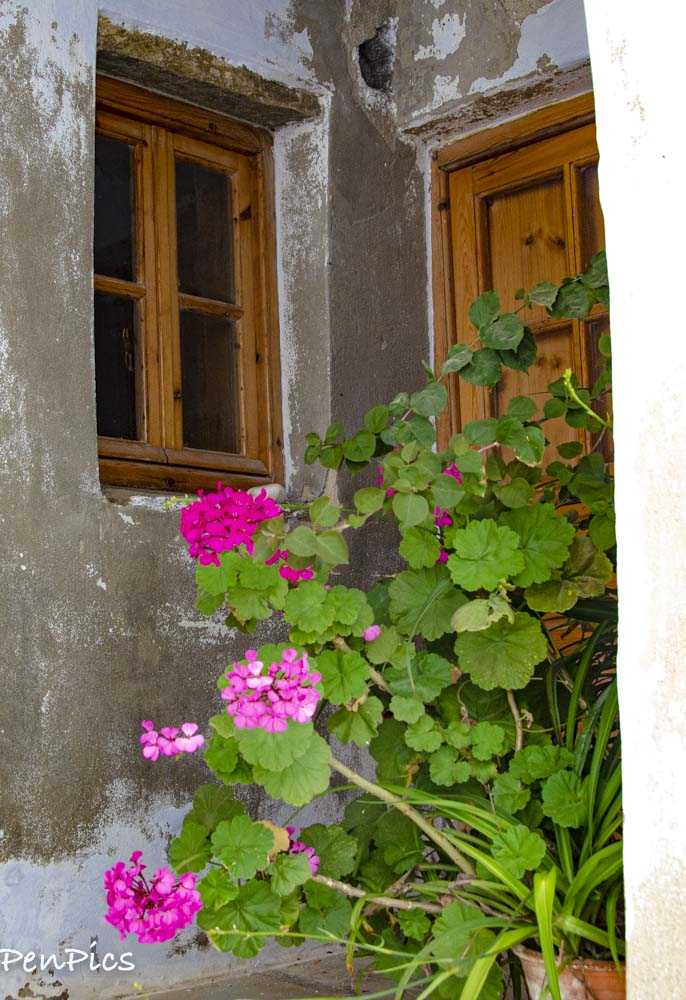
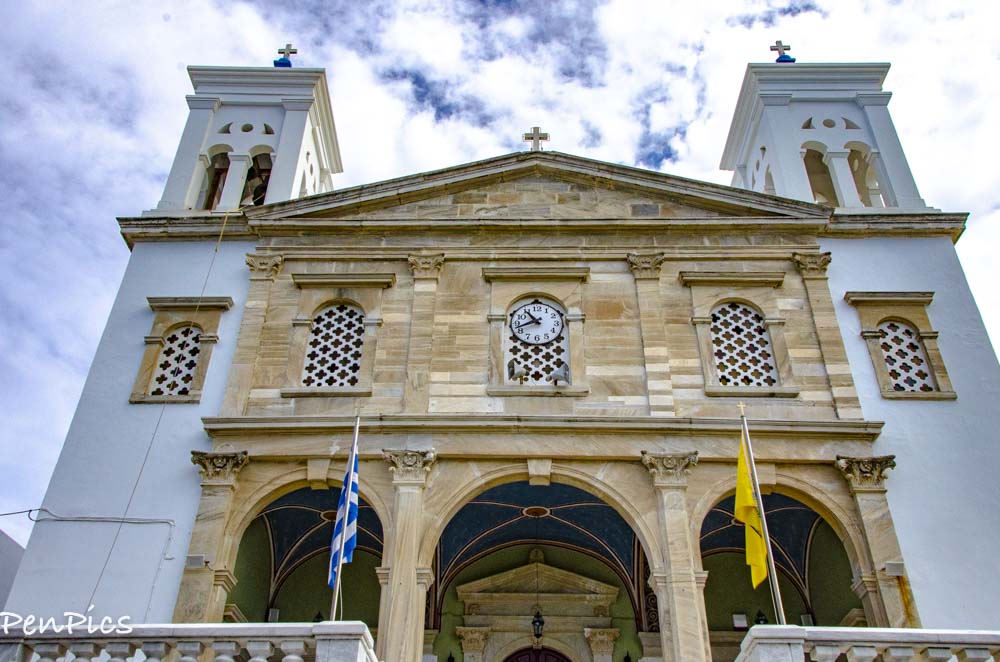
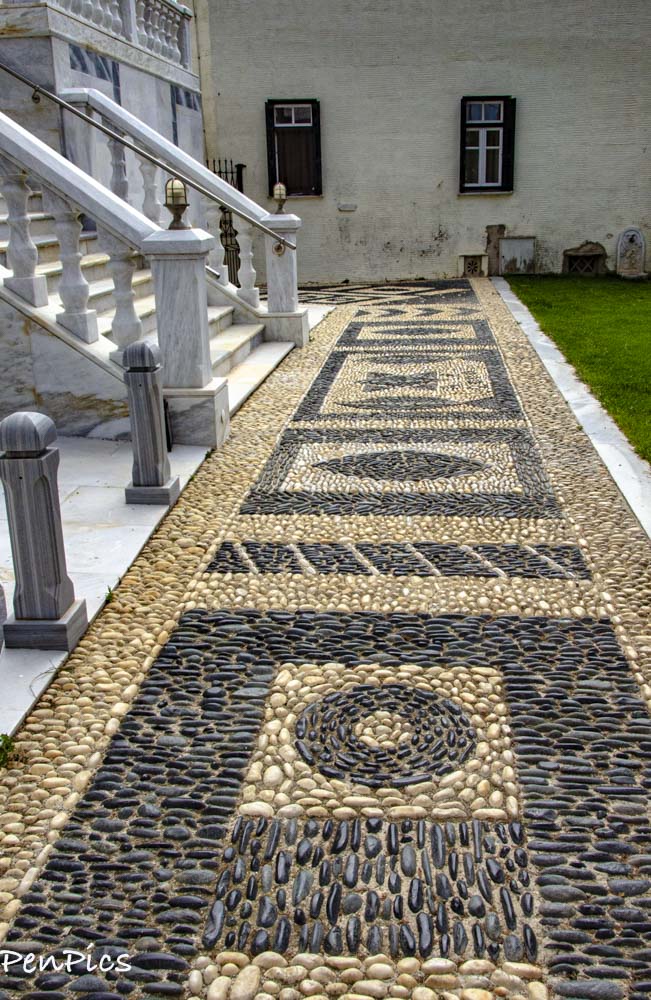
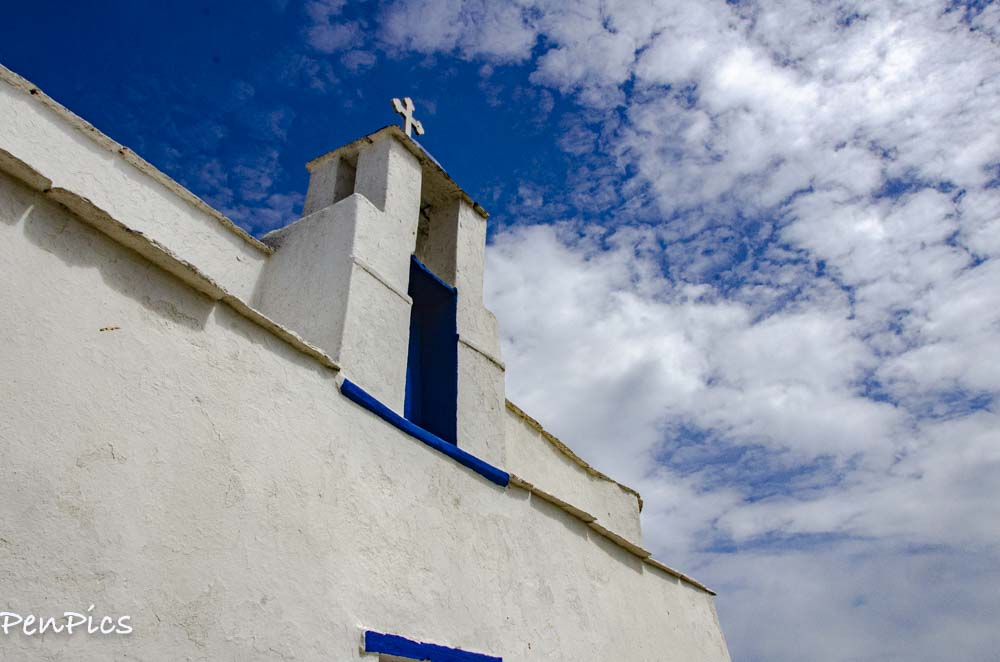
The Monastery of Holy Trinity or Agia Triada is located in the southeast of Tinos, in Falatados village. It came into existence somewhere around the year 1610. It used to be a secret underground school run by monks during the rule of the Turkish Empire.
Today, in addition to the church, you will also find a library and a mausoleum here. It works as a small folklore museum with a nice collection of folk crafts. The main church has a wood carved iconostasis from 1764 that displays some wonderful 18th Century icons. It is built in a beautiful, eye-catching location and is an important contribution to the title of Holy Island that Tinos is characterized
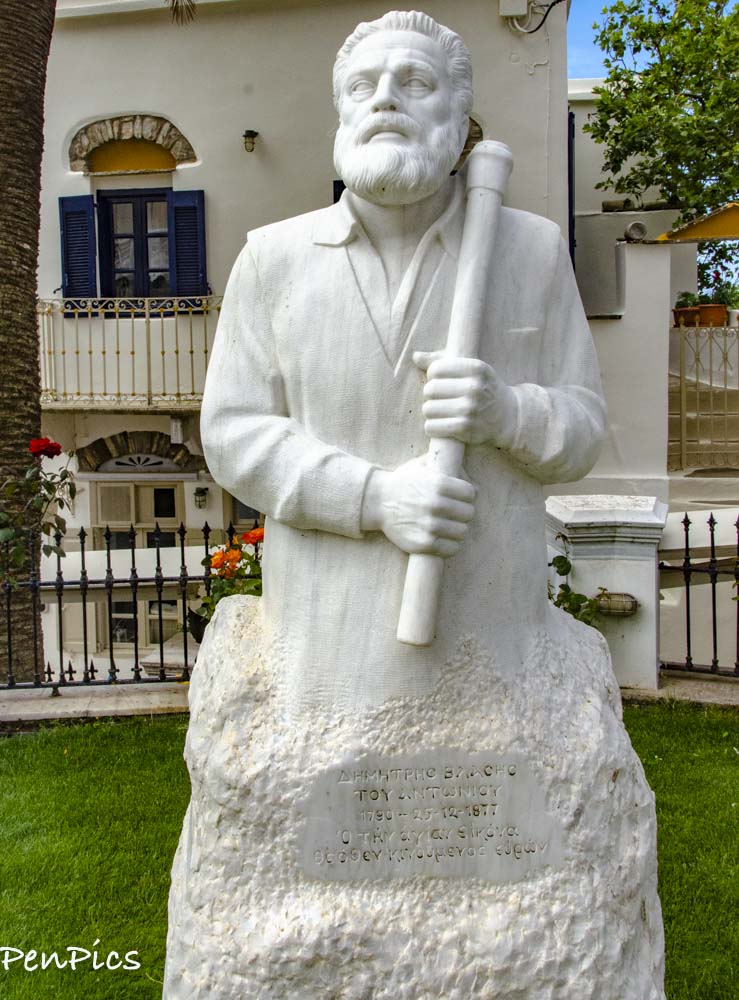
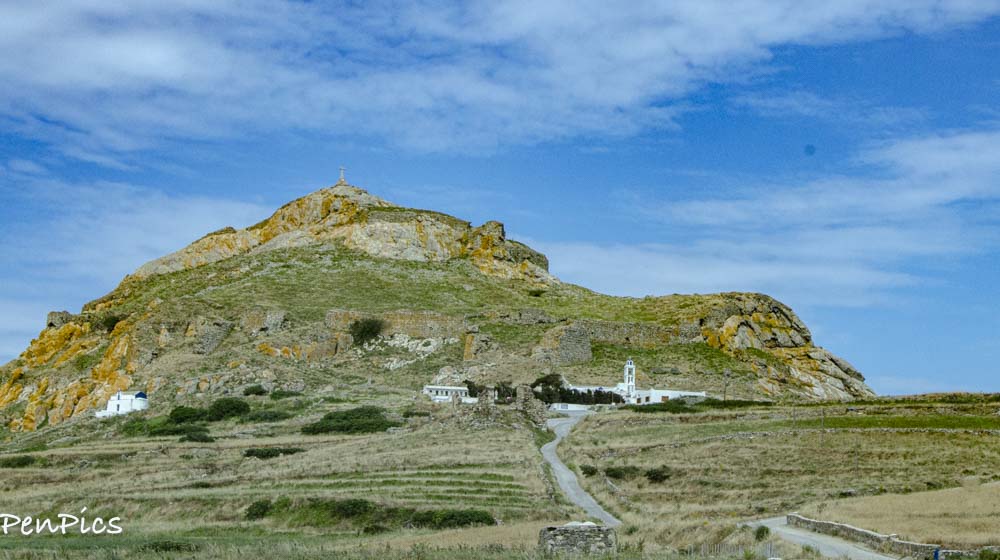
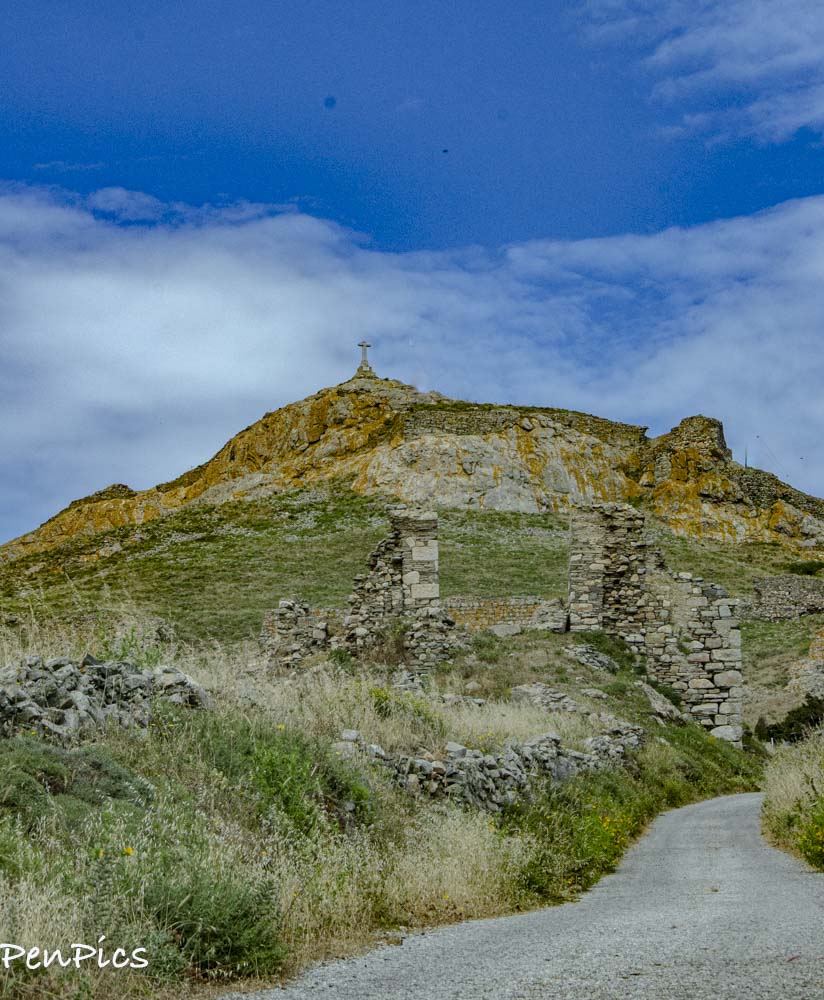
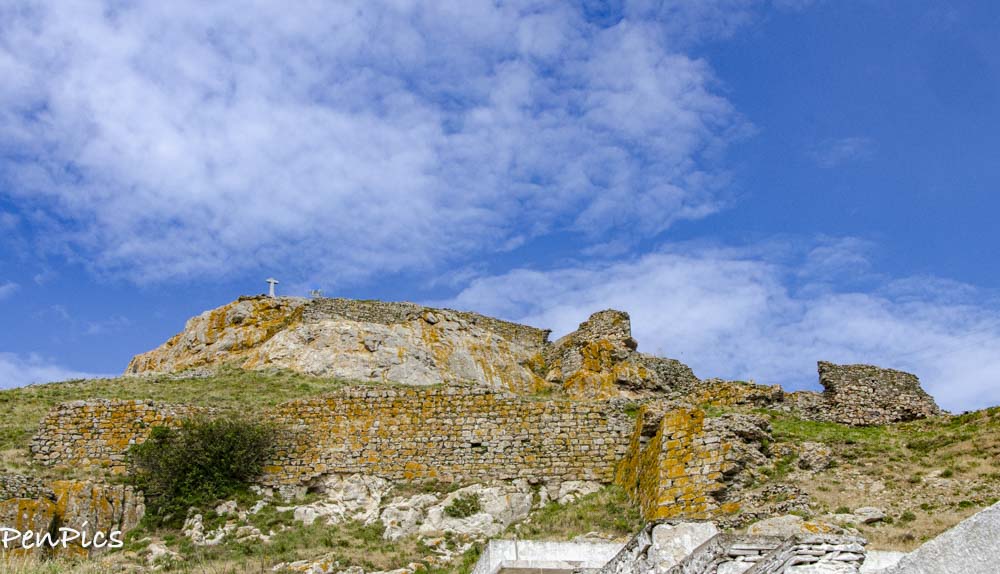
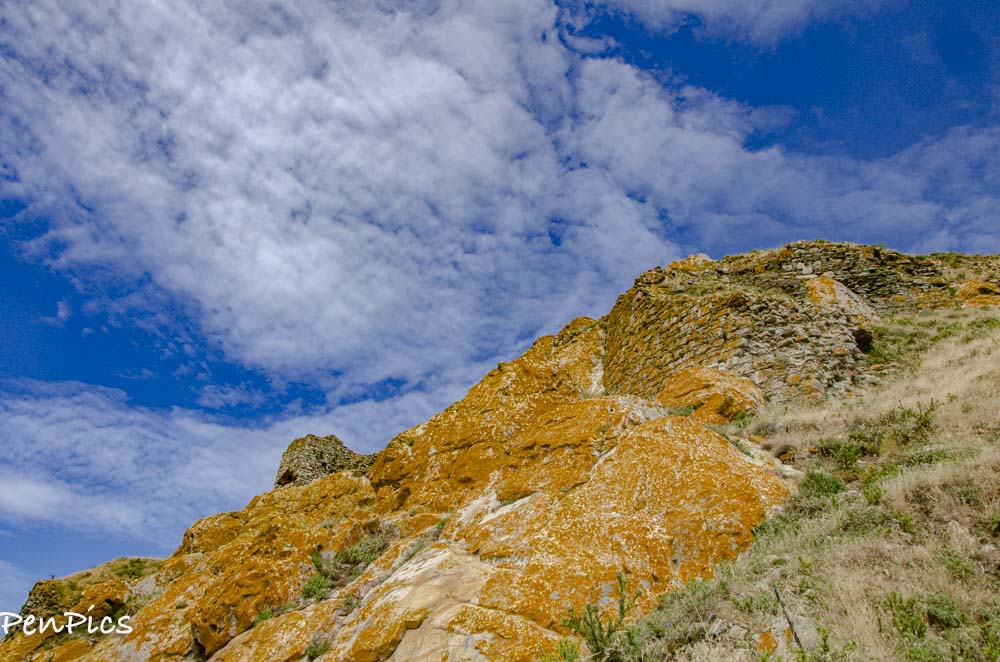
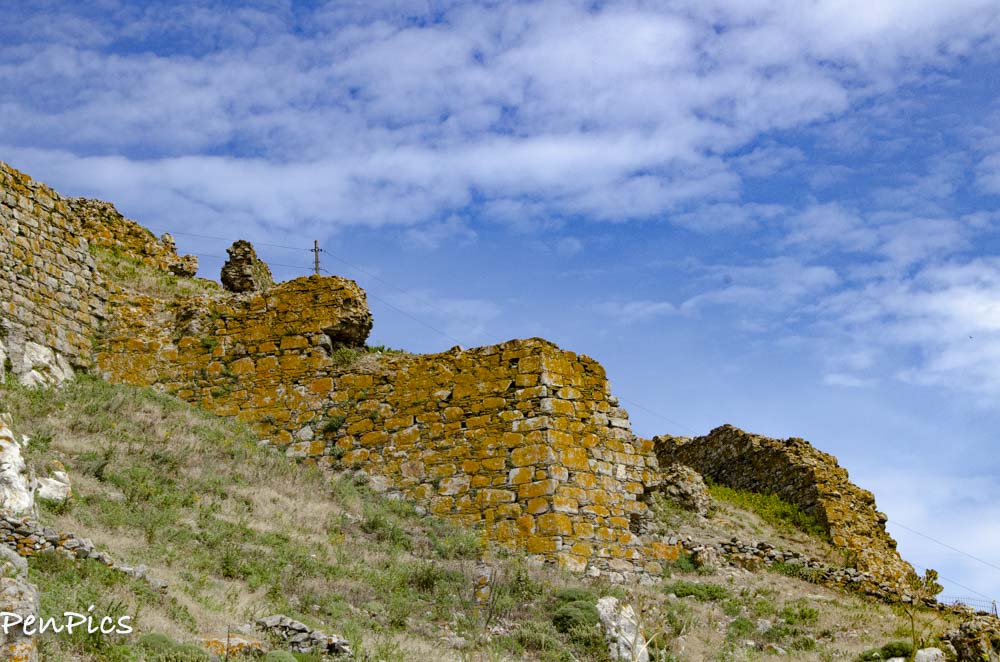
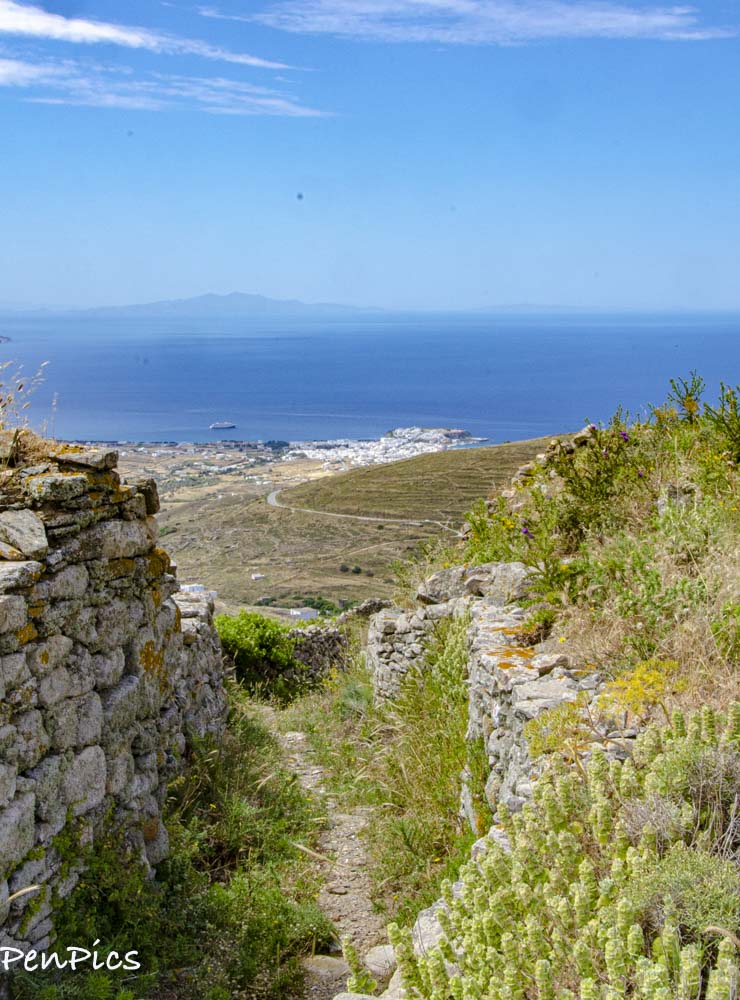
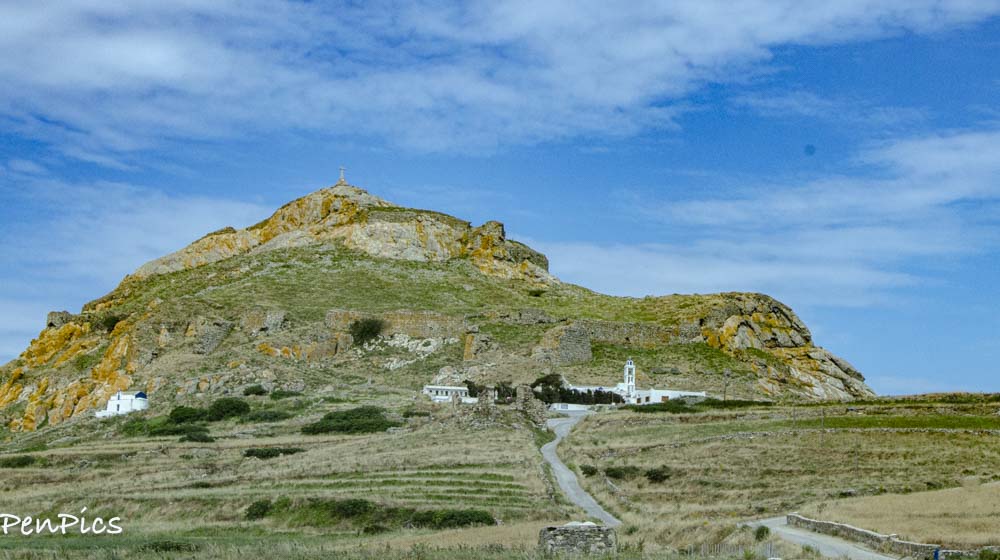
The mountain with ruins of a Venetian fortification was already in pre- Christian times the center of the island. 3.000 to 4.000 year old artifacts from the excavations can be viewed in the Archaeological Museum of Tinos.
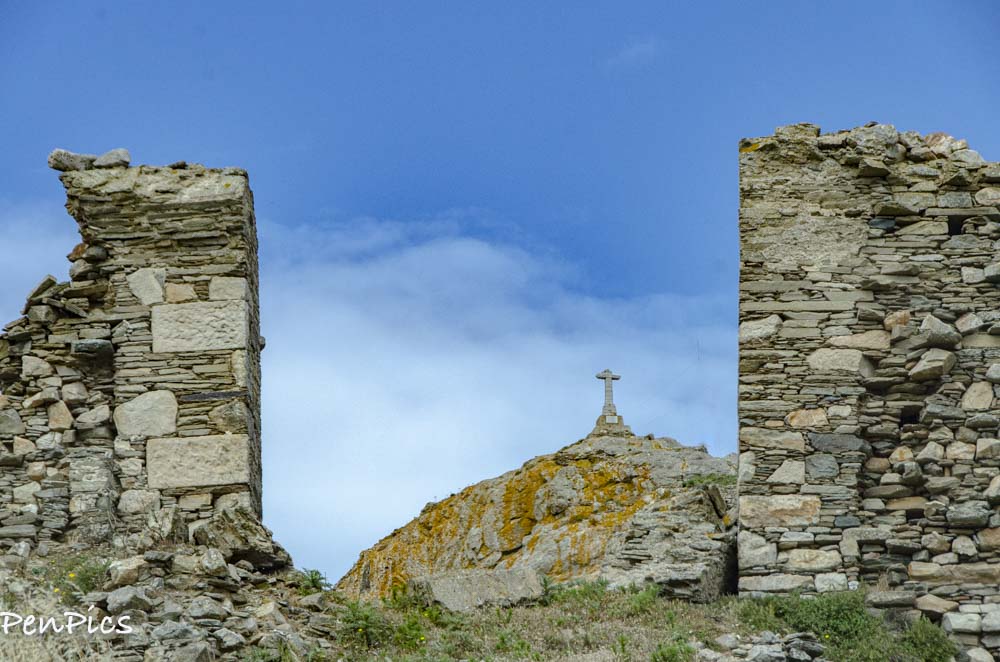
In the medieval times, the Venetians built a Castle on top of this mountain, which they named St Helena’s Castle, after the church that used to be on its premises. This Castle used to be very powerful at that time and protected the island from enemies and pirates. Xombourgo mountain today offers impressive views to the visitors and many picturesque villages have been built against its slopes.
About Us

About Us
Hello and Welcome to our Travel Blog Website, We enjoy writing about our experiences and taking photos of our adventuring along the way. Our names are: Daryl and Pen, but Daryl calls me “Bunny.” We met, quite randomly, whilst both traveling in Thailand with friends. We happened to be in the same travel group, and […]