


“Greece 🇬🇷 ~Day Three on Syros Island”
Today was our last full day to adventure around the island. We feel like it was the perfect amount of time to be here, because we saw everything we wanted to see.
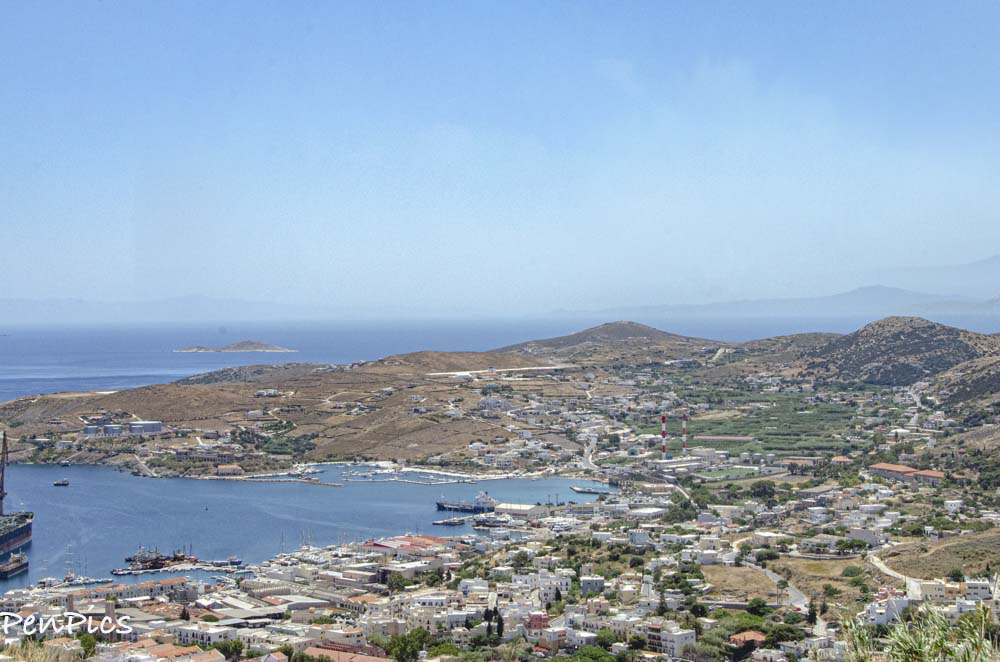
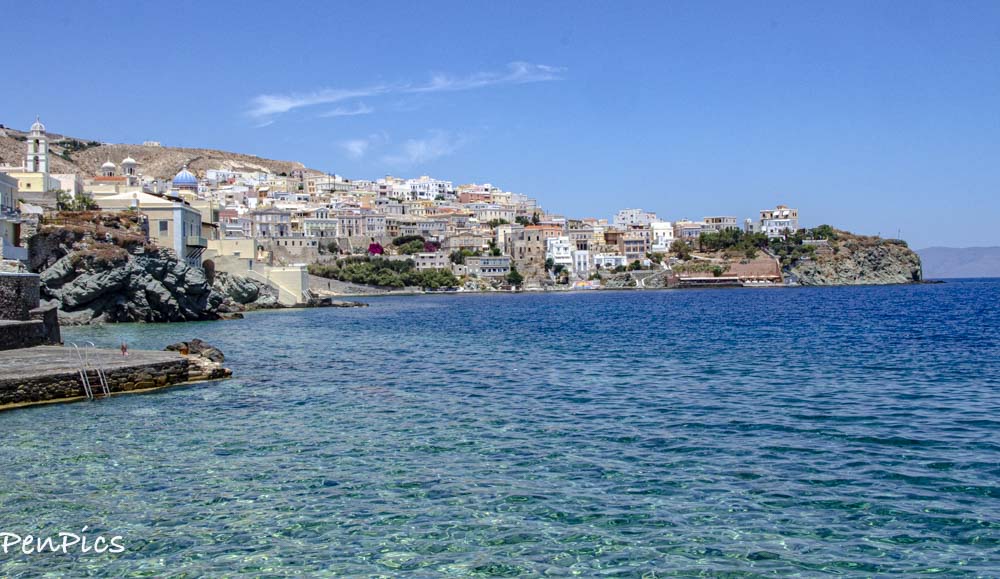
We started out with more exploring of Ermoupolis, which is the port town of this island. The roads are too narrow in many places to drive, so we parked and walked around from there.
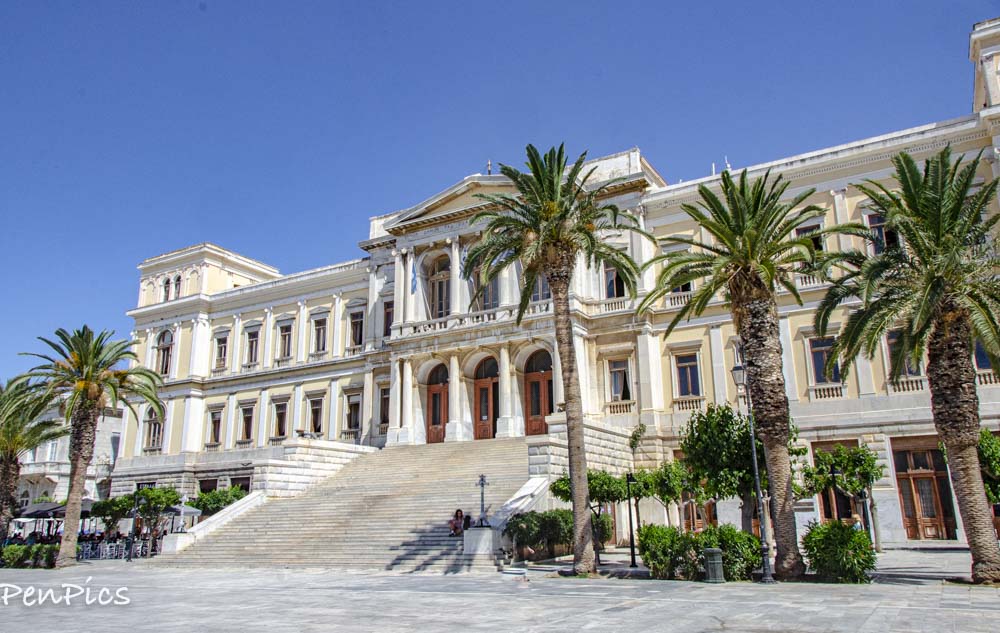
Its historical importance is highlighted by the fact that it is an integral part of Miaouli Square and of all the important events of Syros’ history which were marked by the people gathering there to express their reactions. Today, the City Hall houses the offices of the Municipality of Hermoupolis, Courts, and other government services.
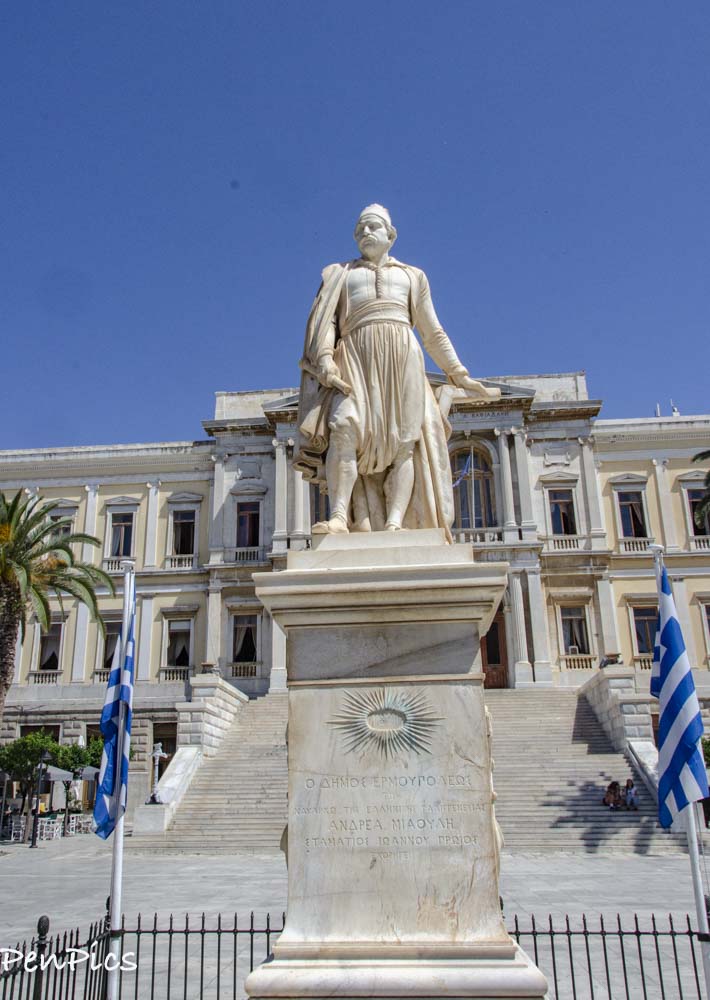
Statesman, Hero of the Greek War of Independence (1769 – 1835).
Andreas Vokos Miaoulis was an admiral, statesman and patriot from the island of Hydra and one of the major participants of the Greek War of Independence of 1821. Together with Constantine Kanaris, Laskarina Bouboulina and Antonios Kriezis, he is considered as one of Greece’s most important naval officers of the modern era.
He descended from a wealthy family of ship-owners and was involved with the emporium from a young age. During the Napoleonic Wars, the adventurous Miaoulis increased significantly his wealth by breaking the siege of the Spanish cities by Admiral Lord Nelson and resupplying them. Another one of his accomplishments was the prevention of an Albanian invasion in the island of Hydra.
With the outbreak of the Greek War of Independence, Miaoulis signed a document whereupon he devoted all of his ships and fortune to the war and was appointed captain of the Hydrean fleet. His first clash with the Ottoman fleet was in the Battle of Pylos where he led the Greek naval forces victoriously against the enemy ships. He successfully defeated the Ottoman fleet in the Battle of Orei and the Battle of Artemisium.
Following the Destruction of Psara, the Egyptian naval forces sailed from Alexandria with 100 ships, 50.000 sailors and 2500 cannons to Kos, where they merged with the Turkish fleet. Under the command of Andreas Miaoulis, the Greek fleet gathered in the Gerontas bay and battled against the enemy forces in one of the longest battles of the Greek War of Independence. In spite of them being vastly outnumbered, the Greeks won by destroying 27 Ottoman – Egyptian ships and causing massive casualties.
The Battle of Gerontas rendered Andreas Miaoulis an admiral comparable to the British ones in terms of skill and military capacity. After his victorious battle, Miaoulis sailed to Methone of Messenia and shipwrecked 23 Egyptian ships; he also confronted the Egyptian fleet in Suda. With his fleet, during the second siege of Mesolonghi, he regularly supplied its citizens with food and firearms, until the final days before the sortie, when it was no longer possible. Throughout the war, he was involved with multiple skirmishes against the Ottoman navy.
Miaoulis’ contribution continued even after the end of the Greek War of Independence. He was assigned by John Kapodistrias with combating piracy in the Aegean archipelagos, a task which he completed successfully. A few years before his death, he was appointed chief of the General Directorate of the Greek navy and inspector of the fleet. He died in 1835 and was buried in Piraeus, next to the tomb of Themistocles.
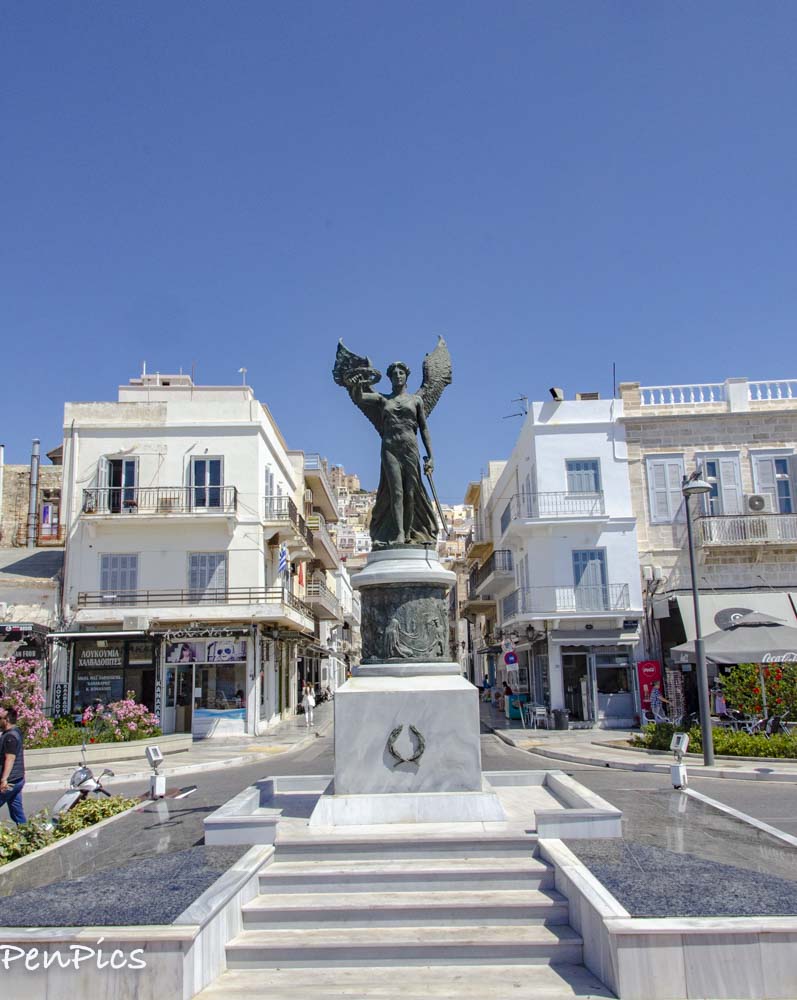
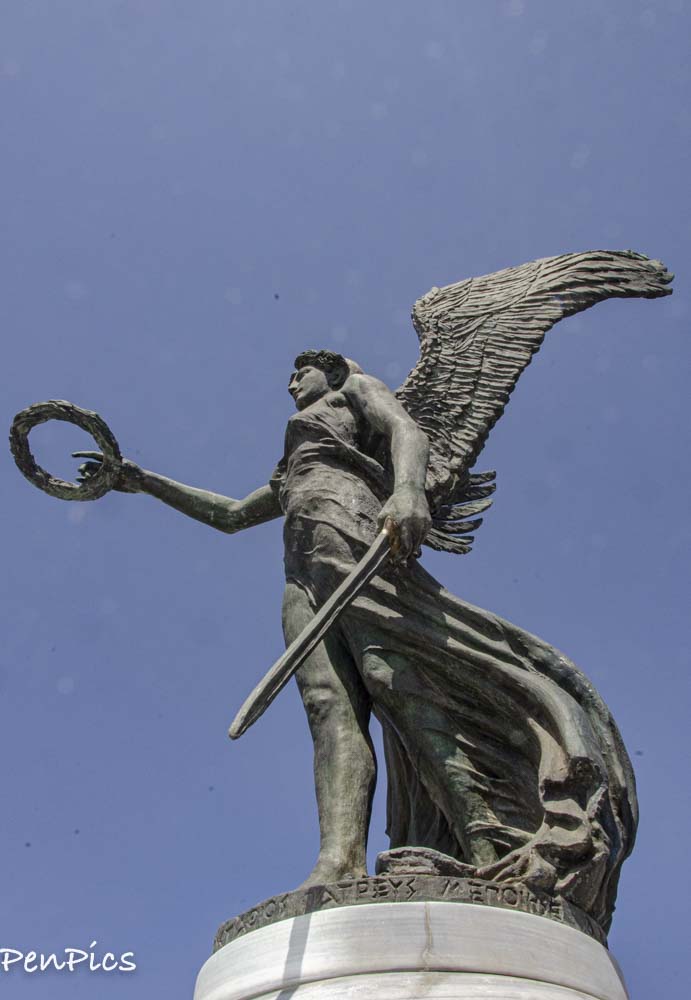
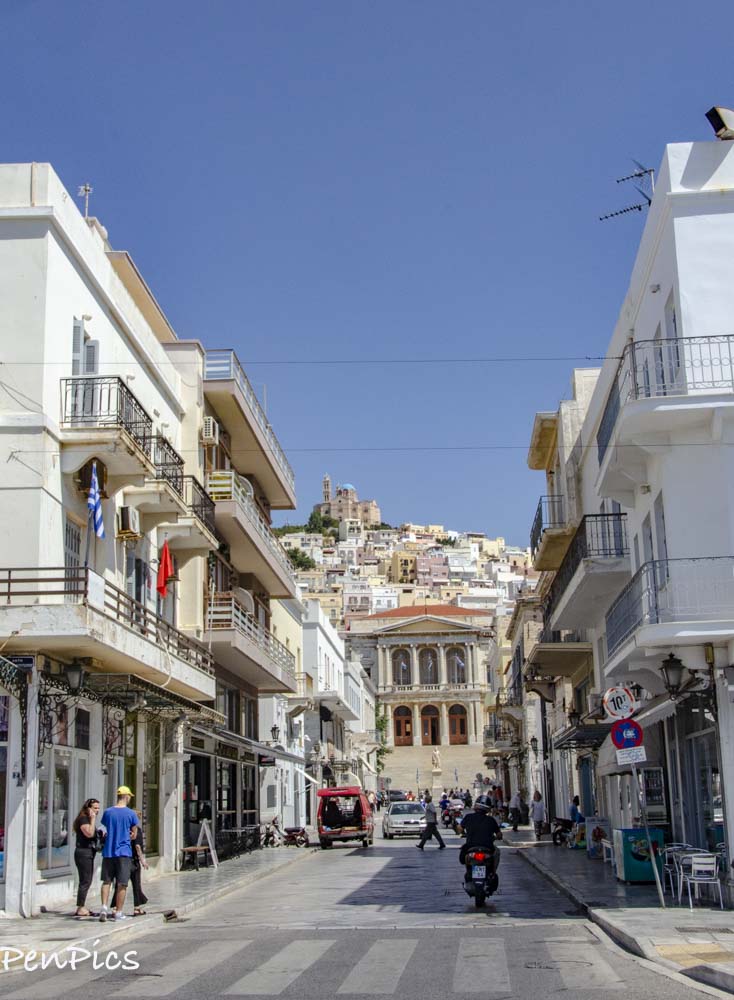
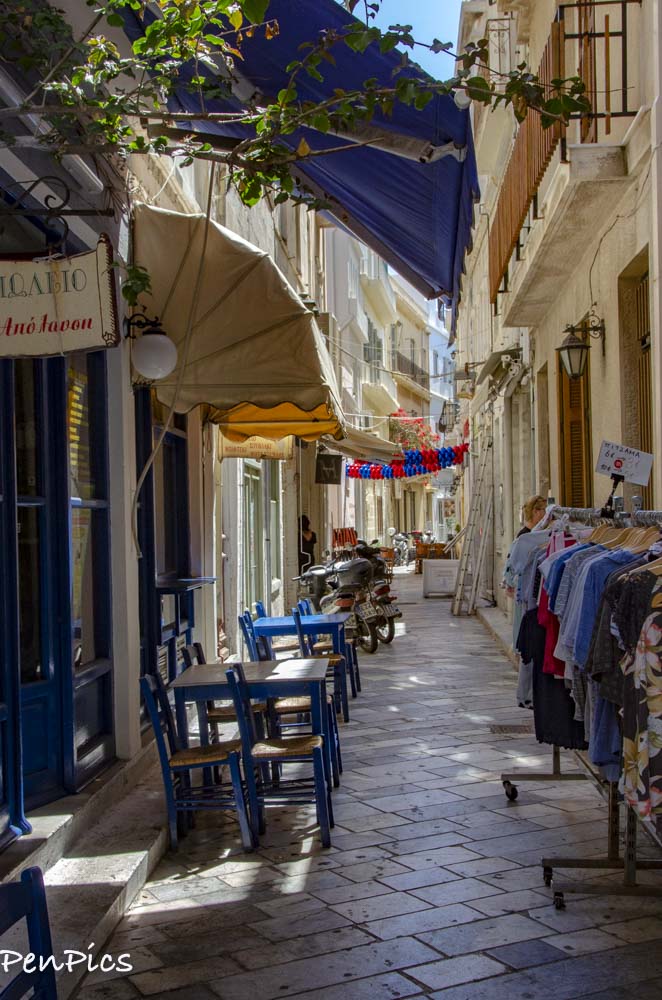
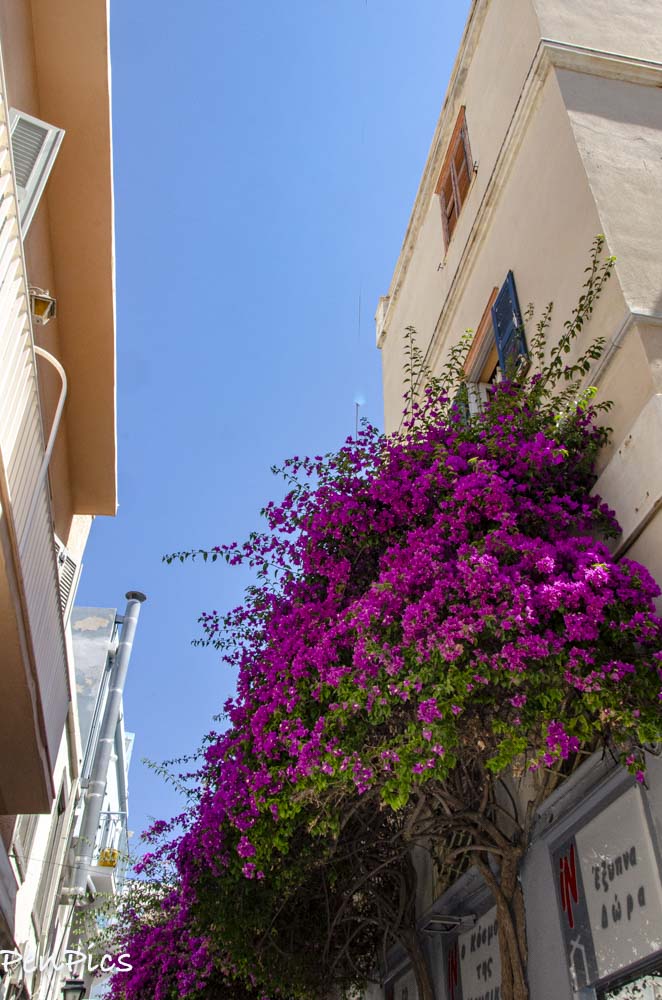
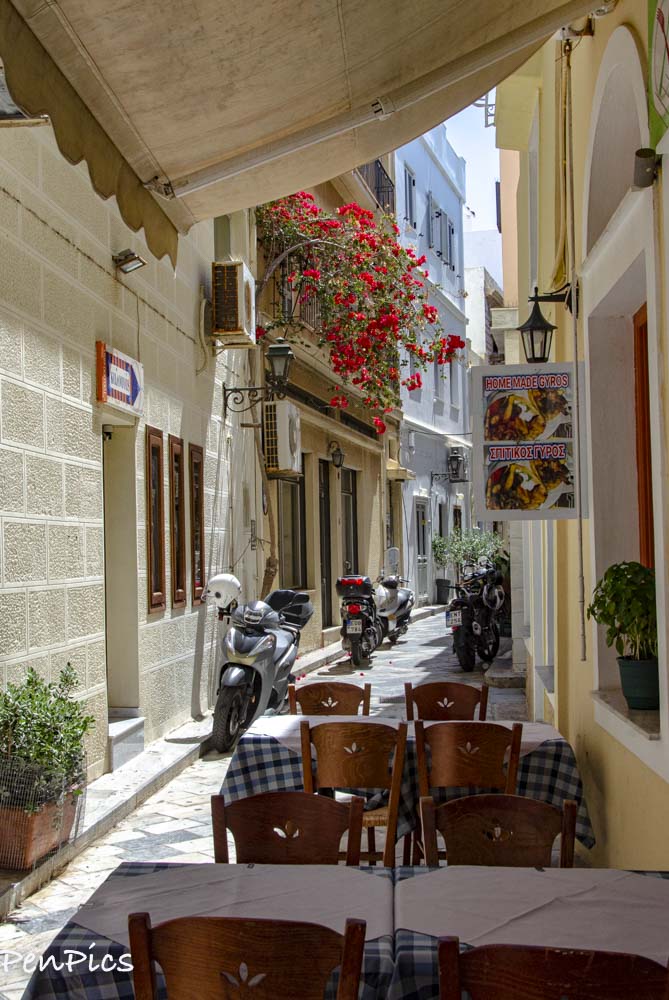
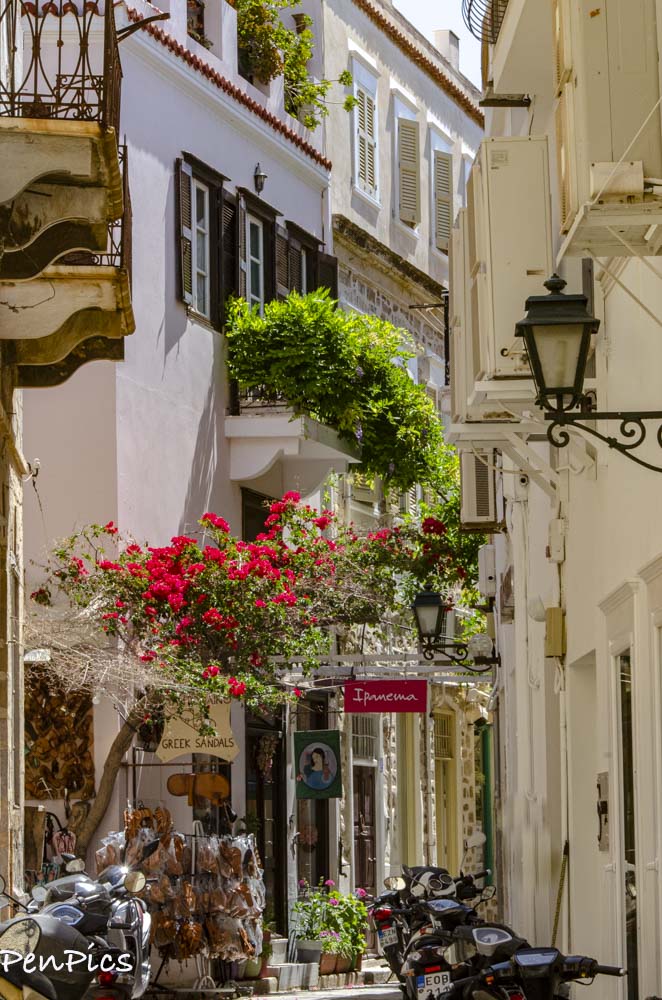
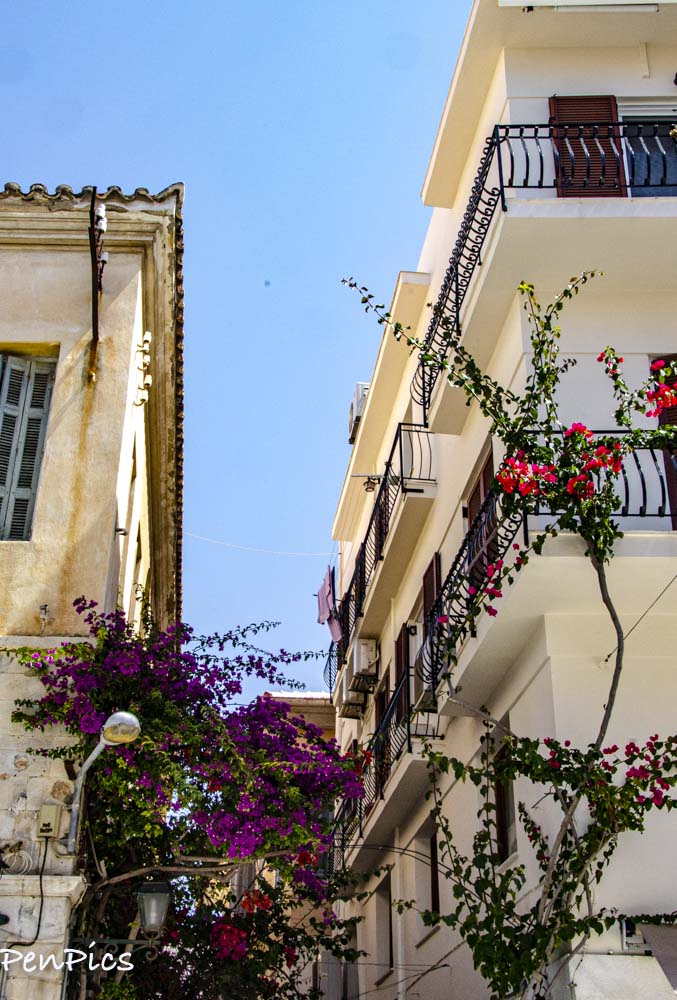
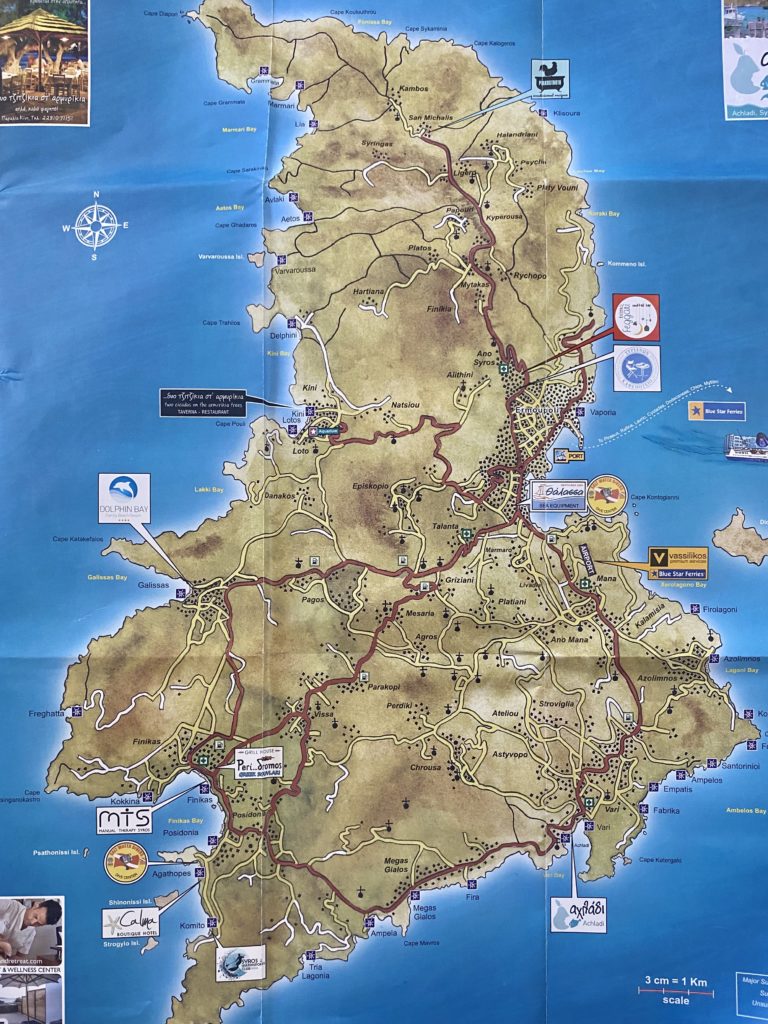
We did our best to make our way to the north end of the island, but after several hours of dead ends, or bad roads, we turned it around and headed back to home base, a bit reluctantly, but it’s tiring to be the driver on these roads, so it was time. Fortunately, it is never tough to come back to our hotel,?because it is so pretty in this port town.
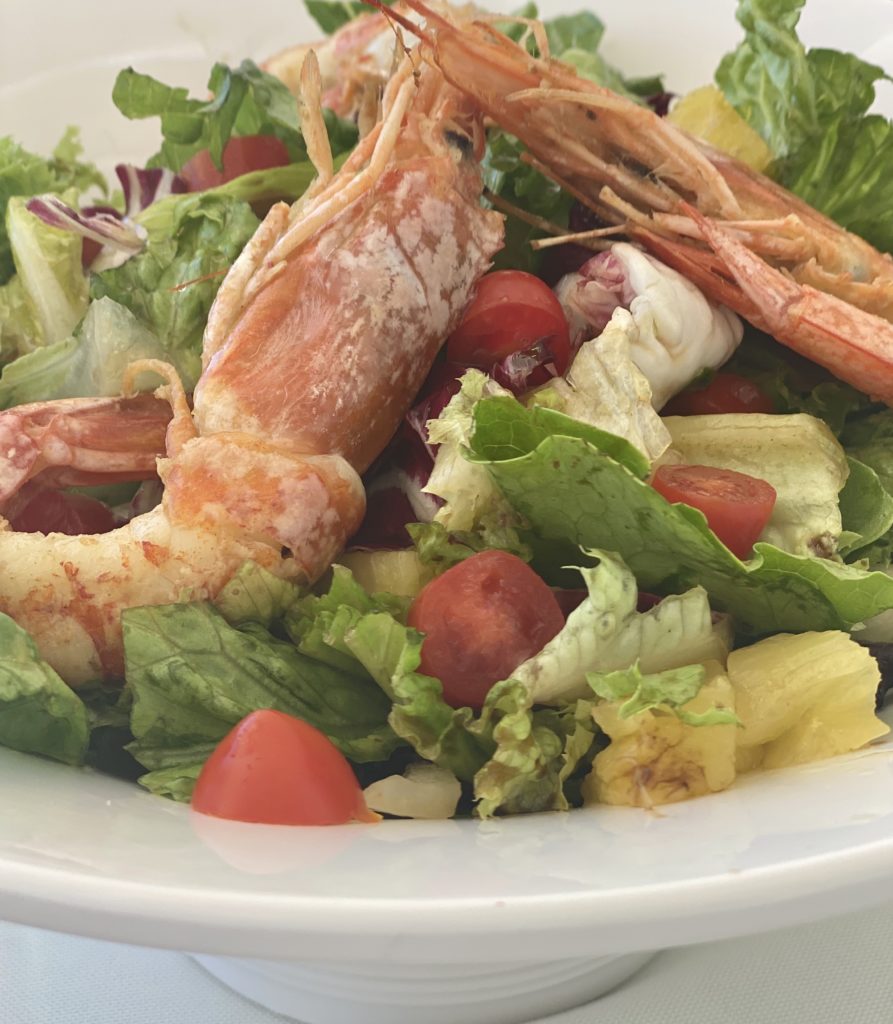
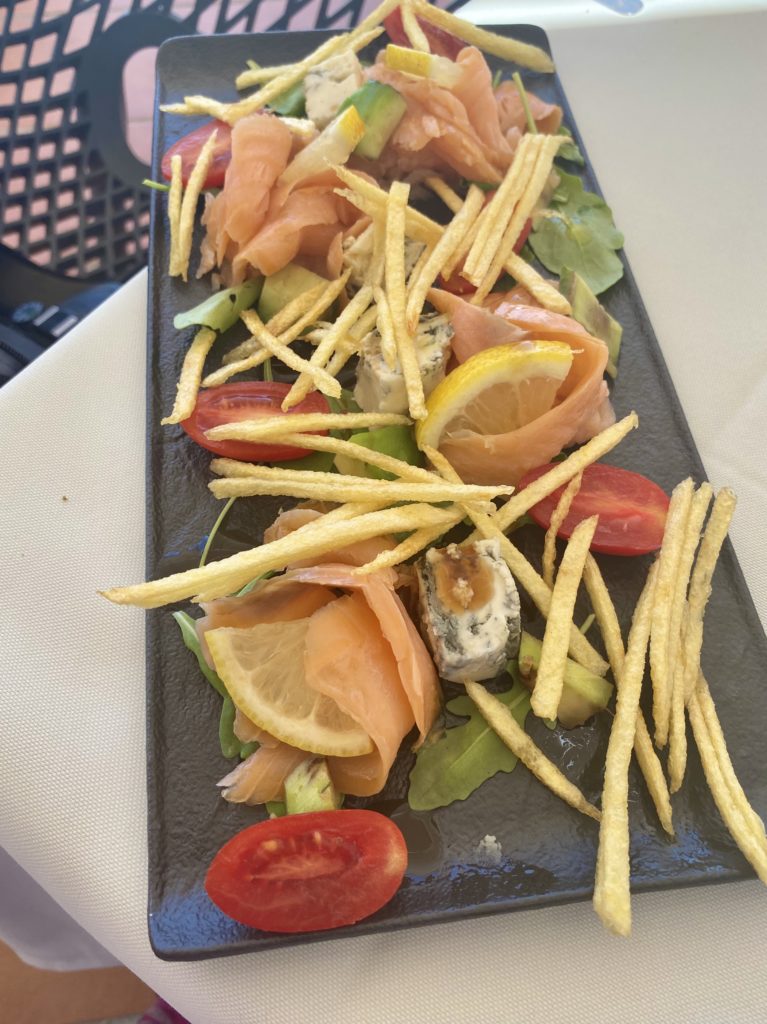
We ate a nice lunch, and then naps were in order. We feel like we are easing out of our quarantine life, back into our usual active life. We are building up our endurance, once again. Not only that, but it is summer weather, which makes it hot to hike around.
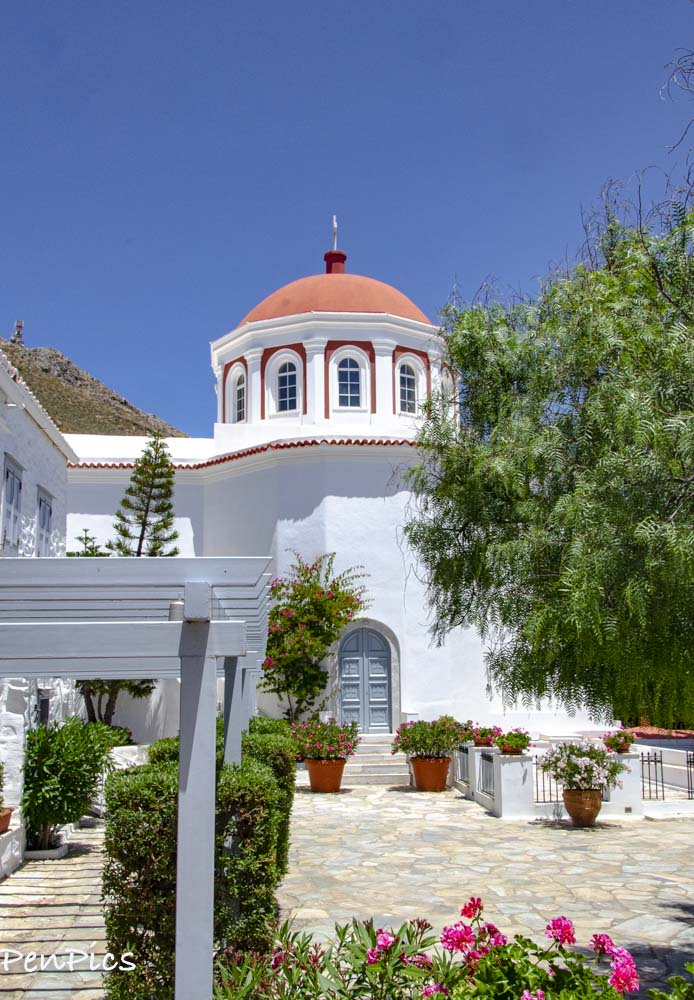
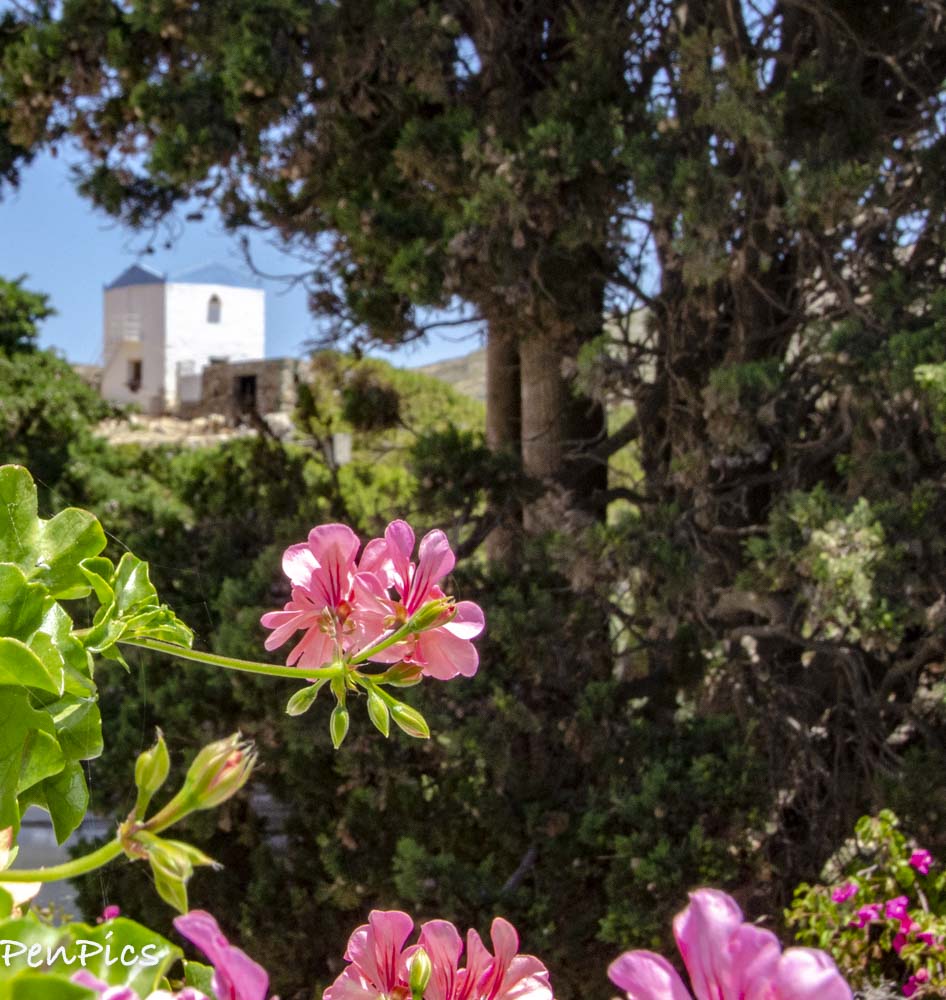
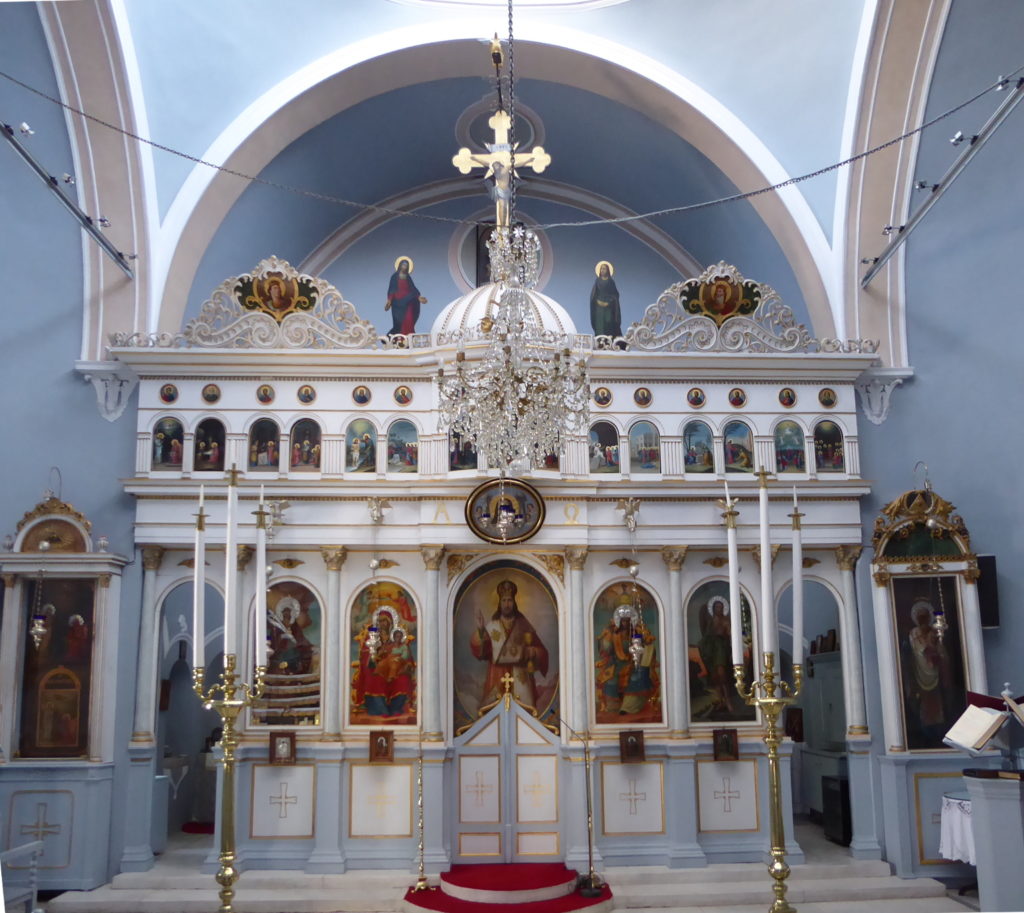
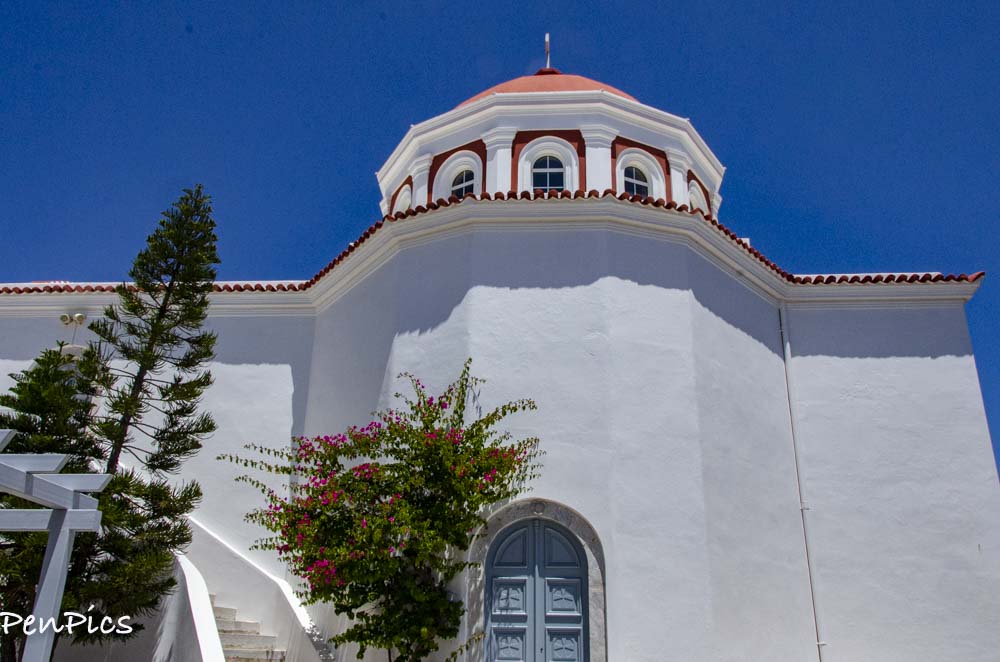
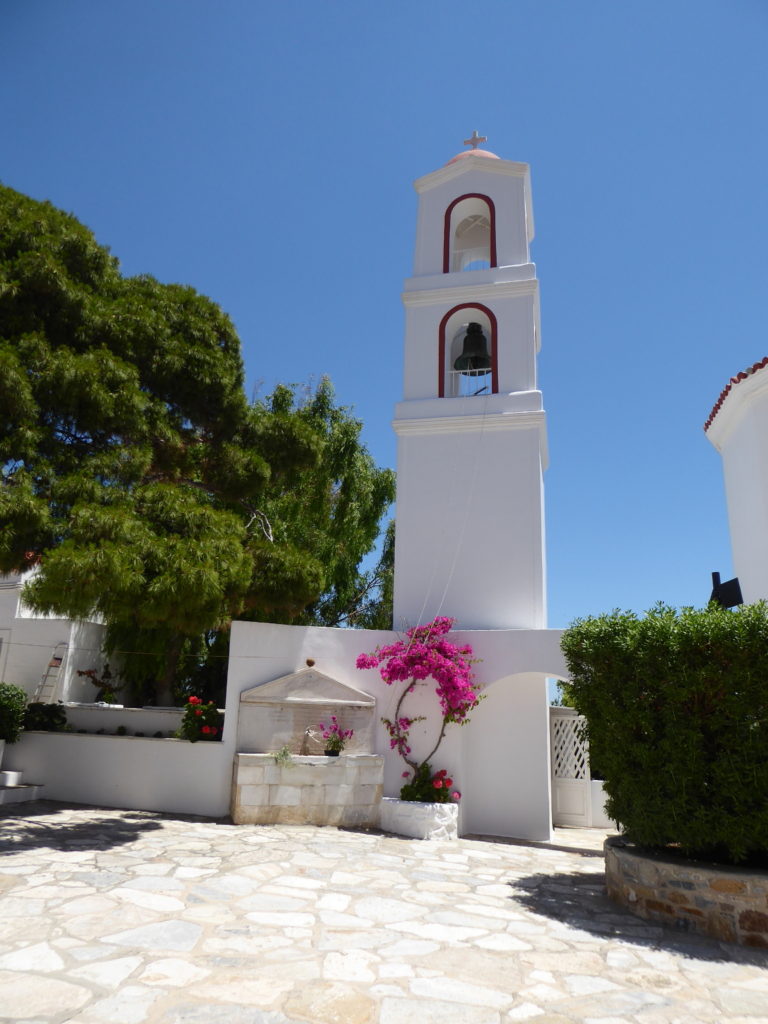
The church, named after the saint. Agia Paraskevi was built in 1600 and was renovated in 1792. At the time of its further expansion to approximately its current form in 1873, it was owned by the family of Andreas Pipinos; a naval hero of the Greek War of Independence. In 1884, the family gave the house, the church and the grounds to Archbishop Methodios. After his death in 1903, they passed to his nephews. Some years later, financial problems forced the nephews to auction off the property, and it was bought by a local Syros man who later sold it to a Hydra ship owner.
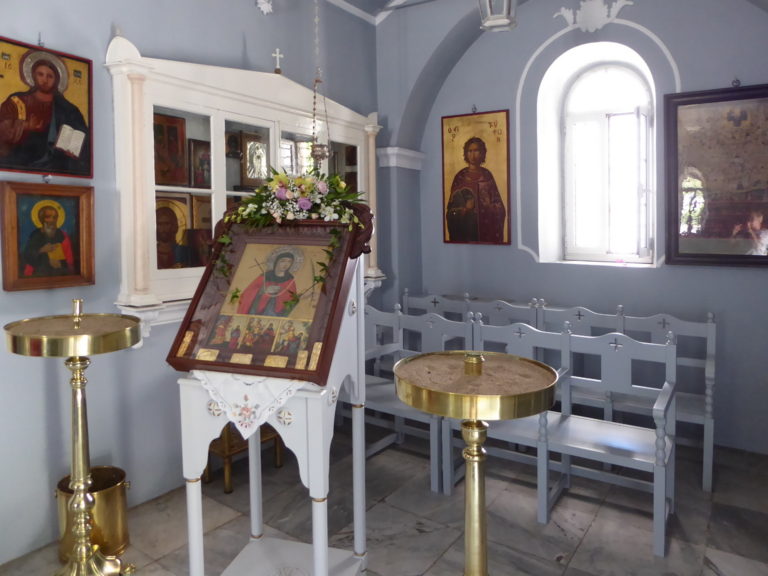
Today, the entire complex, including the church, is owned by Athanasios Martinos, a Syros businesman and philanthropist. In a sense, Methodios still has a residence here, because his body is buried in the chapel, beneath the loggia in the courtyard. This chapel, “All Saints,”also holds the remains of those lost when the ship “Enoumia” caught fire in 1876, as well as the tomb of one of the Pipinos family; Eleni.
The church itself is still in use and the church and its grounds can be visited
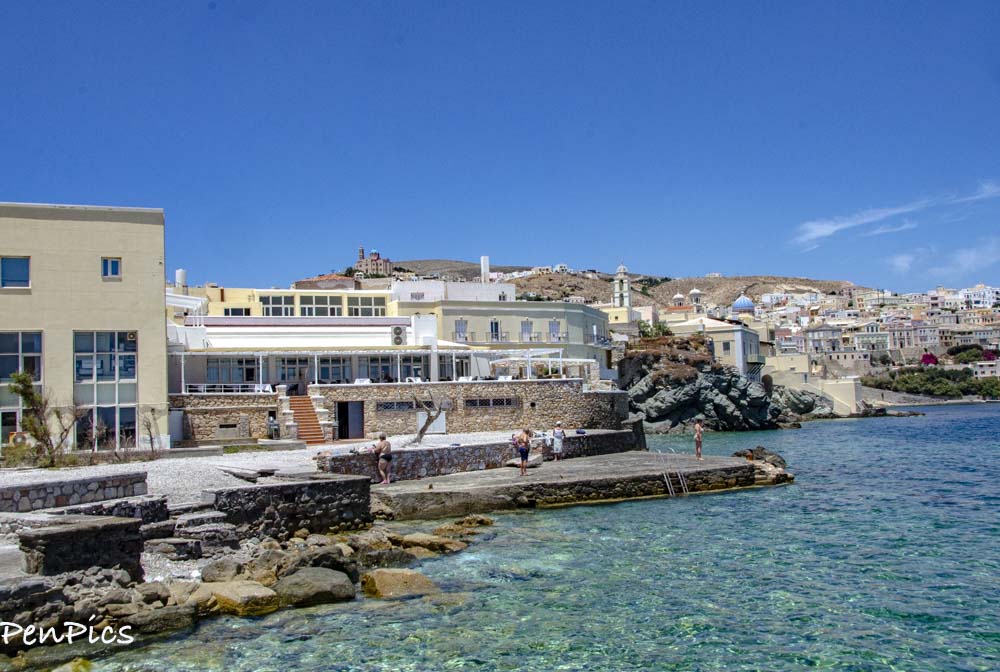
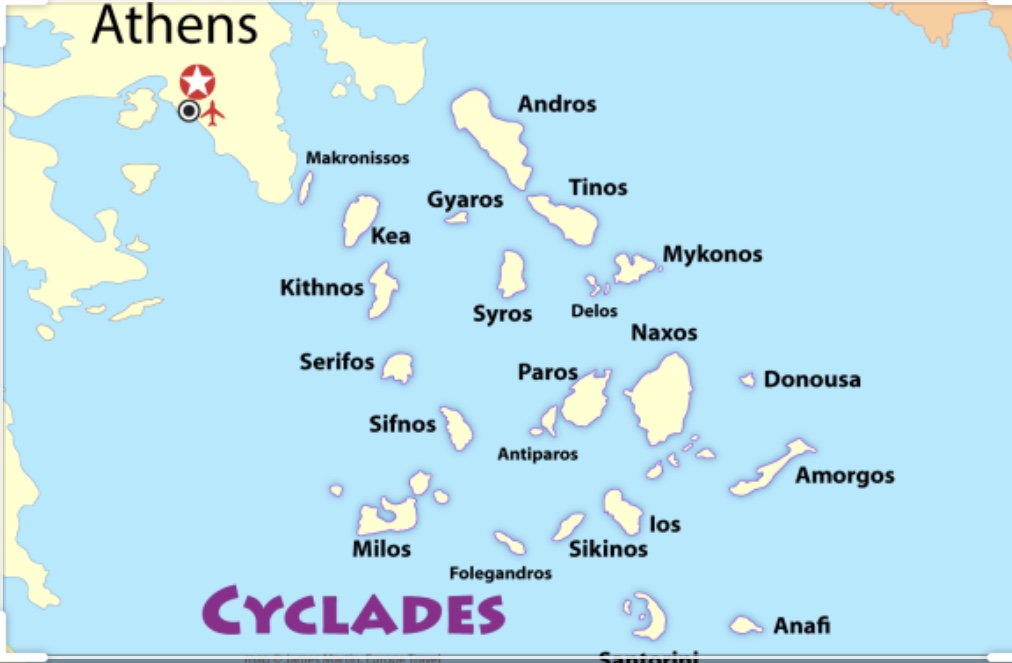
Tomorrow, we leave on an 11:30AM ferry and head to a new island, called Tinos. We are looking forward to spending a week there, plus, by then, our surgery wounds will be healed enough to jump into the beautiful water. It is not too cold, nor is it too warm. It is just right to cool off in!
About Us

About Us
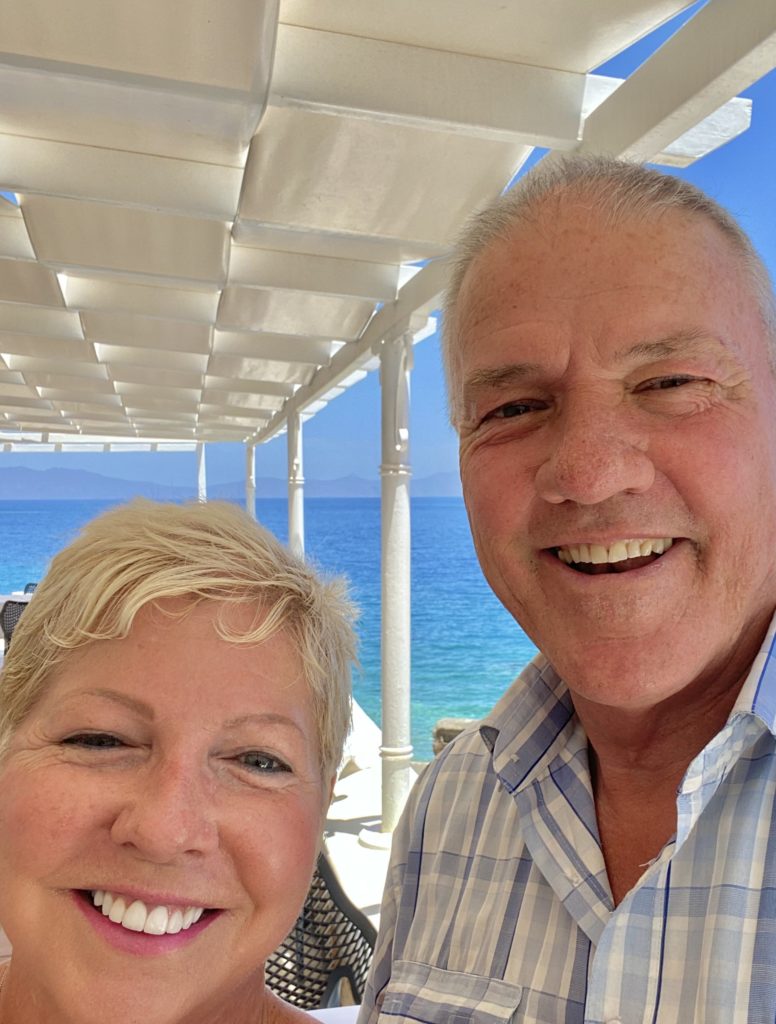
Hello and Welcome to our Travel Blog Website, We enjoy writing about our experiences and taking photos of our adventuring along the way. Our names are: Daryl and Pen, but Daryl calls me “Bunny.” We met, quite randomly, whilst both traveling in Thailand with friends. We happened to be in the same travel group, and […]