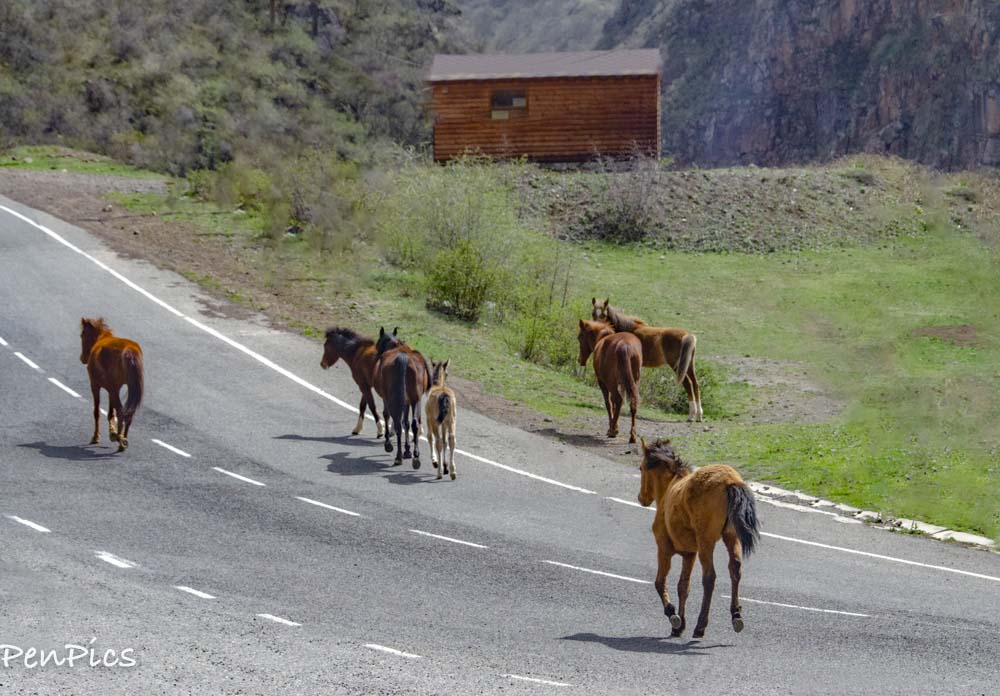
“Armenia 🇦🇲 ~From Goris to the Wings of Tatev” and More!”

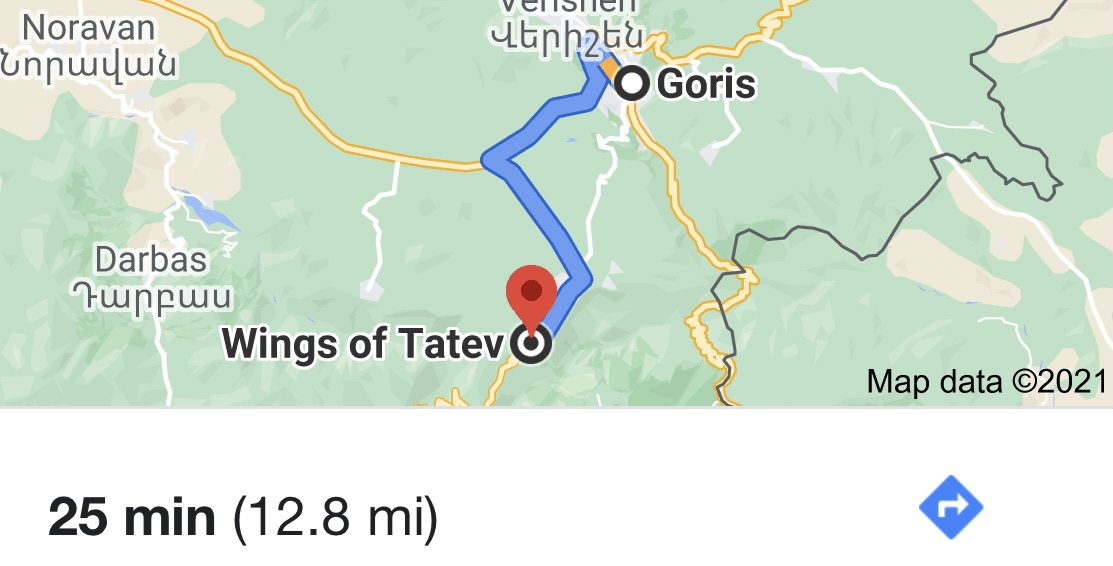
After leaving the Mountain with all the snow, we did make it to Goris to spend the night and eat, before dark. It was a big day of driving and sightseeing, but we loved it! The next morning, we left Goris and continued our adventures in the south.
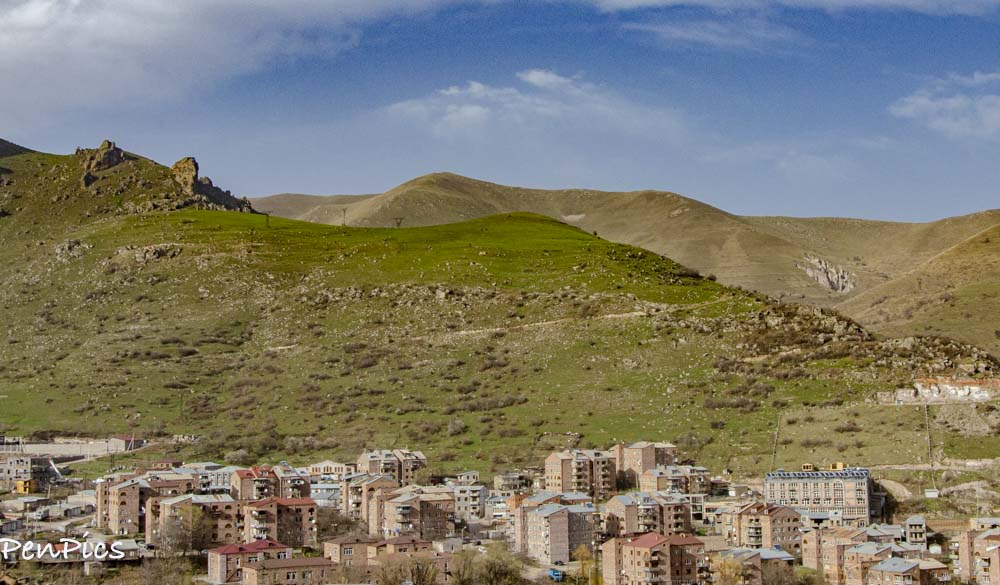
Goris is located in the southern part of the Syunik region. The town has had many different names, which were mainly the phonetic variation of the same name meaning “Rocky place.” The old town of Goris was an area with cave residences. Goris is considered to be one of the most beautiful towns in Armenia. The surroundings of Goris are full of extraordinary towers, castles, rock pyramids, caves, and a lot of other wonders. The town is one of the most visited tourist destinations in Armenia.
We Arrive at the “Wings of  Tatev”
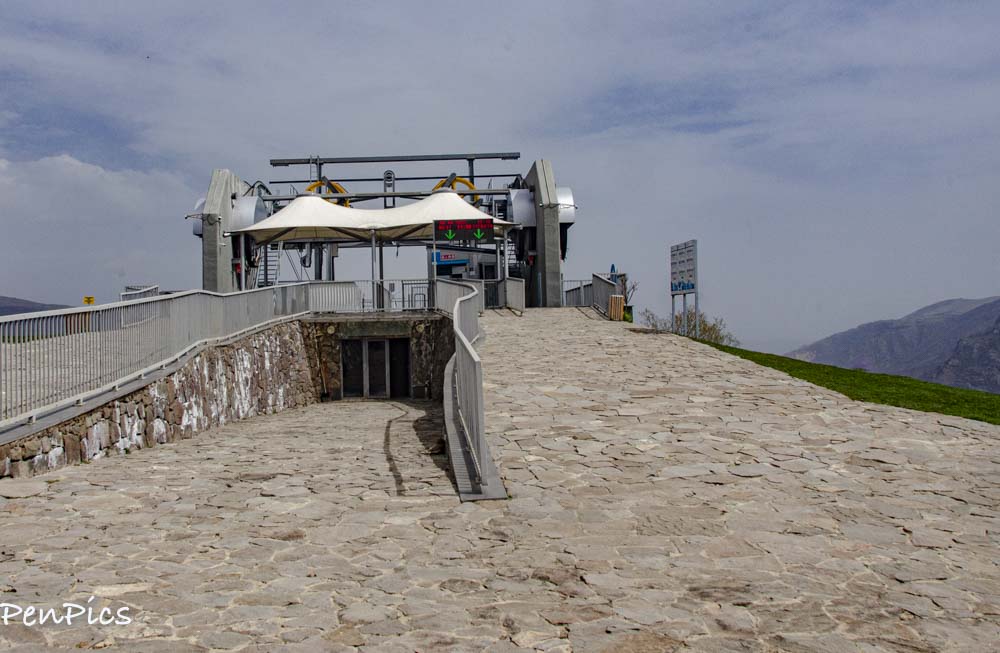
Our plan on this day was to visit a 9th century Monastery, but unlike the other Monastery visits, this one had a special option. Whilst the ancient complex can be reached by driving, we could also go way of a Tram called “Wings of Talev.” We chose the Tramway. (I would later drive it as well, to seek out a photo of the Monastery, from a different view point).
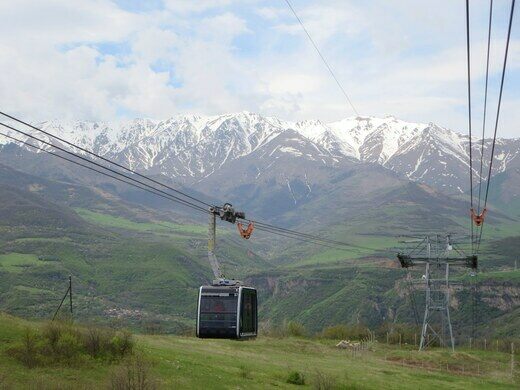
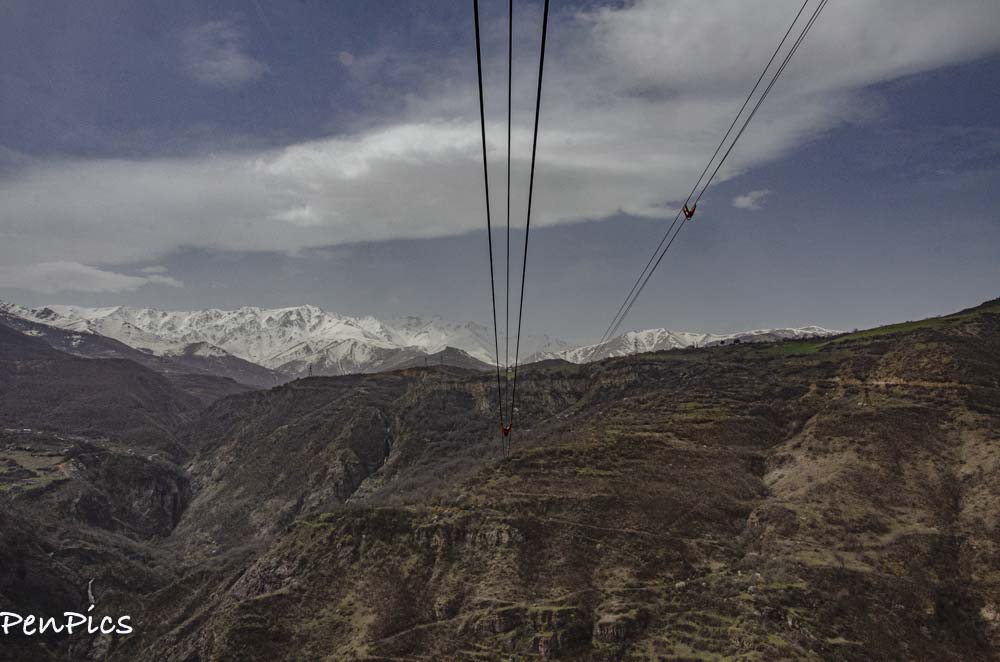
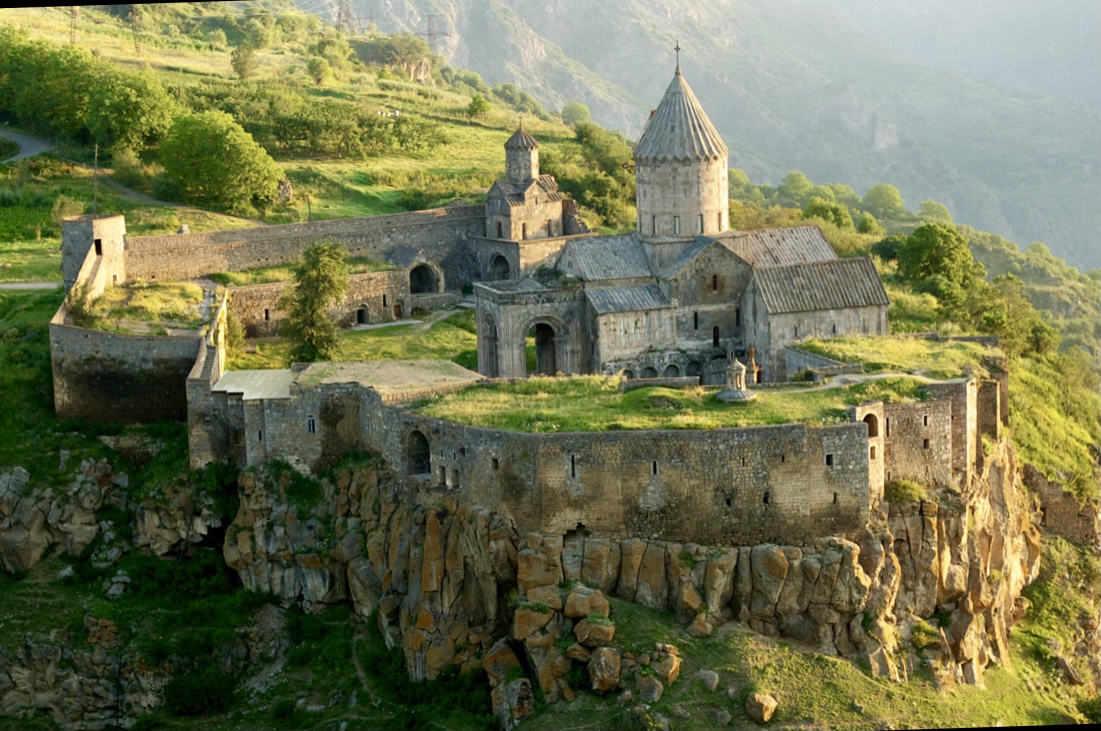
The Aerial “Wings of Tatev” stretches over 3.5 miles between the Armenian village of Halidzor and the famous Tatev Monastery; a center for education and religion during the Middle Ages. The tram holds the Guinness title as the longest nonstop double-track cable car in the world, but that’s not even the most extraordinary thing about this piece of infrastructure. The cableway soars over the deep Vorotan River Gorge, offering breathtaking views of the landscape as you approach the monastery, which sits perched on a large plateau at the edge of a cliff over the stunning gorge. The Monastery Complex dates back to the 9th century and is an architectural and historical icon of Armenia, though the structure itself can be overshadowed by the out-of-a-fairytale natural landscape that surrounds it. The total ride time from one side of the cable car to the other is about 12 minutes. Large pillars divide the ropeway into four sections, the longest of which is 1.6 miles long and overlooks the Monastery. On top of its record-breaking length, it is also one of the highest reversible cable cars in the world, reaching an elevation of more than 1,000 feet at its highest point.

Now, before I go on, here is an important piece of info, I would like to mention; a backstory…

….Before we left on this road trip, I told Daryl I wanted very much to make it up to the petroglyphs in the area of the south. I learned the road is not good and a 4×4 is recommended. We know from personal experience of putting that recommendation to the test, and failing in our little rental car, that when Armenia says a 4×4 is needed; it’s true! So, I hatched a plan for us to drive to the nearest town and put the word out to hire a driver with the right vehicle. Daryl commented that we have hardly ever seen a 4×4, so how will we ever find one, when we need one? While I know this to be fact, I told Daryl I wasn’t ready to “give up on my dream,” just yet! I’m a big believer in “thoughts become things, so make yours good ones!” Of course I still need two remember to make my thoughts way more specific, because finding a suitable vehicle would only be part of the need!

Back to our arriving at the Wings of Talev” for our Tram ride.

…..We pulled into a parking spot and a second later, another vehicle pulled in right, next to us. It was a Hummer! (we were told there are three Hummers in all of Armenia) A young couple on their “babymoon” got out, and Daryl started visiting. Though locals, the husband had lived in New York half his life, and spoke good English. We all visited a little more, then went on over to get our tickets for the Tram. Later, while touring the Monastery, we ran into each other again and continued talking. We were asked where else we were going in Armenia. I began showing map photos, because the names of places are hard to pronounce, properly. Come to find out, our new friend said he had not heard of the petroglyphs and wanted to see them, too and he would drive!
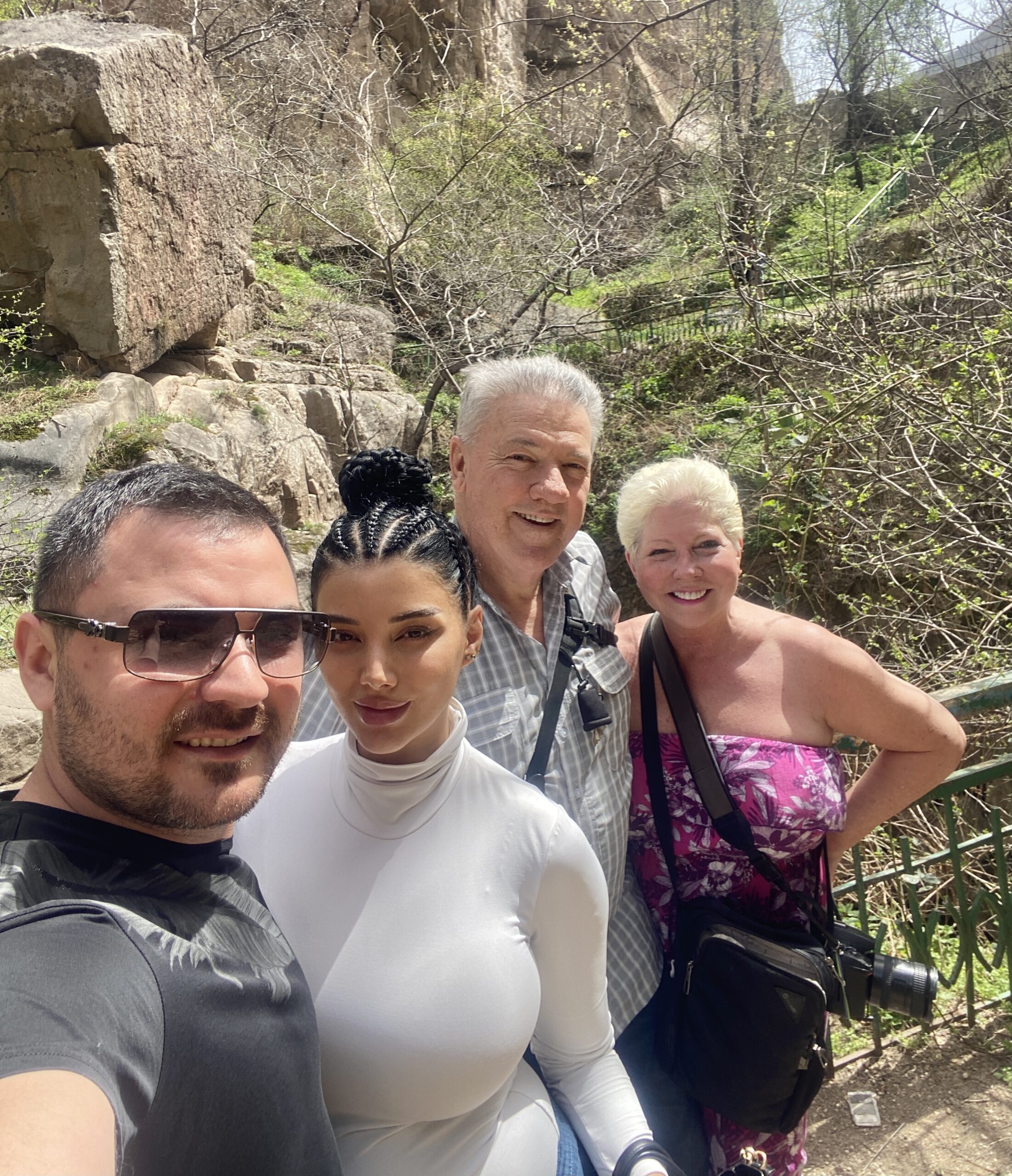
“Thoughts DO become things!”

Enjoy some photos from the Tram and the Tatev Monastery
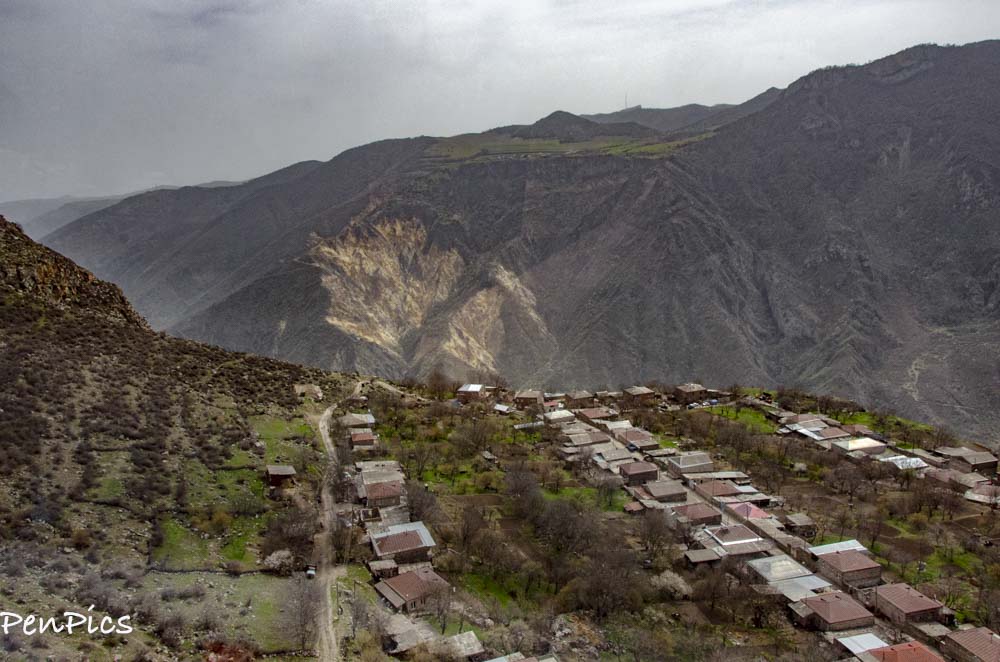
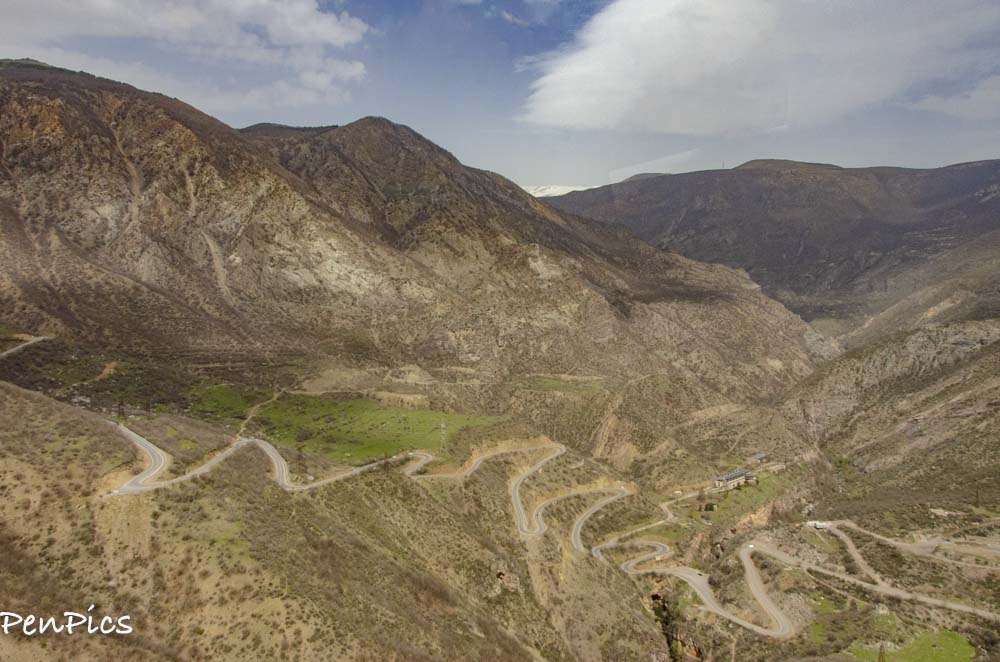
The view from the Tram is spectacular every inch of the way!
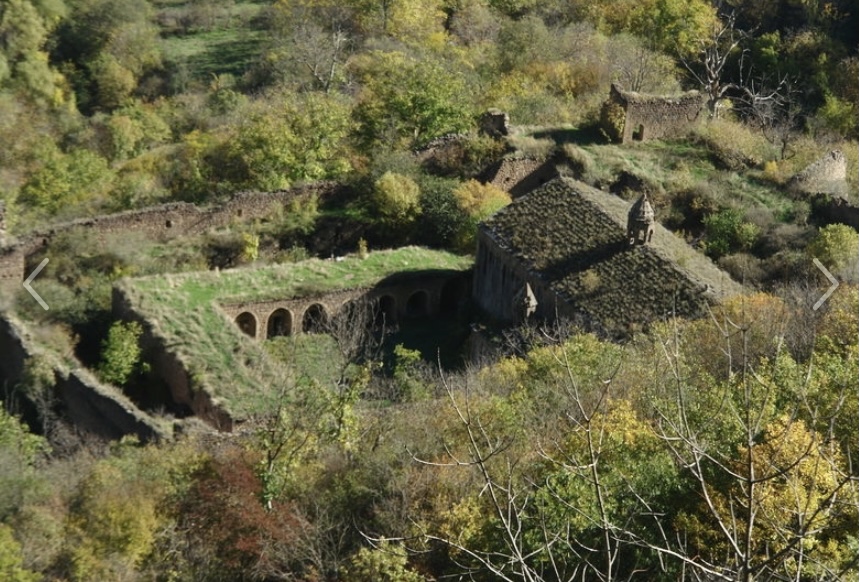
The Tram travels high above this ancient Monk residence complex, built in medieval times. It was mostly built (rebuilt) in the second half of the 17th century, following the 1658 earthquake and resolution of the Catholicos Hakob Jughayetsi, who ordered its construction to replace Harants Monastery. According to the chronicler Zakaria Aguletsi Harants’ Monks transferred to the new site in 1660 and the Monastery is mentioned in 1668 texts. At the end of 17th century Tatev’s head, Hovasap Aghuerdzetsi, added cells to the complex and the Monastery expanded in the 18th century. Tatevi Anapat had an important school and a manuscriptorium and survived to the end of the 19th century. Damaged in the 1931 earthquake, much of the complex survives to this day in remarkably good condition.

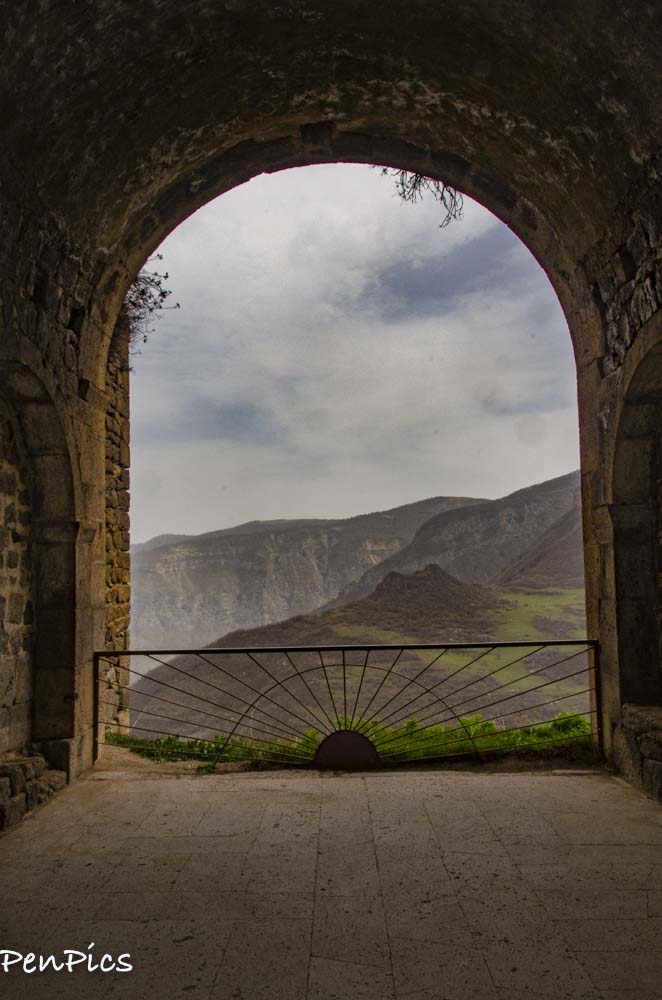
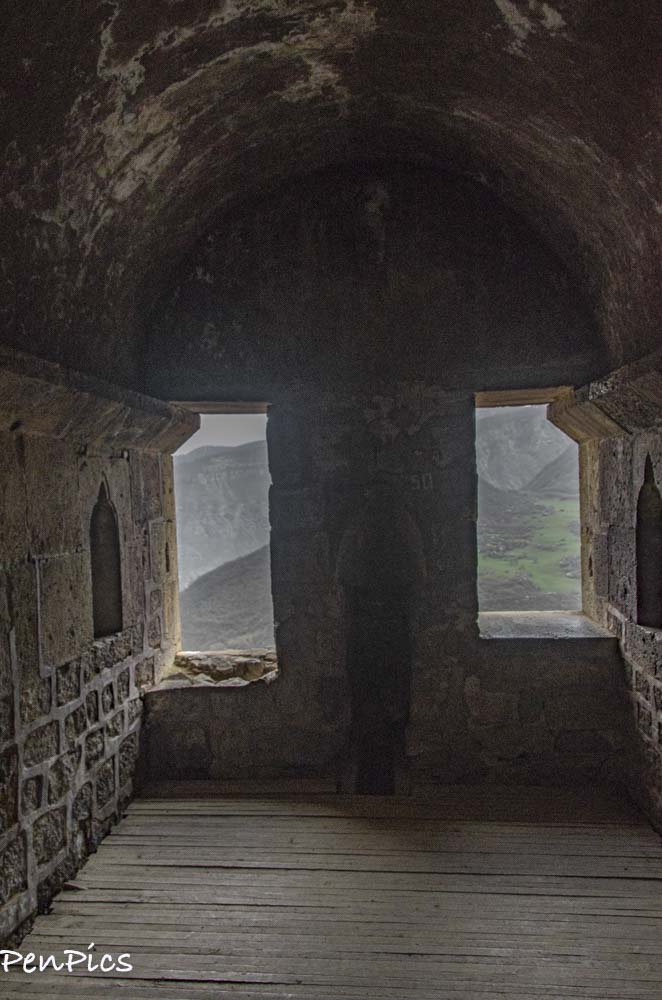
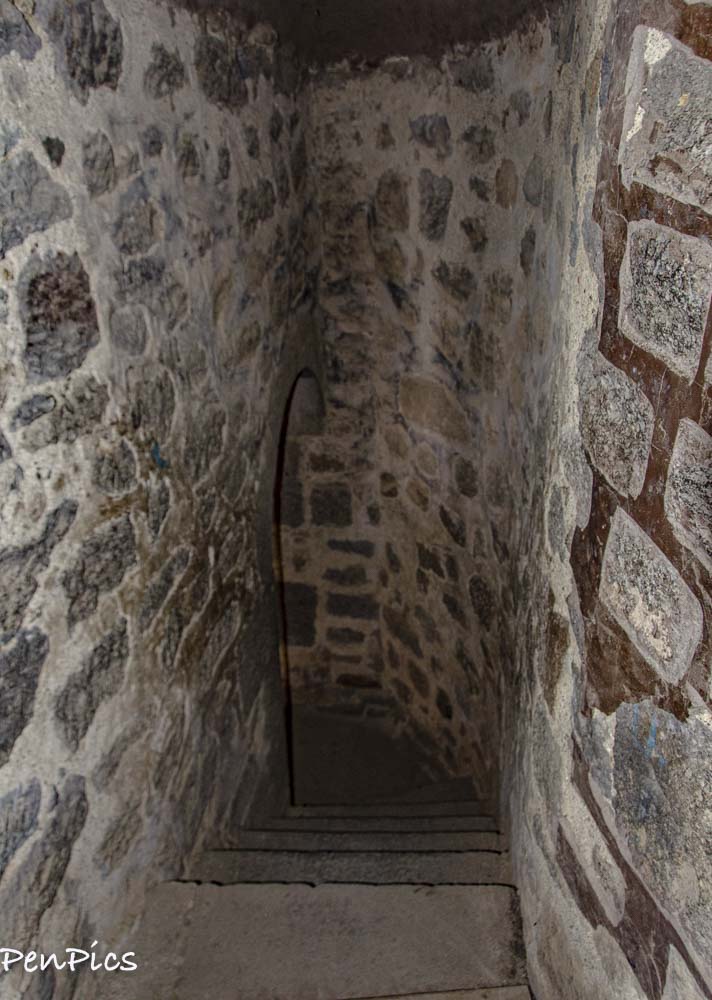
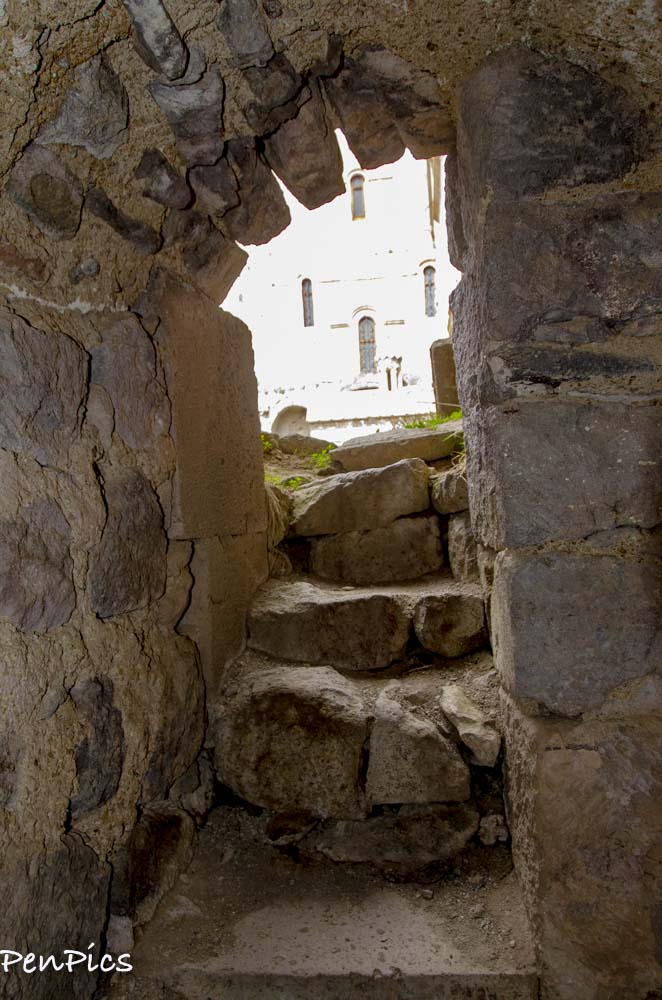
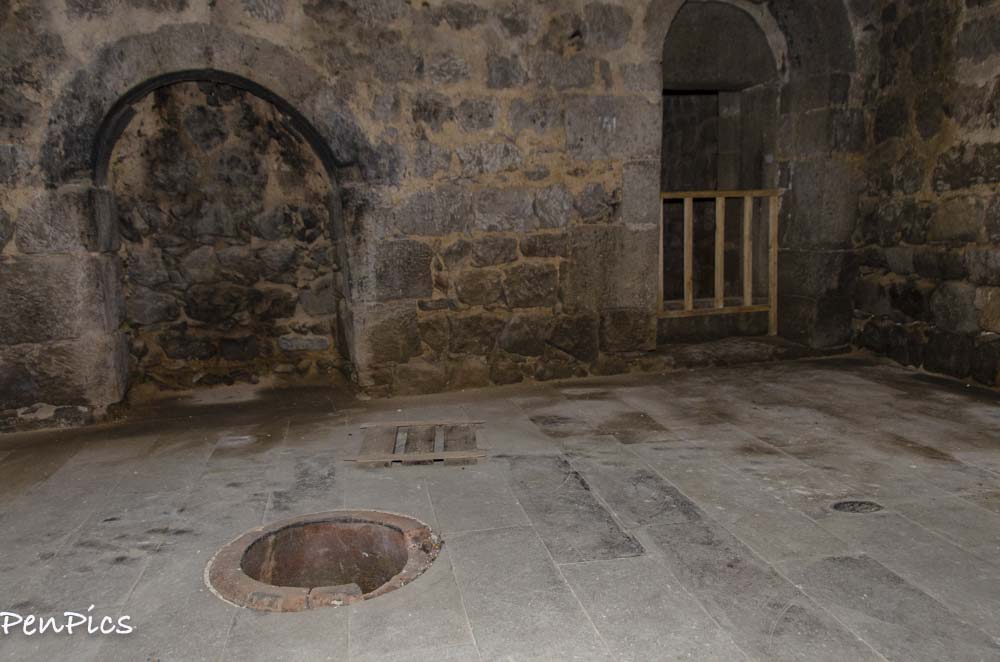
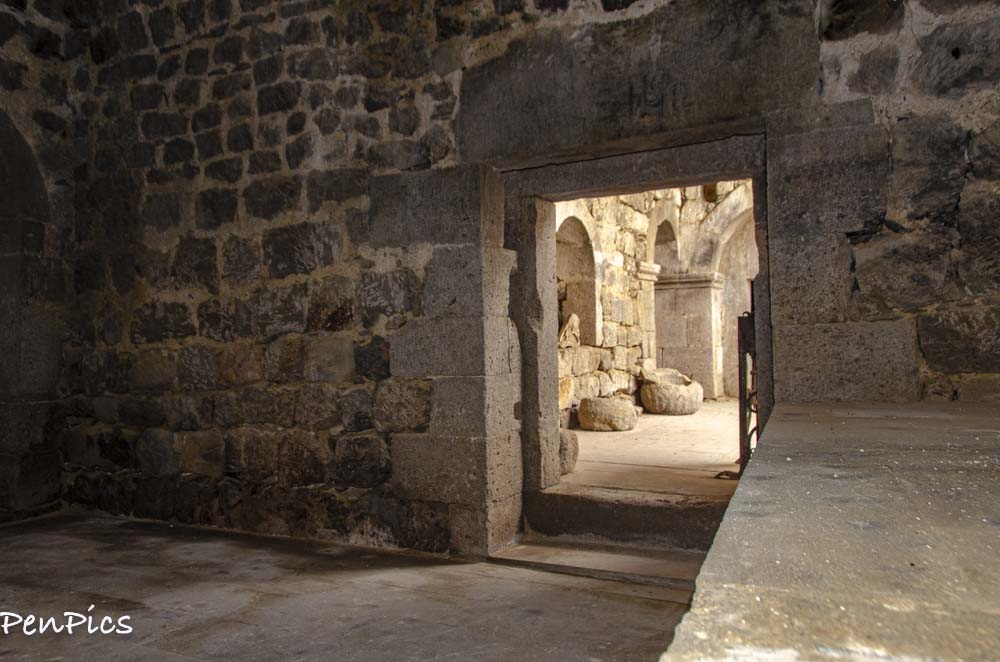
The Tram was fun, and I love a birds eye view of things! Then, we spent an hour checking out the amazing fortified Monastery. It was a bit like a castle with lots of underground tunnels and rooms.
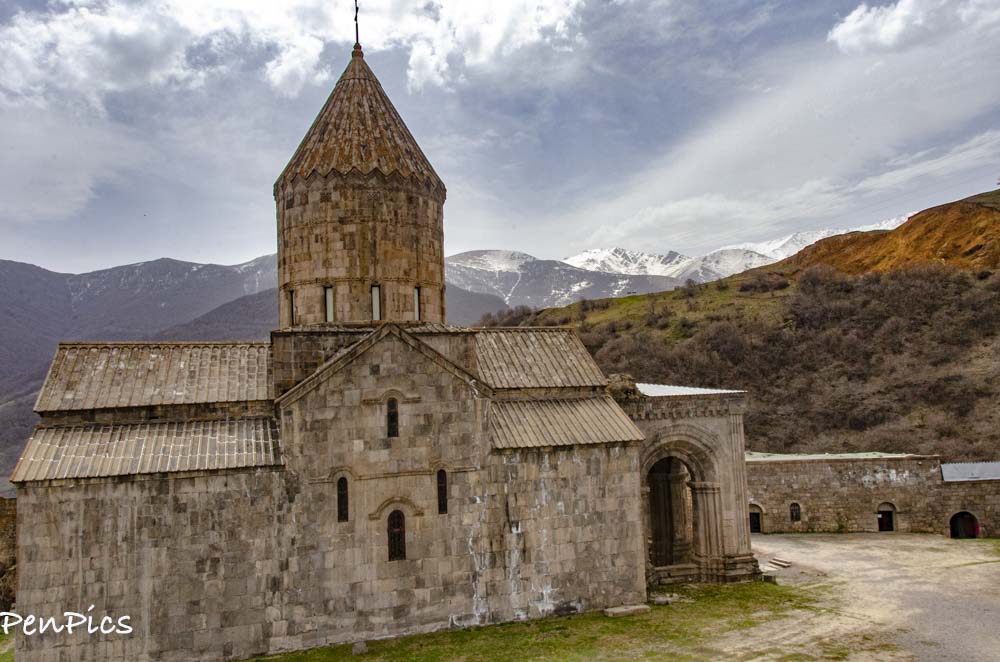
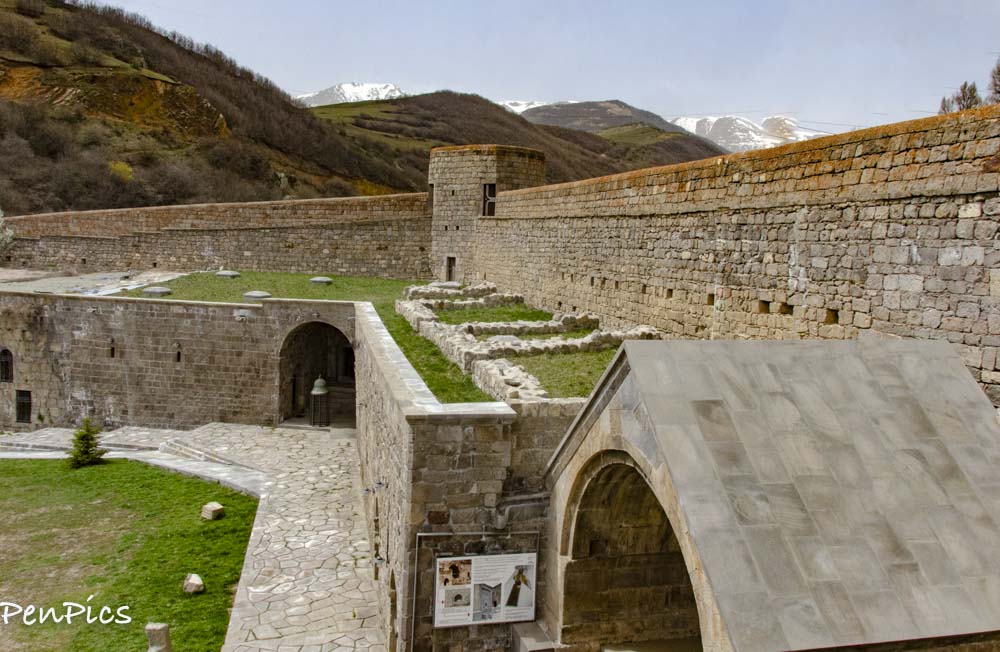
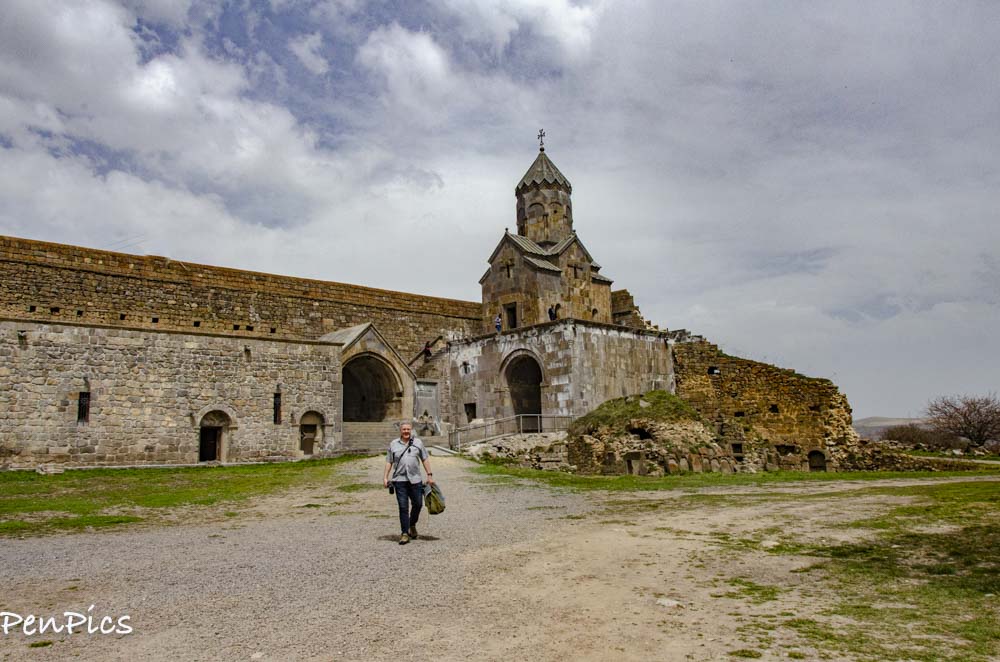
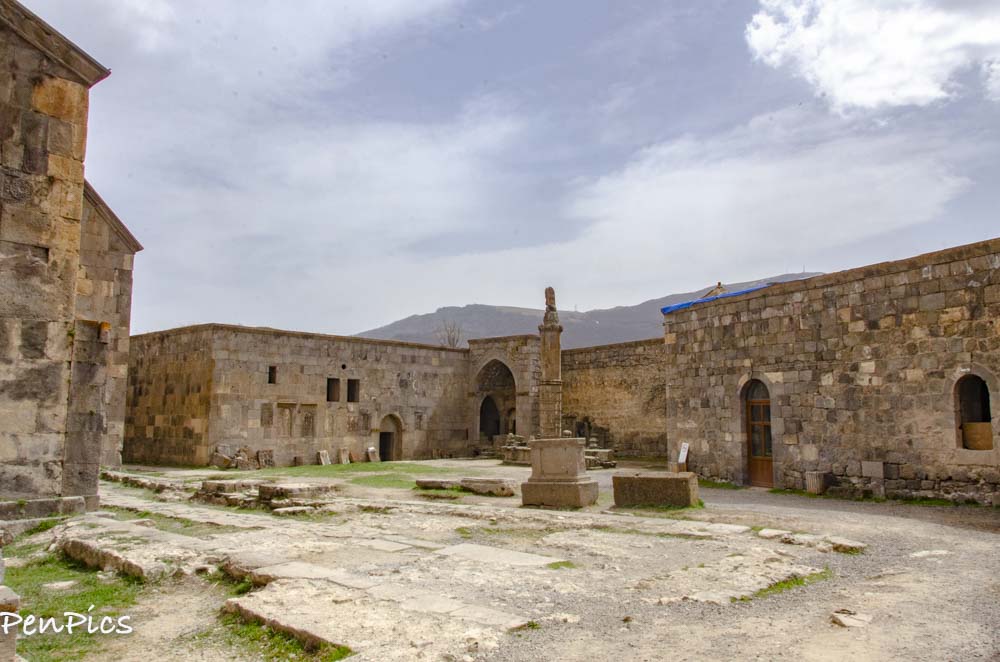
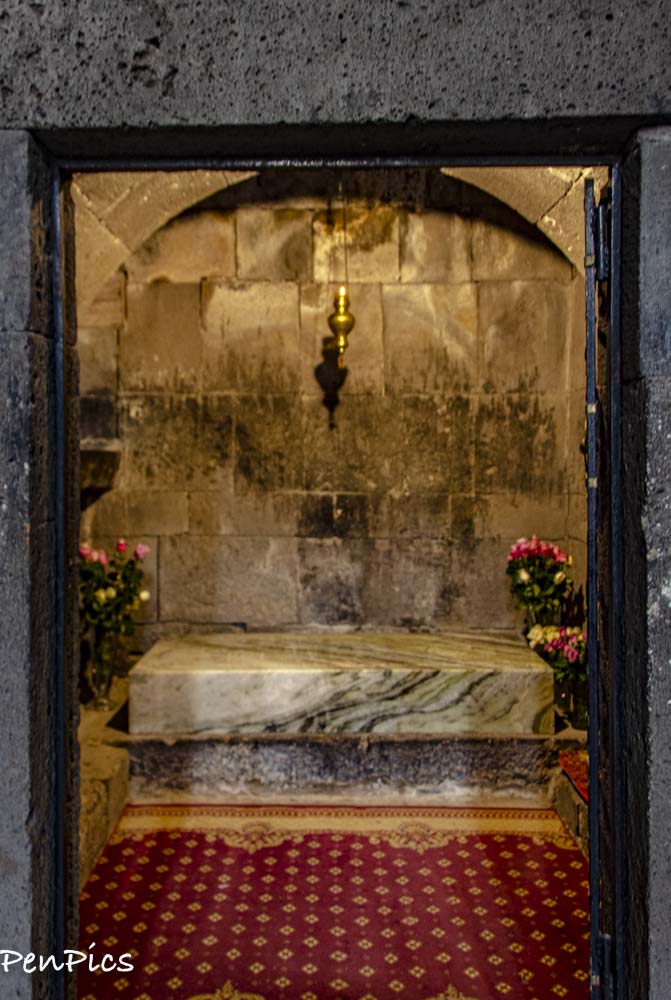
Tatev complex is quite large, and deserving of its reputation as a magnificent historic and natural sight. The entire complex is located on an impregnable precipice thrust over the Tatev and Vorotan gorges. Sheer rock walls and deep hills drop 700-800 meters to the river floor, making the site impervious to invasions on two sides. The other sides are wrapped with thick stone walls, defensive round towers and slit windows. The complex includes outer walls and a mill, the Poghos Petros Cathedral, St. Astvatsatsin and St. Grigor Churches, the Grigor Tatevatsi mausoleum, a Gavazan, dining hall, classrooms, manuscriptorium, pilgrim inn, dwellings, kitchen and numerous service buildings and Monk cells.
The current walls are 18th-20th century renovations of 9th century defenses but they preserve the outline and basic structure. The round tower has narrow slits for its windows with protruding stones on the outer surface. These open to an inner room and are built so that sentries could look down on passersby without being detected (or hurt by enemy arrows). As with other fortresses of the time, the walls were further strengthened by offices, rooms and cells built within the walls, creating a series of buttresses to support the wall system. The walls are not as tall as they once were (20 meters in parts), and are missing sections that ran along the east to the canyon edge. The old gate (4) has been walled over, but its arch can be seen along the walls. On the other side is a spring. The eastern gate (5) abuts the eastern turret and is under St. Astvatsatsin church.
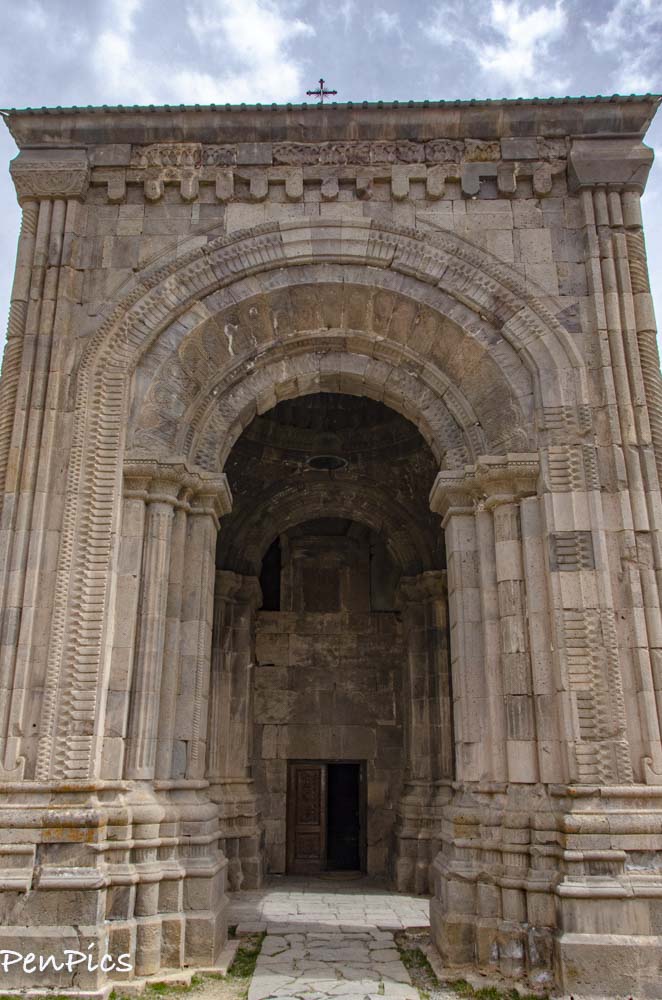
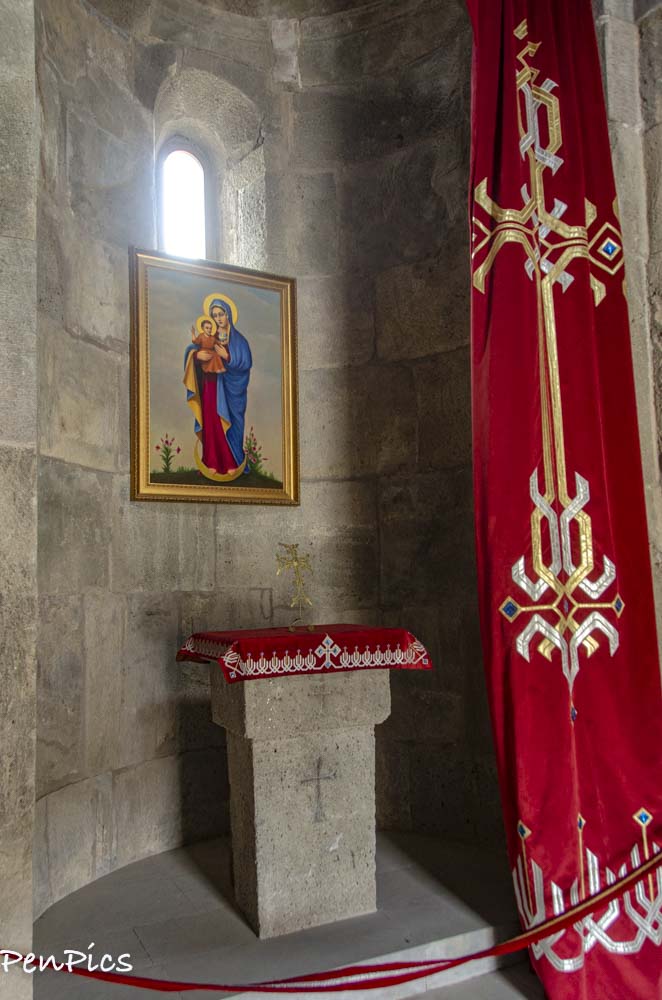
St. Astvatsatsin. This small 11th century chapel-church is set in the northeastern corner of the walls, on top of the vaulted eastern gate and mausoleum. The design is unique for Armenian churches, a small vertical two-story structure the first floor arched with a vault ceiling, the second domed. The entry has a wonderfully detailed wooden door.

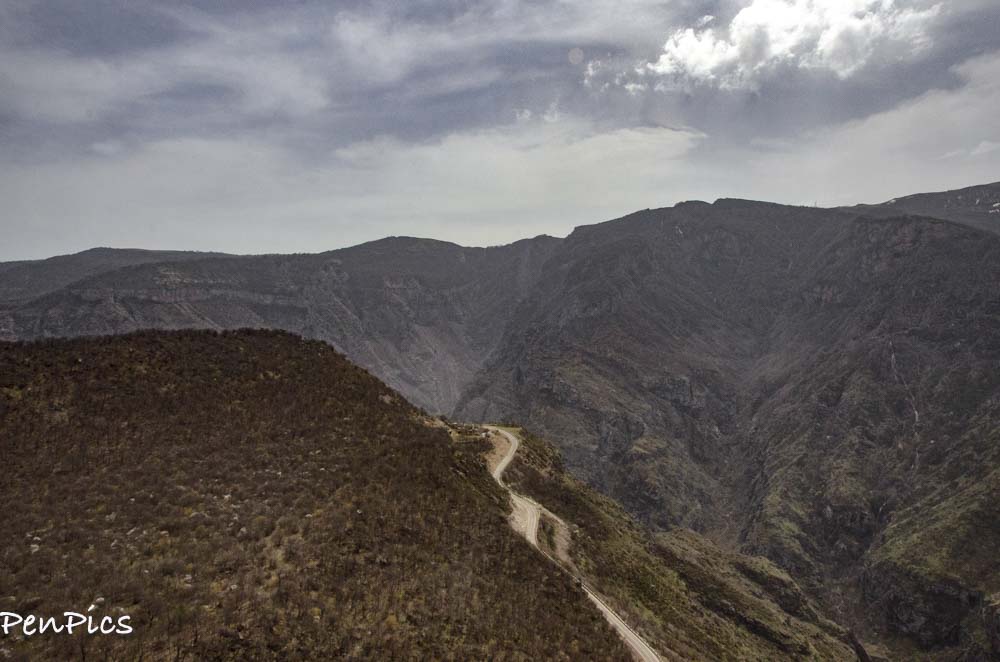
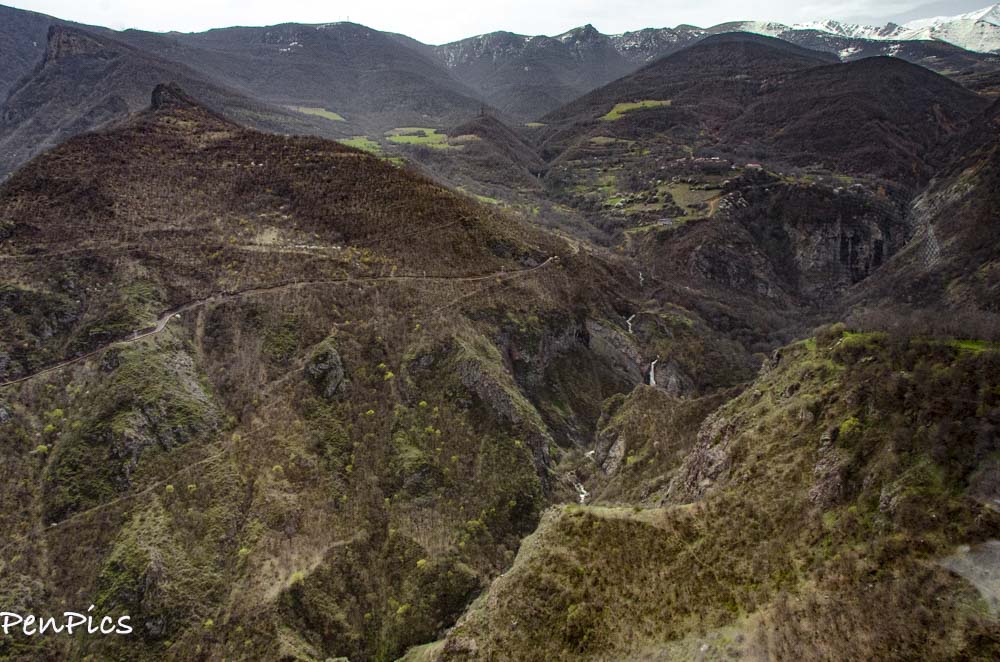
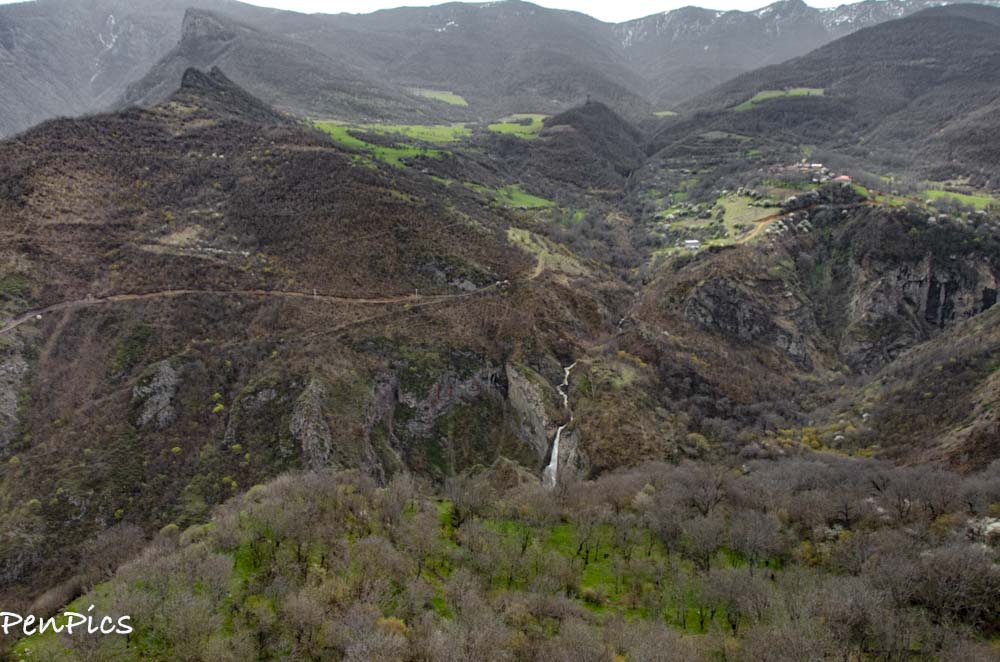
The morning we left the lodge, while everybody ate breakfast (I’m not an eater in the morning) I took a 20-minute round-trip drive by road; to and from the Tatev Monastery. This view is from across the gorge, not seen by being on the Tram. Yes, it is a fairytale place!

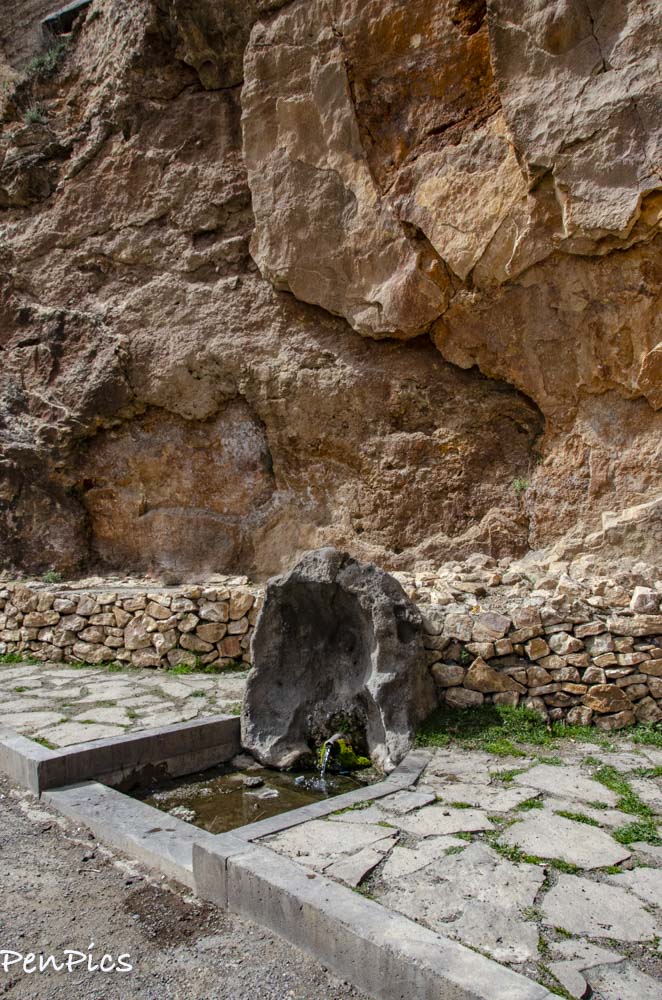
We finished our time around the ancient complex, and got back on the tram for the ride back to the parking lot. We all got in our vehicles and we followed our new friends to another part of the gorge. This stop is a natural bridge, called “Devils Bridge,” with an interesting story. We hiked in just a little ways, but could not see a way down to the actual bridge. It was a super interesting stop though, because natural carbonated spring water comes straight out of the mountain here!
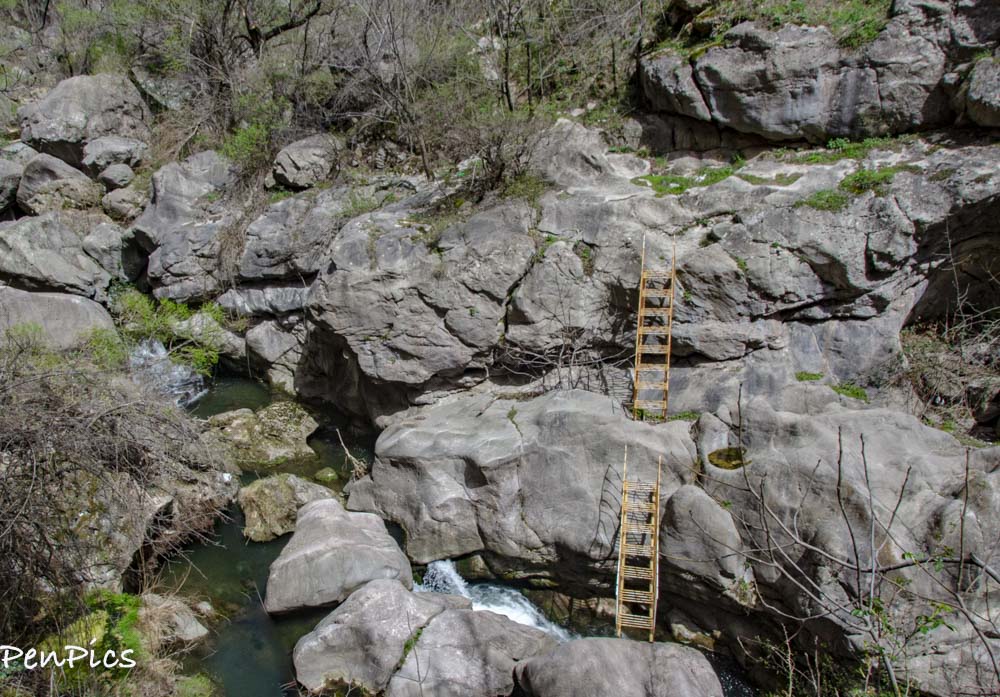
The gorge also includes Devil’s Bridge. In medieval times, a gigantic boulder fell from the cliff and wedged itself, into its current position. The “bridge” obscures the river’s course for over 164 feet. This is how it got is name. For centuries, it was used as a natural bridge to reach Tatev. The mineral springs erupting from cliff rocks at the site color the canyon and form stalactites under the bridge and a small pool of warm spring water attracts soakers for much of the year.
Natural carbonated water come right out of the mountain!


We continued our way to the lodge, just down the road for the night, and it was great. We all dined, together that evening on a delicious meal and enjoy the view and conversation

We made a plan to leave around 10AM the next morning and see if we could all make it to the Petroglyphs.We had such a fabulous day!
Join the Conversation

1 Comment

Leave a Reply to zidane Cancel reply

Your email address will not be published.

Go To Home Page

Archive Blog Posts of Our Country Visits

About Us

About Us

Hello and Welcome to our Travel Blog Website, We enjoy writing about our experiences and taking photos of our adventuring along the way. Our names are: Daryl and Pen, but Daryl calls me “Bunny.” We met, quite randomly, whilst both… Read More