


Turkey 🇹🇷 ~Ephesus “Ancient City, Ayasuluk Castle and St John’s Basilica Ruins near Izmer”
This was our last site to tour, while in Turkey. From here, we are making our way back to Istanbul. Not only is this the end of our road-tripping in this wonderful country, but it is also the end of our total-road-tripping over the last four-plus months, throughout the Balkans. We have made the best memories from this time on the road, in this region. (Turkey is actually a little bit Europe, Asia, and Balkans).
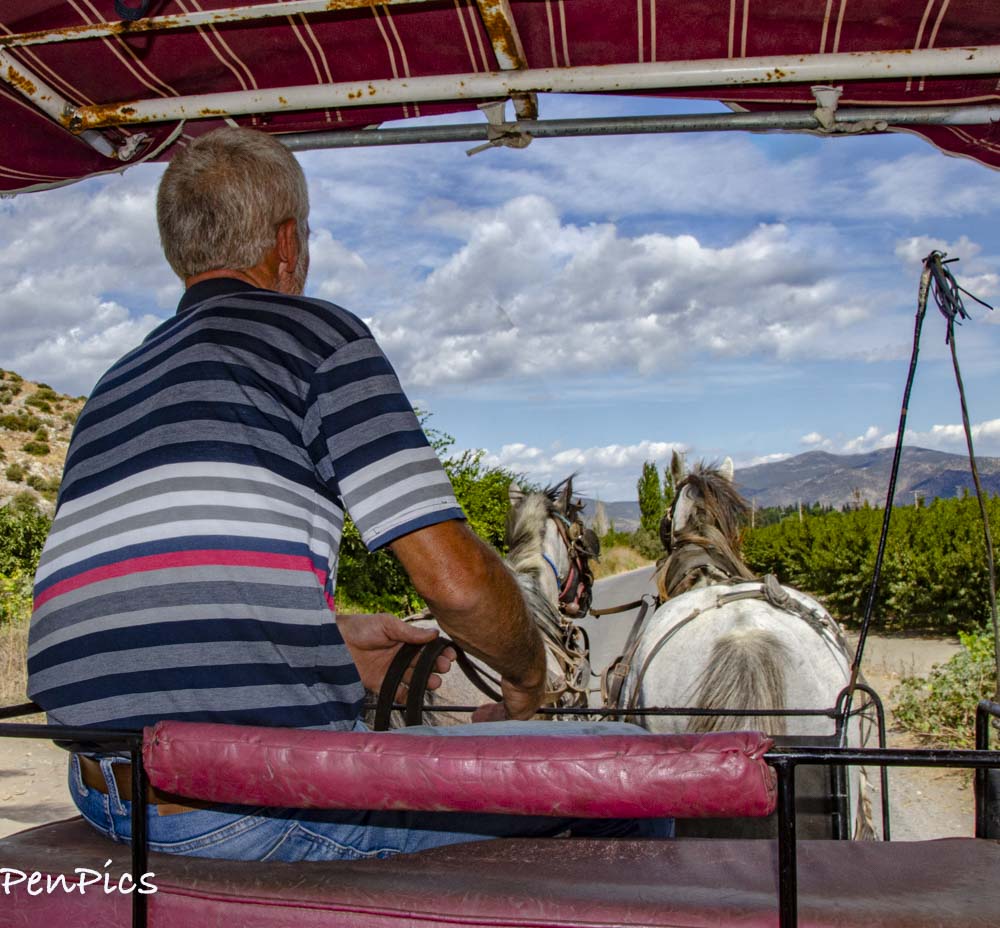
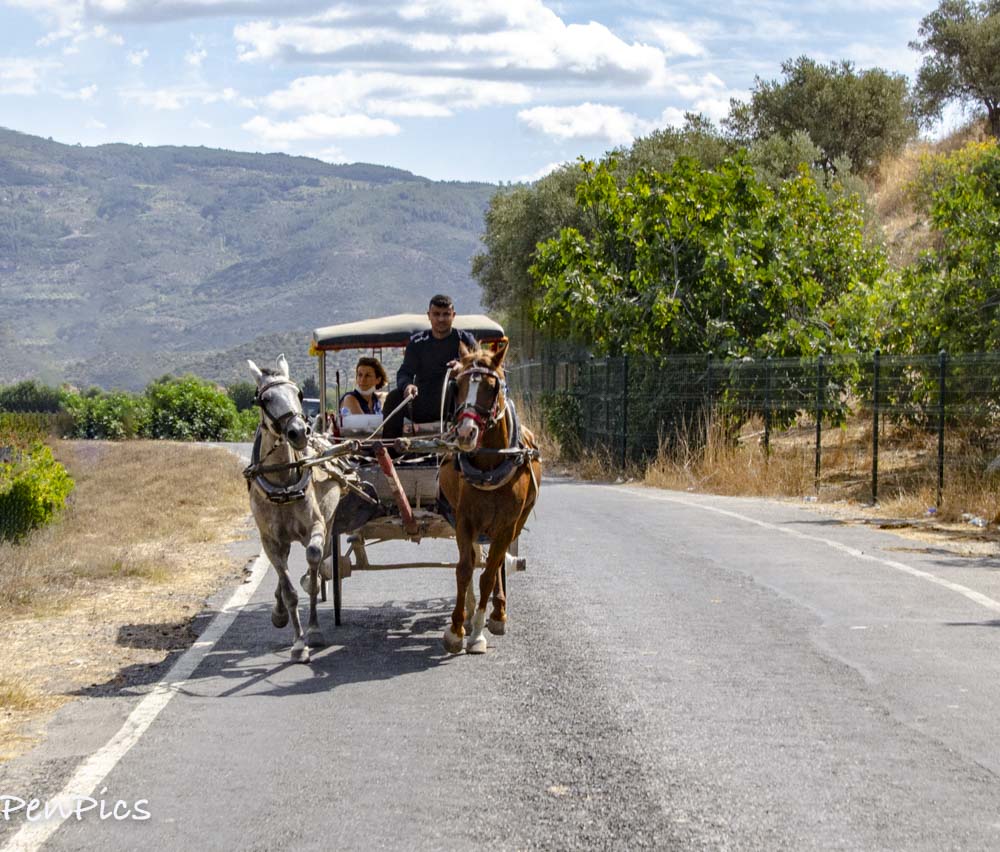
On this day, we entered another Ancient City, well known in Turkey. Unlike the one we saw before this; Hierapolis, there is no driving allowed in the Ancient City of Ephesus, as the only road is the original road, or wooden walkways. This adventure was a self-walking tour, with a car park on each end. We added extra fun, by taking a horse and buggy ride from the car park, around Ephesus, and getting dropped at the car park on the other end. From there, we walked the ancient streets, back to our car. It made for a full afternoon, but we savoured our final site to tour, having mixed feelings about leaving, yet excited to be leaving for new adventures.
Ancient City of Ephesus
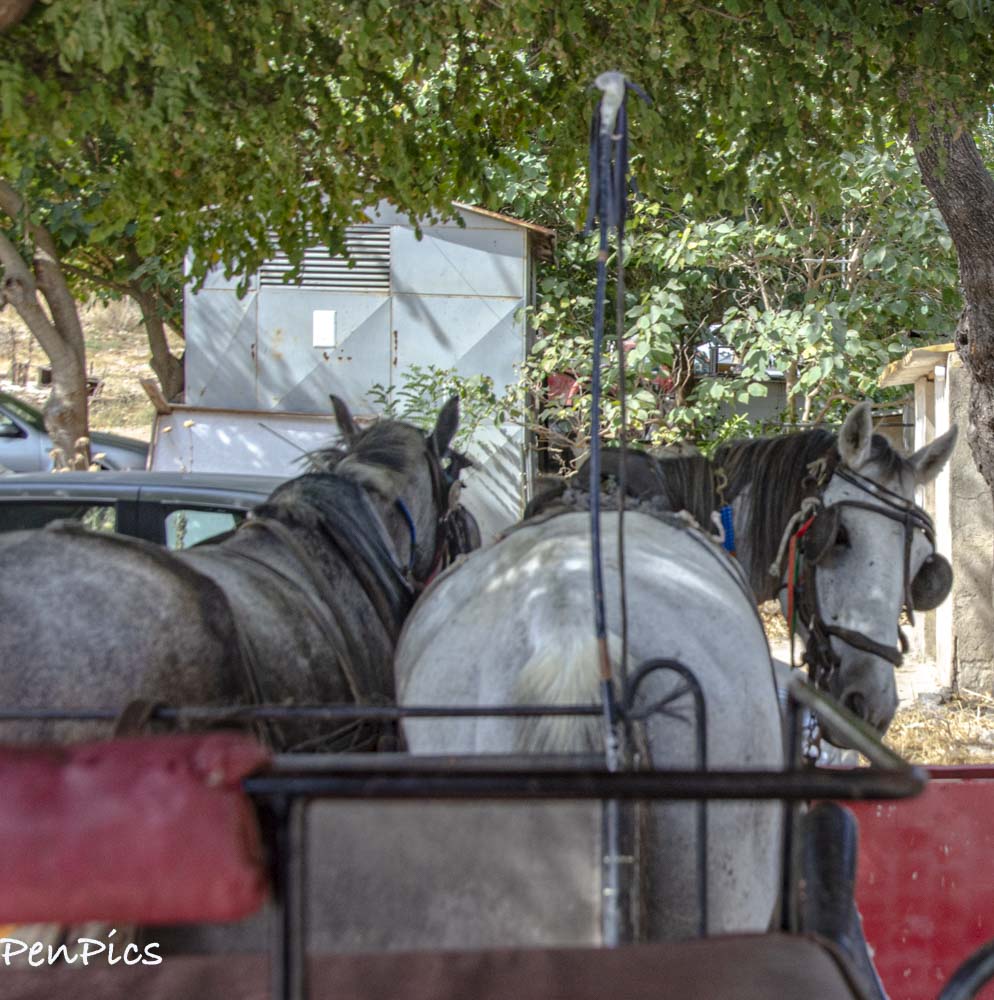
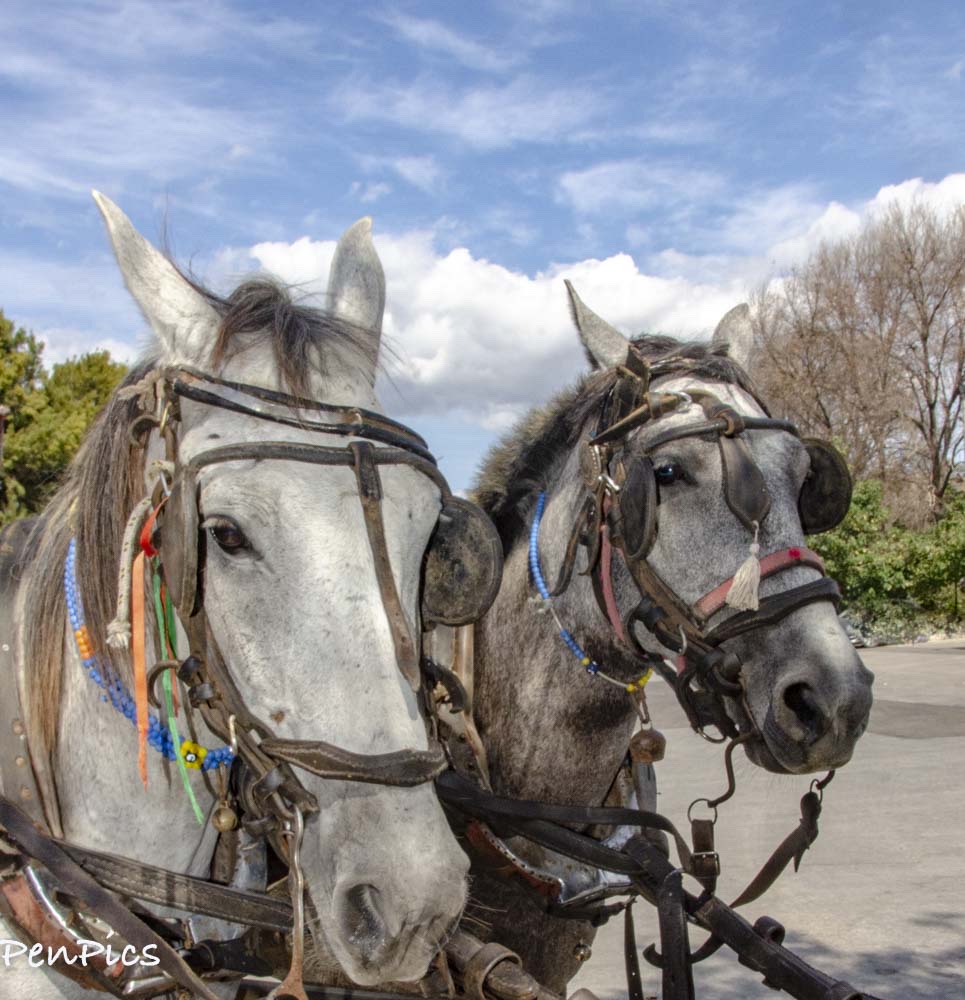
Our buggy pullers. They really stepped-out on the roadway, and they are in good shape, because they don’t break a sweat or breath hard. Its a bout a 15 minute buggy ride. The horses are all in good shape and look well groomed and fed


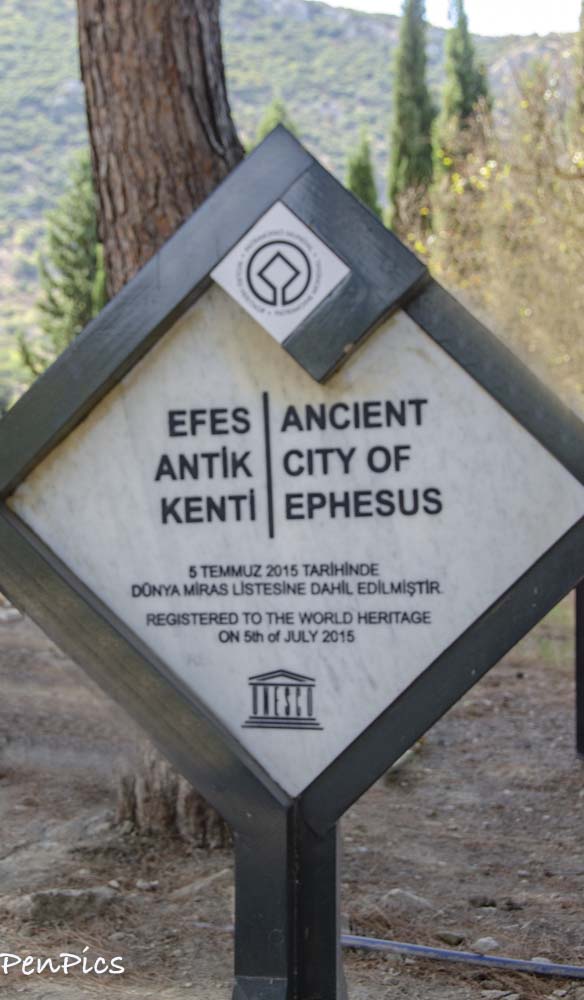
Ephesus was an ancient port city whose well-preserved ruins are in modern-day Turkey. The city was once considered the most important Greek city and the most important trading center in the Mediterranean region. Throughout history, Ephesus survived multiple attacks and changed hands many times, between conquerors. It was also a hotbed of early Christian evangelism and remains an important archaeological site and Christian pilgrimage destination.
In 129 BC, King Attalos of Pergamon left Ephesus to the Roman Empire in his will and the city became the seat of the regional Roman governor. The reforms of Caesar Augustus brought Ephesus to its most prosperous time, which lasted until the third century AD.
Most of the Ephesian ruins seen today such as the enormous amphitheater, the Library of Celsus, the public space (agora) and the aqueducts were built or rebuilt during Augustus’s reign.
During the reign of Tiberius, Ephesus flourished as a port city. A business district was opened around 43 BC, to service the massive amounts of goods arriving or departing from the man-made harbor and from caravans traveling the Ancient Royal Road.
According to some sources, Ephesus was at the time second only to Rome as a cosmopolitan center of culture and commerce.


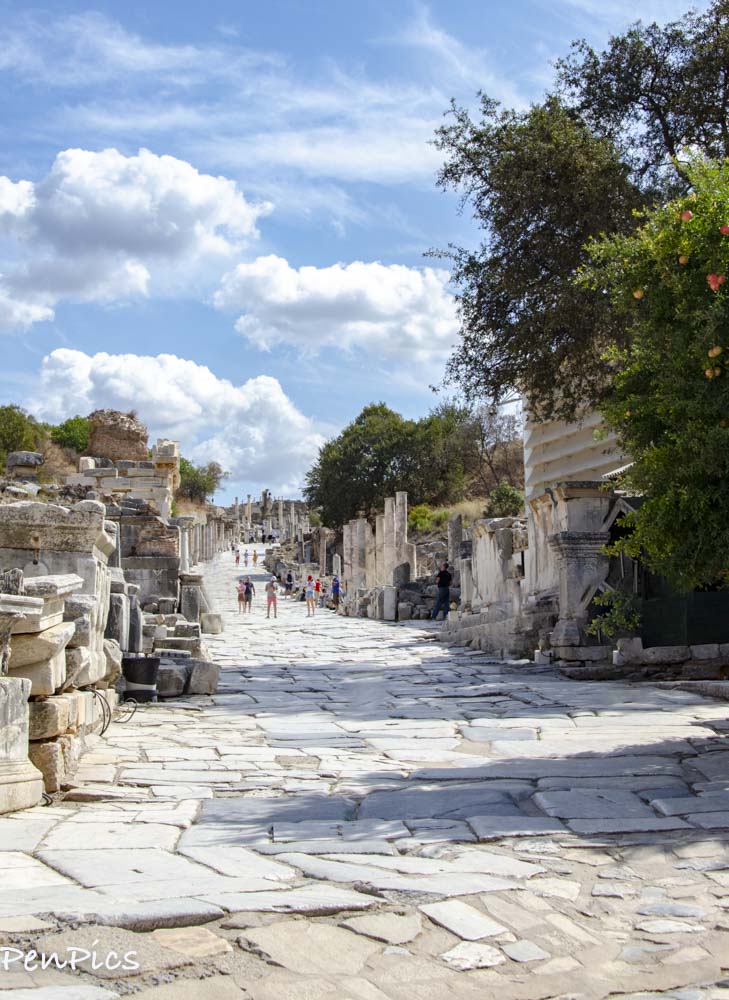
Arcadiane Street is situated between the Harbour Baths and the Ephesus Theater. Entering from the port, traders and sailors would first arrive on this street. So it was designed with gorgeous marble slabs and colonnades. It was constructed in the Hellenistic Period, but then was restored during the reign of the Emperor Arcadius; 395-408 AD, from whom it takes its present name. The street was 1739 feet long atone time, and on both sides of the street there were shops, galleries, and gates in the form of monumental arches. There were four higher columns with the statues of four Apostles on the top. It was one of the three lighted street at that time along with Rome and Antioch. 50 streetlights lit up its colonnades. Water, and sewer channels ran beneath the marble flagstones.
At the entrance of the port there were the Port Baths or the Harbor Baths They were built in the year 2 AD. The Baths are also called the Baths of Constantine, for they were restored by Constantine II, between 337-361
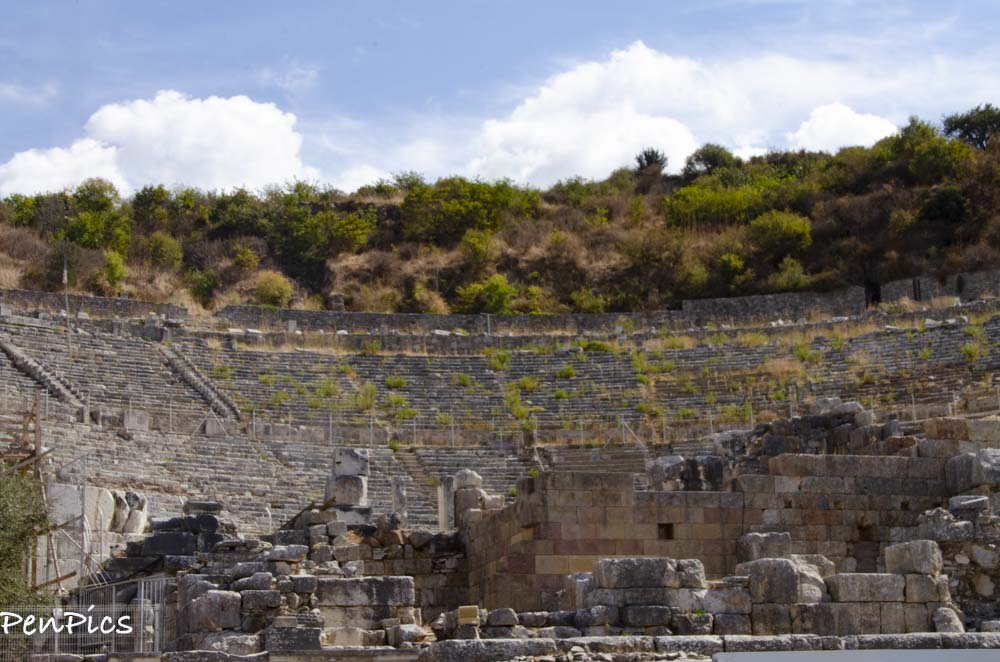
This Theater is located on the slope of Panayir Hill, opposite the Harbor Street, and easily seen when entering from the south entrance to Ephesus. It was first constructed in the Hellenistic Period, in the third century BC, during the reign of Lysimachos. Then, during the Roman Period, it was enlarged and formed its current style that is seen today.
It is the largest in Anatolia and has the capacity of 25,000 seats. The cavea has sixty six rows of seats, divided by two diazoma (walkway between seats) into three horizontal sections. There are three sections of seats. In the lower section, Marble pieces, used for restoration, and the Emperor’s Box were found. The seats with backs ,made of marble, were reserved for important people. The audience entered from the upper cavea.
The stage building is three stories.
The Ephesus Theatre was used not only for concerts and plays, but also for religious, political and philosophical discussions and for gladiator and animal fights.
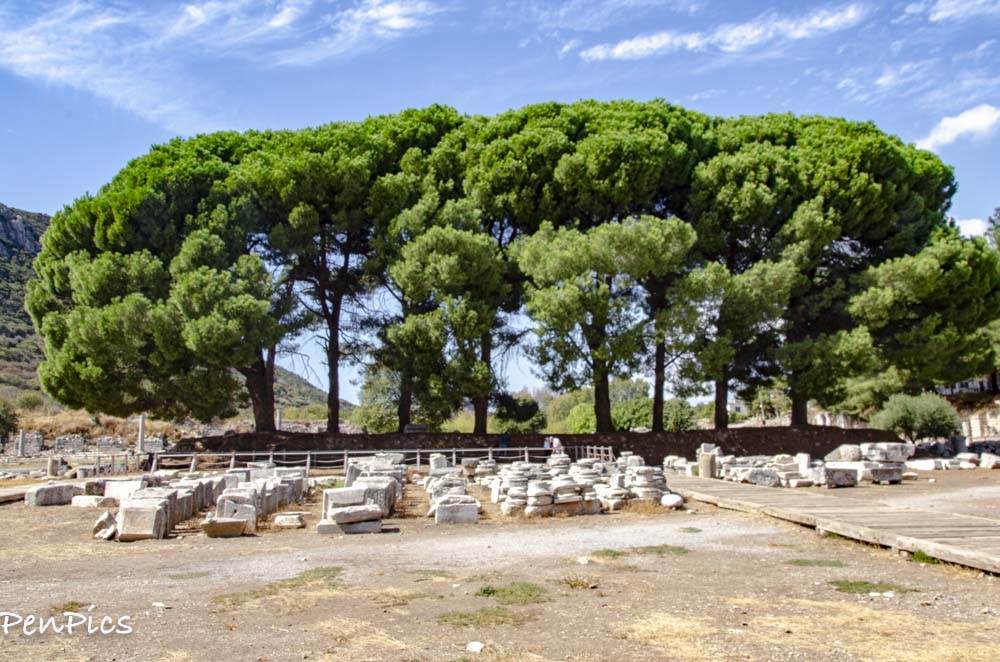
According to legend, the Ionian prince, Androclos founded Ephesus in the eleventh century BC. The legend says that as Androclos searched for a new Greek settlement, he turned to the Delphi oracles for guidance. The oracles told him a boar and a fish would show him the new location.
One day, as Androclos was frying fish over an open fire, a fish flopped out of the frying pan and landed in the nearby bushes. A spark ignited the bushes and a wild boar ran out. Recalling the oracles’ wisdom, Androclos built his new settlement where the bushes stood and called it Ephesus.
Another legend says Ephesus was founded by the Amazons, a tribe of female warriors, and that the city was named after their queen, Ephesia.

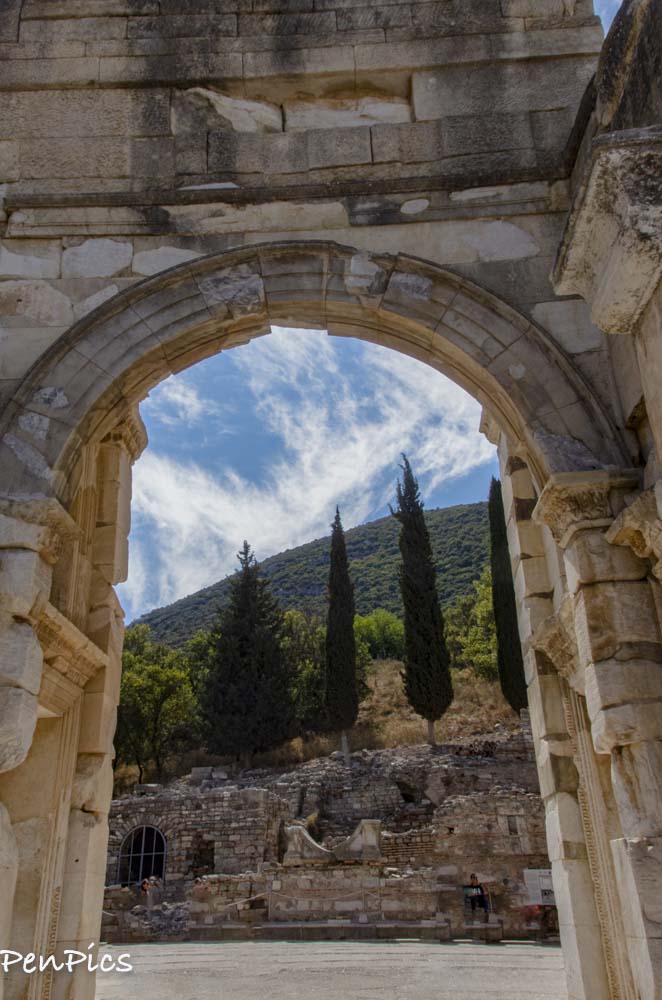

is one of the most beautiful structures in Ephesus. It was built in 117 AD. Celsus Library was a monumental tomb for Gaius Julius Celsus Polemaeanus, the governor of the province of Asia; from his son Galius Julius Aquila. The grave of Celsus was beneath the ground floor, across the entrance and there was a statue of Athena over it. Because Athena was the goddess of the wisdom.
The scrolls of the manuscripts were kept in cupboards in niches on the walls. There were double walls behind the bookcases to prevent the them from the extremes of temperature and humidity. The capacity of the library was more than 12,000 scrolls. It was the third richest library in ancient times after the Alexandra and Pergamum.
The facade of the library has two-stories, with Corinthian style columns on the ground floor and three entrances to the building. There is three windows openings in the upper story. They used an optical trick that the columns at the sides of the facade are shorter than those at the center, giving the illusion of the building being greater in size.
The statues in the niches of the columns today are the copies of the originals. The statues symbolize wisdom (Sophia), knowledge (Episteme), intelligence (Ennoia) and valor (Arete). These are the virtues of Celsus. The library was restored with the aid of the Austrian Archaeological Institute and the originals of the original statues were taken toEphesus Museum in Vienna, in 1910.

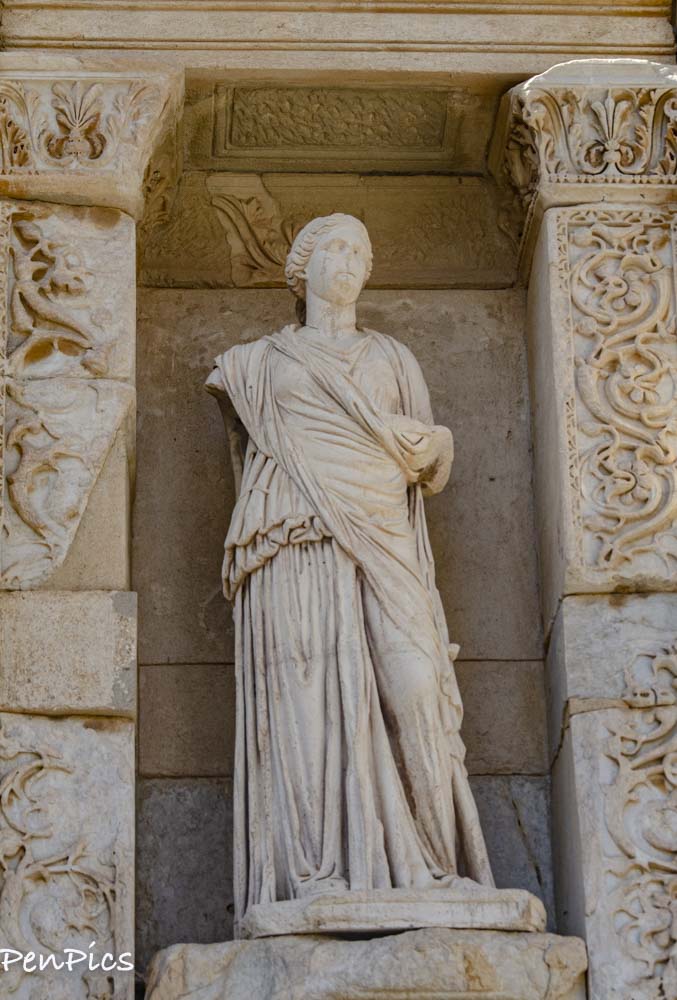
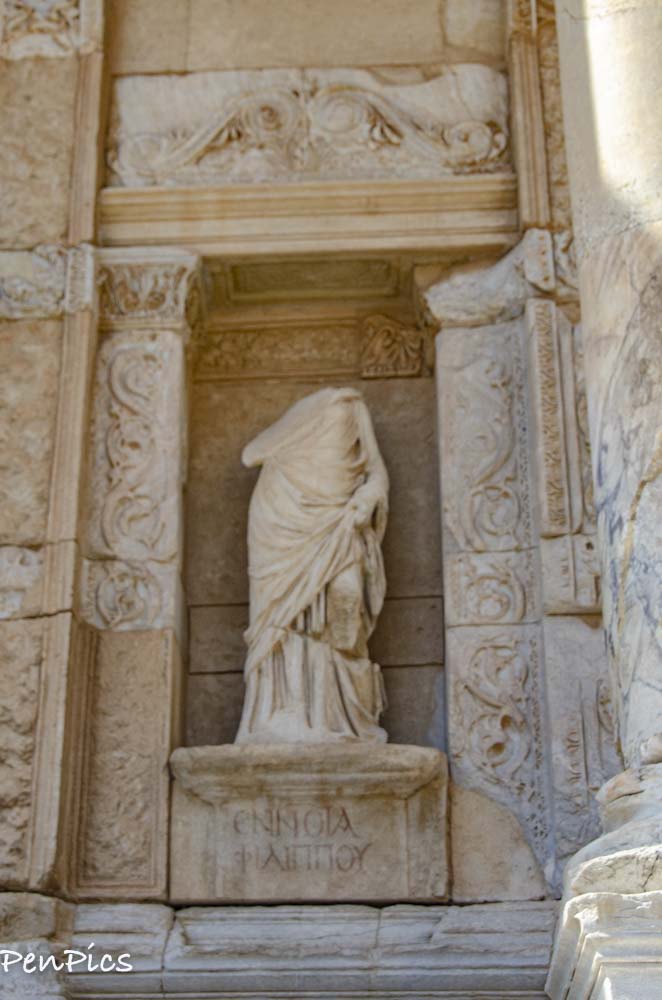
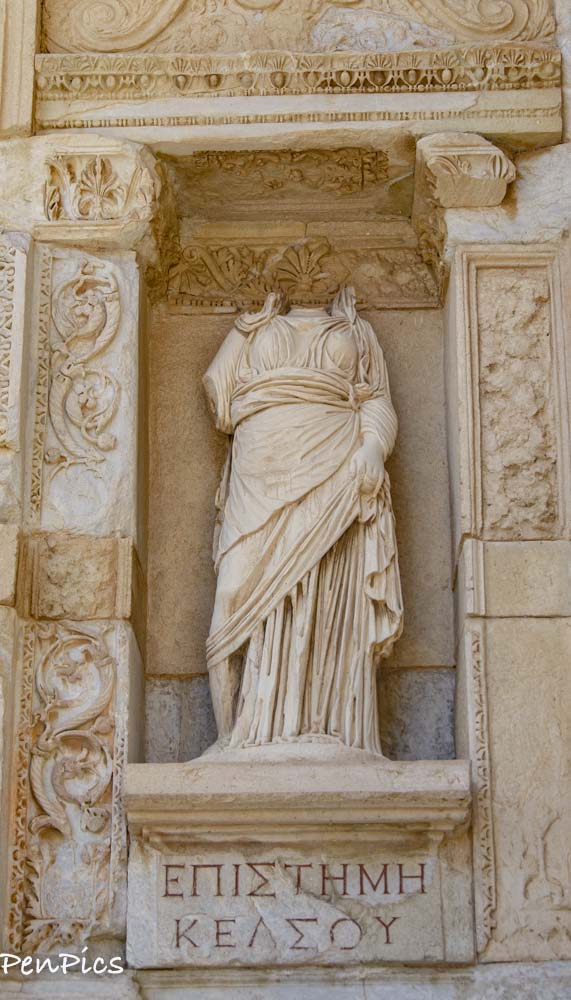


Ephesus played a vital role in the spread of Christianity. Starting in the first century AD, notable Christians such as Saint Paul and Saint John visited and rebuked the cults of Artemis, winning many Christian converts in the process.
Mary, the mother of Jesus, is thought to have spent her last years in Ephesus with Saint John. Her house and John’s tomb can be visited there today.
Ephesus is mentioned multiple times in the New Testament, and the biblical book of Ephesians, written around 60 AD, is thought to be a letter from Paul to Ephesian Christians, although some scholars question the source.
Not every Ephesian was open to Paul’s Christian message. Chapter 19 in the Book of Acts tells of a riot started by a man named Demetrius. Demetrius made silver coins featuring the likeness of Artemis.
Tired of Paul’s attacks on the goddess he worshipped, and worried that the spread of Christianity would ruin his trade, Demetrius plotted a riot and enticed a large crowd to turn against Paul and his disciples. Ephesian officials, however, protected Paul and his followers and eventually Christianity became the city’s official religion.

In 262 AD, the Goths destroyed Ephesus, including the Temple of Artemis. Some restoration of the city took place, but it never regained its splendor. In 431 AD, a council was held in the Church of Saint Mary which confirmed the Virgin Mary as the mother of God.
Emperor Theodosius erased all traces of Artemis during his reign. He banned freedom of worship, closed the schools and temples and forbade women many of the rights they’d enjoyed before. The Temple of Artemis was destroyed, and its ruins used to build Christian churches.
During the Byzantine era, Constantine the Great declared Christianity the official religion of all of Rome and made Constantinople the capital of the Roman Eastern Empire. This left Ephesus, a city already facing decline due to accumulating silt in its harbor, left to fend increasingly for itself.
The city relied heavily on its iconic places of worship to attract visitors to support its struggling economy. Still, Ephesus was a port city with a deteriorating harbor and there was only so much that could be done to literally keep it afloat.
In the sixth and seventh centuries AD, a massive earthquake and the harbor’s continuing decline left Ephesus a shell of the city it used to be, and Arab invasions forced most of the population of Ephesus to flee and start a new settlement, elsewhere. Ephesus continued to deteriorate, although it experienced a brief period of growth and construction under the rule of the Seljuk Turks in the 14th century.
The Ottoman Empire took final control of Ephesus in the 15th century; however, the city was in dire straits, with its harbor practically useless. By the end of that century, Ephesus was abandoned, its legacy left to archaeologists, historians and the thousands of visitors to flock to the region each year to see the ancient ruins.

There were many houses on the slope, coming down to Curetes Street. They were used by the rich of Ephesians. Under the houses there were colonnaded galleries with mosaics on the floor. they were laid there, in front of the shops which had roof s to protect the pedestrians from sun or rain
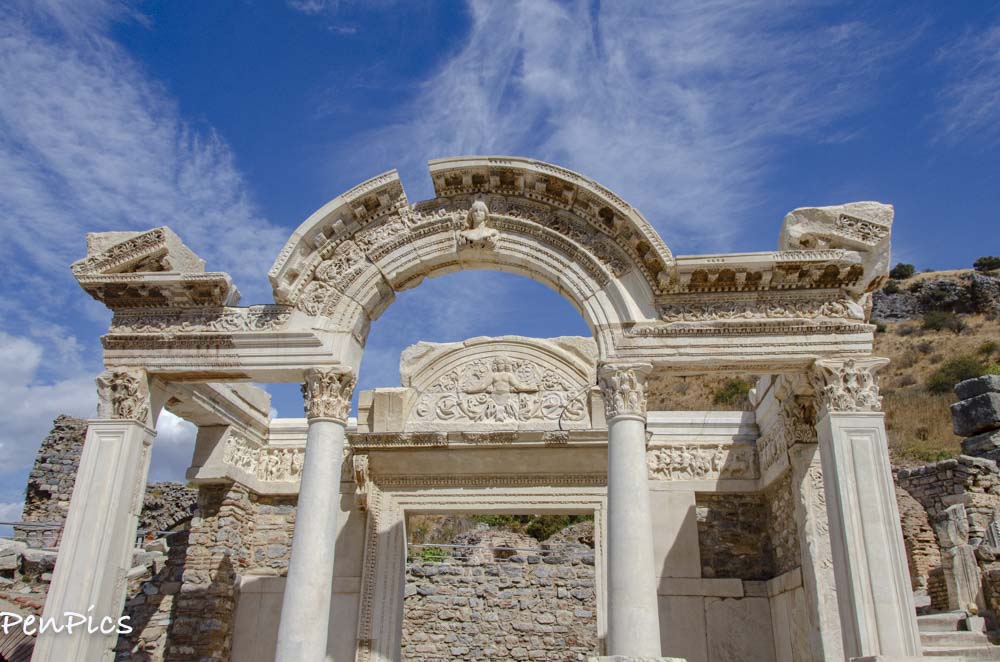
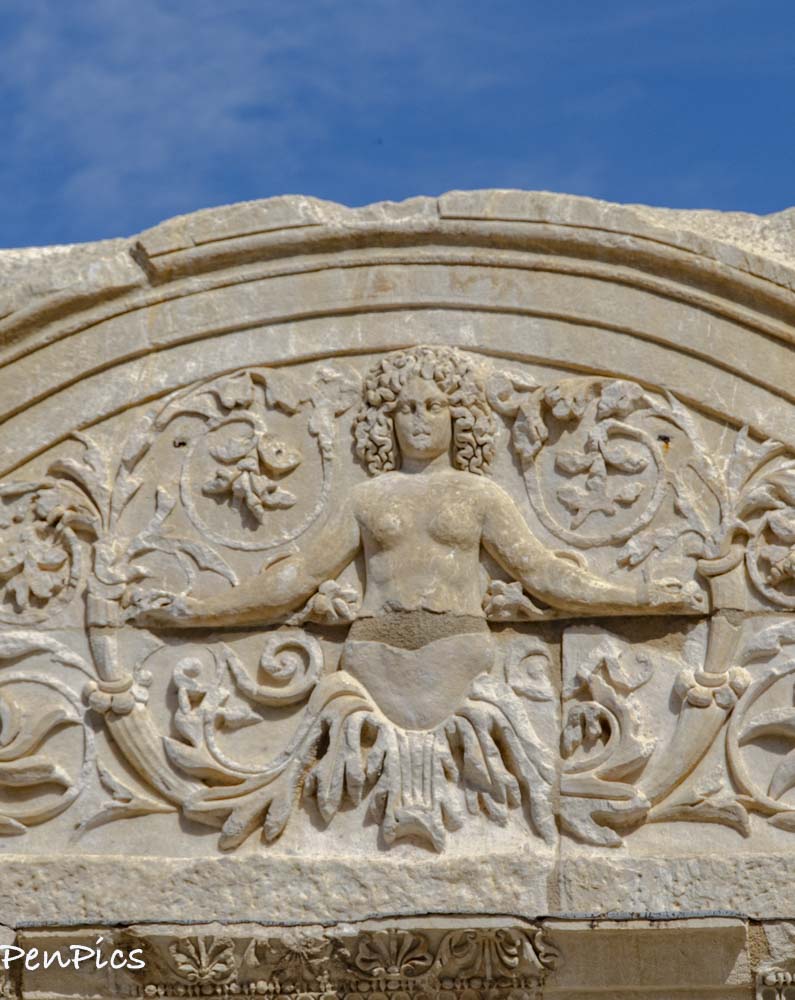
Inside this Temple, above the door, a human figure, probably Medusa, stands with ornaments of acanthus leaves. On both sides there are friezes depicting the story of the foundation of Ephesus; Androklos shooting a boar, Dionysus in ceremonial procession and the Amazons. The fourth frieze portrays two male figures, one of which is Apollo; Athena, goddess of the moon; a female figure, Androkles, Herakles, the wife and son of Theodosius and the goddess Athena. The friezes that are seen today are copies, and the originals are displayed in Ephesus Museum.
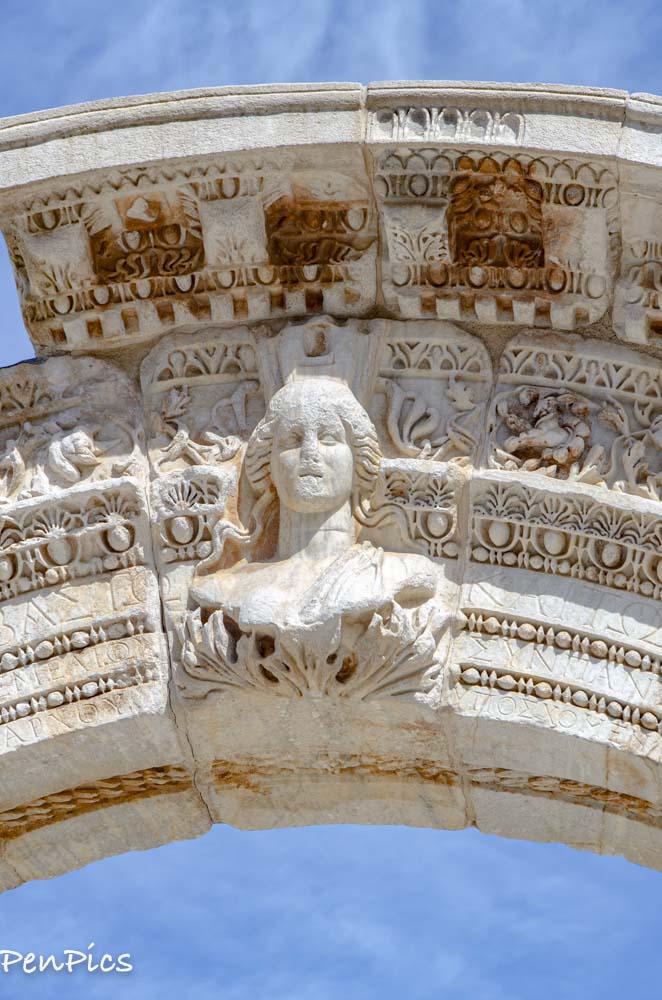

There were fountains, monuments, statues and shops on the sides of the street. The shops on the south side were two-storied. Ephesus had many earthquakes, in which several structures, including the Curetes Street were damaged. The damage, especially on the columns were restored by the new ones, but after the earthquake in the 4th century, the columns were replaced by the other ones brought from different buildings in the city. The differences between the design of the columns can be seen, today.
The street has had its appearance from the 4th century.
Hercules Gate is located towards the end of the Curetes Street. It was called the Hercules Gate because of the relief of Hercules on it. It was brought from another place in the 4th century AD to its current place, but the relief on it dates back to the second century AD.
Only the two side of the columns remain today and the other parts of it have not been found. The relief of the flying Nike in the Domitian Square is thought to also be a part of this gate.
The Heracles Gate narrowed the access to the street, preventing the passage of vehicles.We can understand that from the 4th Century, the street had become a pedestrian area.
In these reliefs Heracles was depicting with the skin of the Nemean lion in myhtology. The Nemean lion had been terrorizing the area around Nemea, and had a skin so thick that it was impossible to kill it. Finally he wrestled the lion to the ground, eventually killing it by thrusting his arm down its throat and choking it to death. Heracles was the god of power and strength.

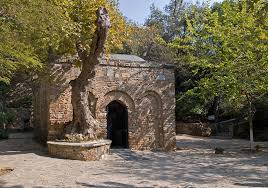
JUST WOW
Ephesus is particularly important for faith tourism as it contains the House of the Virgin Mary. It is believed that the Virgin Mary was taken to this stone house by St John, where she lived until her death at the age of 101. The Church of the Virgin Mary, close to the original harbour of Ephesus, was the setting for the Third Ecumenical Council in 431. Two other religious sites worth visiting are the Basilica of St John, built in the sixth century, and İsa Bey Mosque, which is a sample of Seljuk architecture. Ephesus is not just a touristic site. It is home to the International İzmir Festival utilizing its grand amphitheatre, Celsus Library and the House of the Virgin Mary.

Ayasuluk Castle and St John’s Basilica Ruins

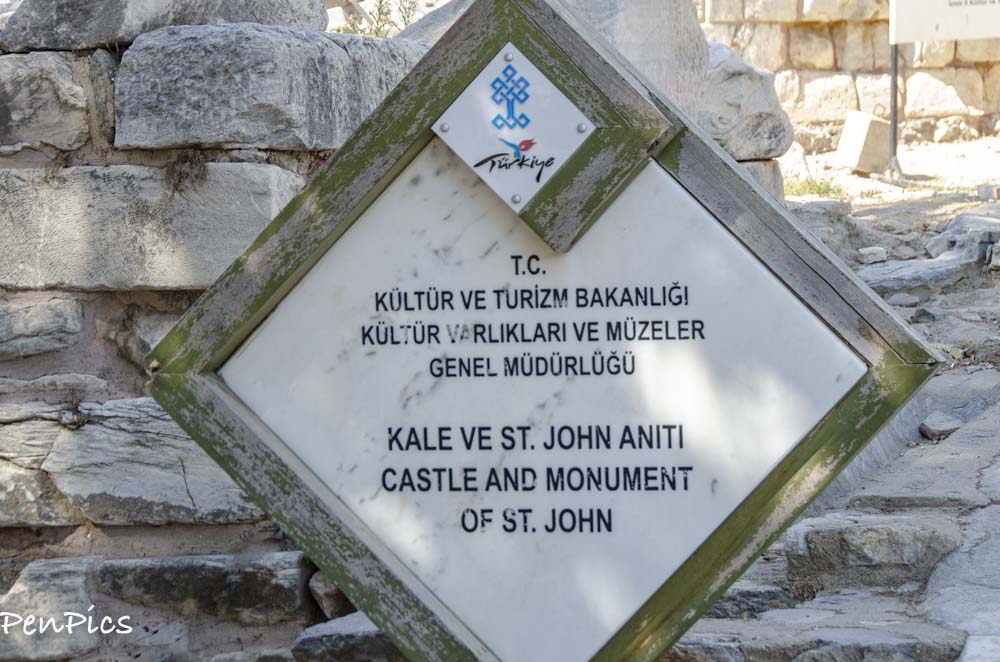


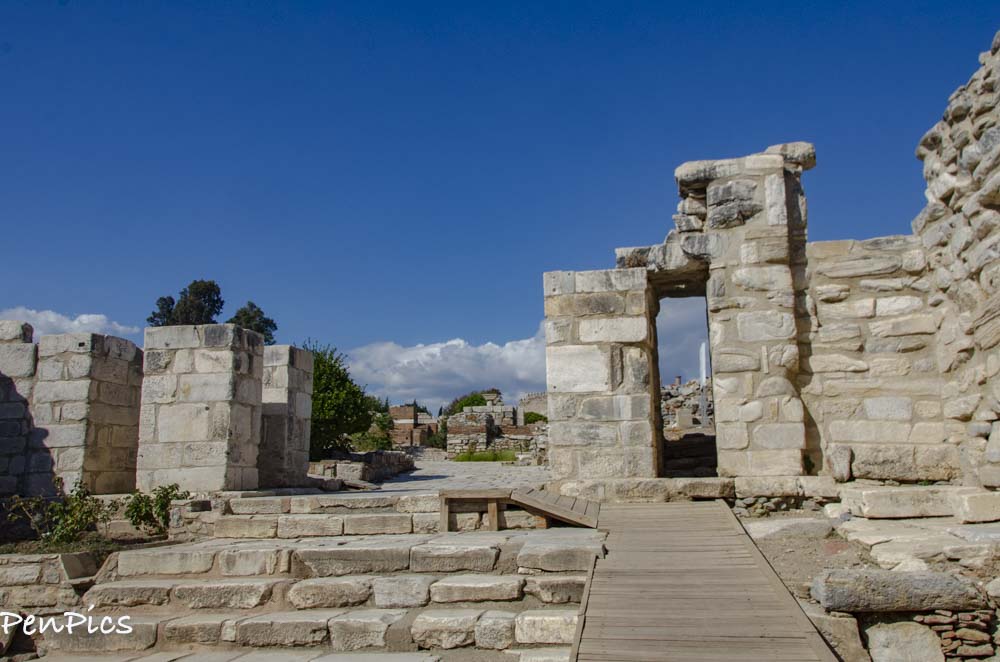
The Gate was called “The Gate of Persecution” by two Frenchmen: Choisseul Gouffier and Chandler, who mistook the representations for something connected with the history of Christianity.
This is the entry into the Citadel from the south; through the Gate of Persecution, which first led into the Basilica. In the 8th century the square towers on either side of the Gate were made pentagonal, aiding in their defensive capabilities.
Inside the archway and on both sides there are pictures of eight Saints. This Gate is believed to have been built in the 6th or 7th century with material taken from older buildings, particularly from the Stadium of Ephesus.
The two sides of the gate stand out and have towers. The upper part of the archway is decorated. First there is a leaf pattern, and then there are grape-gathering Eroses in relief at the upper left. On the right there used to be three scenes representing Achilles’ life, but they are now kept at Woodham Abbey, in England.
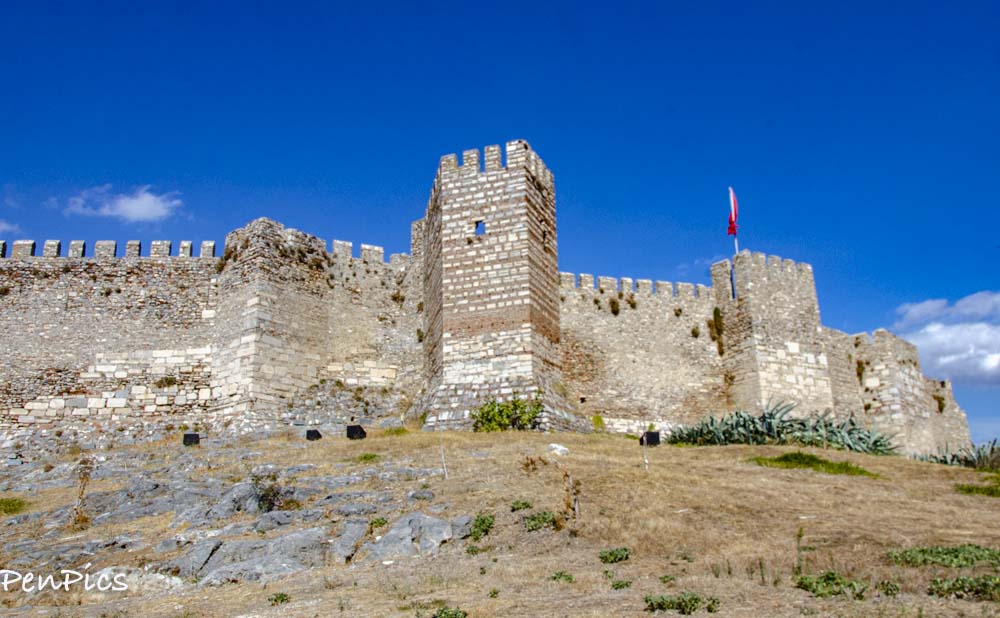
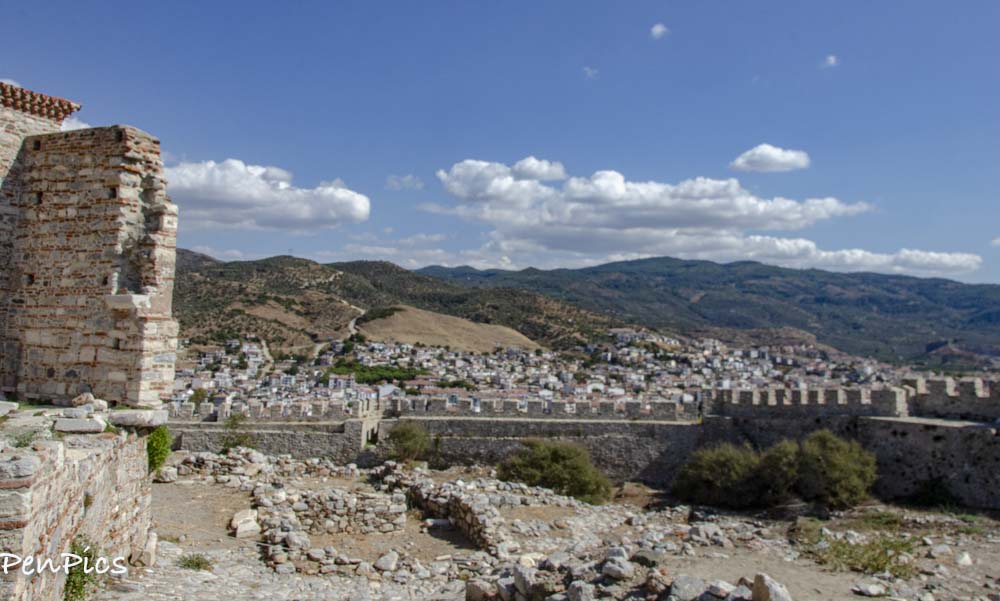
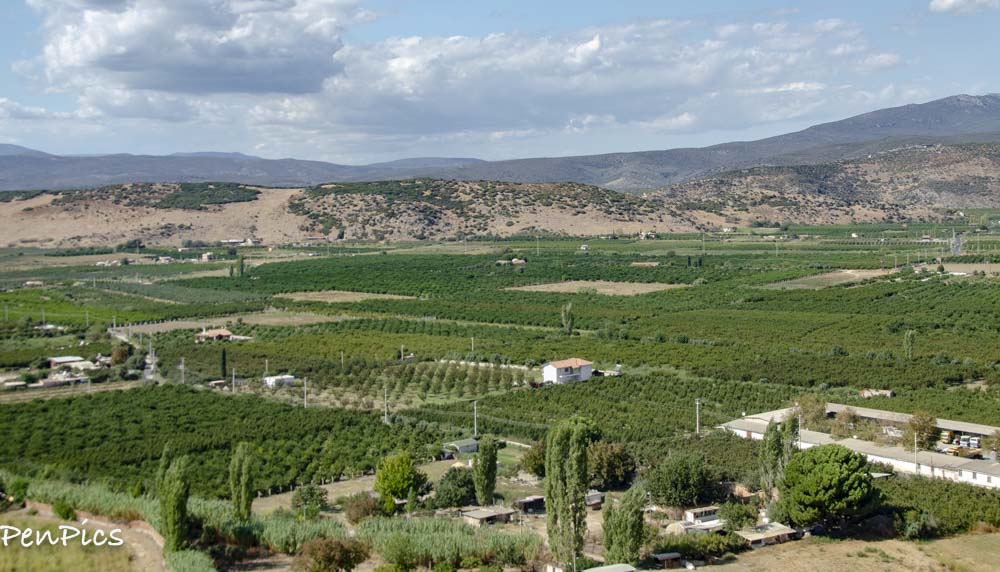
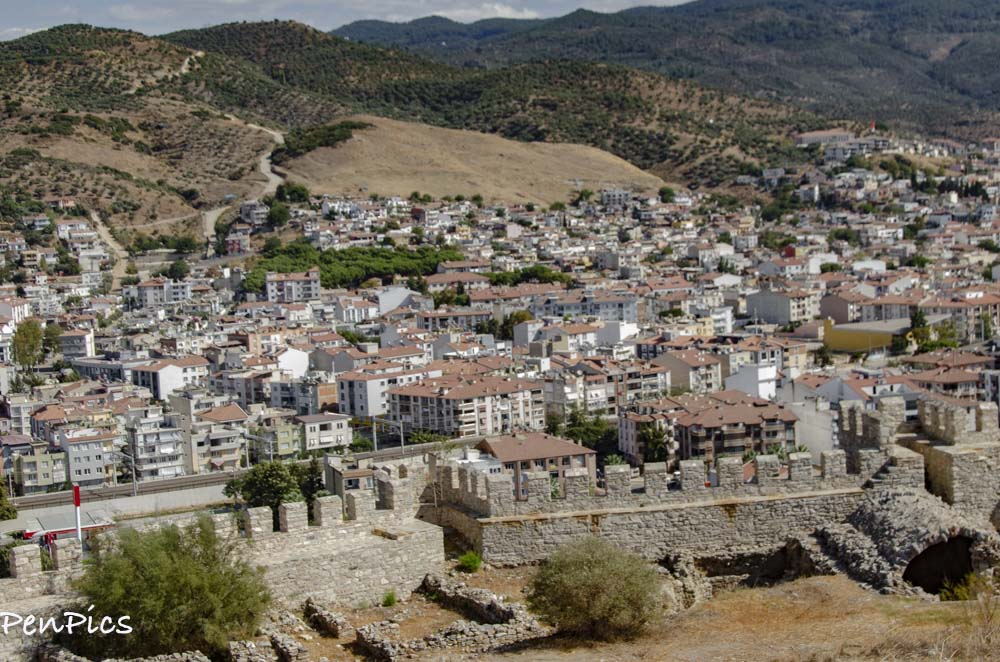
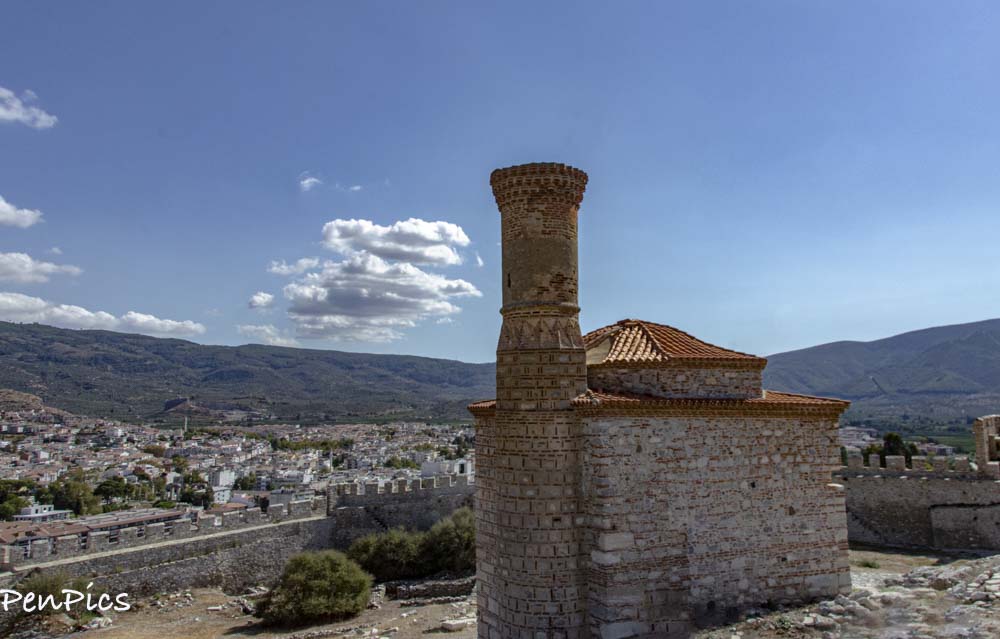
Ayasuluk Castle, locally known as Ayasuluk Kalesi, Kale or Selçuk Kalesi, lies on a hill in the town of Selçuk, close to Izmer, in the province of Izmir in Turkey. It is situated just a mile from the site of the ancient city of Ephesus.
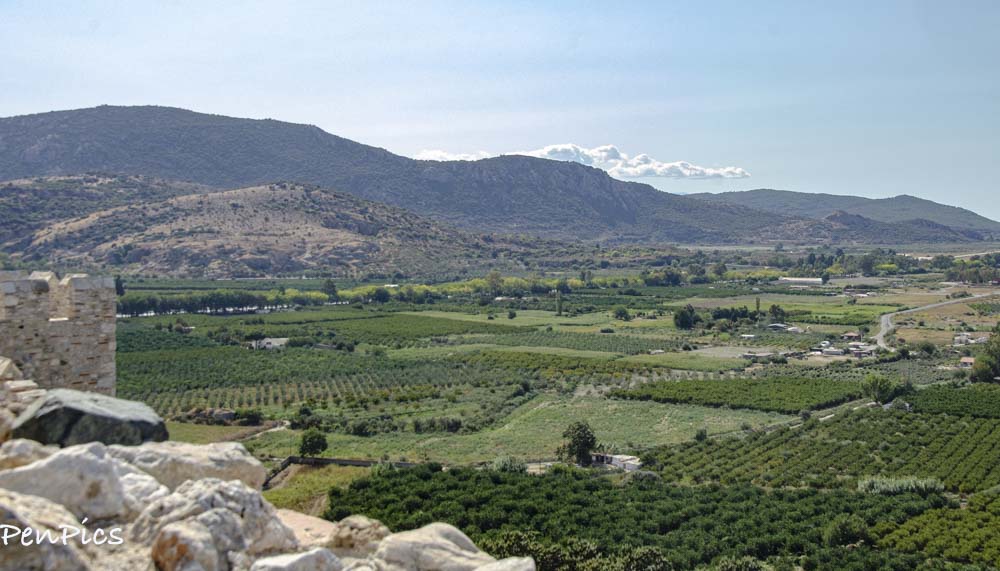
Ephesus was initially a harbor city, but the continually silting up of its harbour eventually made it an inland site situated 2.5 miles from the sea at present.
At the beginning of the Byzantine era, Ephesus was still predominantly at its harbor location. During the 6th century, the city declined and was split up. The old city at the harbor was enclosed by a defensive wall, making it considerably smaller and thus easier to defend. The Ayasuluk Hill had been part of the outskirts of the city and was now a mile outside the city. The Byzantines then built Ayasuluk Castle, using stones from disused Greek and Roman buildings, for its construction.
On the slope of the hill they built the Basilica of St. John. The defensive walls came down from the Castle, and encompassed the Basilica; effectively turning the site into a Citadel with the Castle as an upper Castle and the area with the Basilica as a lower Castle.
The combination of the marble facades and the mortared rubble made the walls. Entry into the Citadel from the south was through the Gate of Persecution, which first led into the Basilica. In the 8th century the square towers on either side of the gate were made pentagonal, aiding in their defensive capabilities.
Over the following centuries, however, people from the harbor site gradually migrated towards the Citadel on the hill as the harbor continued to silt up and they had to battle malaria. By the end of the Byzantine period the harbor was abandoned, and Ephesus was centered around Ayasuluk Hill.
In 1090, Ephesus was conquered by Seljuk Turks, under Tengribirmish, but by then it had declined to nothing more than a small village. In 1097 the Byzantines took back control and renamed the village, Agios Theologus. They kept control until the early 14th century. Then, it was finally taken by the Seljuks, who renamed the site Ayasuluk. They repaired the walls of the Castle, dredged the harbor and put it to use again. This resulted in the town prospering., once more.
Around the beginning of the 15th century, Ayasuluk came under Ottoman rule. By that time the harbor had silted up again and became a swamp. The town declined again, back to a village. The Ottomans, however, did keep the Castle garrisoned. In the mid-17th century, it had a garrison of 40 soldiers. As the population kept declining, the Castle was eventually abandoned during the 18th century.
In 1914 Ayasuluk was renamed Selçuk. Inside, there is a small ruined mosque, a part of a former church turned into a cistern, a couple of Ottoman cisterns and the foundations of a couple of houses.




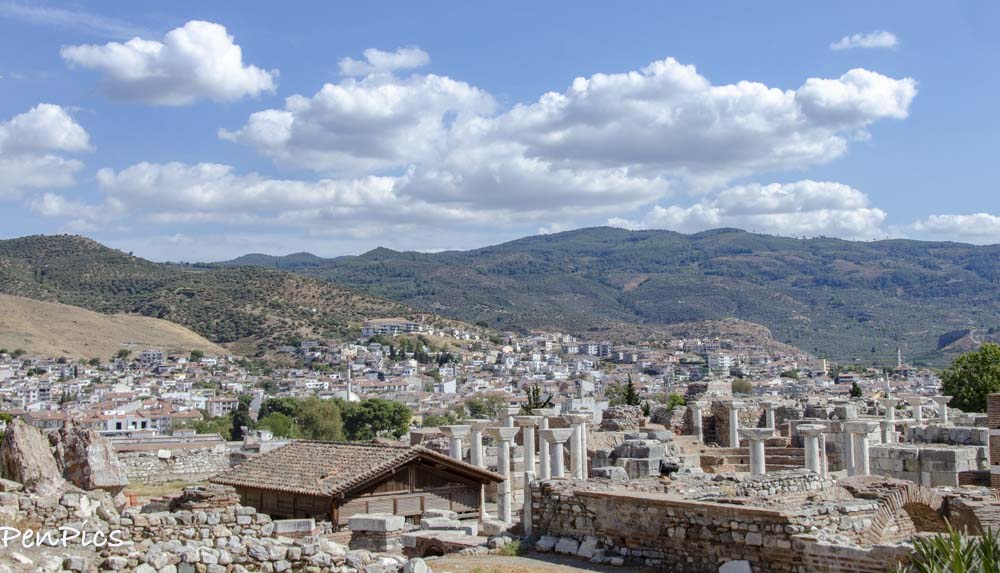
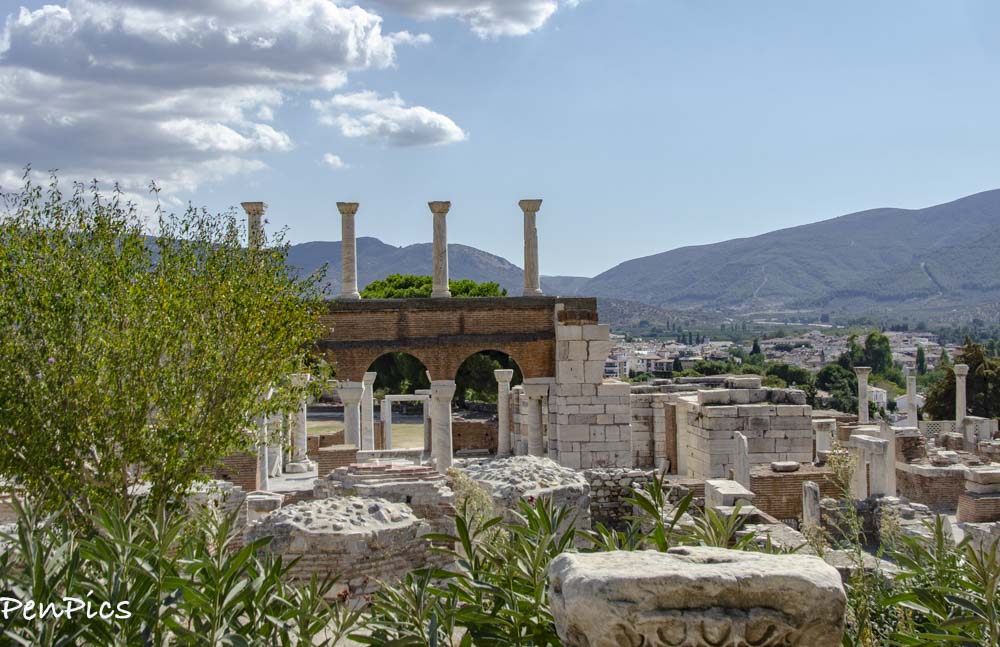
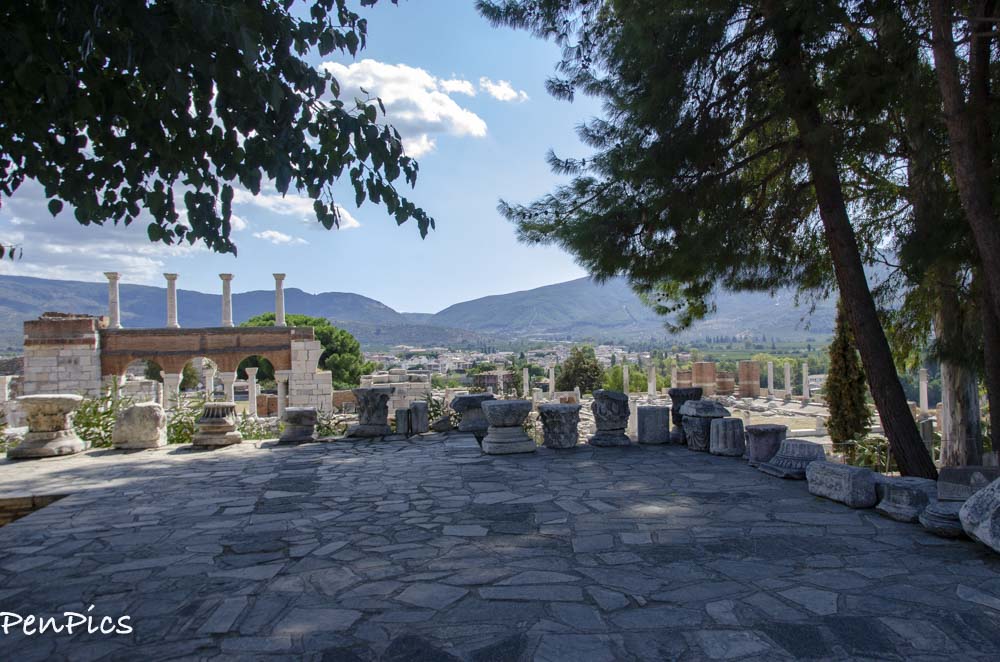
The construction of the Temple was completed in 565. The builders used the elements from the nearby Temple of Artemis; one of the Seven Wonders of the Ancient World.
The Basilica of Saint John soon became an important goal for pilgrims from all over the Christian world. It was believed that the dust from the tomb of the Apostle possessed healing properties.
After the invasion of the Arabs in the years 654-655, Ephesus declined. The urban life began to focus around Ayasoluk Hill, in a place now known as Selçuk. To prevent damage to the Basilica by the Arab raids, a hilltop Castle was built, and the Temple was surrounded by thick walls. The fortified gate, made of stones, obtained from Roman buildings; including the stadium, has been preserved to modern times.
In 1304, Seljuk Turks invaded the city. The Basilica was transformed into a mosque, and the pilgrims had to pay for the access to the tomb of Saint John. In 1402, the Mongol army, under the command of Tamerlane, invaded the area. During the fighting, the Basilica was destroyed. For over 600 years, the ruins of the church lay in total oblivion, raked in search of building materials.
In 1922, during the Greco-Turkish War, Selçuk area was temporarily under the control of the Greeks. The Greek archeologists searched the hill to find the ruins of the Basilica. Their work confirmed the suspicions about the old cult of Saint John. However, there was not enough time to clear the site before the Turkish army reconquered this region.
In the mid-twentieth century, Austrian archeologists began a systematic work on Ayasoluk Hill. The area was cleaned, and the tomb of Saint John rebuilt. In recent years, thanks to financial support from the religious foundations of the United States, some parts of the church were reerected, including the columns and some fragments of walls.
Currently, archeological excavations and restoration of the Basilica and the Castle on Ayasoluk Hill are conducted under the auspices of the Turkish Ministry of Culture by the University of Pamukkale from Denizli.




About Us

About Us
Hello and Welcome to our Travel Blog Website, We enjoy writing about our experiences and taking photos of our adventuring along the way. Our names are: Daryl and Pen, but Daryl calls me “Bunny.” We met, quite randomly, whilst both traveling in Thailand with friends. We happened to be in the same travel group, and […]
Loved Turkey, look forward to your next adventure, stay safe xx
Thanks Judy. … we loved it too.