


“Nepal 🇳🇵~Everything You Need To Know, to Hike the Annapurna Trail”
We highly recommend this glorious adventure, so I am providing some major details for you to pour over, should you consider going!
Secondly, we also highly recommend you hire our friend to lead you on your trek. His name is Narendra, and he is very experienced, concerning all parts of the Himalayas. He will arrange all permits, transportation, accommodations (and horses, if needed). Just sit back and enjoy, without a doubt, one of the most amazing places on earth!

Contact info for Narendra Timalsina:
Email: nepalese977@gmail.com
WhatsApp: 9841499754


We timed our trek perfectly, to see the spring bloom in March/April of Wild Rhododendron (lali gurans) flowers at Ghorepani Poon Hill and beyond. There are about 60 varieties.

Pokhara is the closest main access city for staging treks into the Annapurna Himalayan Mountain Range. It’s a great town to stay in with a beautiful lake, but several hours by bus, from Kathmandu.


There is not much history available on the Annapurna Circuit, but it has been open to the public since the 1980’s. Locals in Nepal, India, and China believe the gods dwell in the Himalayas, and they sometimes attribute accidents and disasters to travelers’ lack of respect for the mountains. Some Sherpas recount stories of seeing figures or ghosts on their ascents; the mountains are sacred to them, and it is important for travelers to the area both know and respect this.
For pretty much every trekker in Nepal, heading to Annapurna, the preparation starts in the Thamel; a neighborhood of Katmandu, where every third storefront overflows with knockoff trekking poles, nylon pants and packs at prices half to a third of those, elsewhere; “Chinese North Fakes” as they are known. Thamel has no sidewalks, so our every foray into its streets was a tooth-and-nail battle with rickshaws, cars and mopeds. I loved our time in Thamel.

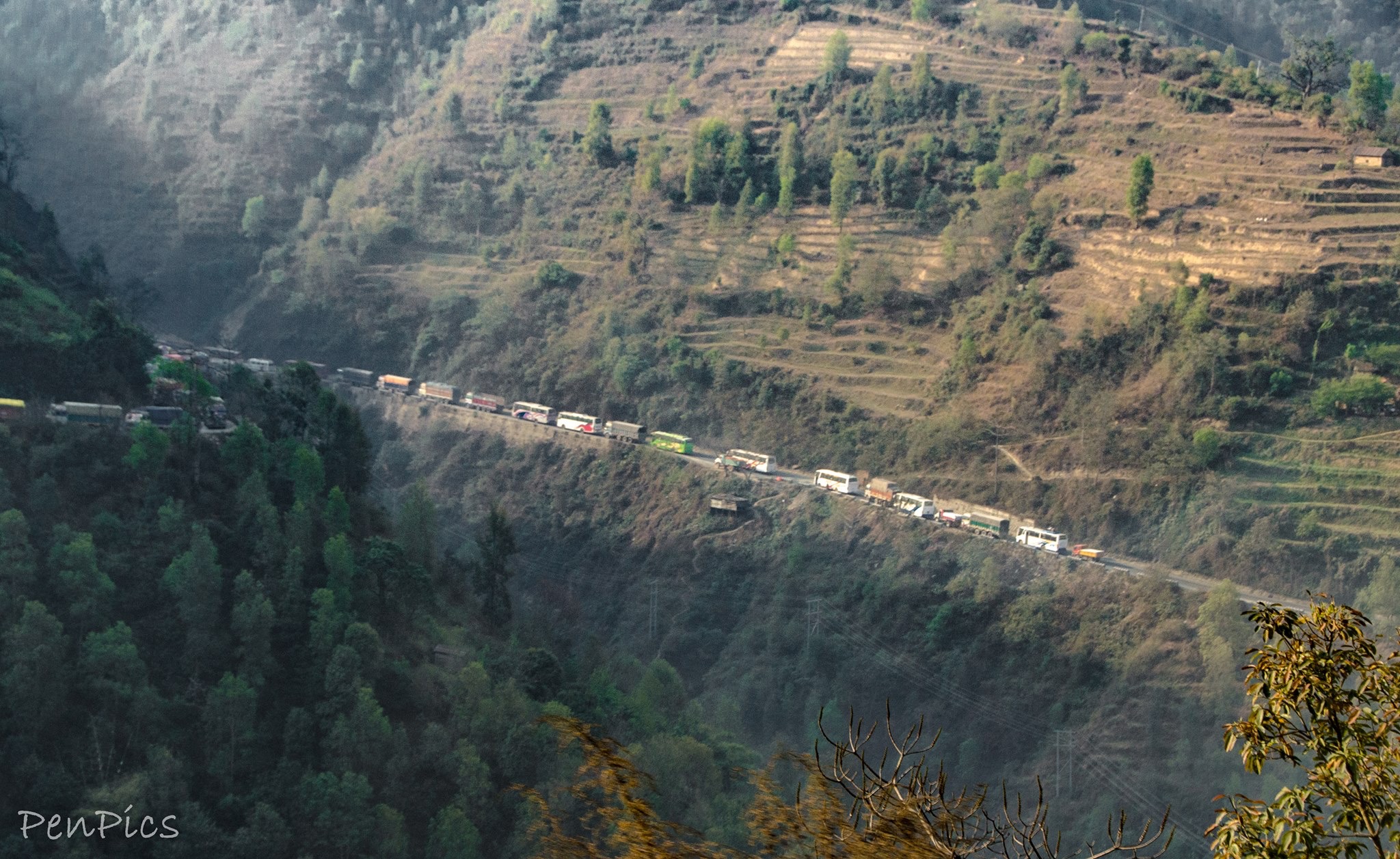
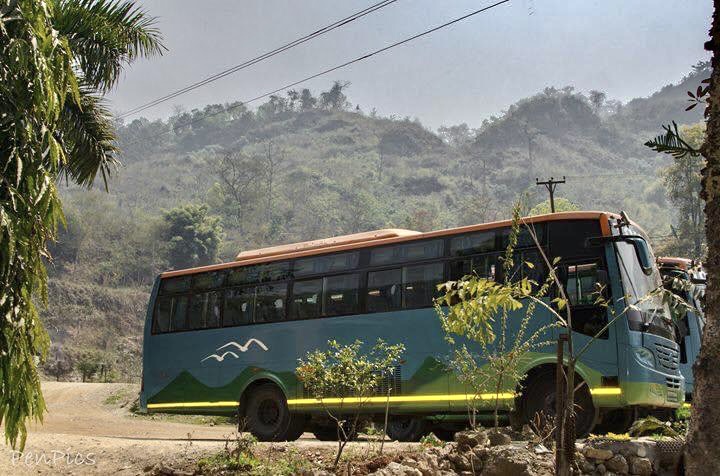
Then, there is the bus ride from Kathmandu: careening along cliffside roads, passing slower vehicles whenever a mouse hole of an opening presented itself, accompanied by a constant soundtrack of honking horns. Essentially, by the time we arrived in the town of Pokhara, just before beginning our trek, the idea of wandering around a mountain range seemed downright tame.
We chose the Annapurna Circuit for a couple of reasons:
1. This circuit has optional routes to accommodate the young and hardy to the old and hardy; speed being the defining difference. Daryl and I took more time than most people, because we had the extra time, to. This place is too gorgeous to rush through, if you don’t have to. We savored our time there.
2. Daryl had done this route before and had met the guide named Narendra, who he would become friends with; saying he would return one day. AND he did, bringing me!
3. Being close to the snow-capped mountain peaks of the Himalayas, was good enough for us peaking out at 10,531 ft; no need to be on top of them at over 17,000 feet.
4. A strong desire to trek through the wild Rhododendrons forest and get photos of this beautiful, natural landscape with the backdrop of the snowy Himalayan mountain range.
Also take note. If you want to take a more challenging trek, going to the base camp of Annapurna is popular, too. This takes an addition five or so days. Our guide, Narendra has also taken trekkers there, too; for many, many years. He can offer more information in trail options.

Day 1: Nayapul to Tikhedunga
Total drive and trekking time 5 hours. Starting at about 8AM from Pokhara (the main closest town to the Annapurna Himalaya range), we took a Jeep (cost us 5000 Nepali Rupees) to Nayapul to begin the trek up to Ghorepani.

The first few hours of trekking, after getting dropped off and checking in with the permit office for the paperwork verification was pretty easy. From there, the trek up the stone steps and along a gravel road, we wore our flip flops!


After arriving in the village of Tikhedunga, we checked into “Sankar Guest House,”’a cute Tea House with the sound of a waterfall in the distance. Tea Houses are a lot like hostels, where most places it is a shared bathroom, and shared great room where food and drink are served. We always had a private room, though. The rooms are very basic: bunks with a blanket and pillow. (surprisingly clean and fresh smelling; every place). No power, except one light bulb. A bath towel is provided, but only one between two people. I always asked for two and got funny looks.


Average expense: Rooms: 600 rupee; With private bath: 800 (but not often an option), 150: shower, 150: internet (that may or may not work), 150: for charging electronic devices (power was not always available) and 60: water refill per liter.
Here is a link to convert the rupees to dollars: https://coinmill.com/NPR_USD.html
Day 2: Stayed at Tea House in Tikhedunga a second day/night
We did a day hike to a mountain villages called Sabet. We saw a new primary school, too. What a view!

Day 3: Tikhedunga to Ghorepani
We got an early start on our first full trekking day to reach Ghorepani; by way of small horses.

From behind our Tea House, we trekked on foot, straight up the mountain, for about 45 minutes to start; where we met up with our horses.
A new road had been cut in that was not there a few years back. We rode the horses on this road till it ended, and merged back on to the Annapurna trail.
This was a much easier option for the horses, as this trail is steep, rocky and difficult. Had I known in advance just how steep and rugged this trail was, I probably would not have gone the riding route.
Though this breed of horse is stout and strong, it was difficult on me to have an animal labor so hard on my account, to ease my burden.
I would not choose this option again. I winced the whole day, and caused some delays, as I insisted on getting off the animals to give them a proper rest.
We also got off and trekked on foot many times, to give the horses a break, as we kept going. Total trekking time with the horses; about eight hours.
Note: without the horses, it would have taken us two days to accomplish the trek on foot, what took us one day with the horses. I will be forever grateful to my horse named “Snickers” for his sacrifice.
They are working animals who have no names, so I gave mine one.
The cost of the horses were 8500 rupee ($85 each horse). They did not come cheap. This day’s trek was quite challenging, as we rode on the horses straight up the side of the mountain all day; eventually catching glimpses of the white snow-capped Annapurna peaks. The views were amazing!


For lunch we stopped at a Tea House called “Hungry Eye” in Nangethani, which is about 1 and 1/2 hours from our destination of Ghorepani. After lunch break, we continued on. The grade was so steep at this point; going up and down, we trekked on foot, as the handlers said it was too much for the horses to carry a human (I was glad to know they had SOME concern for them) After more trekking, straight up, we reached the altitude level that is Ghorepani village. It was here, we said goodbye to our steeds.
At Ghorepani, we checked in to “Nice View” Tea House, located right at the top of the village in the main square area. The charged was 700 rupees for our room with private bath.
Ghorepani was freezing cold when we arrived. It was overcast, but dry. But, this high up, the weather is very unpredictable.

Day 4: Stayed in Ghorepani to relax and enjoy the scenic views!
The next morning, as is common so high up, the morning broke with clear and beautiful blue skies.I will never forget coming downstairs to the Tea room for breakfast, and catching my first glimpse of the snow-capped mountain range just as clear as could be, and SO CLOSE!

We enjoyed the whole day of leisure, just taking in that view!
But it was still very cold. By 3PM, I asked if they could build a fire, and they did.
After that, it was quite cozy and enjoyable. Taking turns with others, sitting right near the fire, was similar to taking turns at the one plug-in and this contraption to charge electronic devices; provided the electricity was running.


A bonus we had was the stove pipe went through our room, so we actually had heat during the day in our room for these three total days. None of the Tea Houses had fires going during the night. The weather did take a turn during our stay. We watched the trekkers, sherpas and guides, pile into the warm Tea House, after getting caught in a storm. Not all Sherpa are men. We saw several women packing gear.


Day 5: Ghorepani to Poon Hill
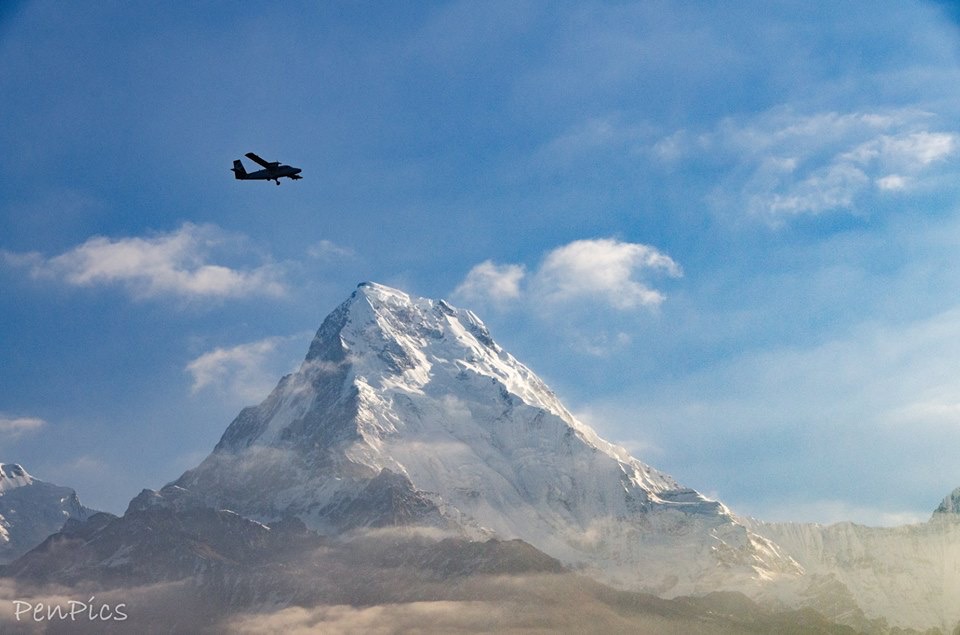
At 4:30AM we got out of our warm sacks, piled high with thick blankets, and dressed quickly, because it was so cold in our room we could see our breath! Then, we began our trek by 5AM, in the dark, for about a 45 minute climb straight up to the top of Poon Hill for sunrise. We lucked out with a clear day dawning. When Daryl did this a few years back, it was a dark cloudy day. The clear morning view of the Annapurna Himalaya Mountain Range was nothing short of majestic! This was the view that the entire Ghorepani Poon Hill trek is based upon, and it’s worth every step to get there.

Up on top we enjoyed hot cocoa and coffee, but did not linger long, as the temps were in the teens, with winds.


We took in the view, got pictures and high-fived our good fortune to have the weather on our side, to where we could see this sight with clear skies and no rain, hail or snow. We hiked back down to our Tea House, where on this day, the fire was built early, and it was fabulous to warm up and eat a hot breakfast.



We then remained in the Tea House for the rest of the day warming by the fire. We took a yummy nap in the afternoon, in our “stove pipe” room, too!
Ghorepani ~Poon Hill Trek on the Annapurna Trail
At 10,531 feet above sea level, The Poon Hill sunrise view of the snowy rugged Annapurna Himalaya range, was worth every grueling step it took to get there! Having the Himalayas close up, literally almost in my face, was a breathtaking sight! We did this Ghorepani-Poon Hill trek in late March and early April, 2018, which is low season. It was still quite cold during the days and more so at night. It got down to a little below freezing, by the time we reached Ghorepani. The Ghorepani-Poon Hill Trek can be done year round, but in the thick of winter there might be quite a lot of snow and ice on the trail. This trail can be done in a four to five day trek, while in the Annapurna Mountain Range. Note: If you take horses for just one of the days, the trek time is cut in half. Daryl had gotten two new knees, and he wasn’t quite ready to do this trek, on the full-speed ahead program, like he had done the first time, so the horse option was the right choice. When trekking, it takes a moderate level of fitness to complete, and the maximum elevation is 10,531 feet (so there’s no real risk of altitude sickness).
Day 6: Ghorepani to Deuali to Tadapani
After three wonderful nights in Ghorepani, we were more than ready to move on. The views were incredible, and the Tea House comfy. We left on this morning taking a different trail than the Poon Hill trail, and climbed up just as high as we had when we did the trek to Poon Hill; earlier for the glorious sunrise. I literally couldn’t help myself from stopping every few steps to take another photo, as we encountered more marvelous views. We hiked along a parallel ridge, surely one of the most scenic hikes I’ve ever taken in my life.


Eventually, we left the high elevation and breathtaking views for steep downhill grades as well. For lunch we stopped in Deuali and I got porridge with the best wild honey I have ever tasted!

We tried to buy some, but were told no; however, we were told Chitwan had it for sale. We will see about that when we get there. We carried-on, after a break, and the trail continued to be a mix of steep; up and down grades. By noon we got hit with a brutal mountain storm. The temperature plummeted, and we got pelted with hail, snow, and rain. The thunder and lightening cracked loudly above our heads. We made it to the next Tea House and took cover as quick as we could; right along with half a dozen other trekkers. After 45 minutes, we got a break in the storm and headed out again. The downtime was just the right amount of time to order Mo Mo’s; my favorite food on the trail!

Unfortunately, the break in the weather did not last, and we got hit again, but this time even harder, and by then, there there was no cover to seek out. We had to just keep moving forward, as the 45 minute delay could very well have cost us daylight as it was.
In the time of the storm, we had both stored our Nikon cameras in dry bags. There was no photography going on during this storm! Unfortunately, I hooked my dry bag over my arm to help hold Daryls stuff, while he adjusted his coat and poncho combo; when the latch came undone on my dry bag with my camera in it. It hit the ground hard, and I heard it shatter. I prayed it was only UV filter on the lens, and not the lens. I did not even open the dry bag in the storm, as I didn’t want to know. The going was difficult, as we picked our way down the steep and now, slippery trail. We had to go so slow, and careful, with each step being intentional. At the bottom, we would only trek a short distance, before we had to painstakingly climb right back up again. This pattern lasted for four hours during the storm. This was tough to take, and our bodies became very weary with the tension and concentrated effort of it all. This to us was frustrating, a little NUTS, and a little scary in most areas. This area was really hard trekking. I predict the day will come that a suspension bridge will be added to avoid this particular dangerous and intensely difficult part of the trail.
We saw many trekkers on the trail during those difficult hours of trekking. I’m sure their faces mirrored our faces, as it was nothing but pure misery to just keep putting one foot in front the other and trek on, under these conditions. I remember thinking “This has really stopped being fun.” At this point, however, we had to consider that daylight was not on our side. We trudged on.
We finally reached the upper village of Tadapani and our Tea House called “Hotel Majestic.” It was almost dark, and we were so thrilled for this place to get out of the storm, and out of our cold, wet clothes, and shoes; if only for one night. I was so happy to get inside and not take one more step for at least 10 minutes!
We both just sat and stared out the window at the raging storm, feeling grateful we did not get struck by lightning. We were so fatigued, that within a few hours, we climbed into bed to cuddle (the only hope of warmth, as Tea Houses do not have heat at night, no matter how cold it is outside).
We were asleep without dinner by about 7:30PM. We just had nothing left.
I have never been so physically challenged in my life, as I was in those four hours on that cold, hard, wet mountain. Would I do it again? You bet!


Day 7: Tadapani to Chuile
We felt better this next morning, and typical of a big storm, morning dawned absolutely gorgeous, again. The sun was out, and the snow-capped mountains were crystal clear, and so beautiful to look at. For a moment, it was hard to believe the afternoon and evening before were so awful!
We did not rush our morning, but instead took our time; still recovering. I sat at the Tea Table with the warm morning sun on my back, drank some coffee, ate some porridge and used the WiFi (that was awesome) to work on my photos, and write. By 11AM, we were packed up again, and on our way out of Tadapani. This day was pre-planned to be a very easy trek. It was straight down the mountain, which would ultimately prove to include warmer weather, but it also took us away from those magnificent views of the Himalayas that felt so close, I could reach out and touch them. (this is a memory that will stay with me forever). In no time at all, (1 hour and 15 minutes), we reached Chuile, which consists of a few scattered farms, where we stopped to rest.


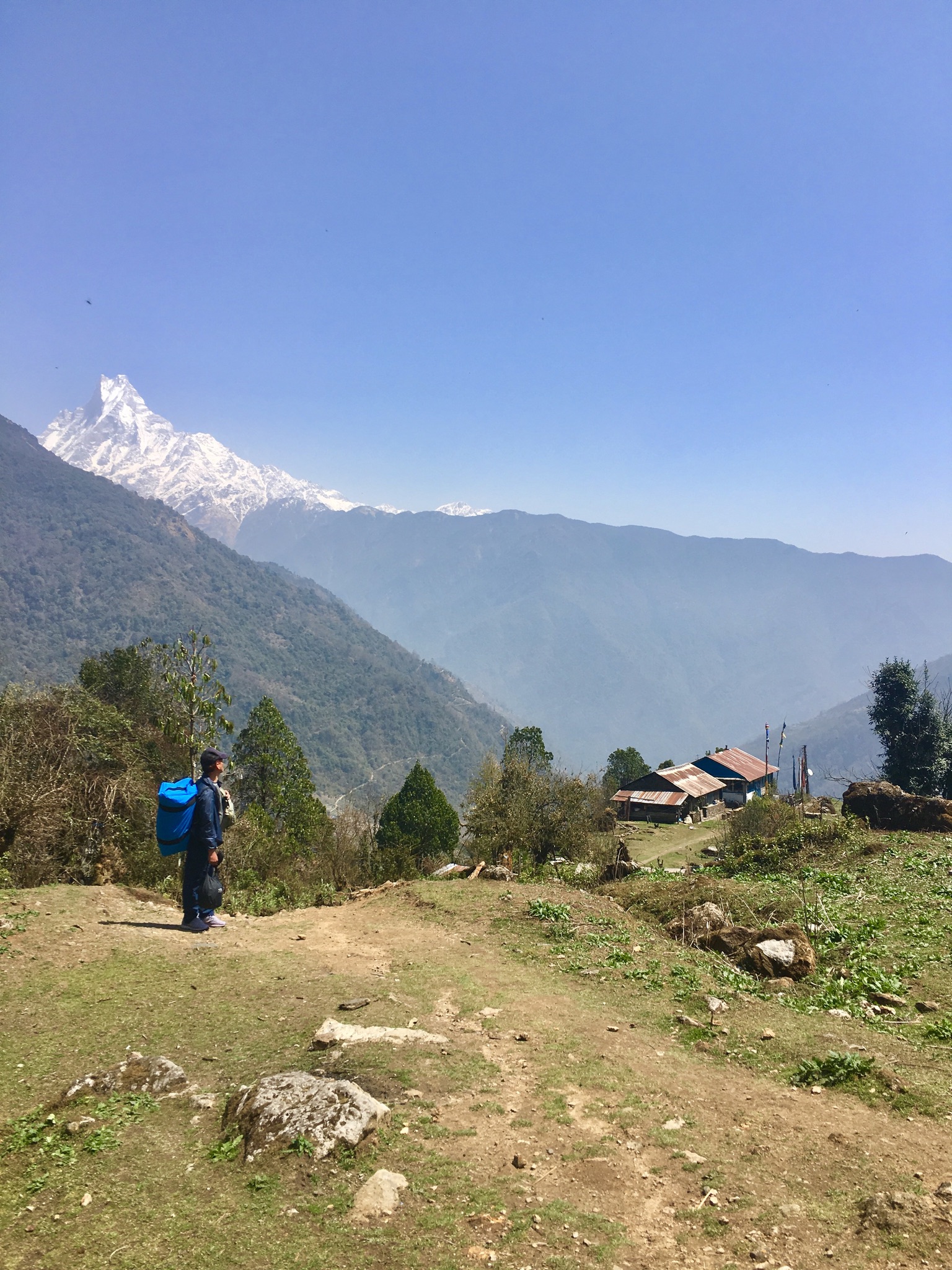
We continue on to our next stop; a Tea House called “Discovery Mountain.” This place is literally carved out of the side of the mountain. It’s a very nice Tea House, and we even had electricity in our room! No heat at night still, but hey, we had a plug in to call our own!


Day 8: Remained in Chuile a second night
Writing, relaxing, fixing my Nikon camera issue is the only thing on the agenda today. Thankfully, my glass on my lens was okay. But, the UV lens cover was shattered, and getting the jammed ring loose to remove it, would prove to be difficult.
Having begun our descent down, from reaching our goal and summits on the Annapurna Circuit at Ghorepani-Poon Hill, we have given ourselves an extra day in Chuile to rest up.


This day has been a much needed respite for the body, as well as the brain. Since we started; eight days ago from Pokhara, and nine days ago from Kathmandu, I took some time today to do some writing and actually look over the many photos I have taken to document our incredible journey. It has been harder than I thought it would be, but more amazing than I expected it to be; and that includes the days that were sunny, warm, and beautiful.
The terrain is way steeper than anything I have ever hiked in the past. This is more like climbing; not hiking in so many ways. The trail is rocky, sharp and super challenging when dry. Then, when it rains, we add slippery to the mix for even more fun. All together, we have only had one hard and troubling day; bad weather on top of the toughest part of the trail made for a challenging combo. I do not question any of this adventure, or second guess our choice to do this one bit, because being challenged can (and has been) very rewarding, when all is said and done. I must say how super proud I am of Daryl and I to have gotten this far with our, still, smiling faces. The fact the scenery at every turn for our efforts, is completely “blowing our socks off,” has a lot to do with that fact.


We have also been looked after and guided by our friend Narendra, who is completely loyal and caring for our comfort and safety along the way. His experience in these mountains is impressive. He knows the Tea House operators, too. BONUS!
Day 9: Chuile to Ghandruk
Today, we have a full day of trekking ahead of us yet, to reach our goal of Ghandruk, where we will stay for two nights. From there it’s all downhill; back to meet up with the jeep and driver, where he dropped us off at; where we started. From there, we also go back to the lake side town Pokhara. In Pokhara, we will stay till the 3rd of April when we board that terrifying bus again, which will “cliff-hug” us all the way back to Kathmandu. But, no need to think about that bus ride, just now.
By 11AM, we were packed up and leaving Chuile. We had our yummy breakfast and coffee. Drinking water was 60 Rupees per liter, so we refilled all of our bottles, before beginning the main trek for the day to Ghandruk.


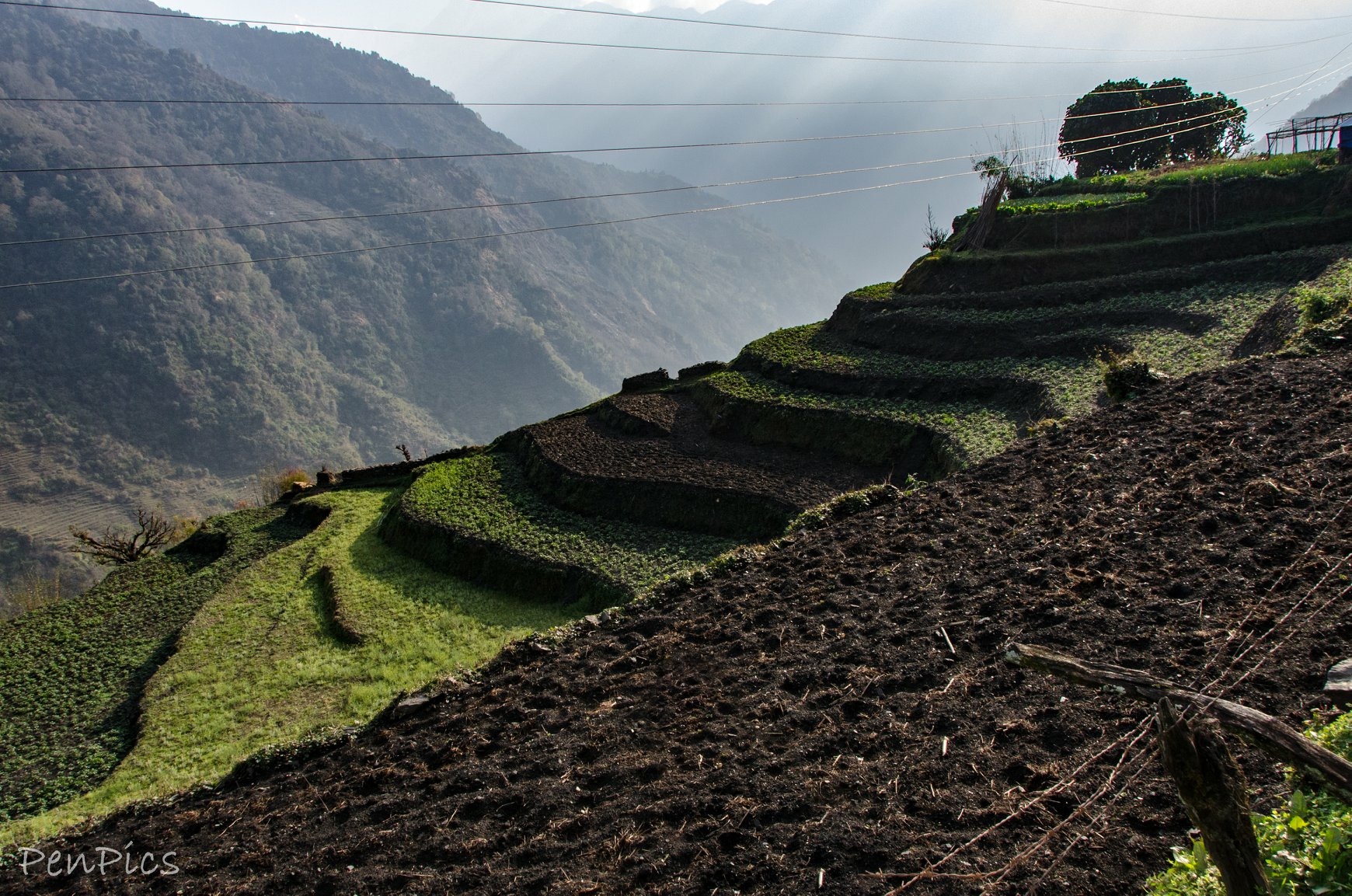


Ghandruk is actually quite a large village, and the views are outstanding. We got set up in our Tea House, there, which was set up on a rise next to the Annapurna stone trail that went through Ghandruk. It was constant motion on that trail all day. Locals, trekkers, shepherds with their cows, sheep and goats, Sherpas, horses and Donkeys. I loved it!


There is a museum in the village to check out, and the locals were very welcoming and friendly.
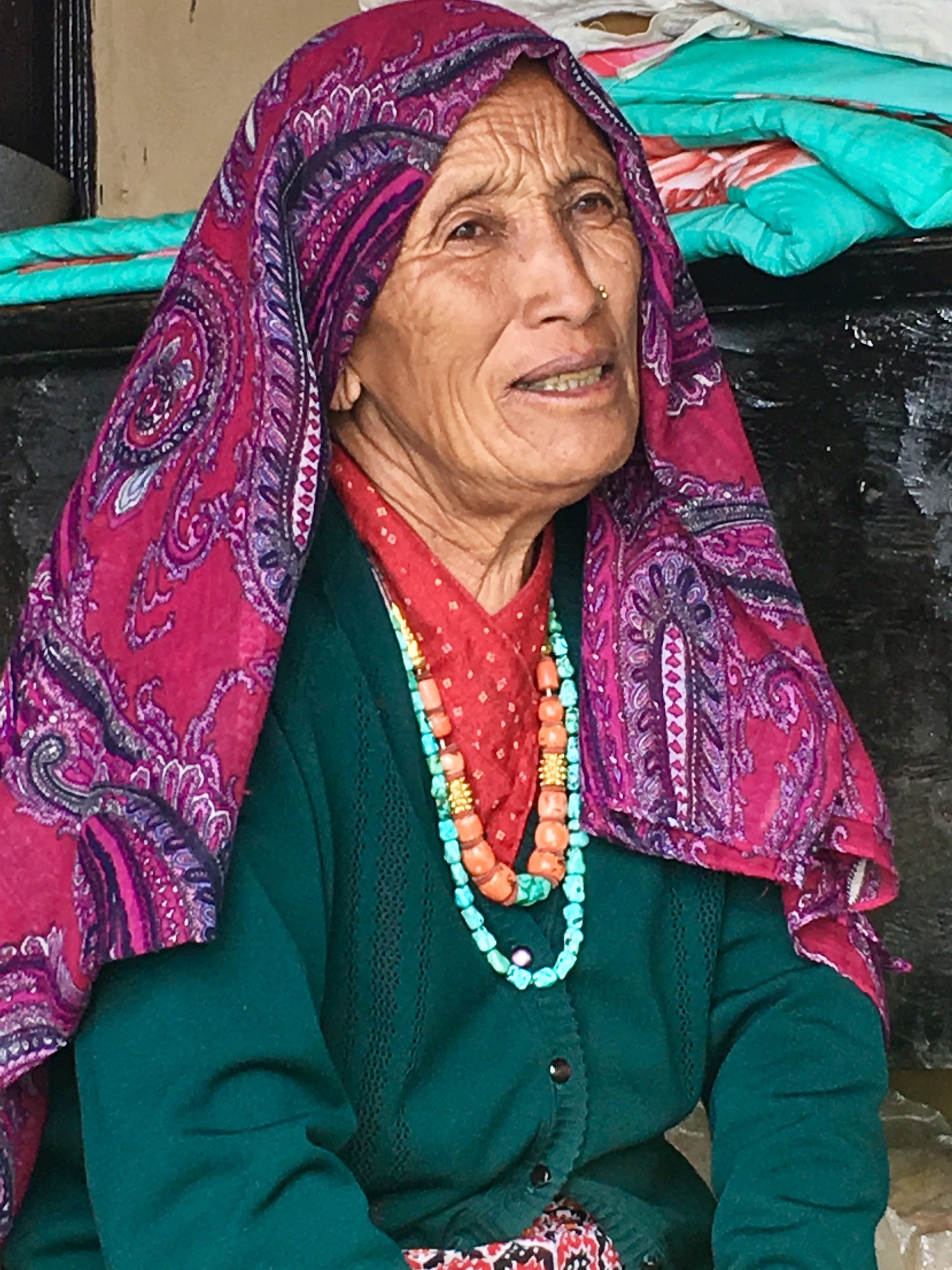
We enjoyed our time in this village. However, that night it started storming again, and unlike the other storms, this one did not let up. As time went on, we had some decisions to make, because feeling satisfied for our accomplishments thus far, we did wanted to finish the last leg, but with the weather, it would not be pleasant or enjoyable. We were tired and had seen the very best parts of the beautiful trail, so we opted to hire a driver to come collect us (4×4 jeep) and get us back to Pokhara from Ghandruk. It was a good choice for us.
Trekking Preparations:
Required Trekking Permits for Ghorepani Poon Hill/Annapurna Trail:
There are 2 different permits required for this trek. We paid a total of 6,650 Rupees for our permits. Our guide, Narendra made all the arrangements and we were very grateful.
1. Annapurna Conservation Permit at 1,000 Rupees per person


Do You Need a Guide? What About Hiring a Porter as well?

For us, there was no question. We wanted a guide and help with our bags. This was Daryls’ second Annapurna Trek, and he met our friend, Narendra, at that time. We hired him, without question, for this trip as well. Not only is he a great person, he is also very experienced and knowledgeable in the Himalayas and Annapurna ranges. If you want to save money, and not bringing a guide, it is an option. What I can say is the trail is very well maintained, however there aren’t always great signs, so not having a guide might require a lot of asking which direction to go, to which village, and it can be confusing, with language barriers.
I personally thought it was fantastic that we had a guide; mainly because we had a local along with us, and I didn’t have to keep looking at a map every 30 minutes. We could focus on taking photos, without worrying about where to go. Our guide also knew exactly which Tea Houses are the best, to take us to each night, and also which restaurants to stop at on the trail for breakfast or lunch. I thought having a guide was well worth the cost, and we would have not wanted to do this trail without guidance, at a cost of $20 US per day plus tip.
There’s also an option to hire a porter if you wish for someone else to carry your backpack. I think the cost would be similar per day as for a guide, maybe a bit less. It is also a great consideration to hire the help, as a way to give to the Nepalese people. For most, this life is their bread and butter.
Gear
The Tea Houses provide sheets, blankets, and pillows. We were happy with what was made available to us. No sleeping bags needed, unless you choose to bring them. We mostly brought long pants, a few shirts, and one summer pair of shorts for daytime. We hiked in just normal shoes, which are fine overall for the trail. Definitely bring dry bags and rain ponchos!
Accommodations
I’ve done quite a few backpacking trips in the USA, where I had to bring all my own food, cooking utensils, tent and sleeping bag. The Ghorepani Poon Hill trek on the other hand is what’s called a “Tea House Trek.” Basically, the trek, while it does require a moderate level of fitness, is not an extreme wilderness survivors-trek. You basically hike from village to village, stay in decent, but barebones Tea Houses, and have the awesome option of eating delicious, freshly cooked foods, that somebody makes got you, and cleans up after you, too.
As for accommodation (and you can see everywhere we stayed by looking at my day to day itinerary above), I didn’t even do any research but just let our guide lead us. I would not know how to line up our own accommodations, because reservations are necessary. We did the trek in March/April and it can be challenging to get rooms at peak season. Again, Narendra handled all the arrangements for us with Tea Houses, and he did a great job!
Food on the Trek
In the mountains, prices are higher for food, than in the lower elevation towns and cities, due to everything having to be transported by mule or by hand, up the mountain. Also, I think there’s some standard set prices for restaurants on trekking routes in Nepal. The restaurant owners, while charging these prices for food, are hardly making much profit, and they have to work hard to bring all the food up the mountain. Hopefully the profits from tourism are put to good use. We were thankful for the opportunity to enjoy hot and deliciously cooked food all along the trek. Dal bhat, the Nepali food staple of rice, dal soup, vegetables is such an energy-packed meal when you’re trekking. Dal baht normally costs about 300 to 400 Rupees on the trek. The menus were pretty much all the same at every restaurant, offering local Nepali dal bhat, spaghetti, bread, omelet, Tibetan bread, porridge, fried noodles, fried rice, and Mo Mo’s if we were lucky! All meals were about 300 to 400 Rupees. Tea and coffee cost about 50 to 60 Rupees per cup.
Drinking Water
As you probably guessed, water is not potable anywhere on the Ghorepani Poon Hill Trek. So there are a few options for drinking water.
1. There’s opportunities everywhere to purchase new bottles of water, so you’ll never go thirsty. Usually the price is 80 to 100 Rupees for a 1 liter bottle, depending on how high in the mountains you are.
2. If you have empty bottles, many Tea Houses offer drinking water re-fills for about 60 Rupees per liter.
3. Water purification tablets, known as Aquatabs, are available all over Nepal. You just add a tablet to a liter of water, let it sit for a while and it’s then safe to drink.
For the most part we re-filled our bottles (option #2),
Ghorepani Poon Hill Trekking Costs
By this point, if you’ve made it this far, reading, you are probably interested in knowing how much we spent in total, on the Annapurna Trail.
Here’s what we spent (give or take, based on my memory and notes) all together for 2 of us for 12 days: $875
Remember, the trek can be done far quicker than we did; in 4 to 5 days on average. We did not rush at all.
We Trekked: March 20 thru April 3rd: $30/day for 12/days for Tea Houses along the way:
Bed, food, showers, electricity: $360
Guide @17/day for 12 days: $515 plus tips
Porter for same amount of days $170 plus tip. We paid all to Narendra 3/21/17
2 Horses: one day @$160 and $20 tip
Tea House stays on the trail $30 x 12 days total, plus 2 days in Pokhara making 14 days: $420
$21 transfer to Pokhara from Kathmandu by bus
Jeep $50 (5000 Rupees) from Pokhara to checkpoint start for the Annapurna Trailhead. Return trip needed for pickup from Ghundrek to Pokhara $100
Permits $80 (8000 rupee)
$155 total for transportation
We had an absolutely amazing time, and the views of the Himalayas were beyond spectacular. As I mentioned, before, about my backpacking trips in the USA. Well, there is no comparing the two experiences. There is nothing like the Tea House Trek.
The Ghorepani Poon Hill trek is a great way to go, and be in the mountains, while still being able to sleep securely and warmly and eat freshly cooked meals. The trek was the highlight of my trip to Nepal and I’ll never forget the breathtaking scenery!
Here is a “by-the-clock” gage on the trails, if interested; going from village to village.


On the bottom right corner of the map ⬆️, is where we began. Our first Tea House was going left to Teikhedhungga (5,053 ft).
From there (on horses) we continued to Ghorepani (9,022 ft). Poon Hill the next morning for a morning trek, (10,531 ft).
When we left Ghorepani, we trekked up through Deurali (9,800 ft), then began our descent down to Tadapani (8792 ft). From Tadapani to Chuile, and then through Komrong (7382 ft) to Ghandruk (6,362 ft)
From Ghandruk we either ride out by Jeep in 4-5 hours, (if the road stabilizes from all the rain), or we trek out; going down 3,000 ft towards Birethani (3,445 ft), which is 2 more days, then back to Pokhara by Jeep from there.
The new road stabilized, abs we opted out and left. Overall we had pretty decent weather, sans one very bad day we trekked in, as afore mentioned. But, the weather took a bad turn and we had nothing to gain by trekking any further in a storm.The map is not very good, I know, but I took screenshots of the one I saw in a village, on display, so you can look at all of them a little closer. I’ve never found any on the internet. Again, hire a guide!


If you want to see all the photos from our trek, click on the links.
Along the Annapurna Trail in Nepal:
The Ghandruk Museum:
https://picsbypen.smugmug.com/Places/AsiaLife/Nepal/Annapurna-Trekking/Museum-in-Ghandruk/
The Lakeside town of Pokhara, Nepal:
https://picsbypen.smugmug.com/Places/AsiaLife/Nepal/Annapurna-Trekking/Pokhara-Lakeside-Town/
About Us

About Us
Hello and Welcome to our Travel Blog Website, We enjoy writing about our experiences and taking photos of our adventuring along the way. Our names are: Daryl and Pen, but Daryl calls me “Bunny.” We met, quite randomly, whilst both traveling in Thailand with friends. We happened to be in the same travel group, and […]