


“China 🇨🇳 ~On Our Tour of the Yangtze River / Three Gorges and Dam”
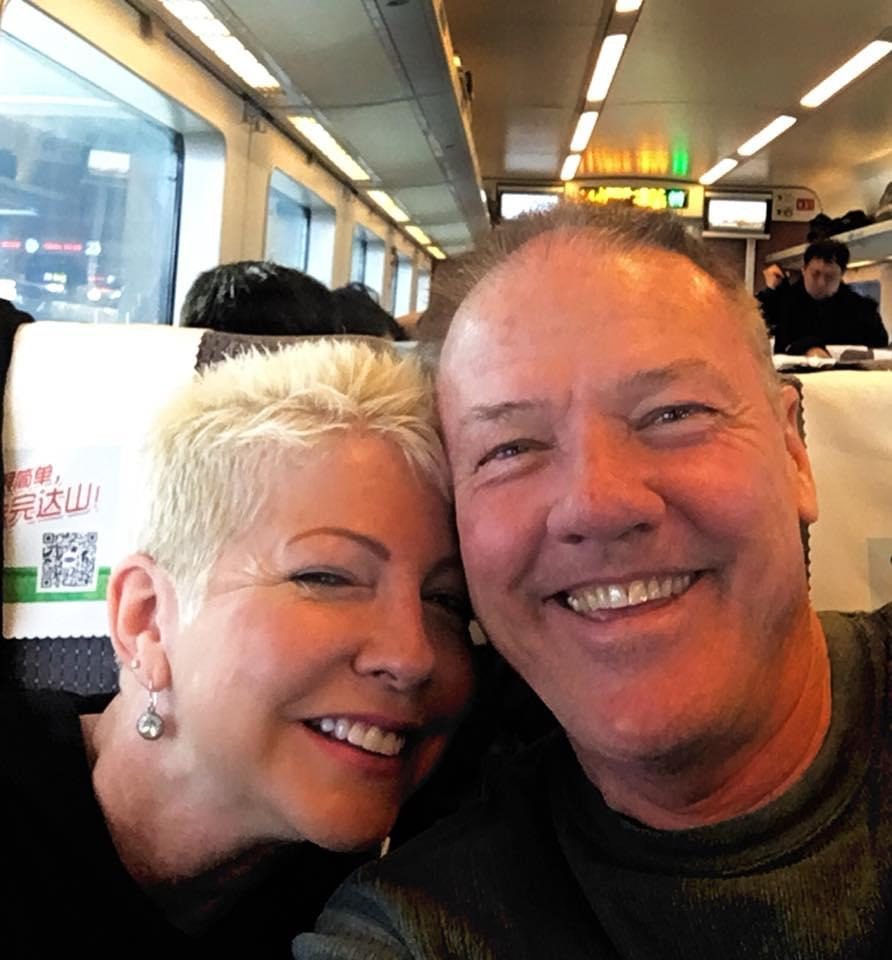
After touring around Beijing and Shanghai, we took a high-speed train, that traveled at speeds higher than 186 miles per hour, from Shanghai, to reach the port town of Yichang.
*Shanghai Yichang Distance*
Shanghai is over 700 miles away, to the east of Yichang City; which needs about 12 hours to drive for about 715 miles, by car to the port. This is why we took the bullet train. A bit expensive, but it cut the time in less than half and it is always a thrill. Worth it!
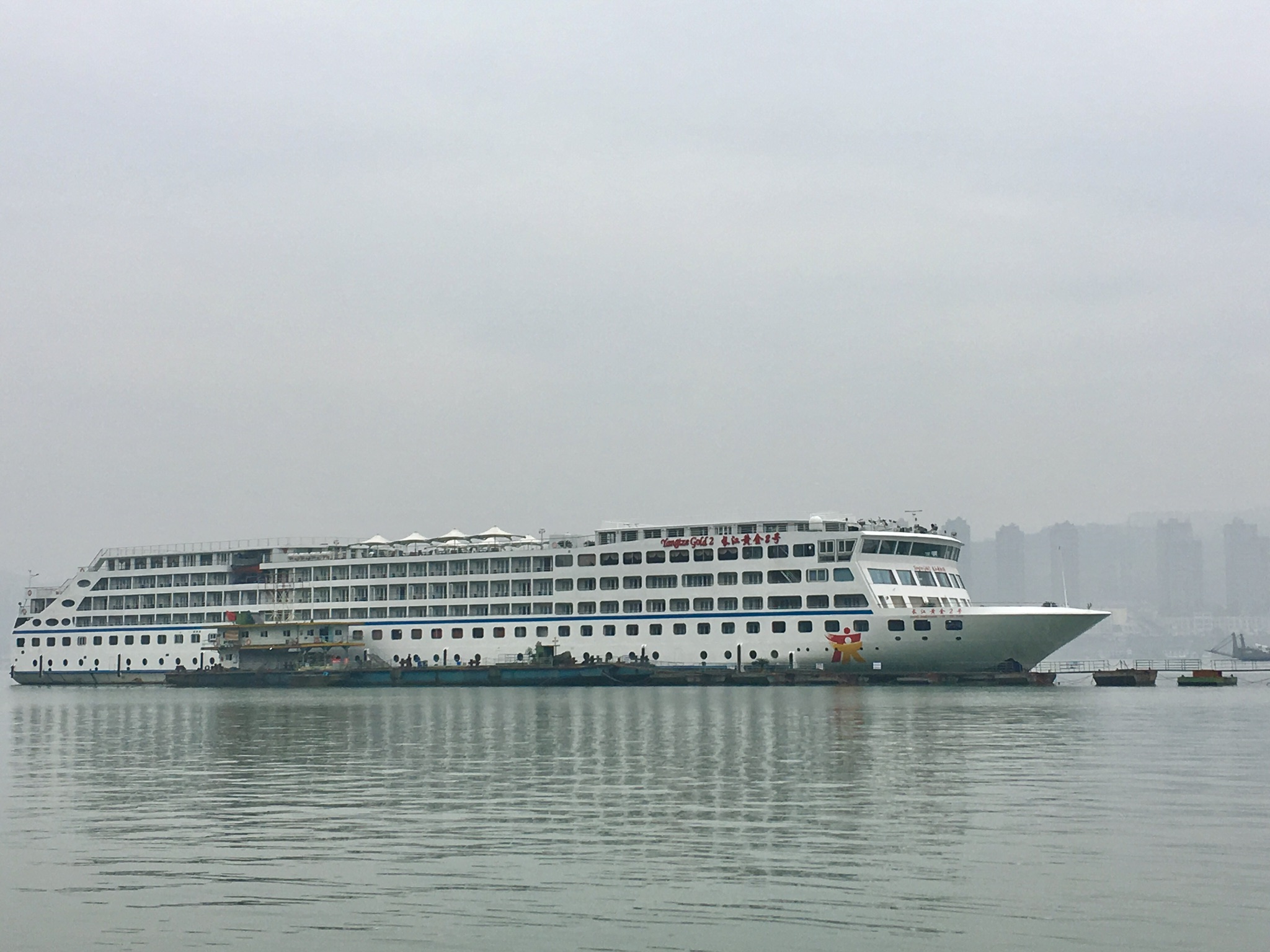
From there, we boarded our Cruise Line to explore the Yangtze River; which is known as the “Mother River” of China. The decision to take this 5-night cruise was perhaps the best decison we made, for “what not to miss” in China 🇨🇳
Yangtze River ⬇️
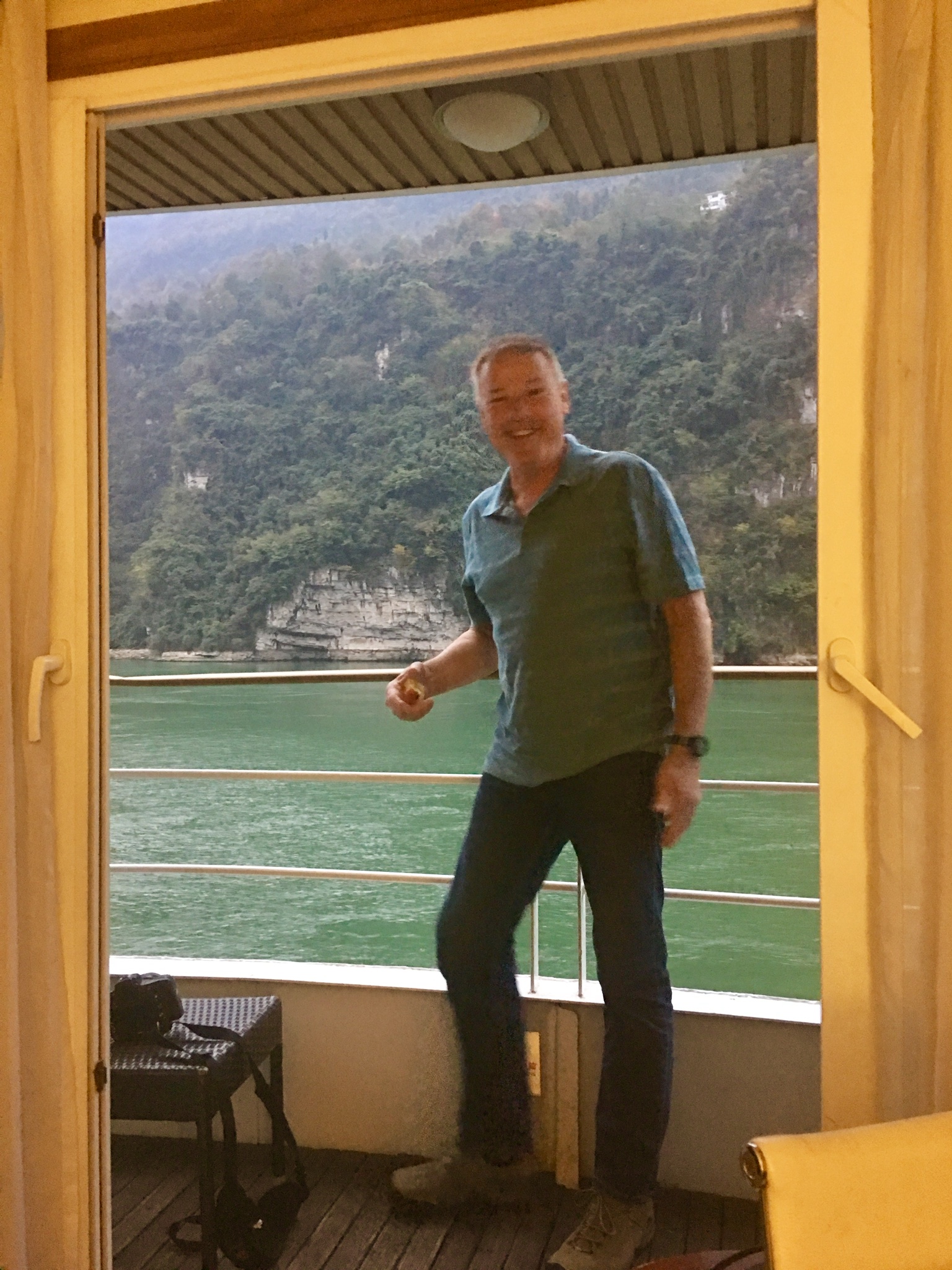
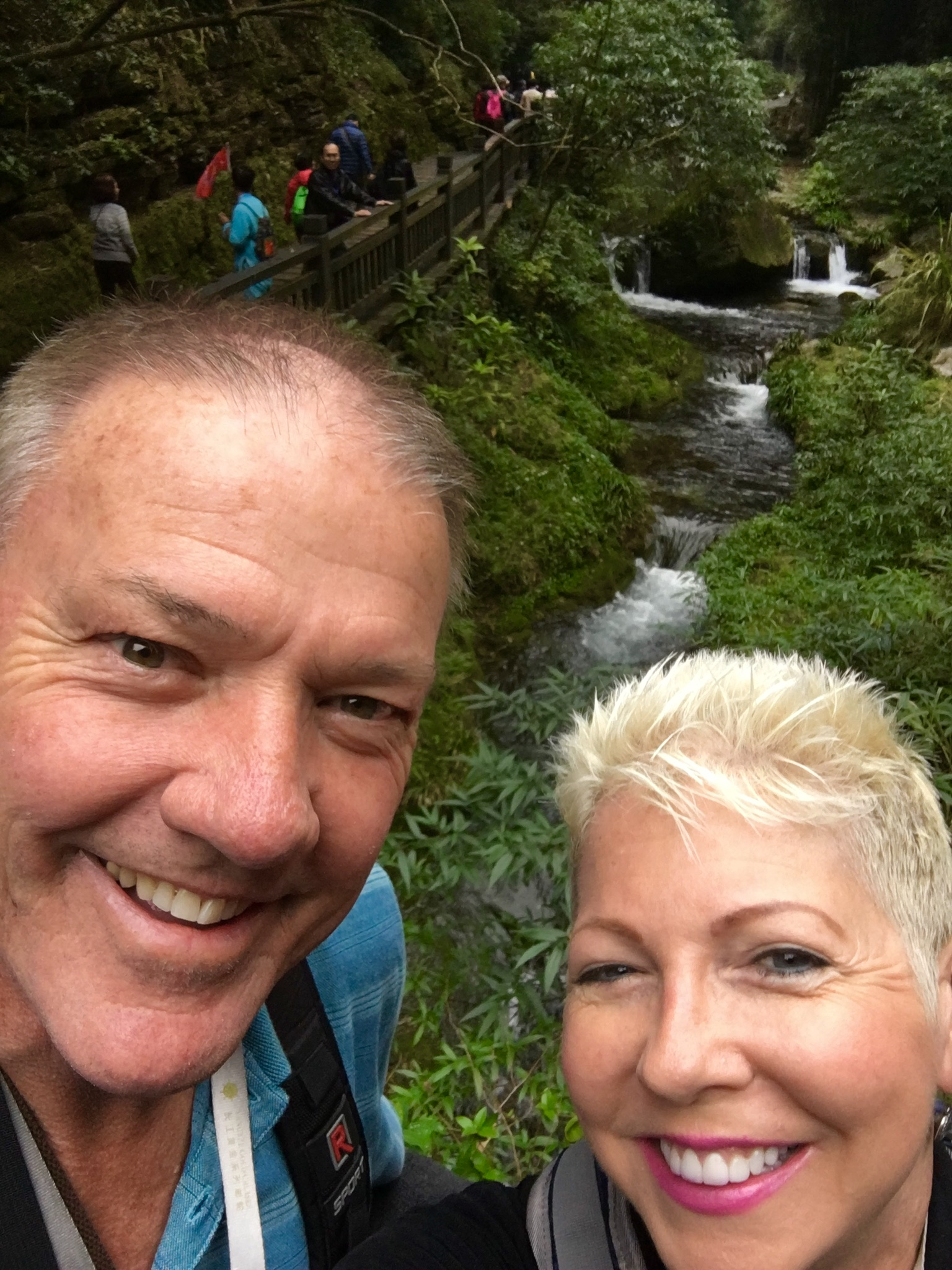
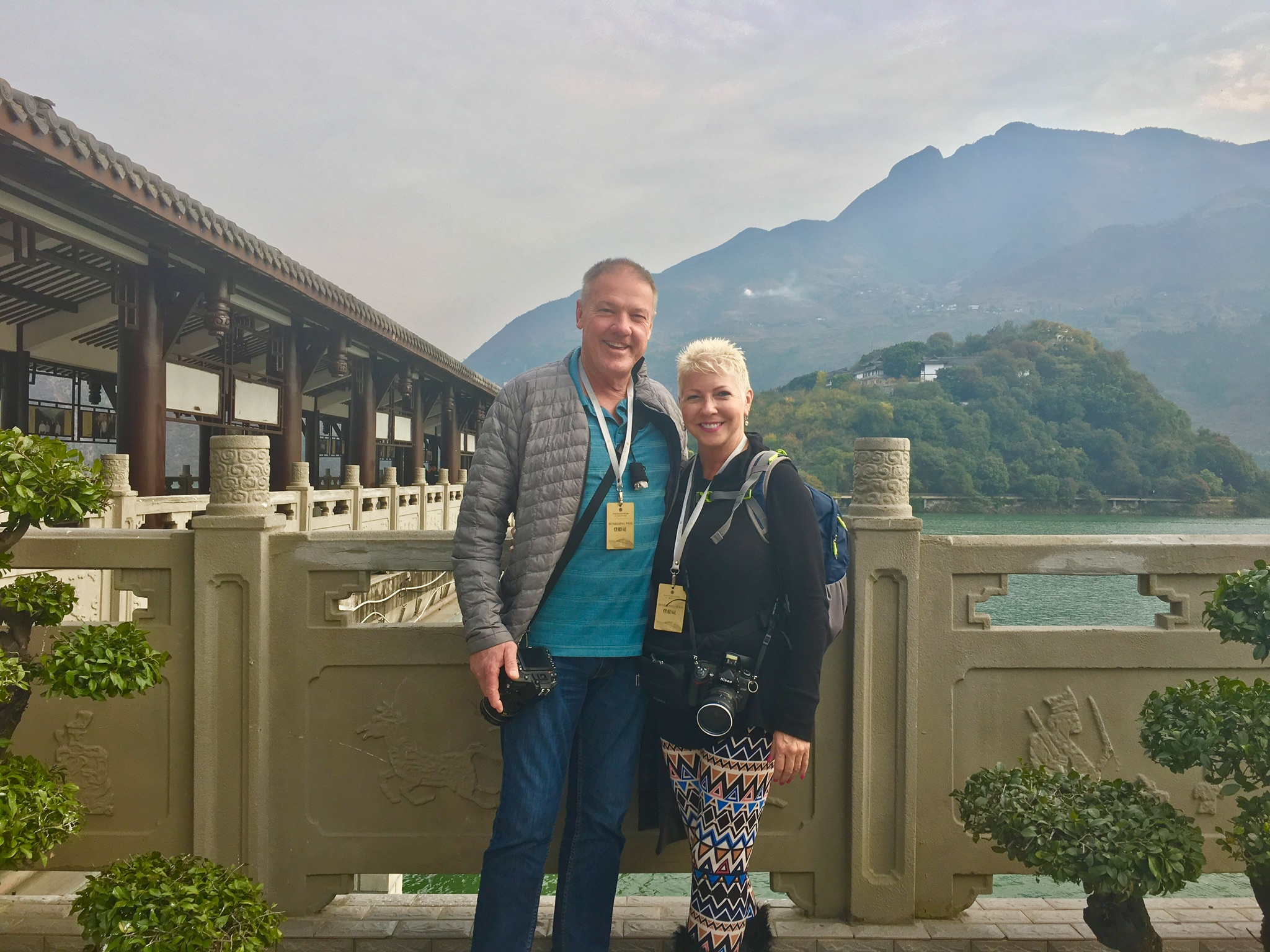
Not only did I get to share a cabin on the largest River ship in China with this handsome guy, we spent five glorious days touring all three lovely gorges on the Yangtze (pronounced -Antz) River.
This trip has been a highlight in all of our travels in the world. We invested about if month exploring, and really got to embrace the ancient Orient.
On the cruise ship, we had a spacious cabin with our own balcony. The staff are all very nice, and work hard to please! We are the only two English speaking guests, so we have a human assigned to us, to make sure we don’t miss out on anything, and know when to be ready for tours from the cruise ship.
To begin, we disembarked at 6:30 AM from a small port in Yichangdong. As we sail up river, we also get to visit several places of interest, along the way.
Our Cruise Ship is called; “Yangtze Gold 2″
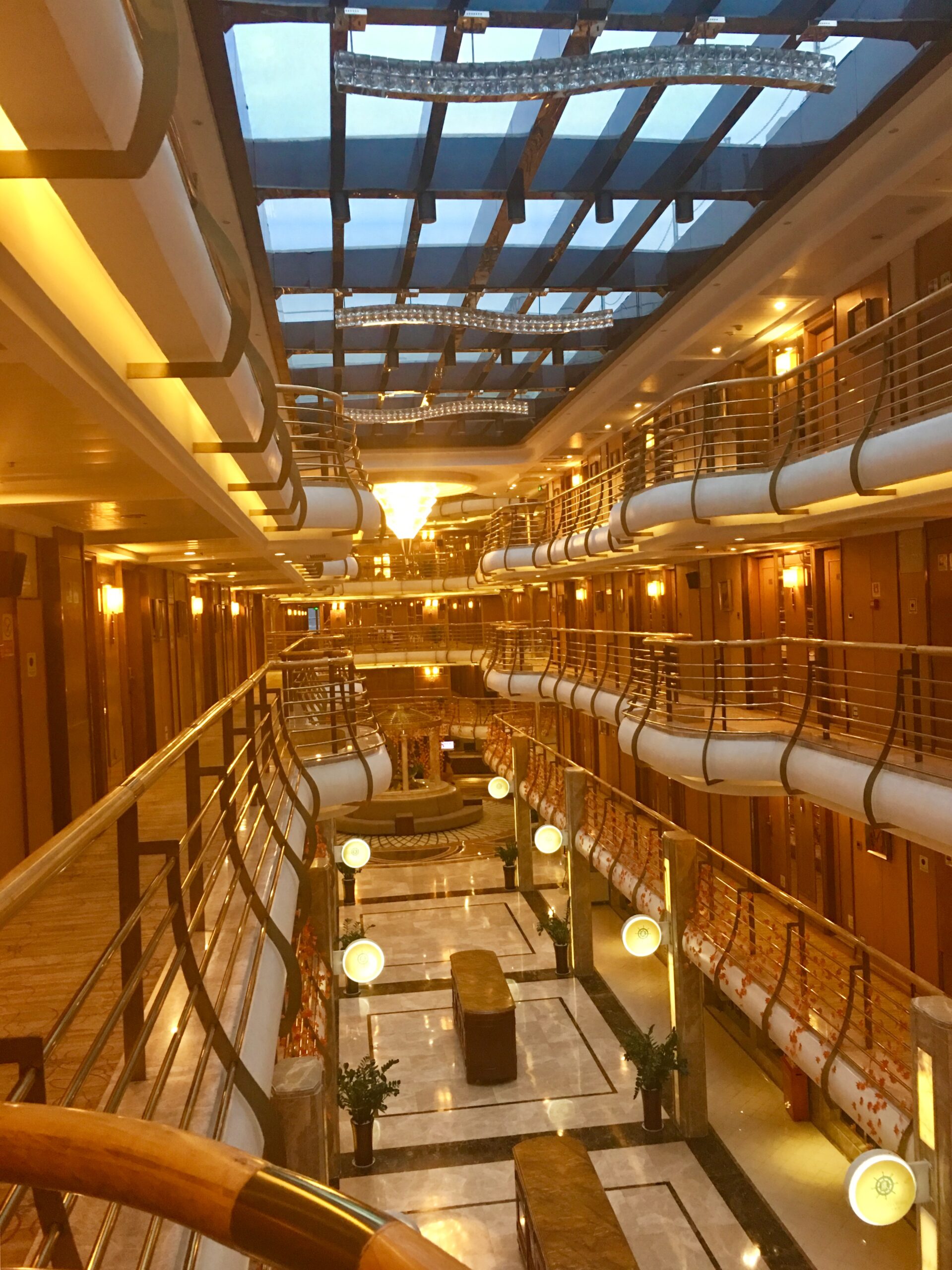
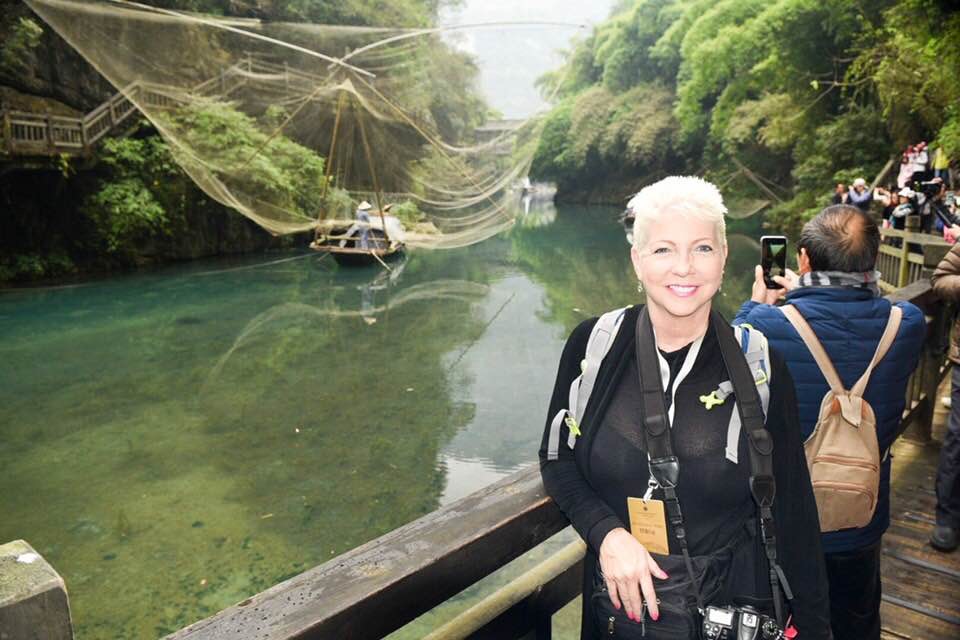
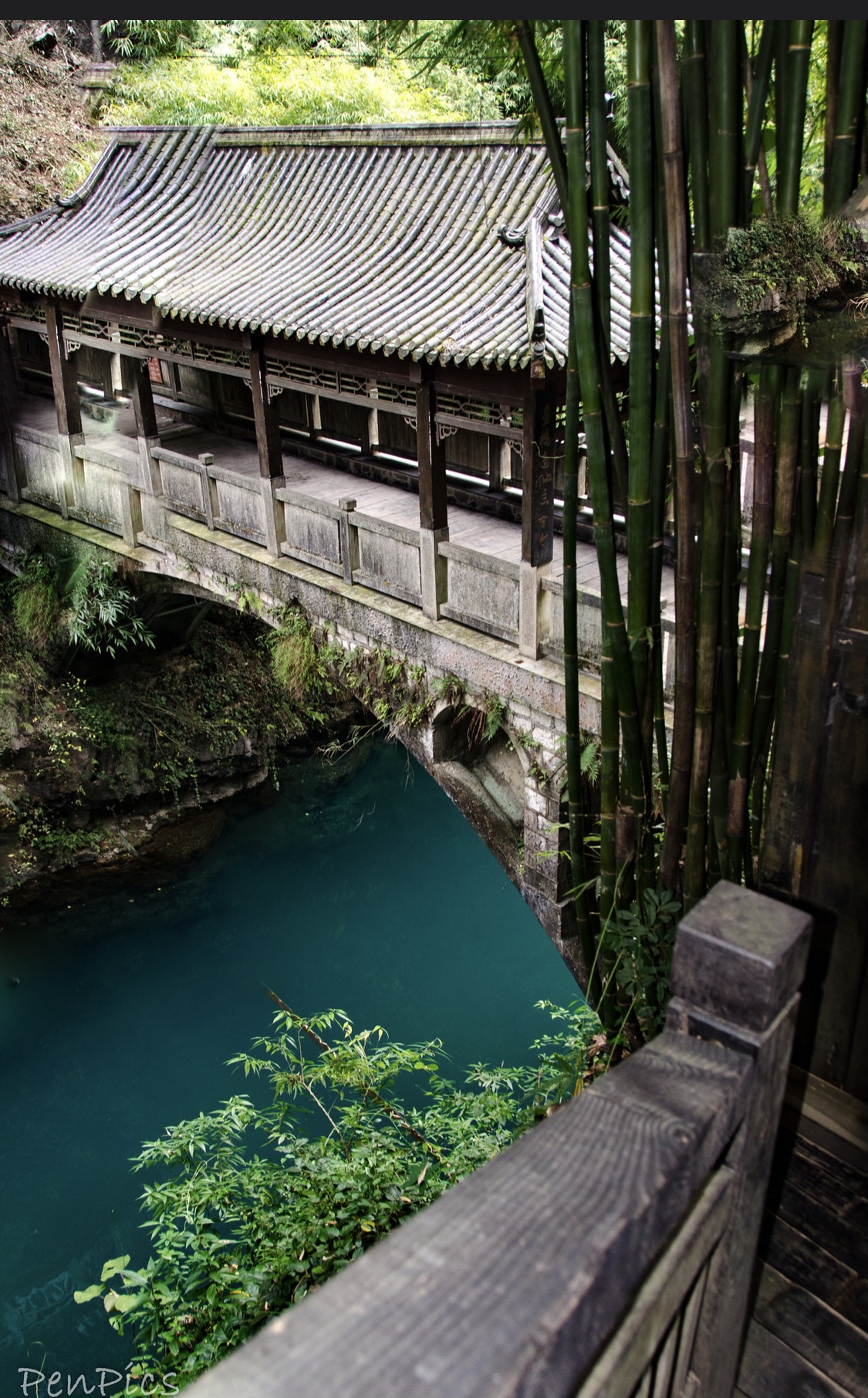
We made our way for the first stop of “Three Rivers Tribe.” Very tastefully done, and the highlight of our trip. I can honestly say its one of the prettiest spots I have ever been in!
History
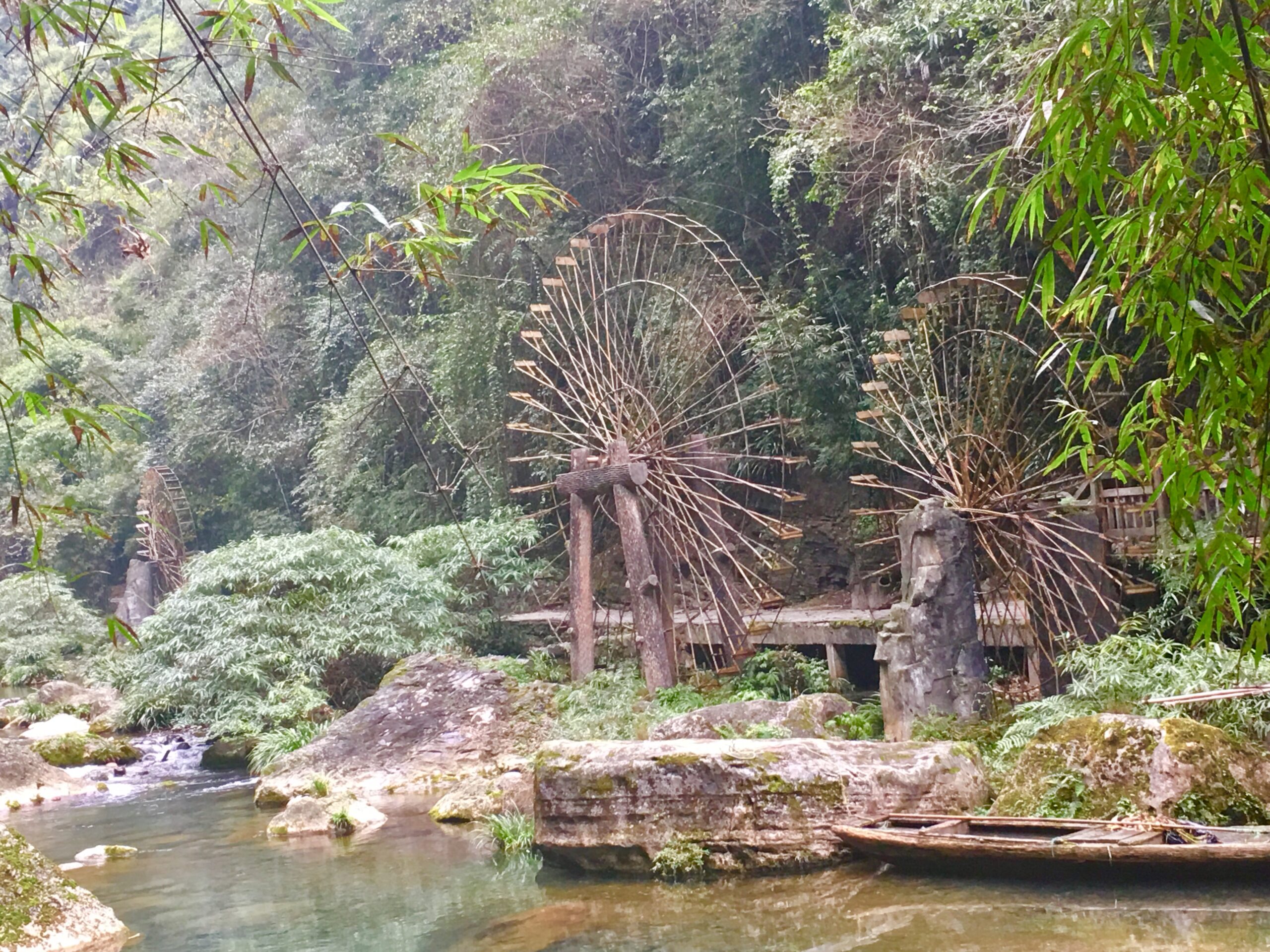
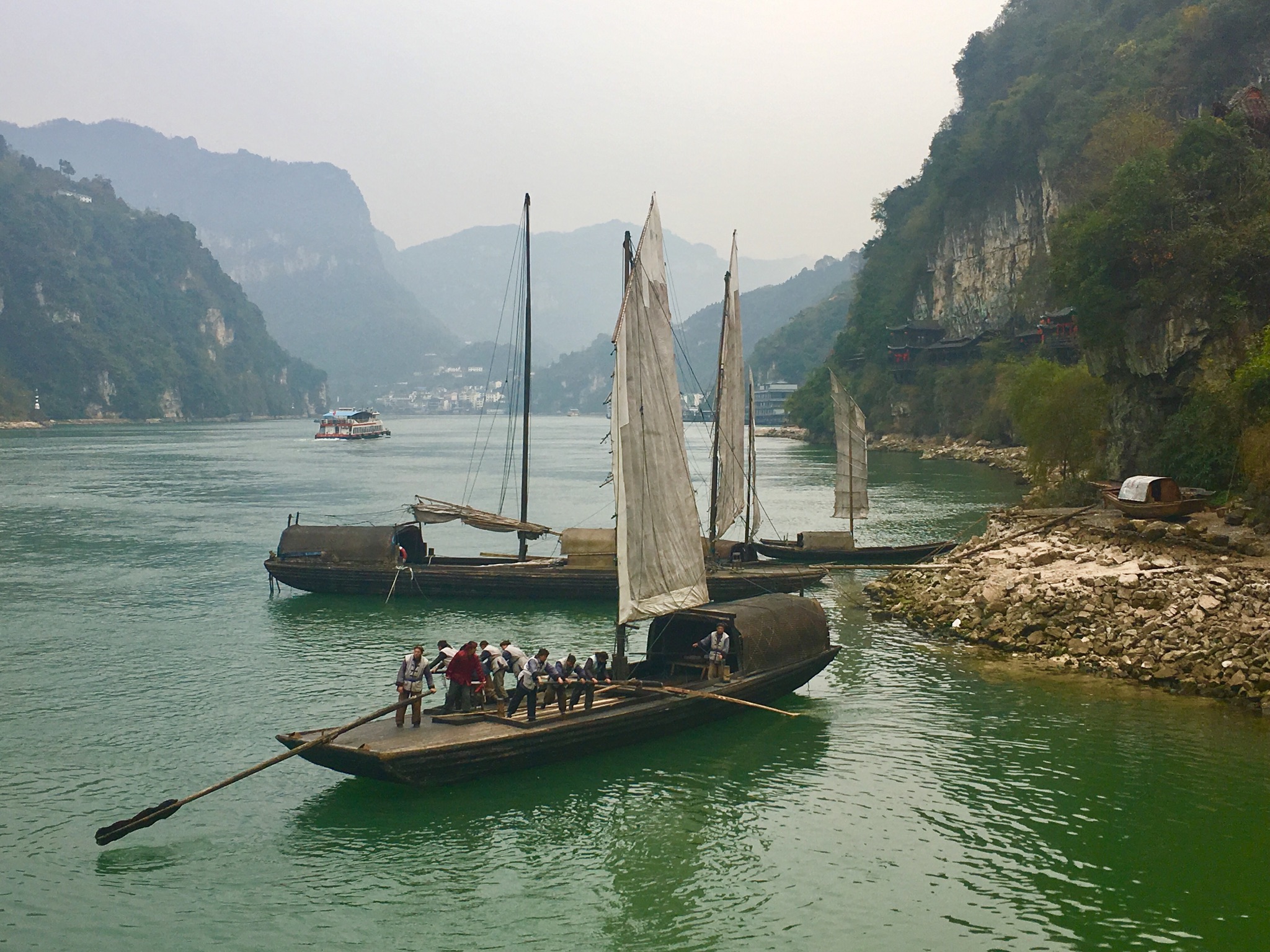
Three Gorges Tribe in Yichang, Hubei Province, is a good place to enjoy the wonderful, natural landscapes and experience the culture and customs of the Tujia ethnic minority. It stands between Gezhouba Water Conservancy Project and Three Gorges Dam Project along the Yangtze River. The natural scenery here is just like a painting, with the green mountains reflecting on the crystal-clear water, the quaint boats floating quietly, and the waterwheels rotating, slowly.
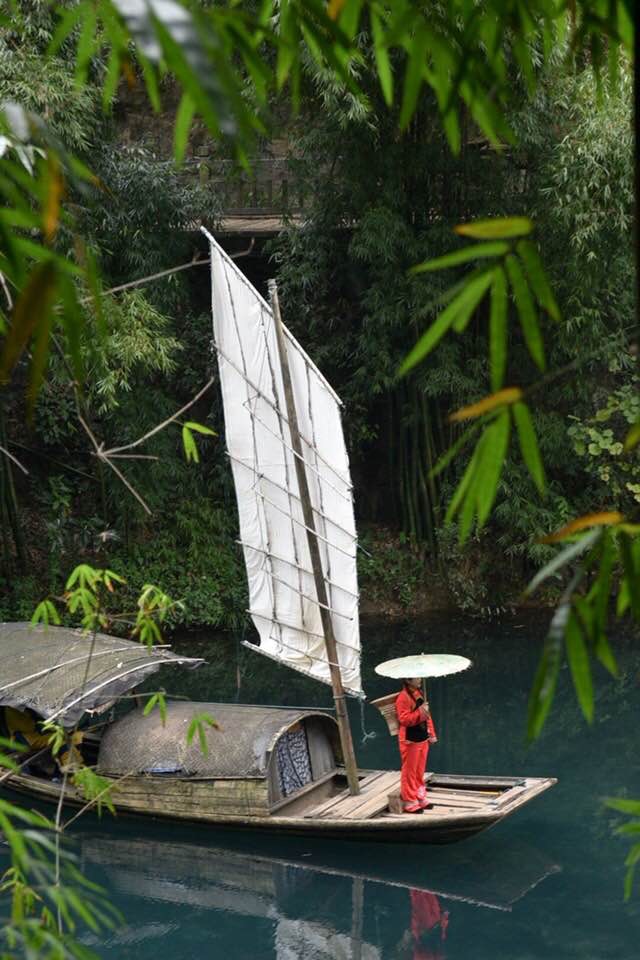
Next, we made our way to the “Worlds Largest Dam.”
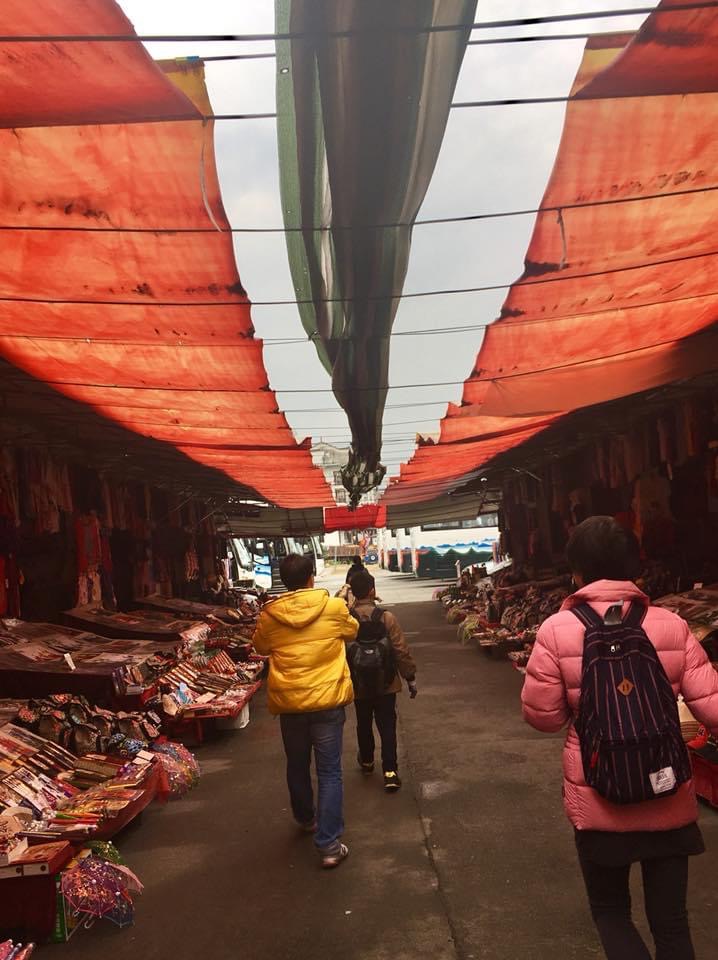
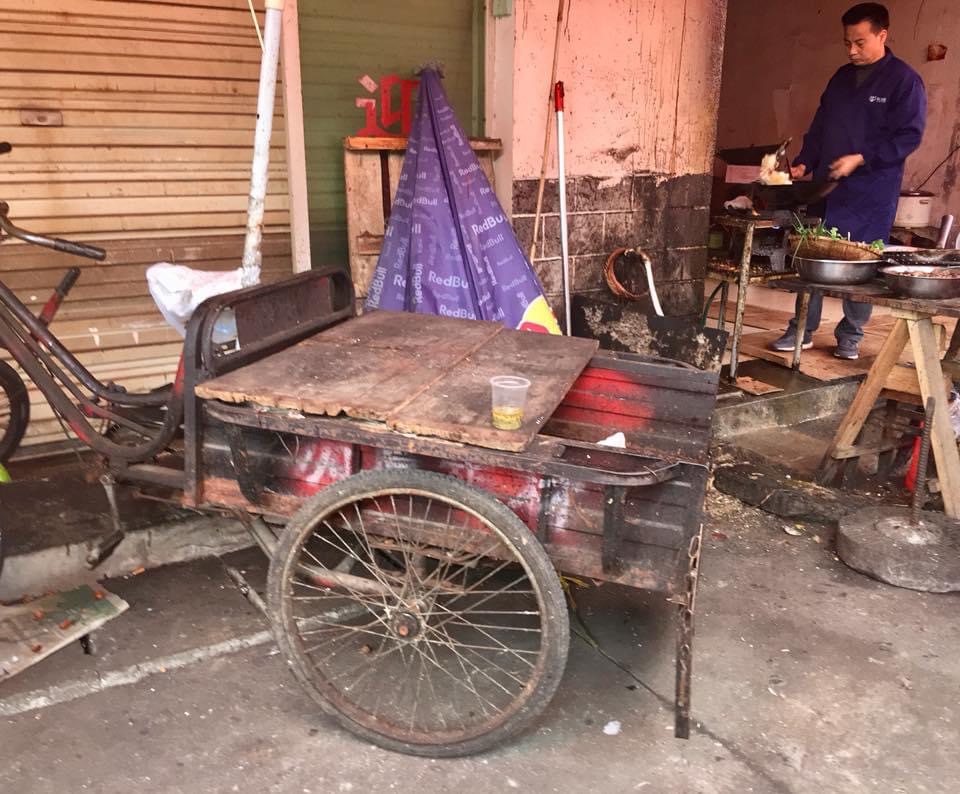
First we got to stop and walk around this little market
Some Tough History on this Dam
Our local guide from this morning was raised in this area of Yangtze (Wushan). He is one of 1.2 million people who were displaced by the building of the Dam back in the 90’s. That being said, he also states; had the government NOT intervened, those same people, including himself and his family, would have all perished from the natural flooding that was inevitable vs the controlled flooding of the Dam project.
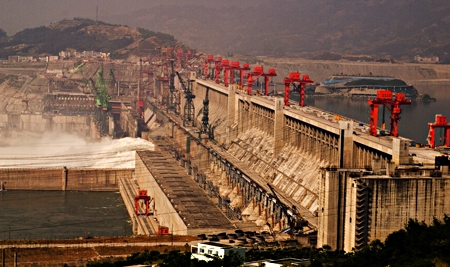
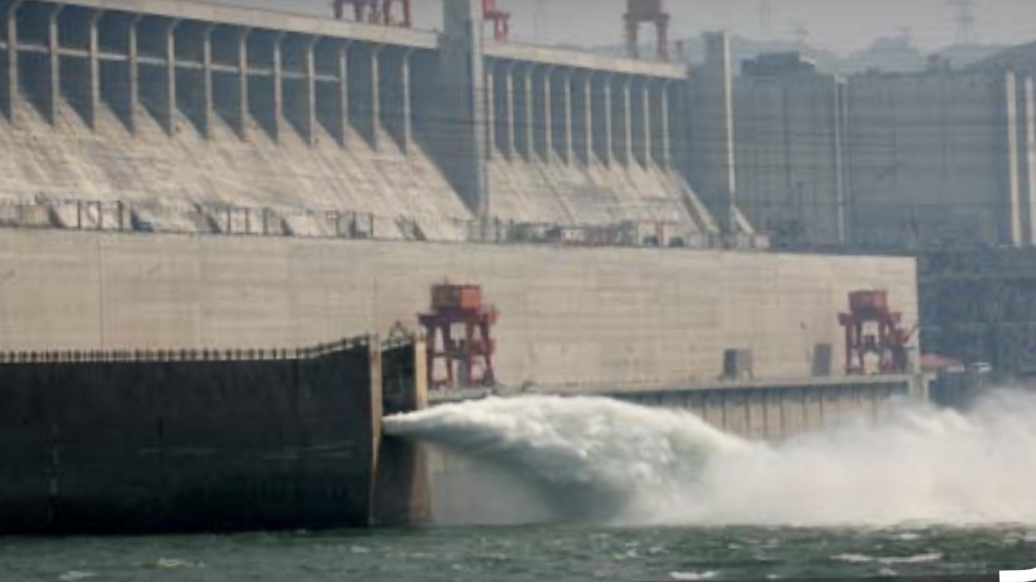
Three Gorges Dam
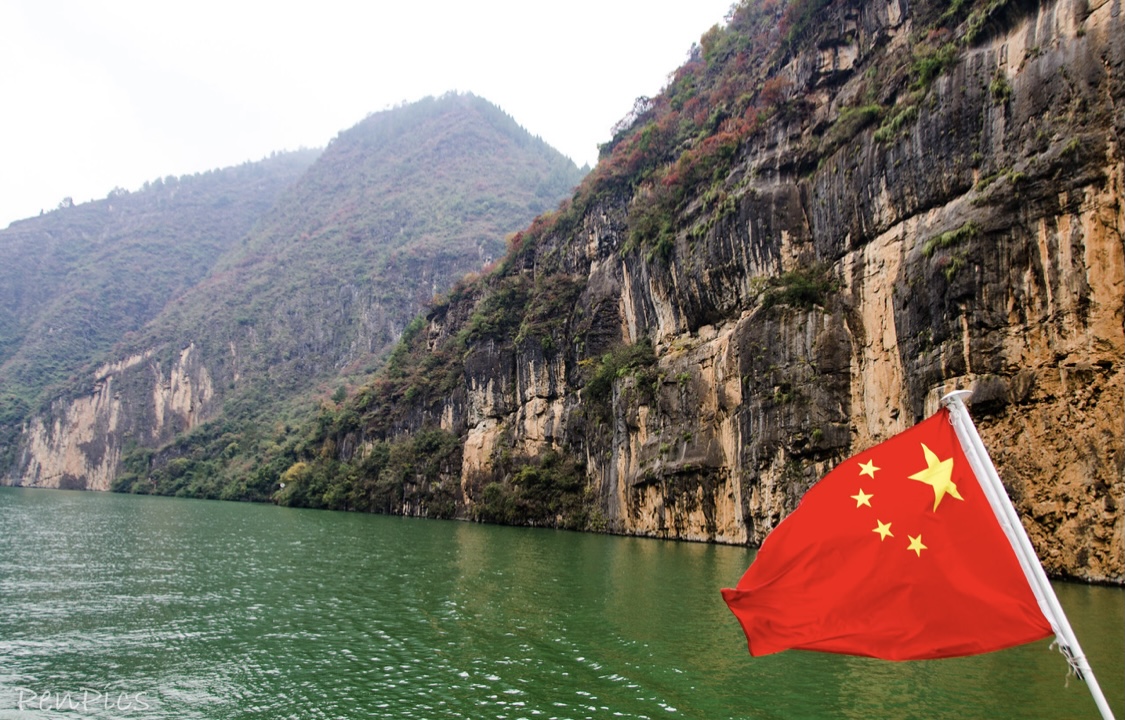
Some 270 feet below the water, is the original civilization from 3,000 years before. This is a civilization lost forever.
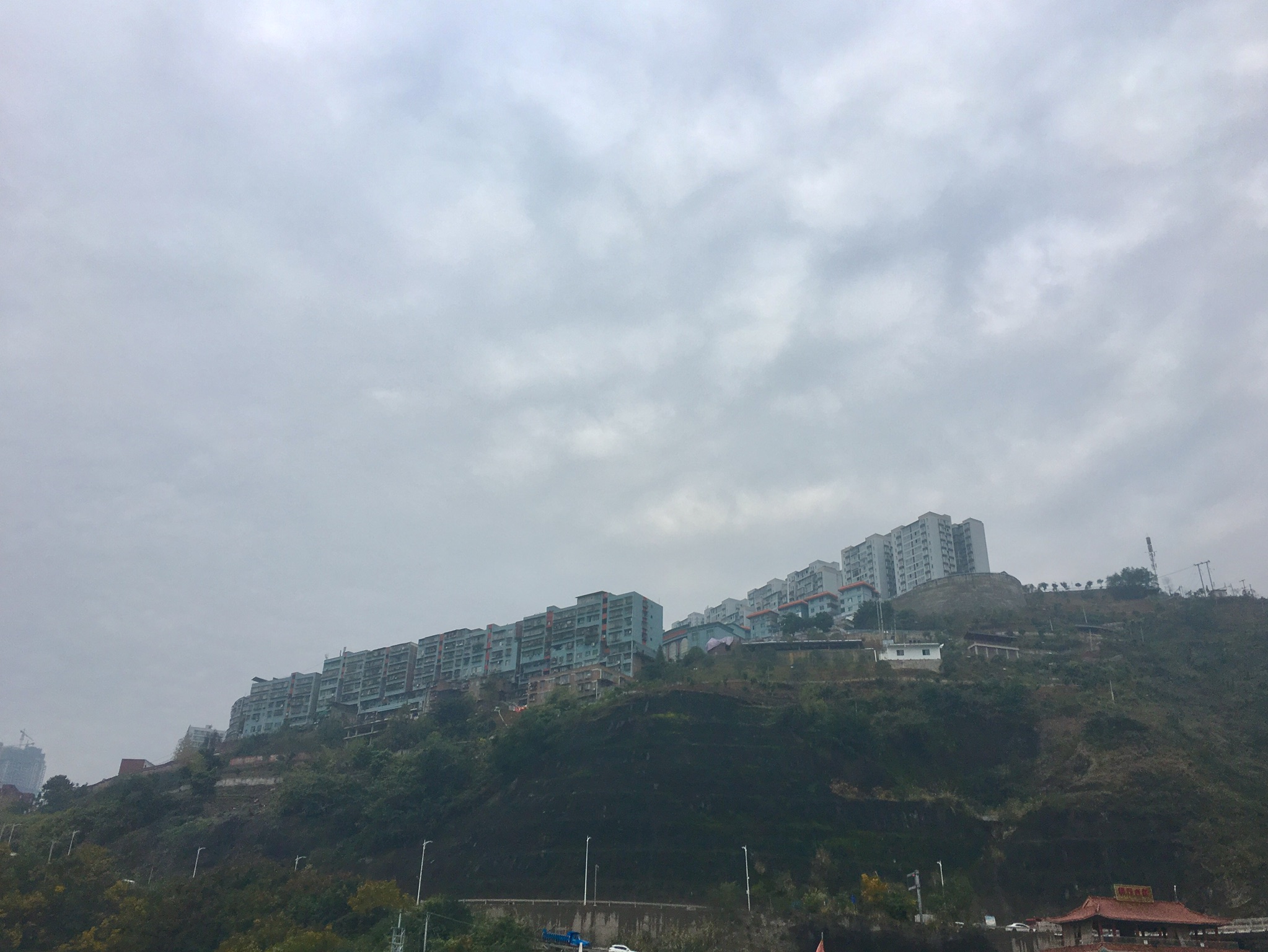
This picture shows the housing on the top of the cliff that the government built, to provide new housing for those displaced by the Dam project.
More Dam History
The massive project sets records for number of people displaced; more than 1.2 million. The number of cities and towns flooded; 13 cities, 140 towns, and 1,350 villages, and length of reservoir is more than 300 miles.
The project has been plagued by corruption, spiraling costs, environmental impacts, human rights violations and resettlement difficulties.
The Three Gorges Dam is a hydroelectric gravity Dam that spans the Yangtze River by the town of Sandouping, located in Yiling District, Yichang; Hubei province, China.
The Three Gorges Dam is the world’s largest power station in terms of installed capacity (22,500 MW). The Dam body was completed in 2006.
Another reason why the Three Gorges Dam was constructed, was to generate electricity. There are several generators within the Dam, which use the potential energy stored in the water, to generate electricity. This is sold to many provinces around China, including Shanghai. The ability to generate and sell power in this way will mean that the Dam will eventually pay for itself and start making profits.
The electricity is generated without the need for fossil fuels. This means that it is green, renewable energy which does not pollute the environment. It has helped China to reduce its Carbon Dioxide emissions and also continue providing its thirst for electricity.
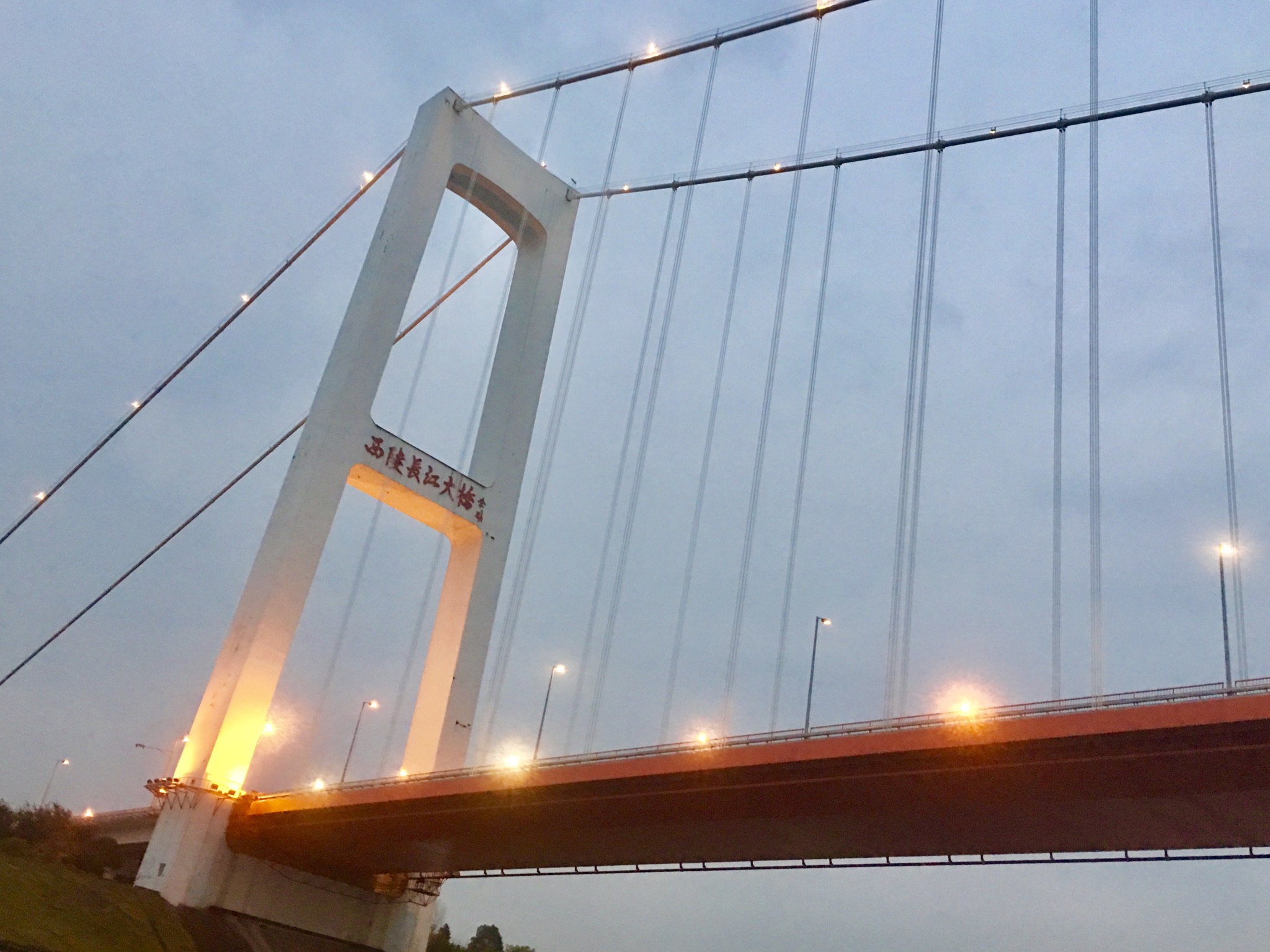
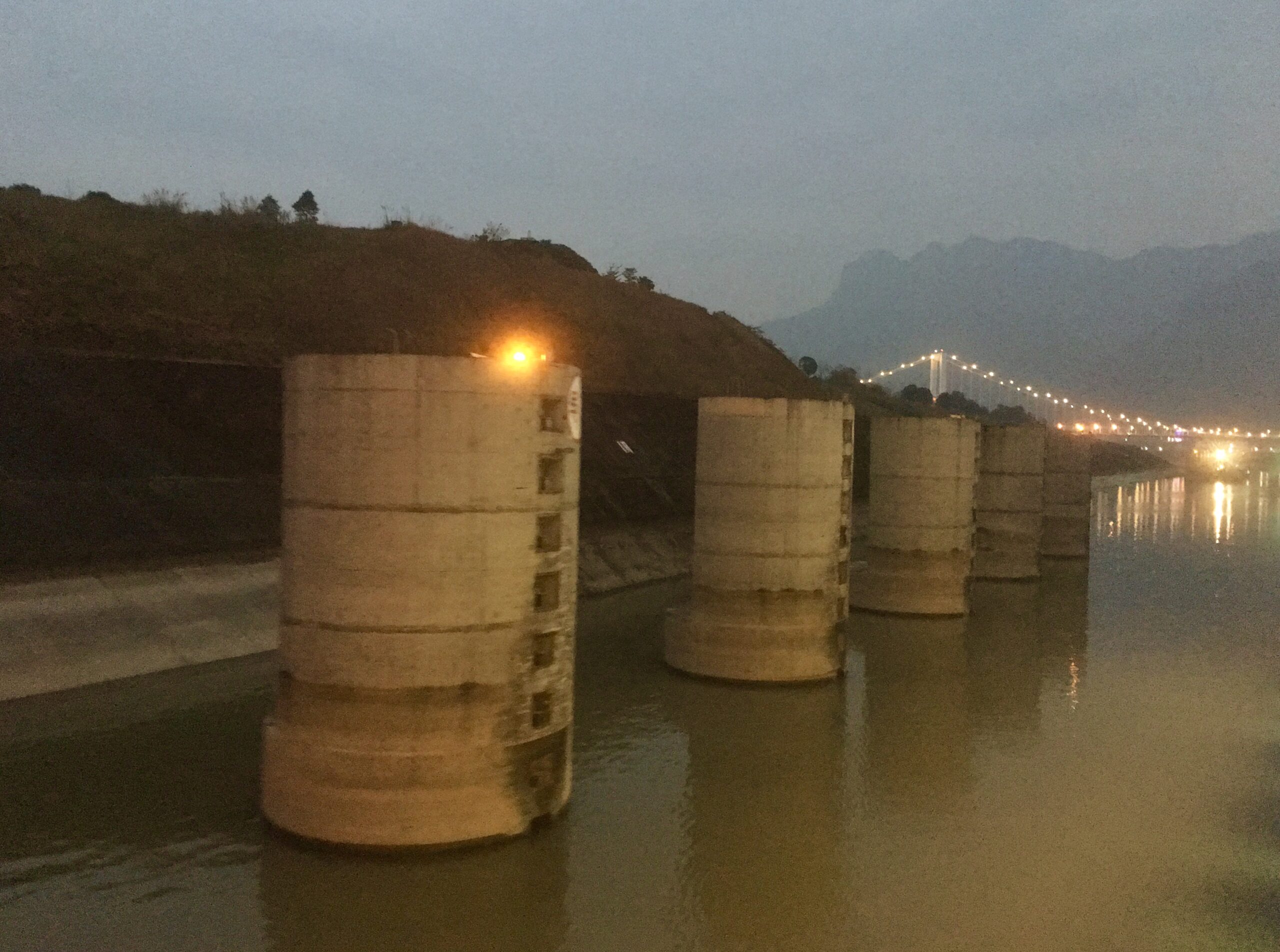
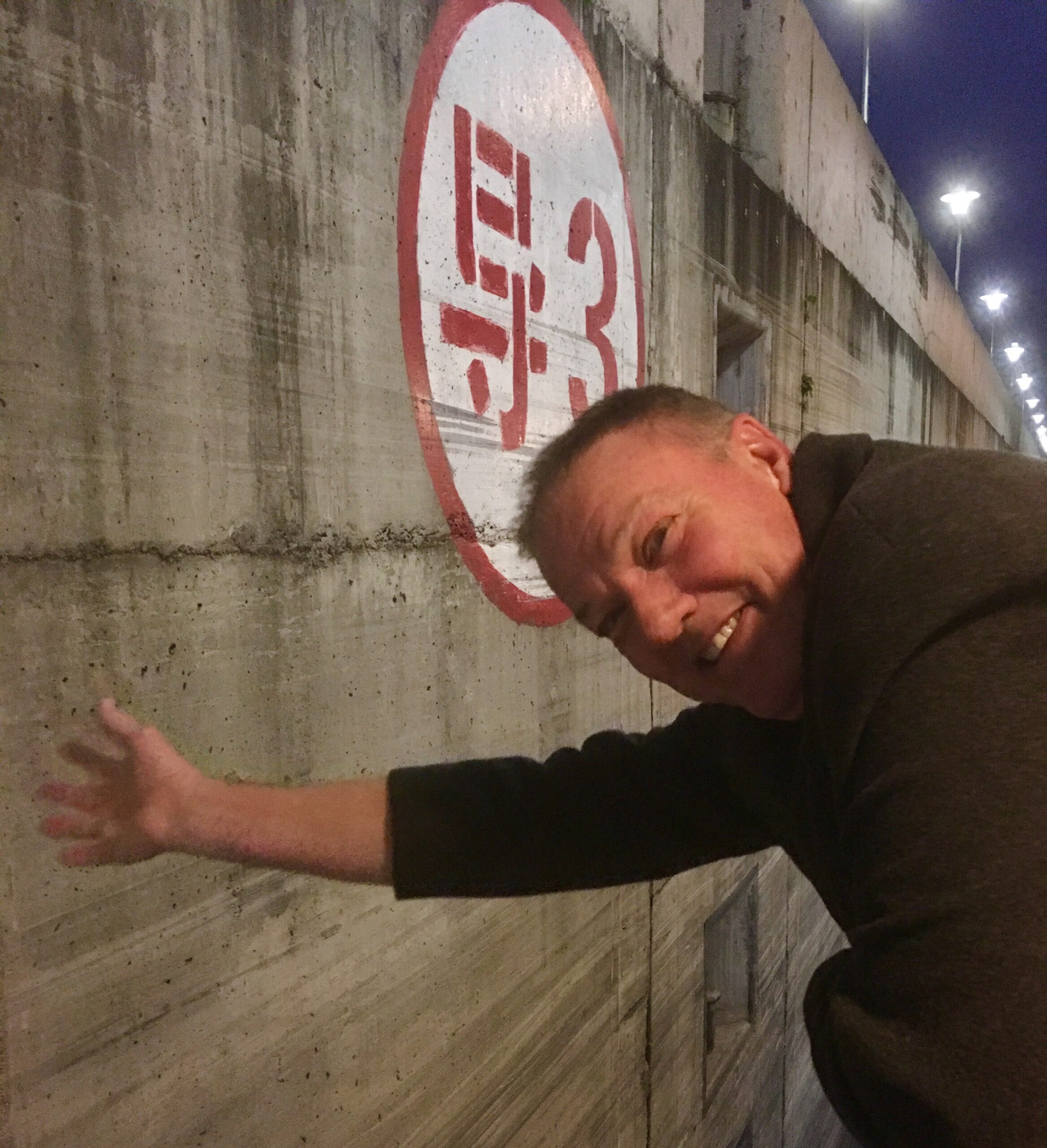
Later, by dinner time, we will enter the lock system of this dam, so our cruise ship can continue up the Yangtze.
Update: it is after 10:30PM. All locks through the passage area complete, and it’s smooth cruising again! It was a very loud and long evening. Who knew the lock system was so tight for this largest River cruise ship. LOUD creaking, and scraping sounds. It was quite an experience, but now, we can get some sleep!
On this next morning, we transferred from the cruise ship to a large long boat, then to another (smaller) longboat, to accomplish the “Lesser Three Gorges,” and the “Mini Three Gorges” Tours.
We were gone for about 4.5 hour, and traveled 31 miles total. We started in Wushan in the South, and ended in the Dachang Ancient Town of the North.
Lets just say, there was no Gorge left unexplored by us, on the Yangtze today!
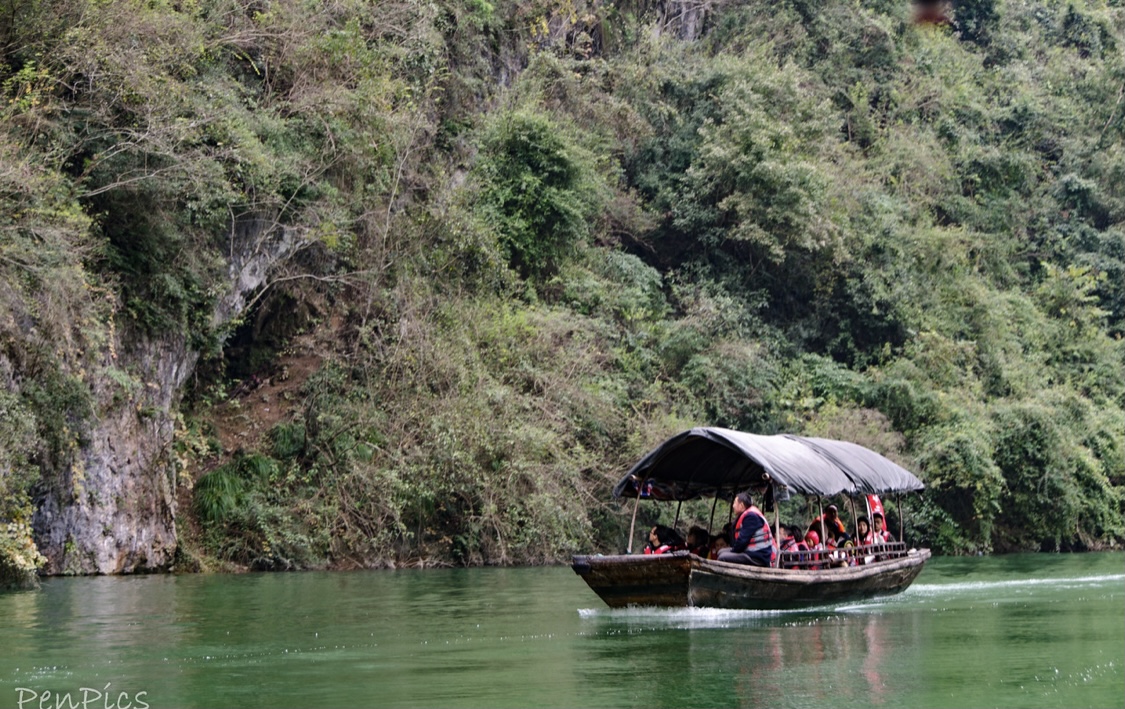
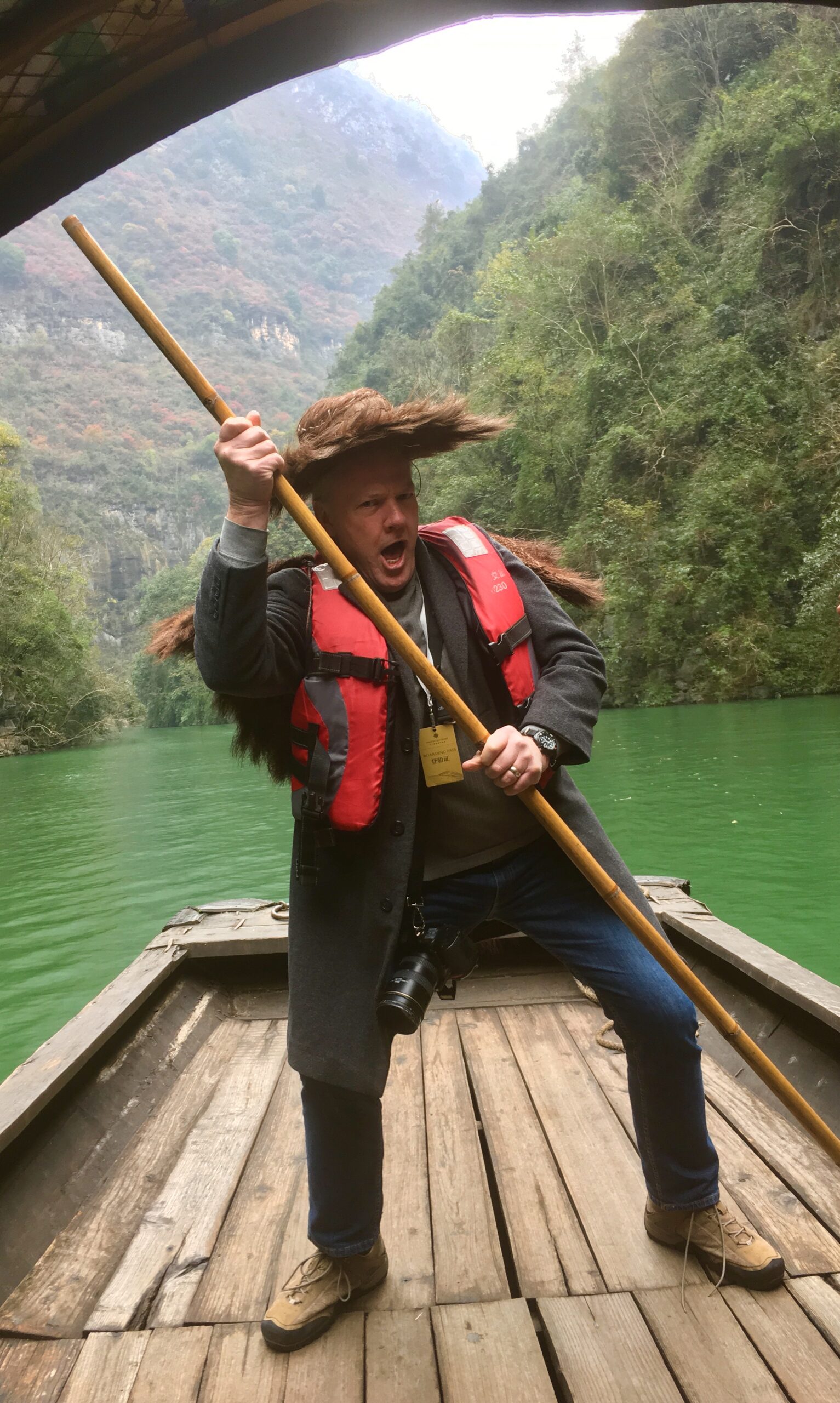
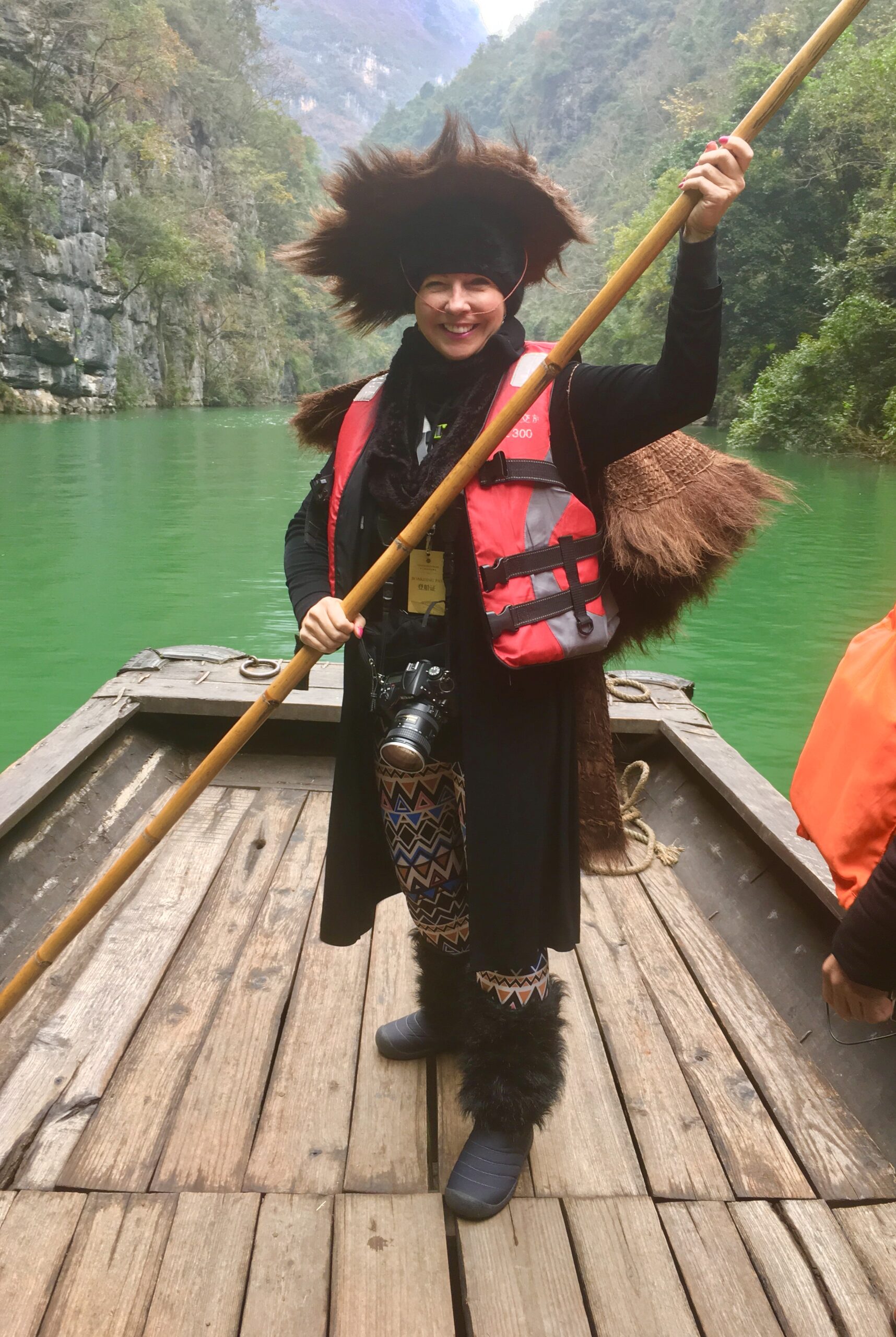
Okay, this was great! Each longboat had about 30 people in them. If desired, one could don the hat and cloak, and handle the push-pole (mock-up from ancient times).
Daryl and I had not planned to partake, but the group on the boat INSISTED on the Americans going first! There was much hooting, and hollering by the locals to encourage us.
Daryl got into character right away. Me, I felt overwhelmed 😳 There was much ado from the Chinese, not to mention pictures being taken of us. It was pretty crazy, but fun. Everybody was having a fun time.
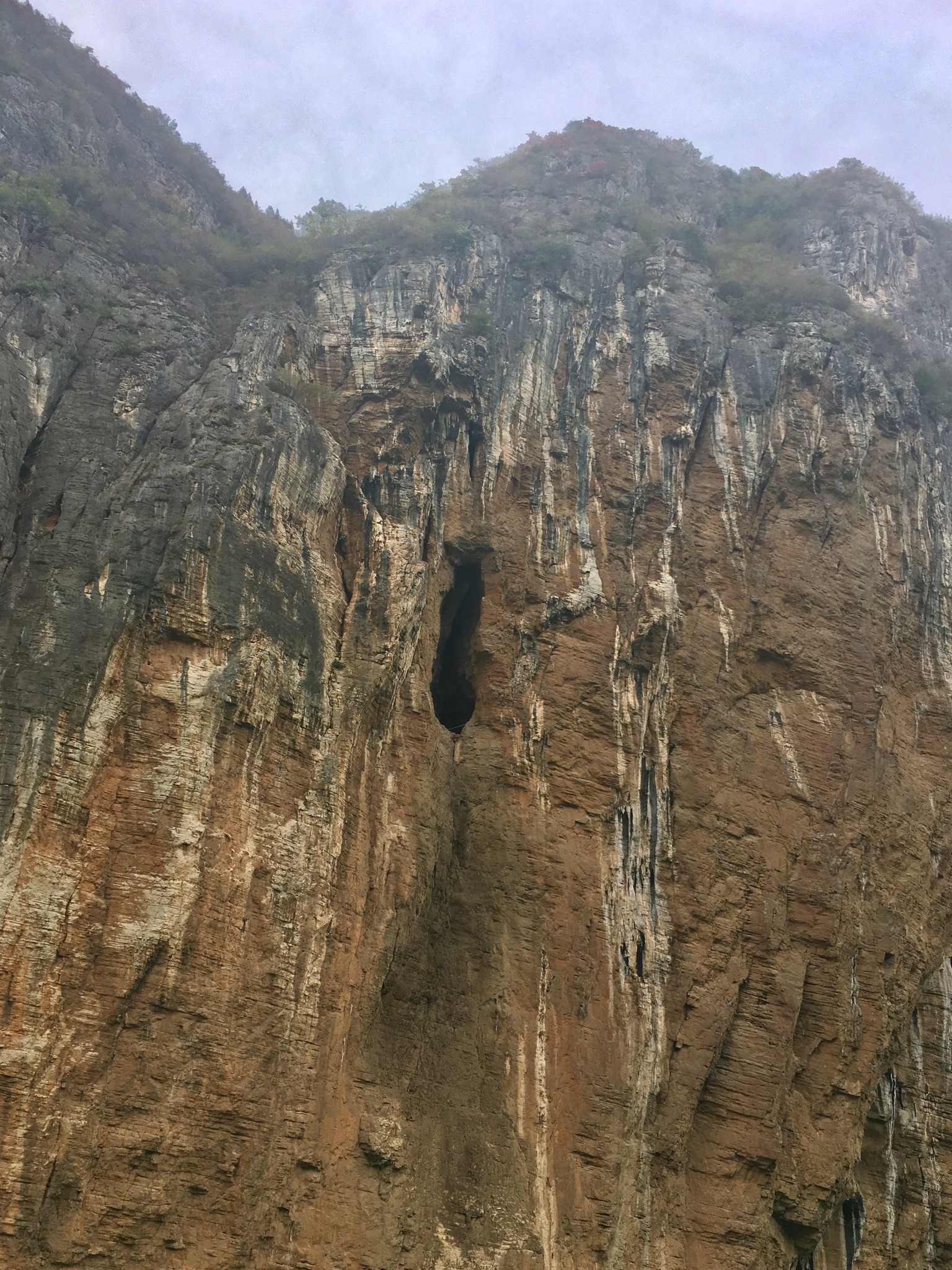
Here, we entered the area of the “Hanging Coffins.” Not too many left, after the elements have taken their toll over the hundreds of years. These are ancient! After learning about the history, I was a little amazed any were left.
History of the Hanging Coffins
The term hanging coffin refers to a coffin that is suspended in a natural or a man-made cave. high up on the cliff. According to historical records, the earliest coffin had a 1500-year history. Because of the low technology level in ancient times, people considered the mystery of the coffins for a long time. During that time, lots of folk legends came about.
Legend about the Hanging Coffins
People thought that human beings came from the water, mountains and caves, so they needed to return them there, after they die. During the age of troglodytism, humans hunted in the forests and fished in the water, so they had a special connection with nature. Placing their ancestors’ coffins on cliffs above the water, could be seen as sending them back to nature. There was a sentence in the famous poem “Flower Burying;” “the inner being came from cleanness and would return to the cleanness,” which is an example of the returning to nature theory.
More History of the Hanging Coffins
Most of the coffins, which date from the Spring and Autumn Period to the Warring States Period (770 BC-221 BC), were placed high above the water, particularly the ones found along the Daning River, with the lowest distance being 98 feet, and the highest being 1,640 feet. With no support and backstop in the surrounding area, how the heavy coffins were placed in such a high place still remains a mystery. However, experts have speculated several feasible means by which ancient people did the great work. One theory is that the coffins were lowered down from the top of the mountain by ropes. It was a common funeral custom in ancient times for Yangtze River people to hang coffins on the cliffs. But the intention remains controversial. One legend among the Ba people has it that a man called Wuxiang defeated his rival competing for the chief of the tribe by making a boat out of earth that would float in the water. In order to commemorate the great leader, his descendants made his coffin boat-shaped and placed it high up in the cliffs. Thus this practice was retained by later generations.
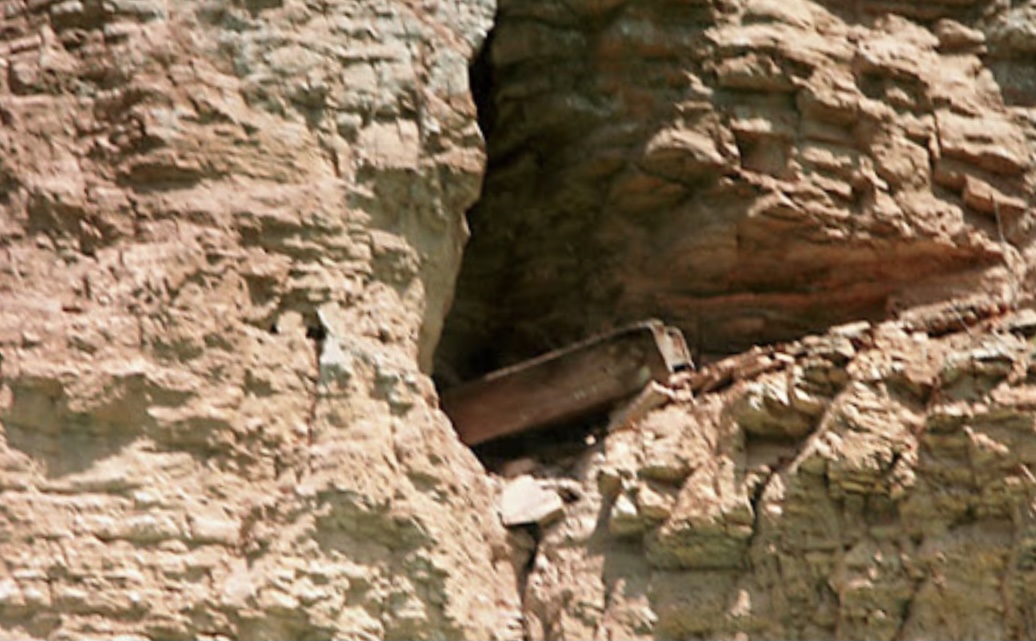
We were only able to see a wooden coffin in a cave. The other “hanging” coffins are actually placed in a natural slit in the rocky bluff. It is believed these coffins are around 3,000 years old.
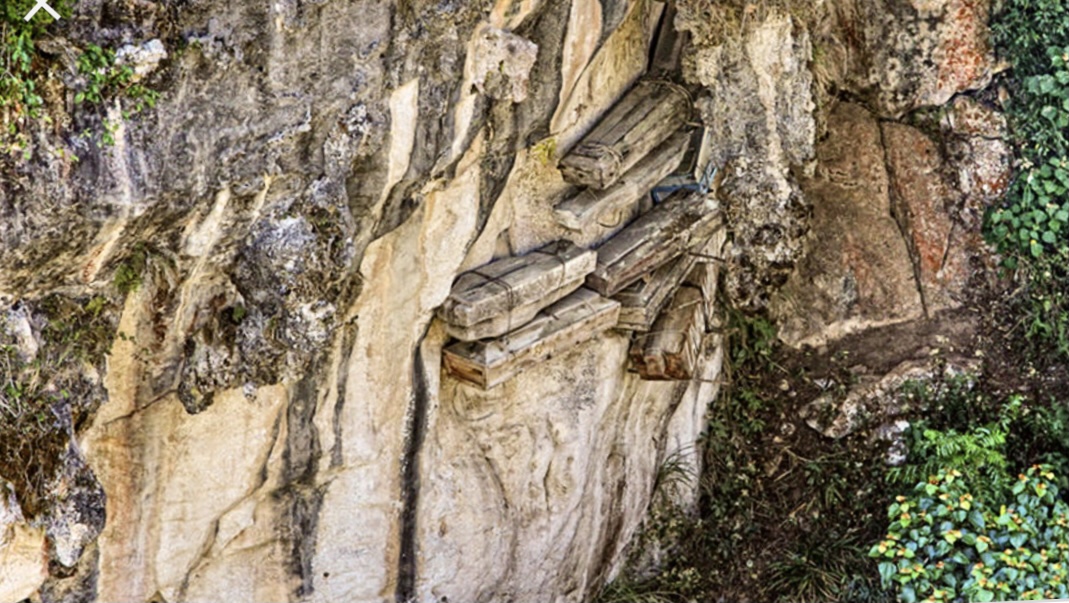
Overall, these were two, great side-trips to explore on the River. We only saw a few monkeys on the river edge. Too cold for them to be out in force.
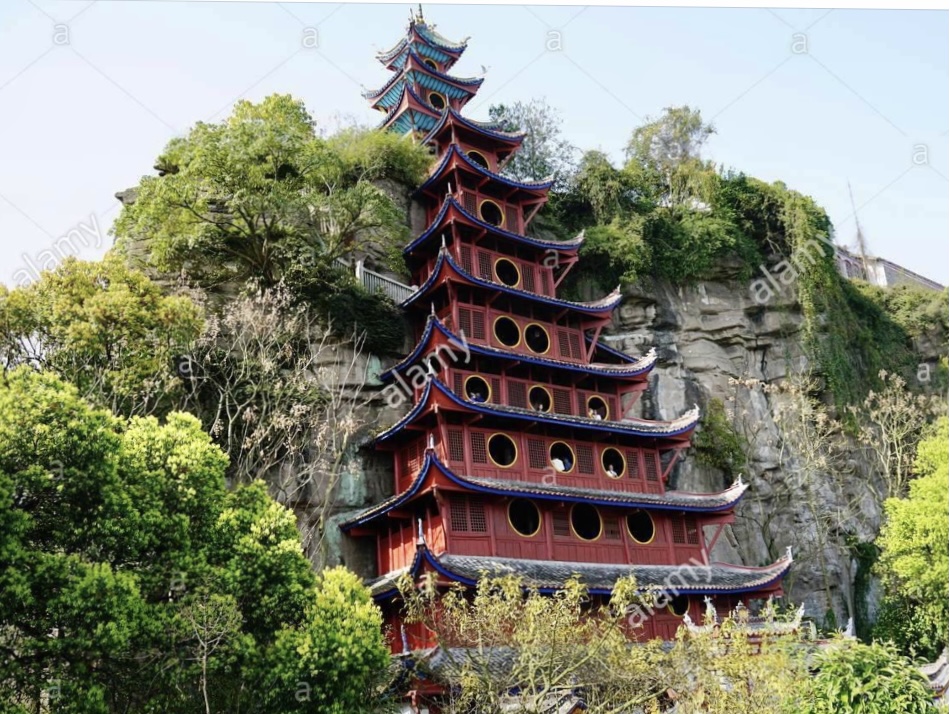
Shibaozhai Pagoda
We just learned the night before, our ship is not stopping at this ancient site. Going on by was NOT enough! It is the one stop I was most looking forward to! Apparently, there has to be at least 50 people on-board who purchase the extra tour, to warrant the expense of docking, and that did not happen. Darn!
It isn’t like we haven’t had the most amazing time on this trip, so I shouldn’t complain, but it’s not like we will be back again to see this another time, either. This structure is one of the most unusual in the world. It was built into the mountain!
History
Legend of the Shibaozhai Pagoda, which literally means the “Stone Treasure Fortress,” but some call it the Treasured Stone Stockade or Precious Stone Fortress.
From afar, the protruding 720 foot hill on the Yangtze’s north bank, can appear to resemble a jade seal, and is so named. The creation of the hill is attributed to the Goddess Nuwa, who caused a rockslide while she was decorating the sky, after a fierce battle between two warring dukes.
The Temple structure consists of gateway, tower body and the top temple of Tianzi Palace. The tall yellow entrance gate which is decorated with lions and dragons and etched with an inscription invites the visitor to ascend into a “Little Fairyland.”
With 183 feet high, this tower has 12 floors and become one of the eight most oddity designed structures in the world, due to the tower’s extraordinary design. It is an architectural delight, having been built without nails.
Climbing to the Top
The temple is relying on the peak and stairs as the only way to climb to the peak. It is said that the higher one climbs in the temple, the more likely your wishes or dreams will come true. This may be easier said than done, since each floor of the Shibaozhai Temple is reached via a creaky, unstable ladder.
I was up for the challenge!
When climbing up to the top of Shibaozhai Temple, you will find there are so many historical and cultural relics waiting for you to discover, with so many beautiful stories and legends ringing in your ears.
Cultural Relics
The Main Hall’s spirit wall is constructed of excavated Han Dynasty; 206 BC to 220 AD bricks. While inside the temple there are a series of statues to Buddist notables. The hall behind is dedicated on the right to general Zhangfei and Yan Yan of the Three Kingdoms, and on the left to General Qin Liangyu; 1576–1648 who fought bravely against the Manchu forces. A mural shows the Goddess Nuwa repairing the sky.
Rice Flowing Hole (流米洞)
In the rear hall are the remains of the Rice Flowing Hole. Legend has it that long ago just enough husked rice would flow up from the small hole each day for the needs of the monks and their guests. One day a greedy monk, thinking he could become rich, chiseled a bigger hole, and the rice flow ceased forever.
Duck Hole (鸭子洞)
In front of Ganyu Palace, at the top of the Jade Seal Hill is the Duck Hole. It is another legend which is said that as spring turns into summer, if you take a live duck and drop it through the hole, 15 seconds later it will appear floating down the Yangtze. In the past the monks apparently drew their drinking water from this hole, by using a pipe made of bamboo.
Today’s Shibaozhai Pagoda
With the construction of the Three Gorges Dam, the base of the red pavilion will be beneath the water level, and part of Shibaozhai could be submerged. Thanks to the plan to build a coffer dam around the base to protect it from the rising water level, it has been well preserved to this today.
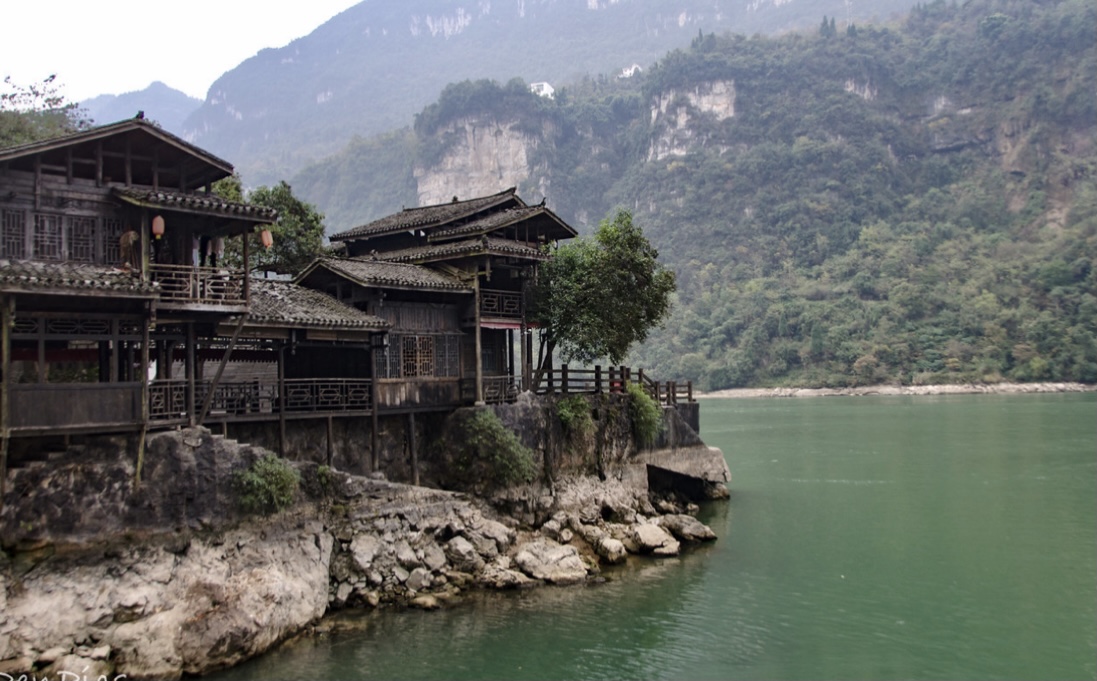
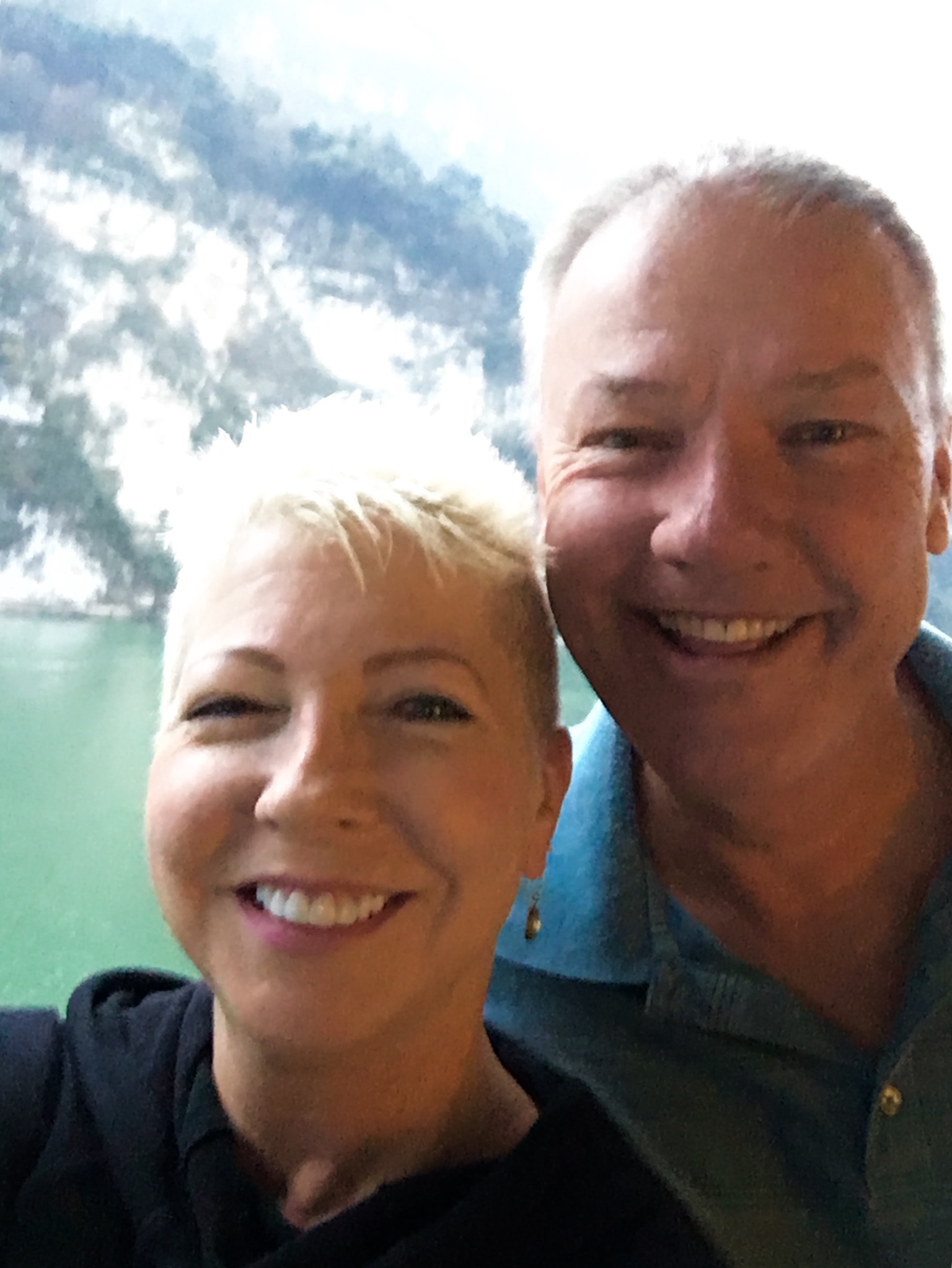
At the beginning of this 3rd week of full-time travel, this morning (while cruising) is the first morning we are taking some time to just “be” and relax a little. It has been a steady clip of go-go-go. We are a little tired, so taking advantage of this moment in time is precious!
THIS feels equally as nice. Here I am, “idle” in my cabin, watching the scenery go by as we slowly power up-river. I love the vibration of the ship motors, and the subtle lapping of the water against the ship.
Daryl is currently taking a private tour of the “wheelhouse” of the ship. All Chinese tours were complete by 9 AM, so they arranged a special English speaking guide for just Daryl. I’m not into that “control bridge” thing, but Daryl has the engineering brain, so he is quite excited!
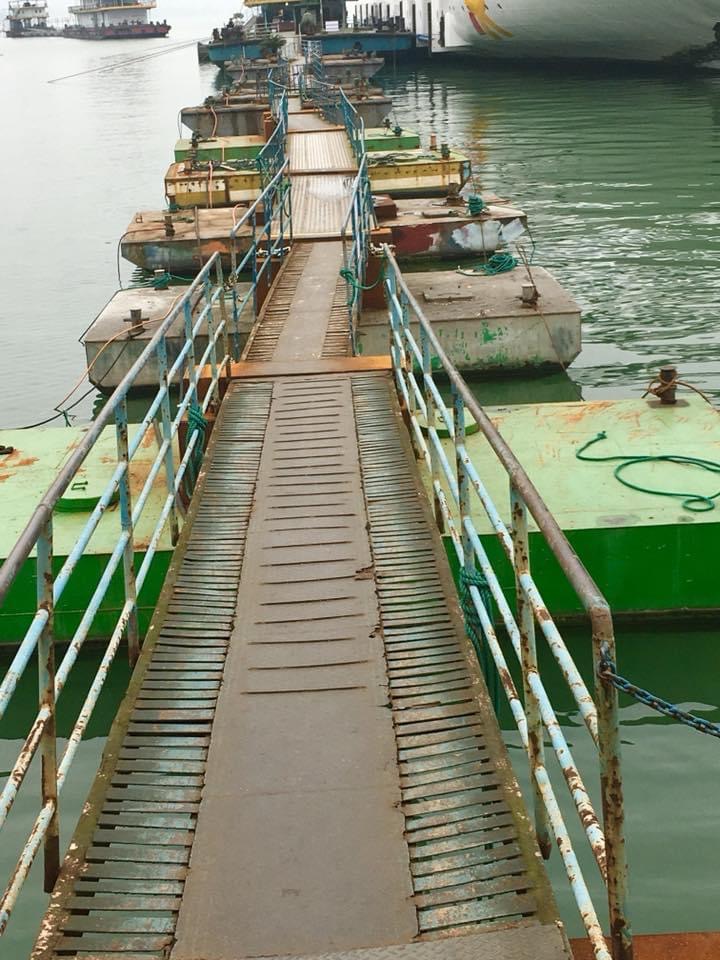
On this next morning, we arrived at the port of Fengdu, China, along the Yangtze River. After disembarking, we visited the “Ghost City.”
This City is up on a hill, and one must “climb high into the sky to be closer to the heavens.” As I mentioned before, the Chinese have a lot of superstitions. We really found this ancient city for the dead, very interesting.
Fengdu is where the devil lives, according to Chinese legend. They say that spirits go to heaven, and evil goes to Fengdu. Having a history of nearly 3,000 years, Fengdu County has formed a special culture of ghosts and the afterlife. Well known as the resting place of the spirit of the dead, Fengdu is now the most characteristic and reputed historic and cultural town in China.
This ancient place of has many “stations” within it to visit. “Tests” are offered up for whether or not you will go to Heaven or go to Hell. Good person, or Bad person kind of thing.
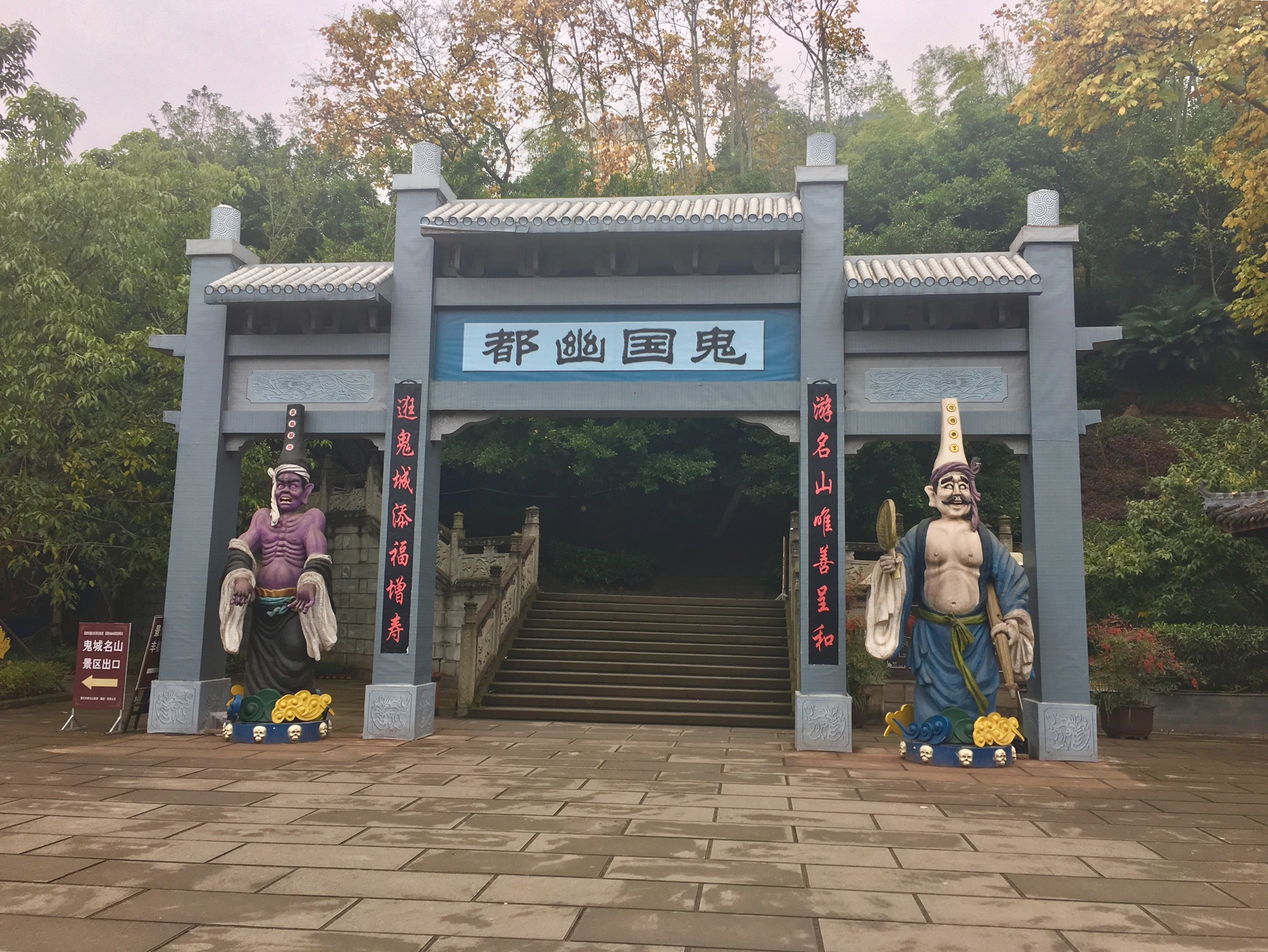
The Ghost City
Located on the Ming Mountain on the northern bank of the Yangtze River, Fengdu County is known to most Chinese as the “Ghost City.” Having nearly three thousand year history, the Ghost City combines the cultures of Confucianism, Taoism and Buddhism with the mystique of ghosts. Many famous literary works like Journey to the West, Apotheosis of Heroes and Strange Tales of a Lonely Studio contain vivid references to Fengdu.
Fengdu got its name as the Ghost City in the Eastern Han Dynasty. Two officials from the imperial court: Yin Changsheng and Wang Fangping, decided to come to Ming Mountain to practice Taoist teachings. Through self-cultivation, according to lore, they became immortal.
Combining their surnames, produces the term “Yinwang” meaning the “king of hell.” Later, during the Tang Dynasty, a stupendous temple was erected on Ming Mountain depicting life in hell. It displays demonic images and torture devices and reflects the notion that good people will be treated well in the afterlife and that bad people will be punished by going to hell.
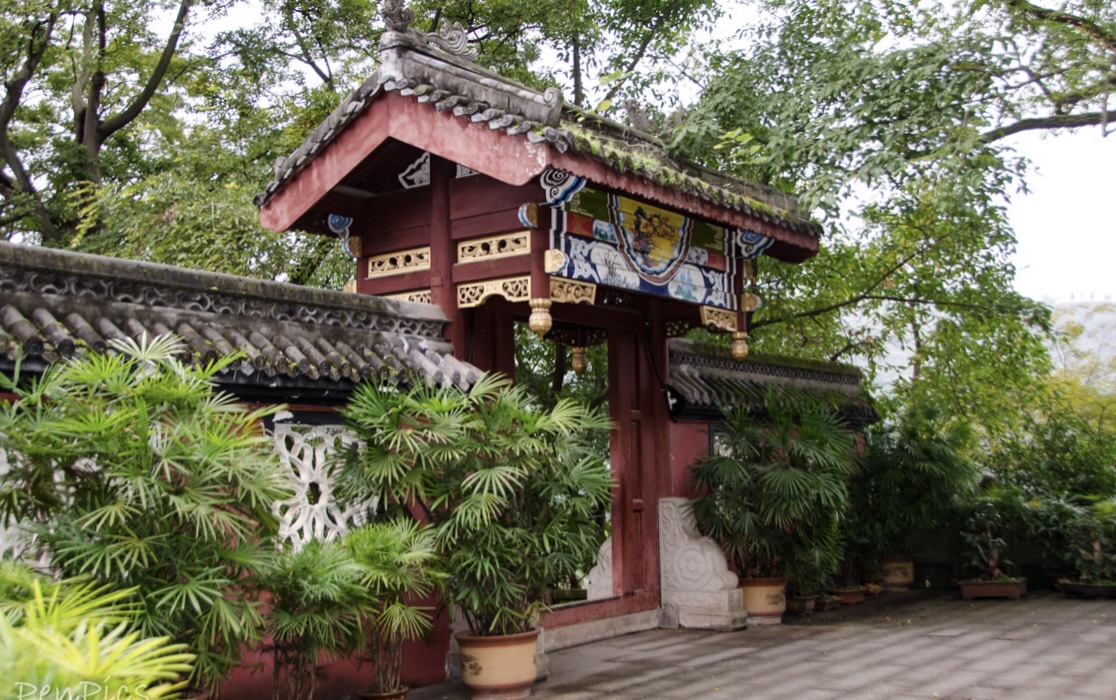
One of the fun activities at the temple is physical tests, such as running up stairs while holding your breath or crossing a bridge in the fewest steps. These physical tests, though they might be considered fun now, actually stem from a Taoist tradition about how to enter the area in peculiar physical ways that would make people have good Taoist fortune.
In the Chinese vision of the afterlife, the dead must undergo three major tests to enter the netherworld. These tests are taken at three different locations: Nothing-To-Be-Done-Bridge, Ghost Torturing Pass and the Tianzi (son of heaven) Palace. These three locations are among many attractions in this scenic area.
Nothing-To-Be-Done-Bridge
Built during the Ming Dynasty, the bridge connects the nether world with the real world and is a testing point for good and evil. According to legend, the Nothing-To-Be-Done-Bridge is composed on three identical stone arches. The middle arch is used for testing people. There are different protocols for crossing the bridge depending on your gender, age and marital status. Below the bridge are square-shaped pools of water. Virtuous people will pass over the bridge without obstacle; villainous people will fall into the pools below. The other two arches are called the golden and silver bridges respectively. When preparing to leave, visitors are encouraged to pass these two bridges because according to local superstition this will bring them good fortune.
Ghost Torturing Pass
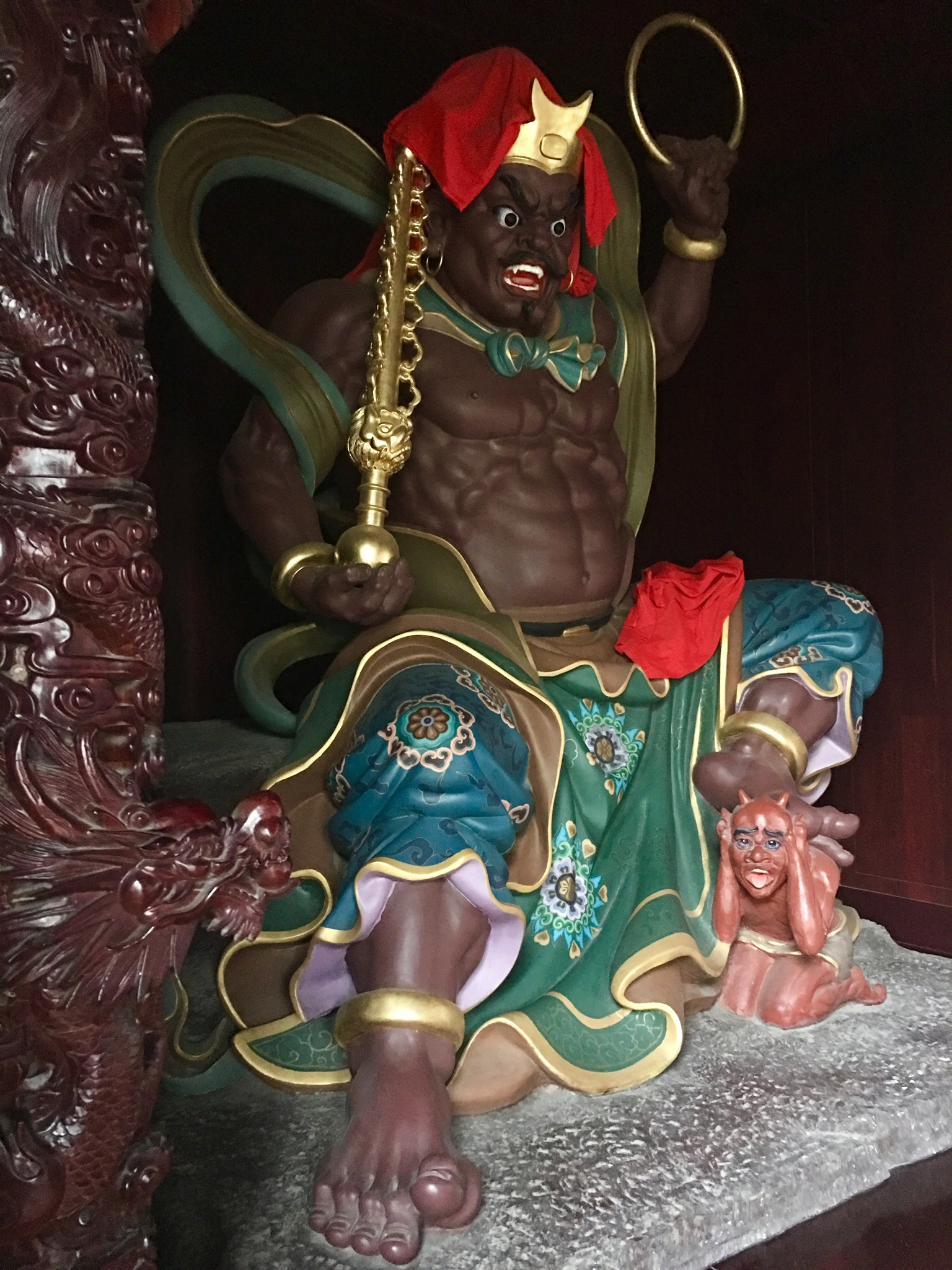
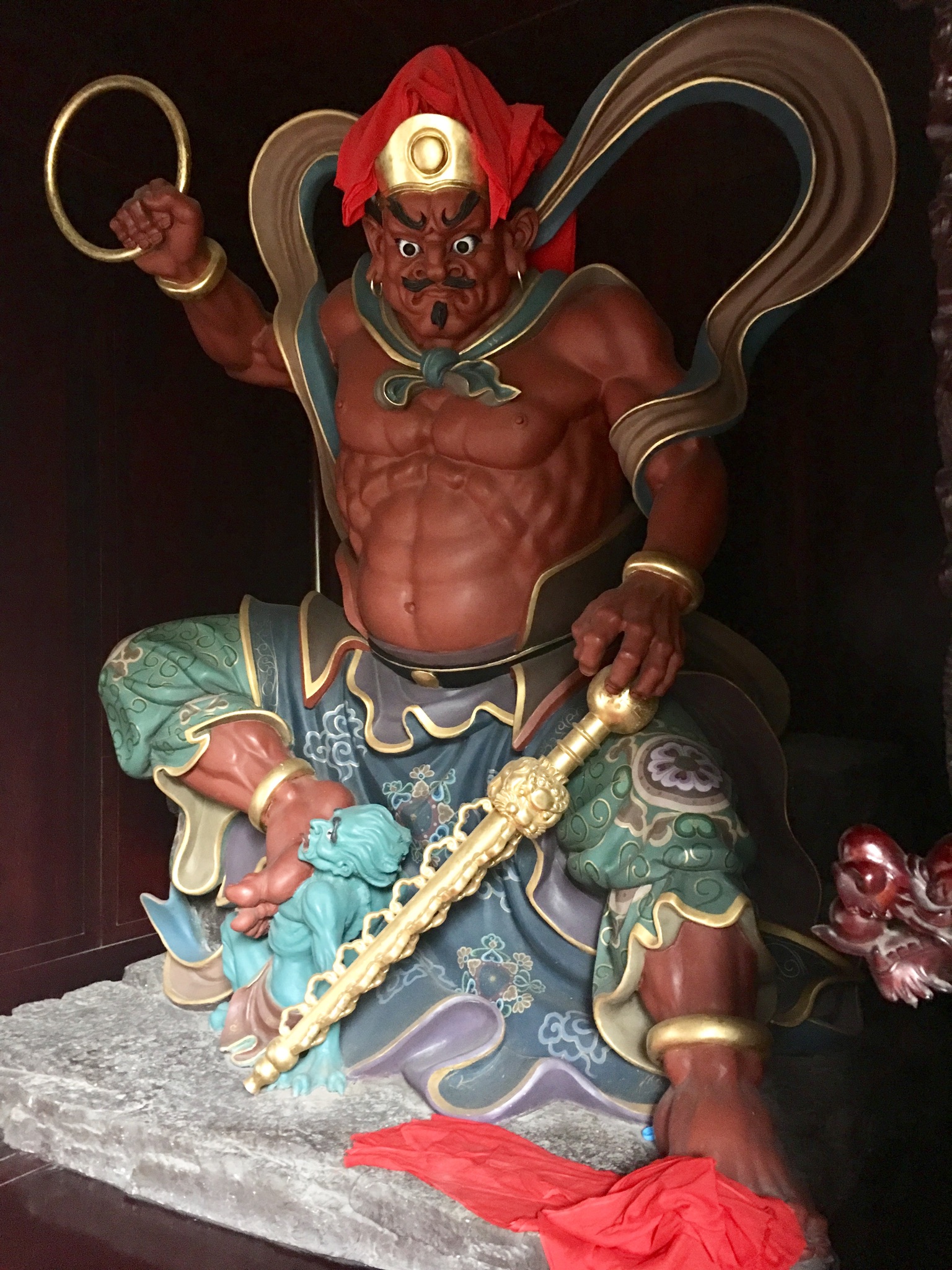
It is the second test before entry into the nether world. It is said that this is the place where the dead report to the Yama, the King of Hell, for judgment. In front of the structure there are eighteen sculptures depicting ferocious demons. Each of these devils is quite lifelike creating a feeling of true eerieness.
Tianzi (Son of Heaven) Palace
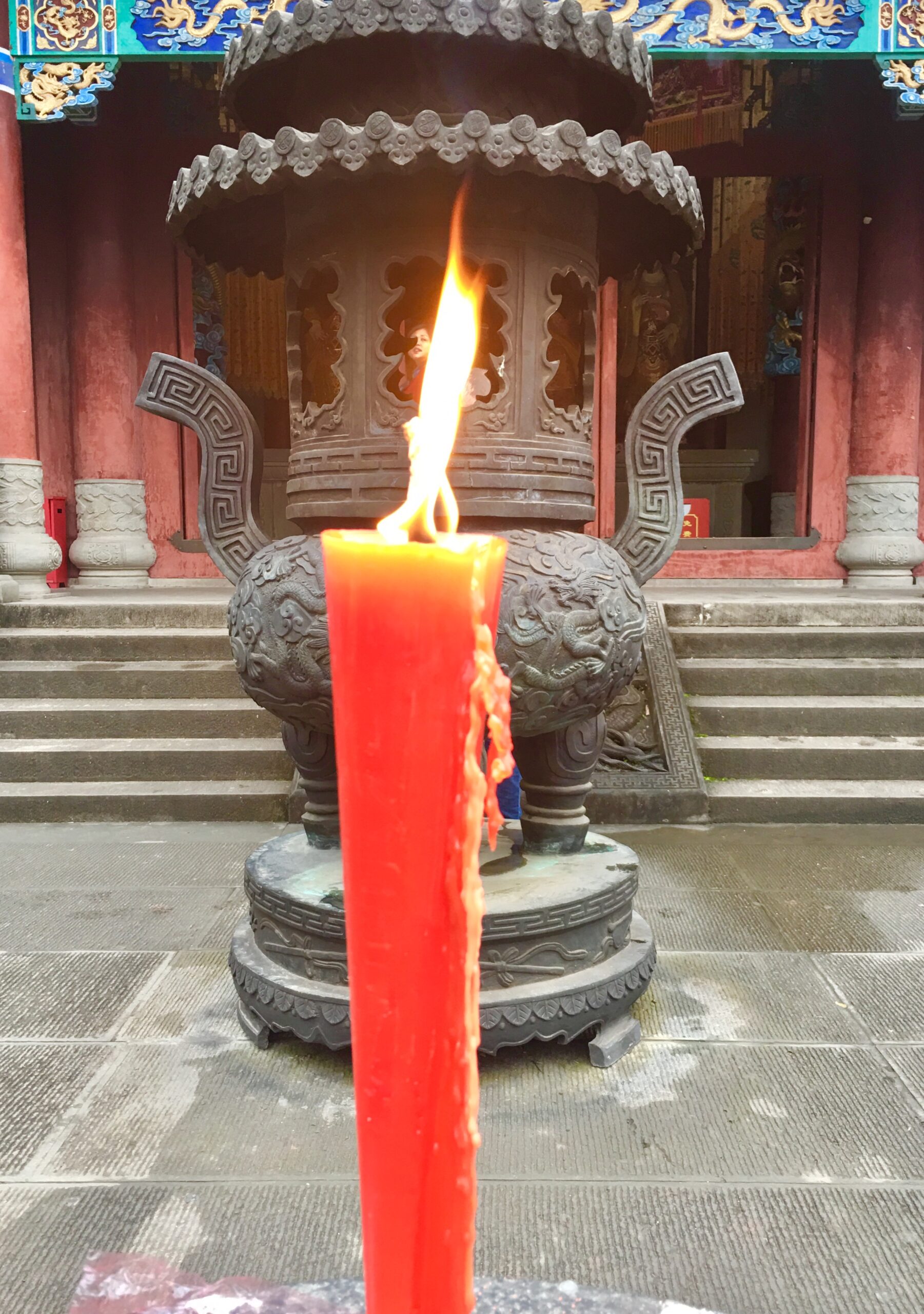
Having over a three hundred year history, the palace covers an area of nearly 2,908 square yards. It is composed of a temple gate (paifang) and the palace itself. The gate is an archway made of wood and stone rising to height of nearly 33 feet. The palace is the nerve center of this scenic area and is the oldest and largest temple on Ming Mountain.
The Palace, facing the east, was firstly built in West Jin Dynasty, about over 1600 years, and the present standing construction was built in 1663, over 300 years old. This palace is the key part of Fengdy Ghost City, and also the most historical, largest, and best preserved temple construction on the Mingshan Mountain. That is the place of the “Maya” who is the “King of Hell.” It consists of an archway, gate, and the palace on an axis. And here in front of the gate, people would do the second test. Dead people are required to stand on the stone there on one foot. And good people can stand for 3 minutes, however, bad people can’t do that and will be punished to the hell.
Apart from that, in the palace, there imitates the scene in the hell with the thick atmosphere of dark and gloom. You could see the statues of the king of hell, officials of different appearances, and many torture scenes displayed there. And that also expresses the opinion of praising virtue and punishing vice.
Ghost Torturing Pass
The third test to evade hell takes place at a large stone in front of the gate. The ghost must stand on the stone on one foot for three minutes. A good person will be able to do this while an evil one can not and will be sent to hell.
One other ghostly attraction in Fengdu worth mentioning is the Last-Glance-at-Home-Tower. This structure was built in 1985 and commemorates the site where spirits consigned to hell could take one last look at their families.
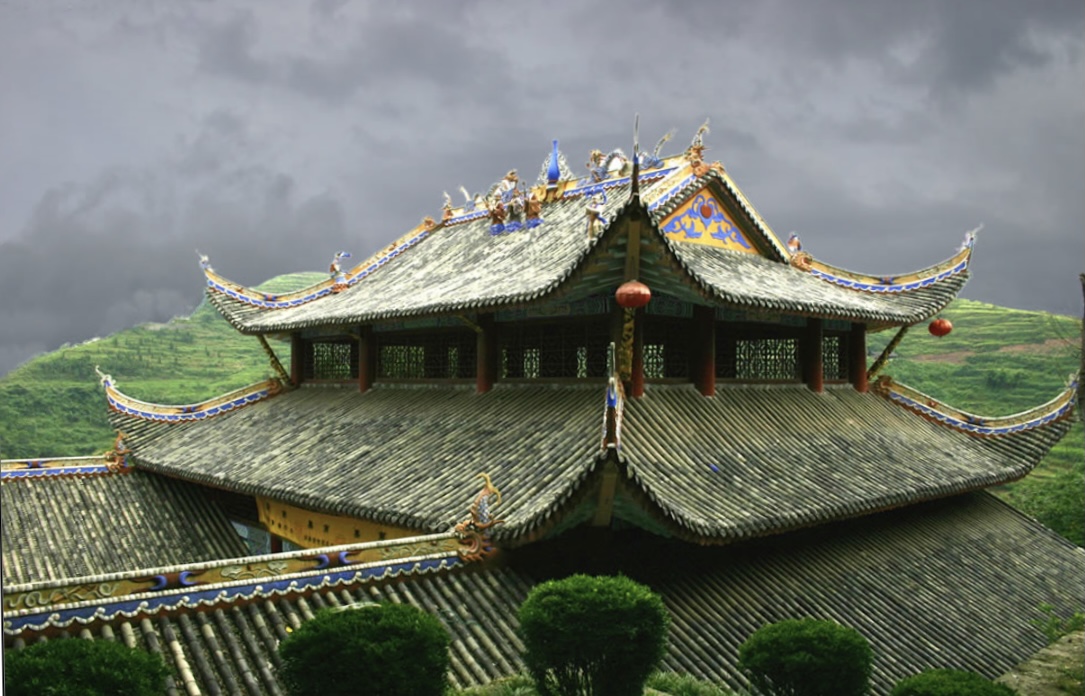
We definitely marveled at the artisanship of ancient craftsman, the unique styles of architecture and the culture of the ghost. Whatever your beliefs, you are constantly reminded the “Good will be rewarded with good, and evil with evil, while in this place.
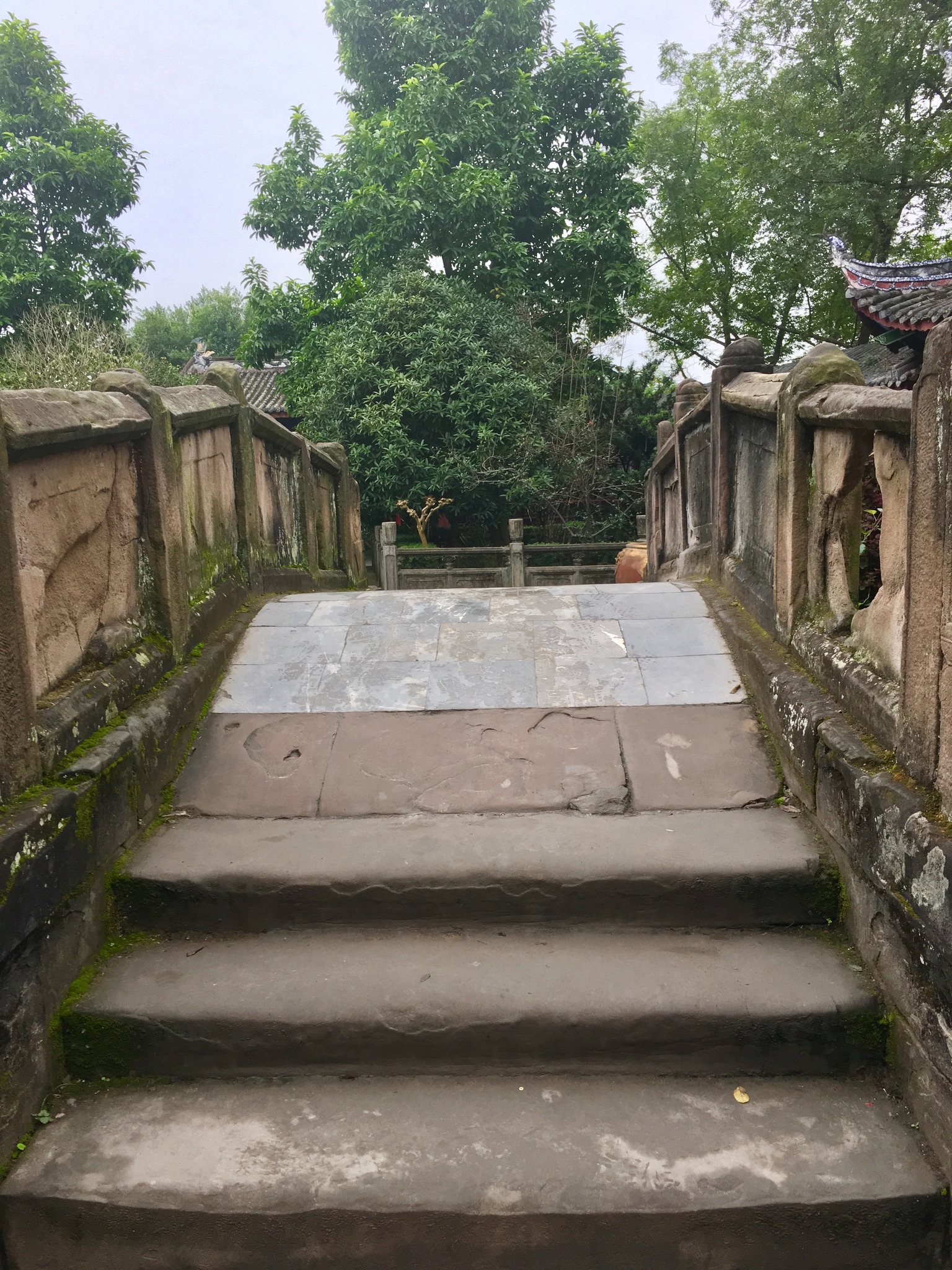
We also crossed the bridge of “troubled waters” (hand in hand)-ladies starting with right foot (because we are always right) and men starting with their left foot). If you make it across without stumbling, you are true lovers, and will be together in the afterlife. (of course we did not stumble).
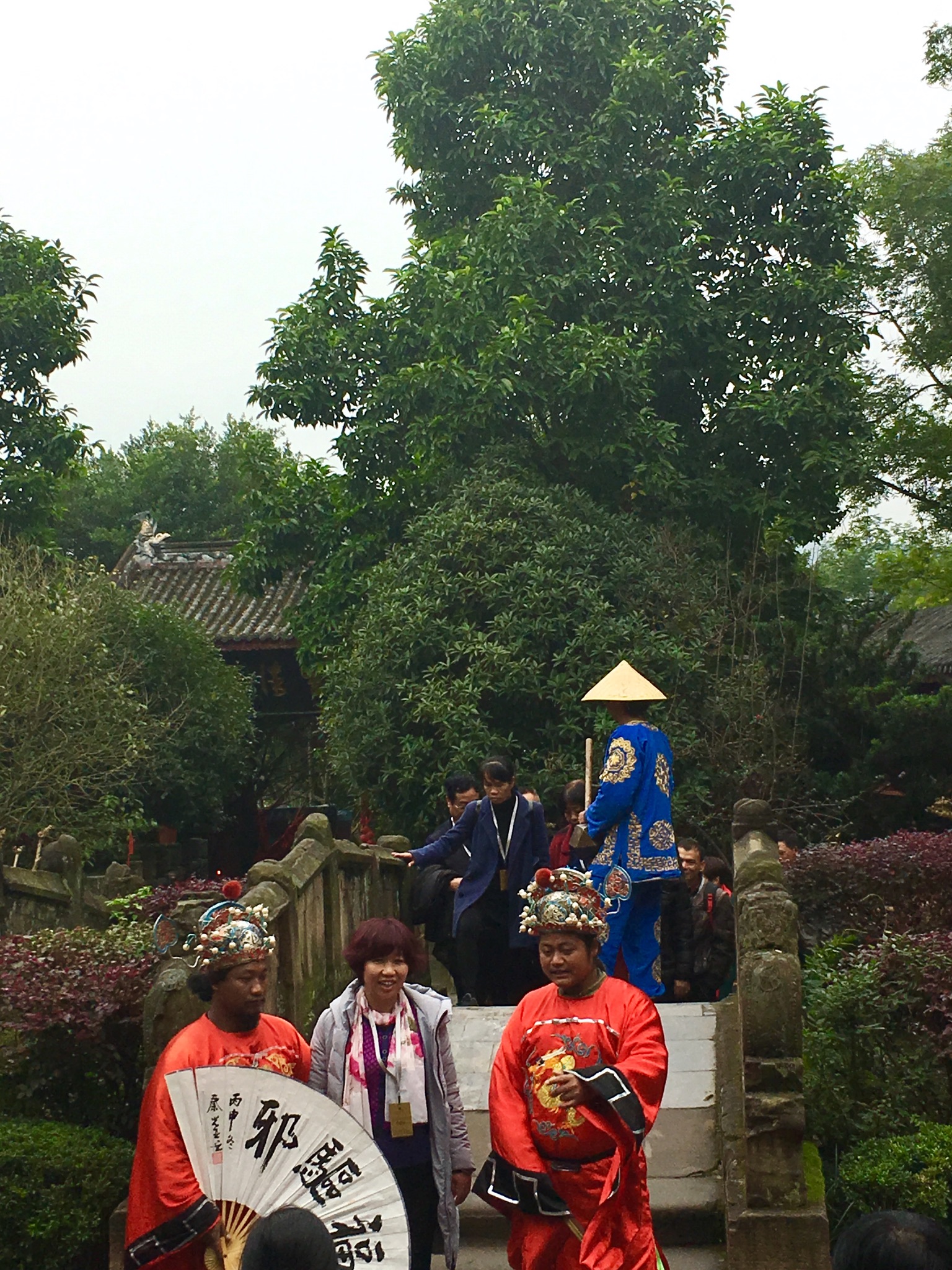
We rubbed the stone of “Prosperity,” and rubbed another stone of “Harmony.“
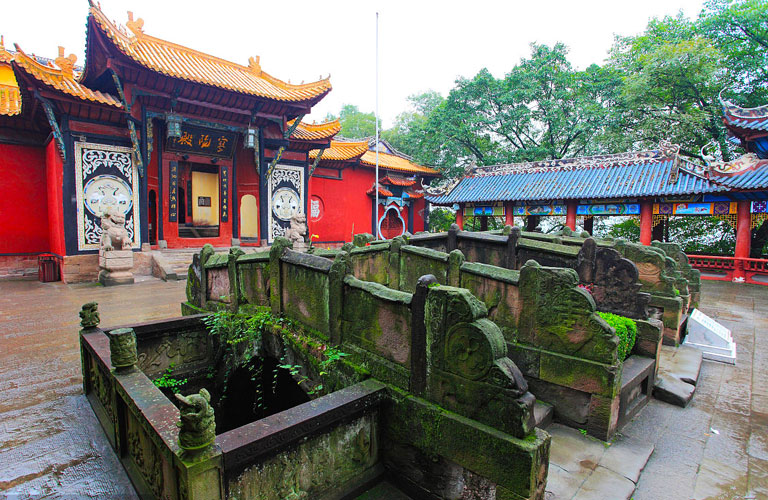
We had the choice of crossing the “Bridge of Troubled Waters.” Wealth? or Health?We chose “Health.”
The Bridge of Troubled Water or Naihe Bridge (奈何桥) is situated at the half way on Mingshan Mountain. It is regarded as a bridge connecting the past and present, the hell and the real world. the left bridge is for health symbolizing being healthy each year, while the left one is for wealth standing for being rich every year. For couples, you could walk together with hand in hand in even steps, and for single visitors, odd steps, so that you can live happily and peacefully. It is legendarily said the Naihe Bridge is the first test among all the “Three Tests” for people after death, and the dead people would drink the Mengpo soup, walk through that bridge, and then forget all the things happened in the previous life and get the next new life. According to the folk tales, after death, while walking through the bridge, virtual people will have God and Buddha to protect, while the evils will be punished to fall in the “pool of blood” and be tortured by the snakes and dogs in the muddy wave. So every year on the pilgrimage occasion, many pilgrims would through copper coins, ghost money, and stirred rice into the pool for the hungry ghosts.
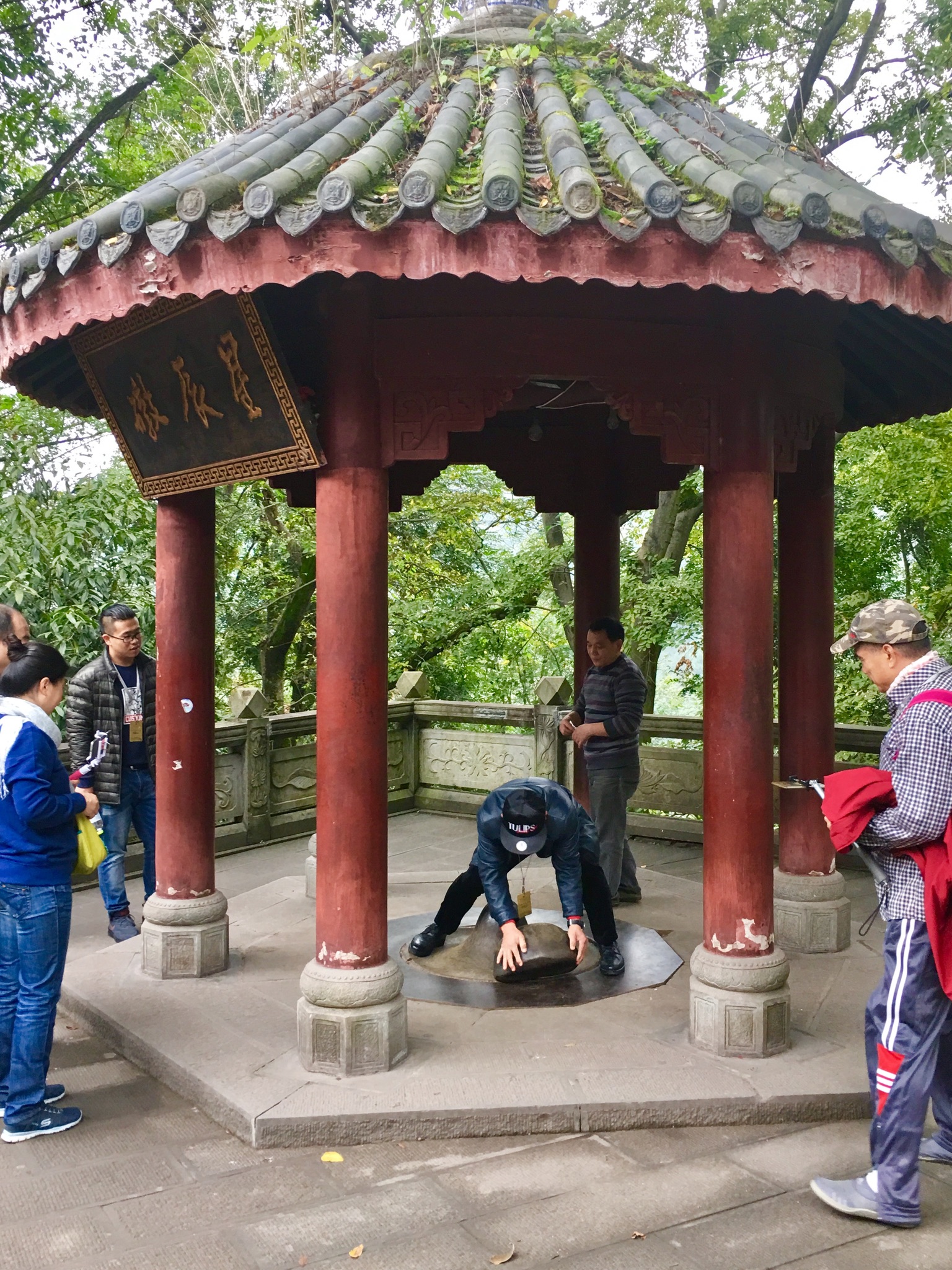
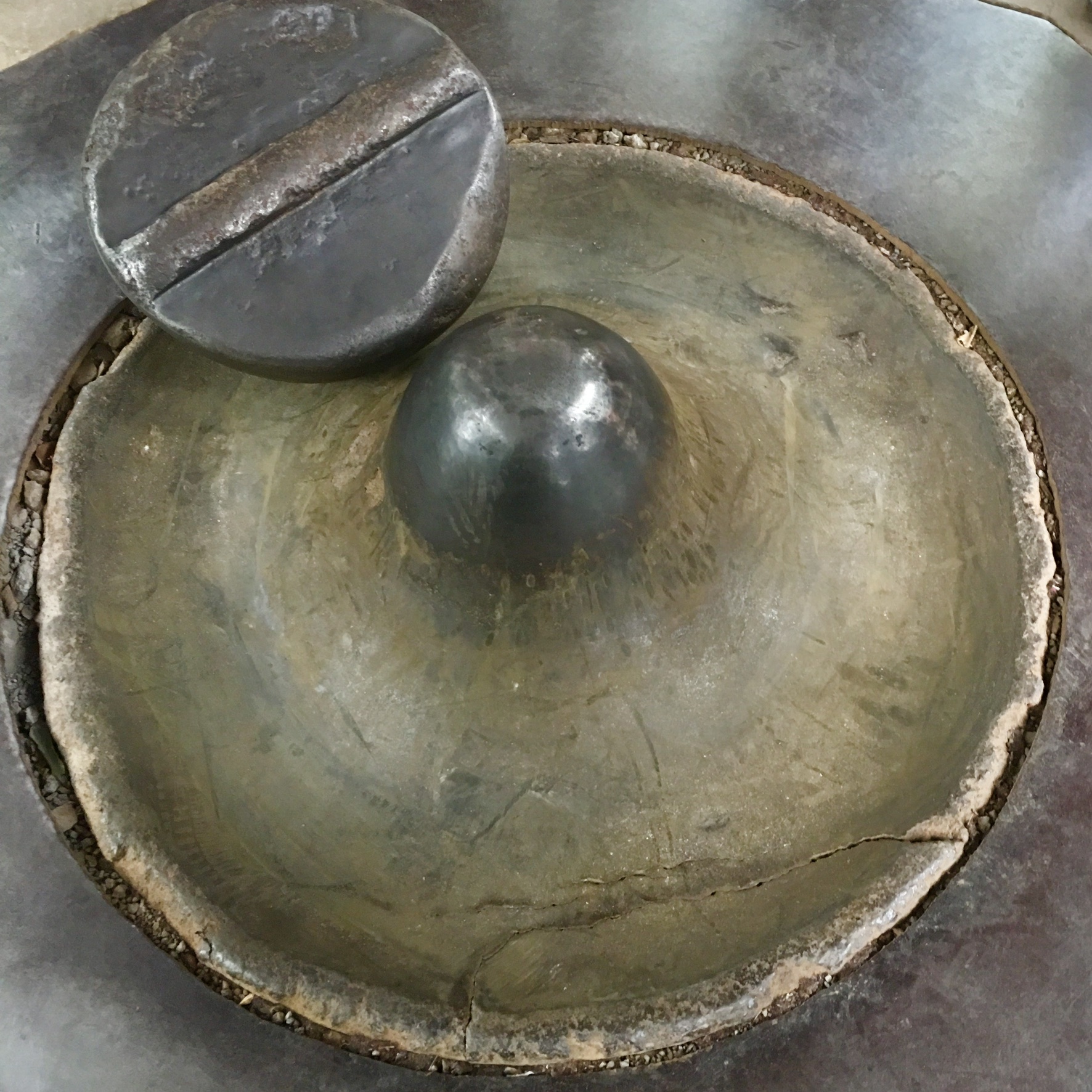
This test was fun to watch. Given the age and fitness of the young men trying to roll the metal ball, once around the ring, it must have weight hundreds of pounds!
If a man is able to roll the ball one time around, he is worthy of marrying.
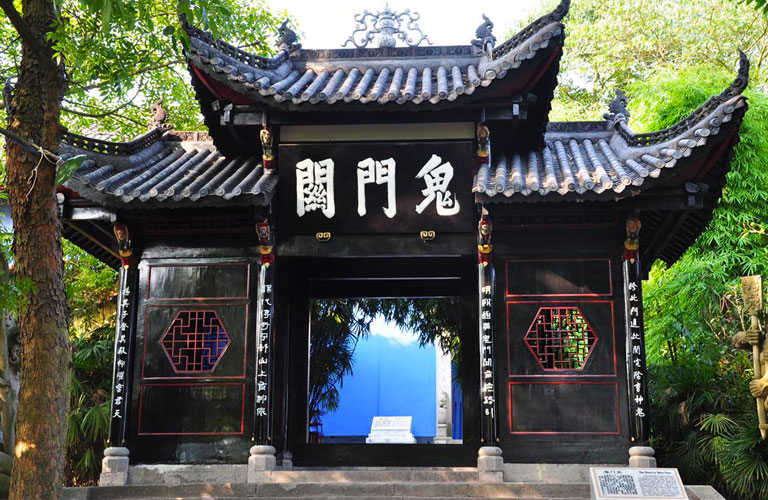
Gate of Hell (Guimen Gate)
It is legendarily, that the Gate of Hell (鬼门关) is the only way to the hell. Whoever is coming here, would have to have their road pass checked, which is the evidence to the fact, they are register in hell after death. With that pass, dead people can go to hell and go up to the heaven for the upcoming of the next life, without any obstacles.
We chose not to enter the “Gates of Hell,” though we walked up to the entrance, which was very interesting.
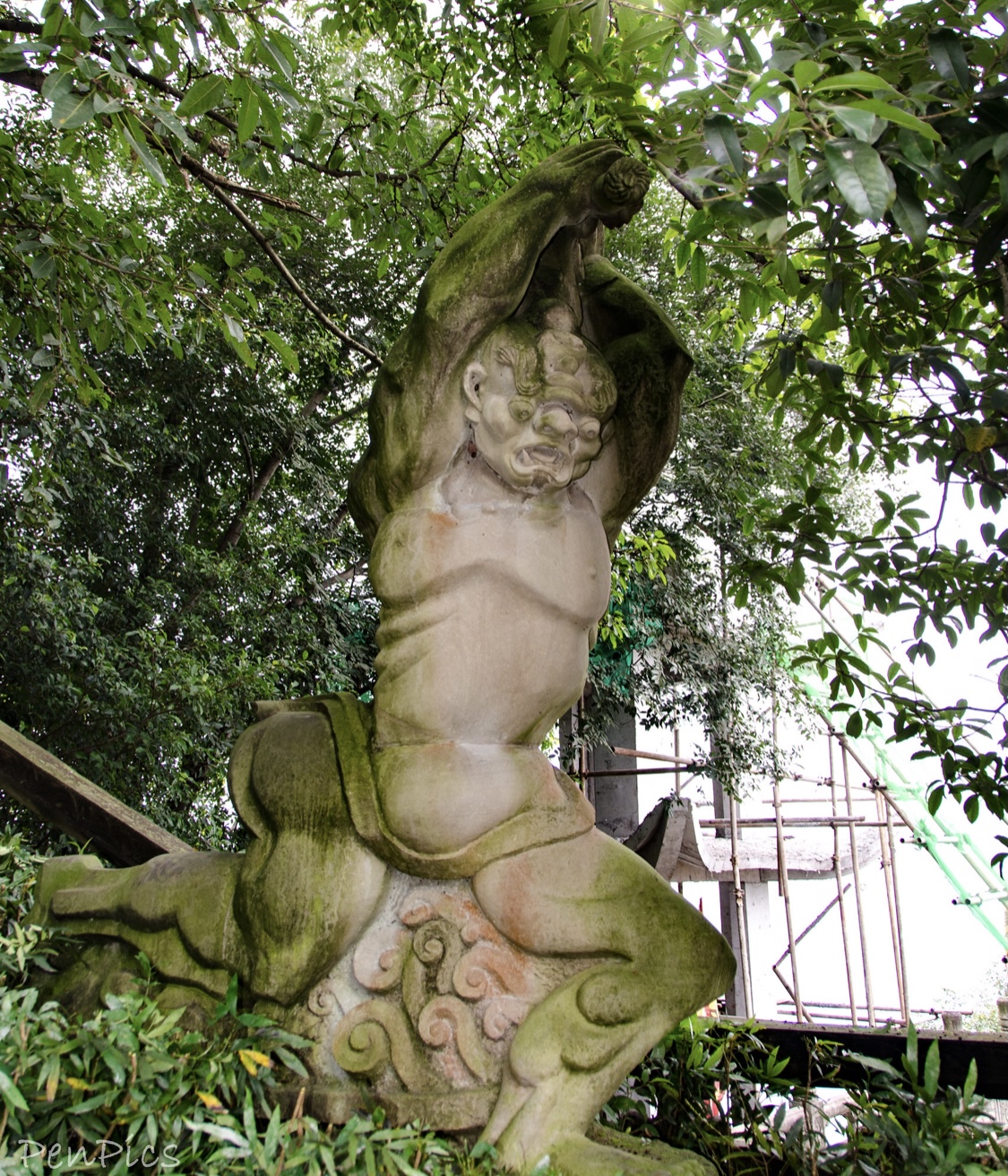
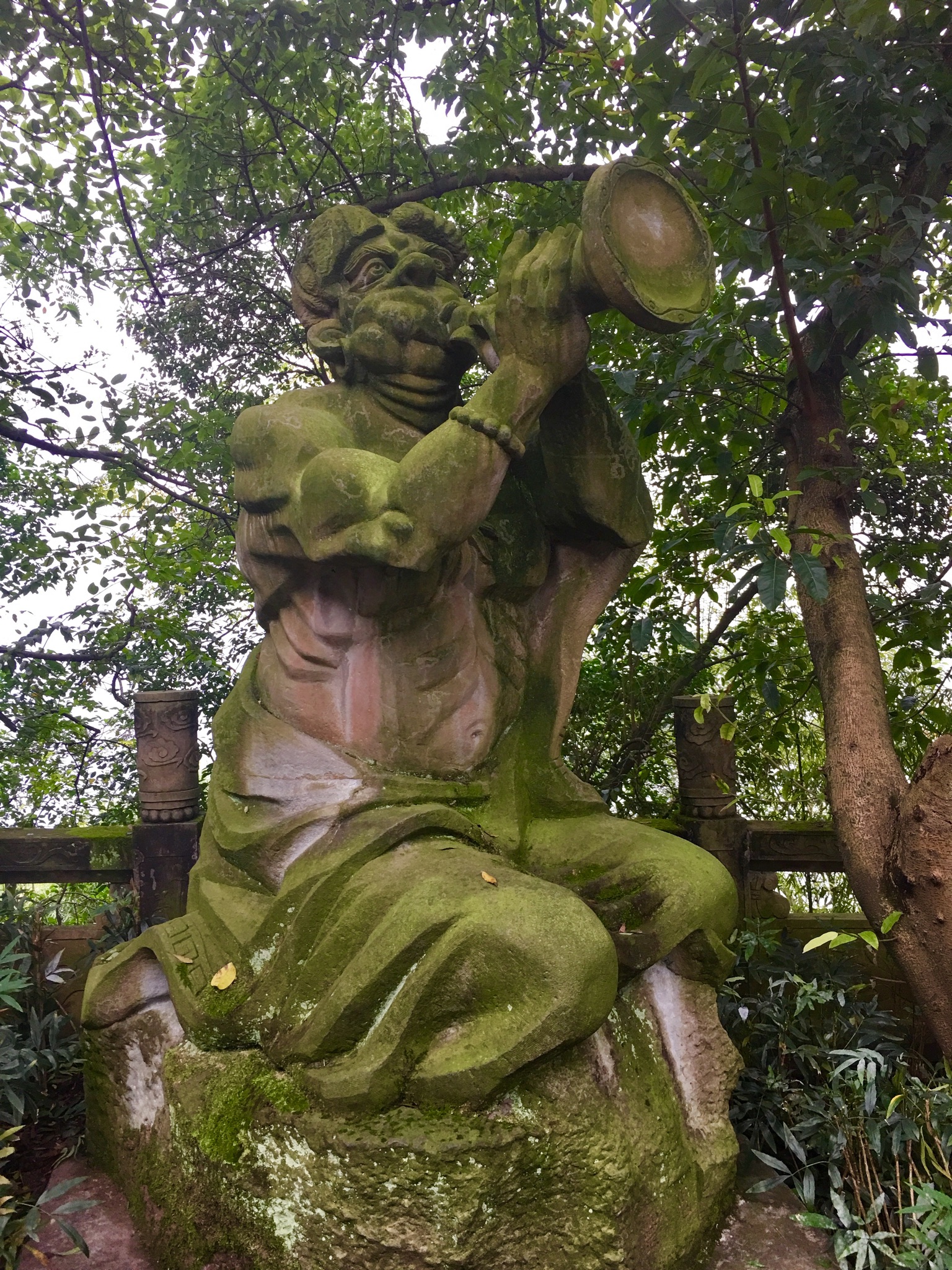
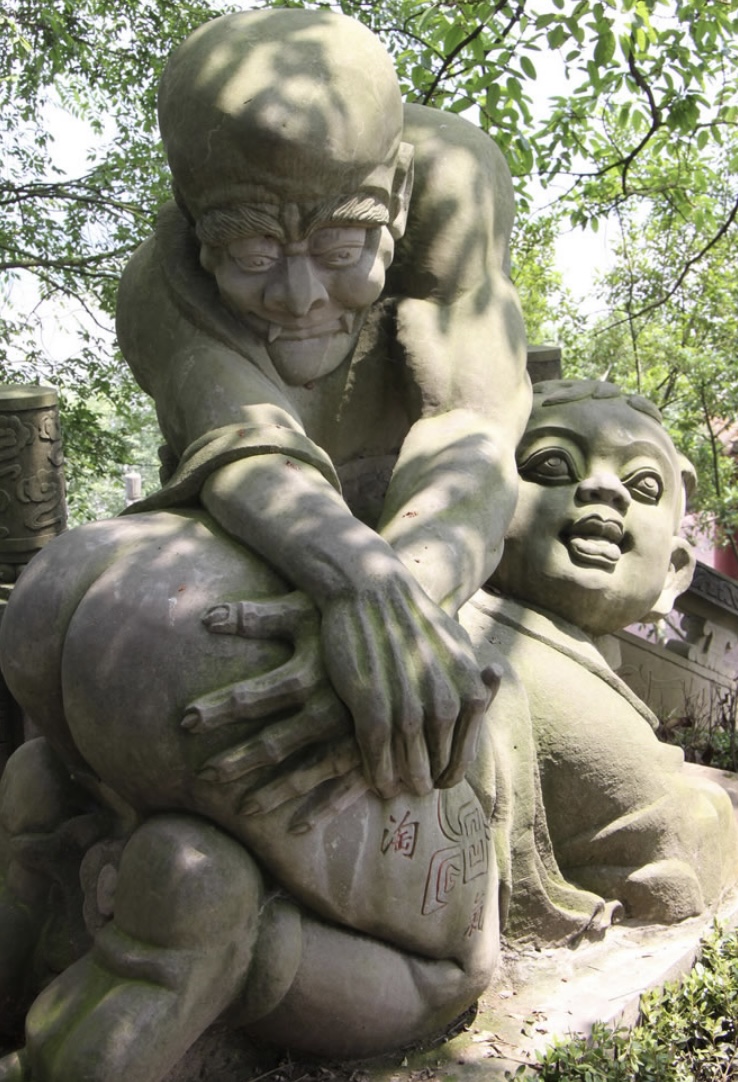
Each statue had different meanings. This one was about misbehaving boys.
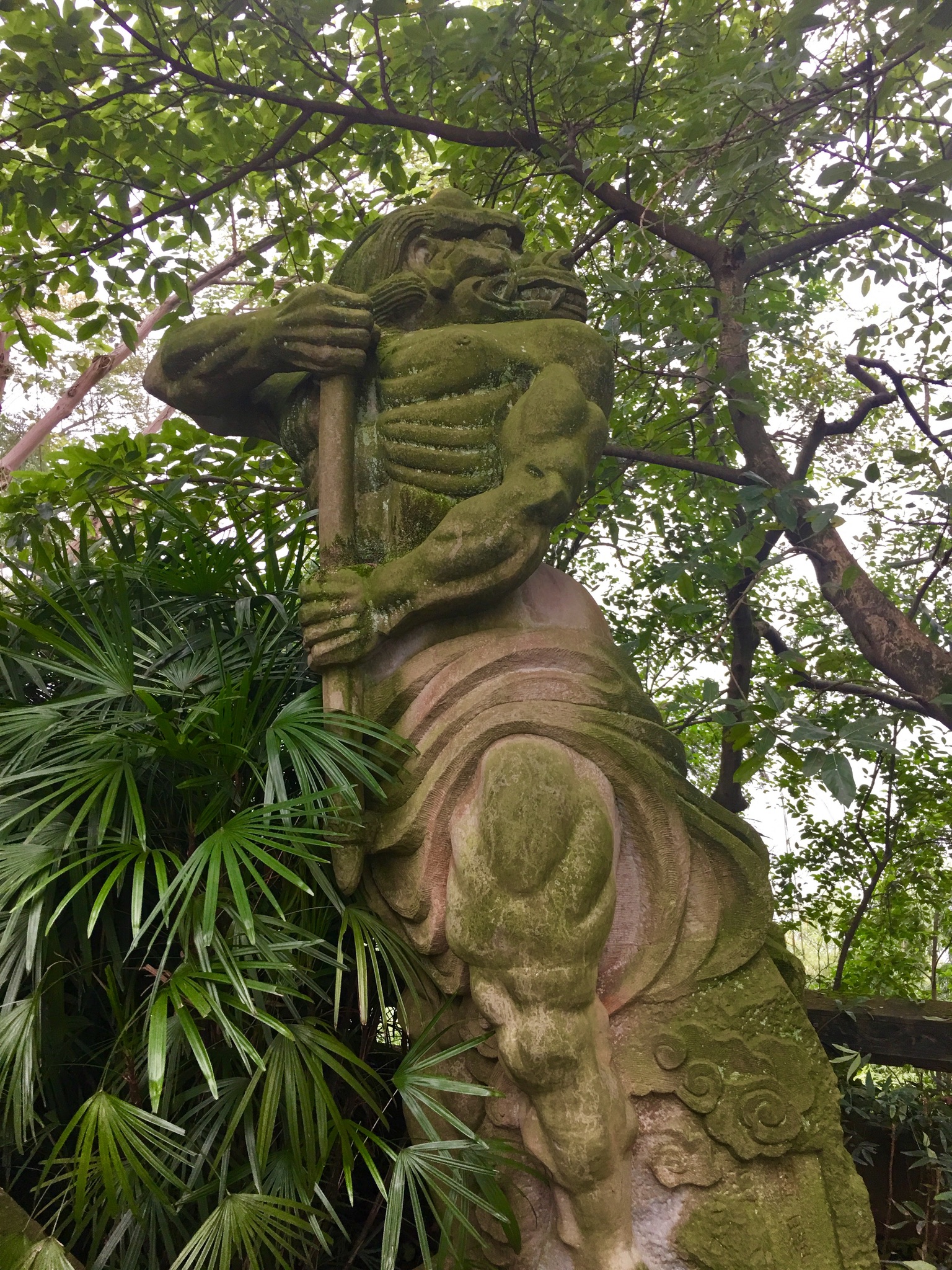
By the way, just for visiting this special ghost city, we will now live to be at least 99!
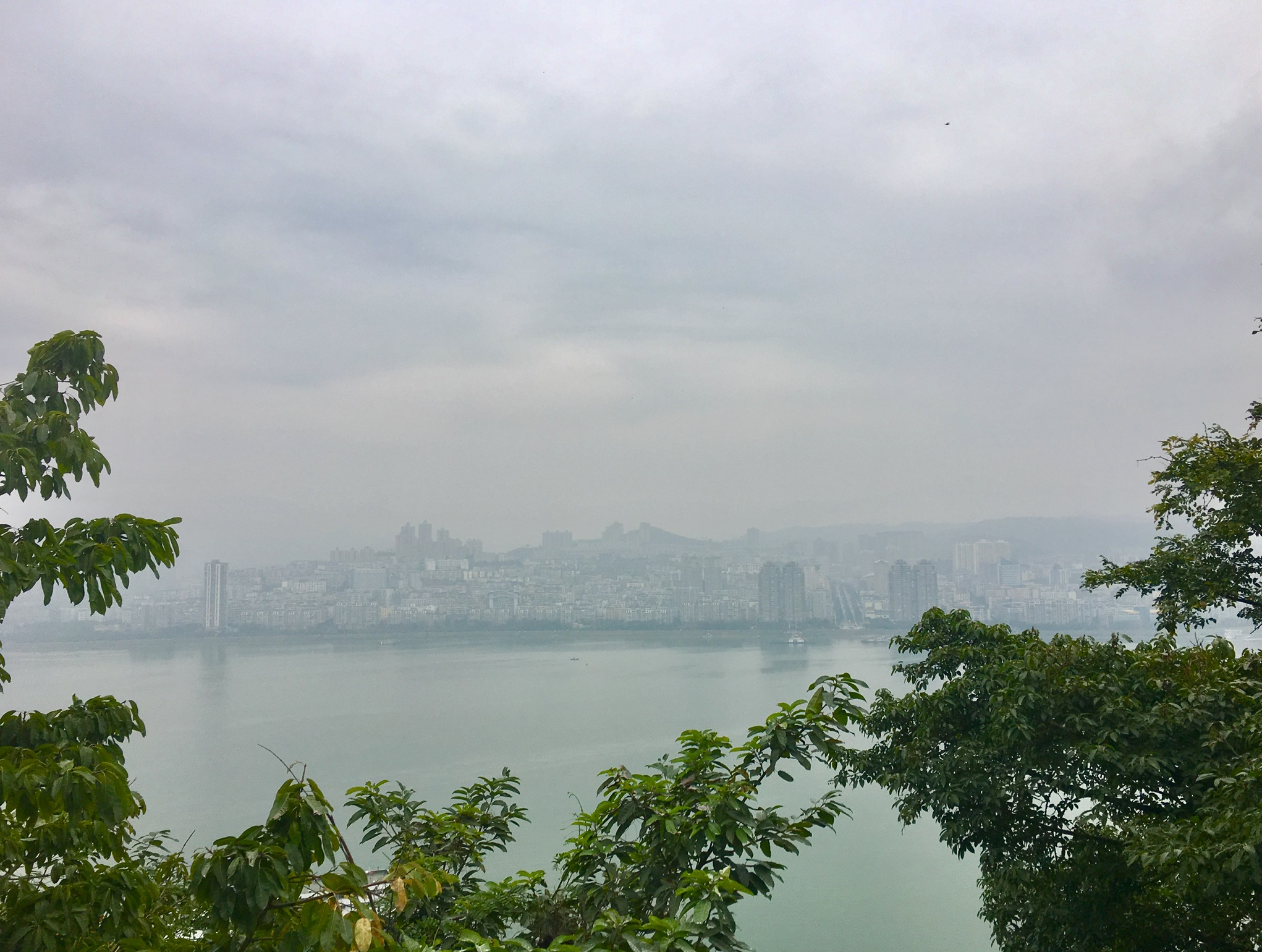
The hazy picture is of the city of Fengdu. It is very sad for the air quality here in China. There is a price to pay, when so many products are “made in China.” That, and the coal burning.
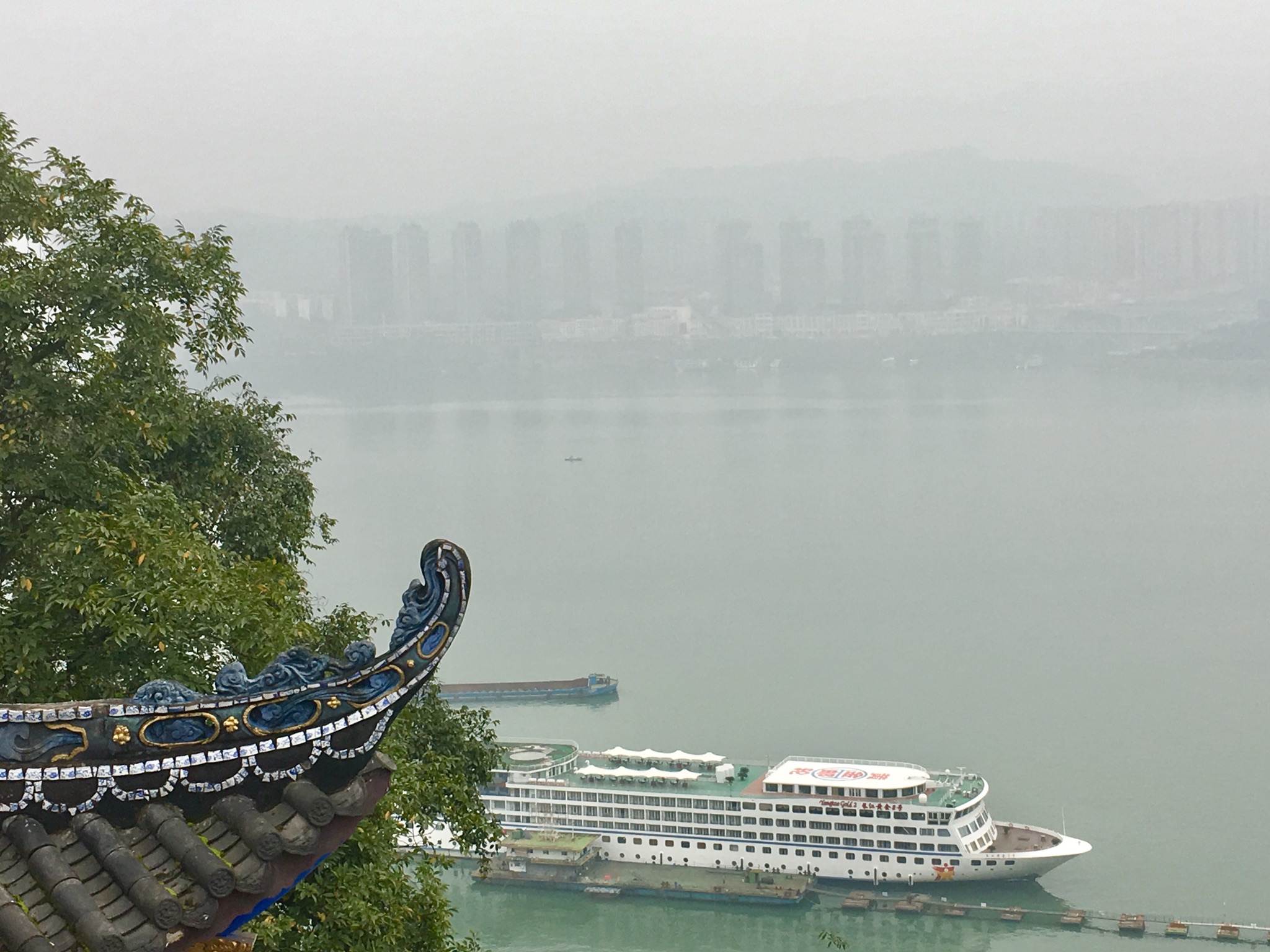
After lunch, we take our last tour of this cruise; “White City,” then we get our “feet” pampered at the spa. (a Chinese technique). Tonight is our last night on-board; whereas we have a nice farewell dinner planned.
Funny Story: We found these free “coupons” for two, in our cabin, so we could watch “food being washed.” It took me a day to figure out it was for our “feet to be washed” so, I may entertain that idea at the spa, rather than in the kitchen! 🤣
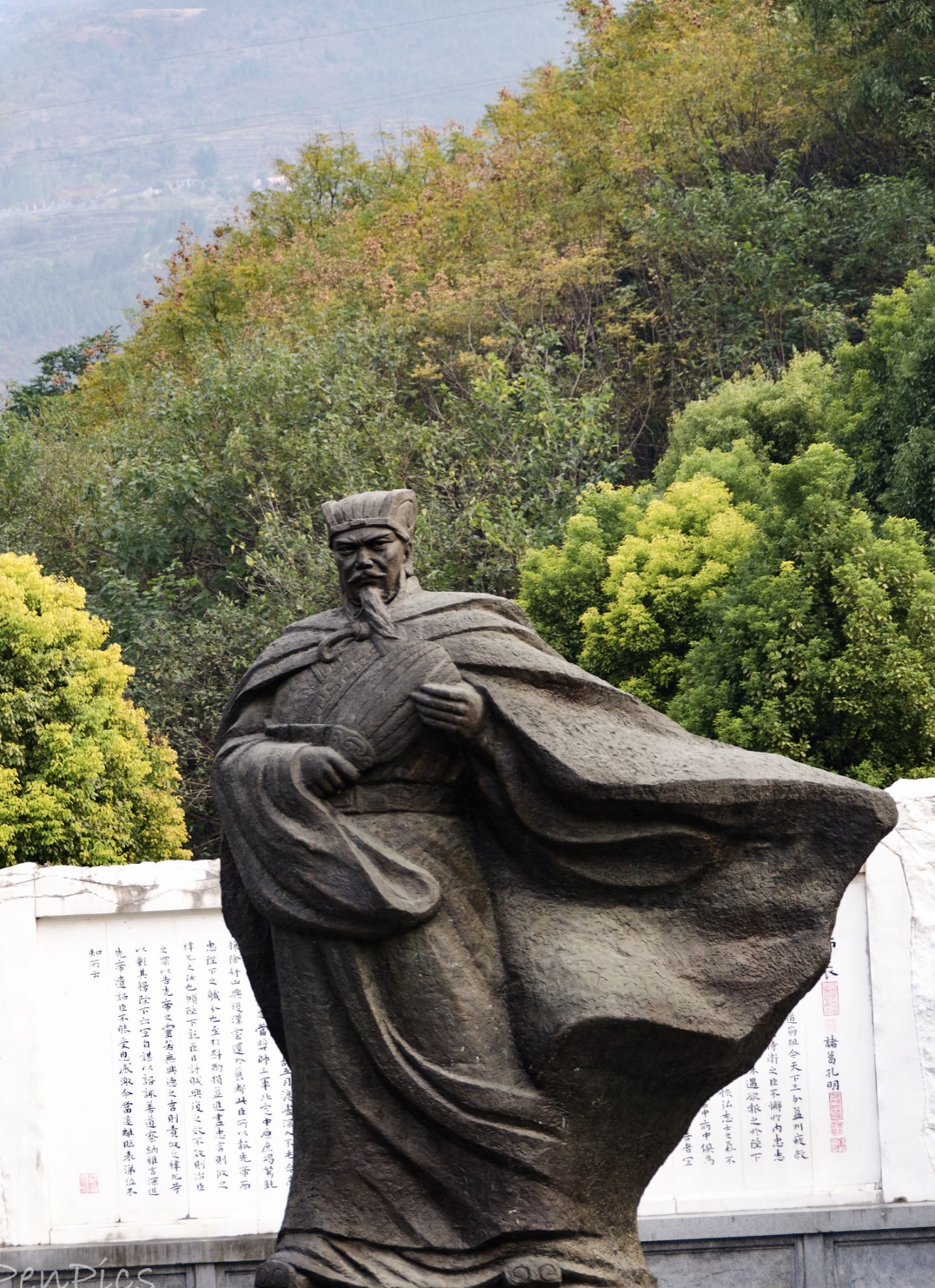
History of White Emperor City
White Emperor City was first called “Ziyang City,” and during the late West Han Dynasty, Gongsun Shu (公孙述) with ambition, set up his separatist regime in Sichuan. After he came to the mouth of Qutang Gorge, he saw the white fog like a dragon flying up to the sky rising from a well there. Then, he built the city and called himself “White Emperor.” He then named the city “White Emperor City.” Later, during conflicts between small countries, the original White Emperor City was destroyed.
In 222 AD, Liu Bei who was the first king of Shu Kingdom, retreated in Baidi Cheng, when attacking the Wu Kingdom. Before he died there, he entrusted his whole country and two sons to his prime minister; Zhuge Liang.
For nearly 2,000 years, White Emperor City experienced a lot of changes and rebuilding, and at present, it is a place to know the inspiring history and to admire the famous people in the ancient times.
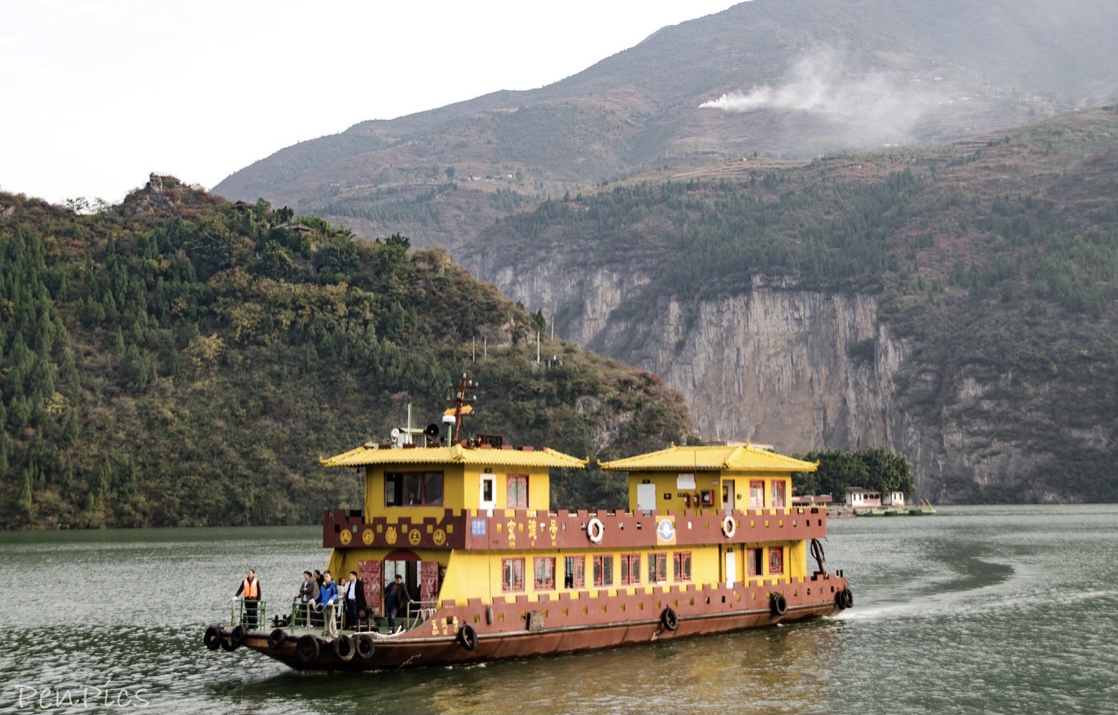
BaidiCheng is surrounded by water on three sides, and by mountains on the left side. Standing amongst the magnificent steep mountains, and waters, BaidiCheng is extremely beautiful with imposing images.
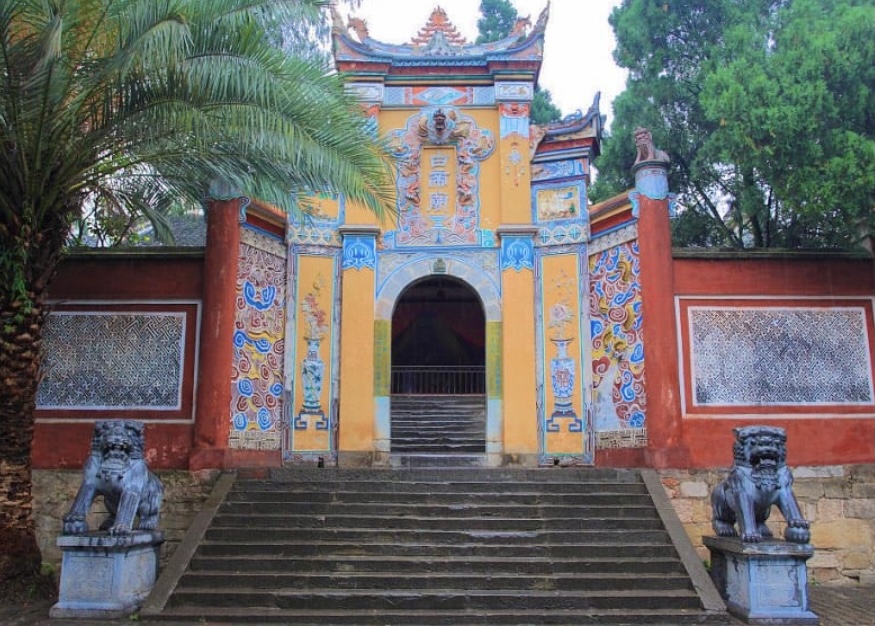
There are nearly 1000 steps to reach the top of the mountain; BaidiCheng. From there, the view is that of the majestic Kui Gate (the western tip of Qutang Gorge) and the Caoting River winding down from BaidiCheng Mountain into the Yangtze River.
From here, we headed for the Port of Chongqing, thus ending our wonderful cruise on the Yangtze.
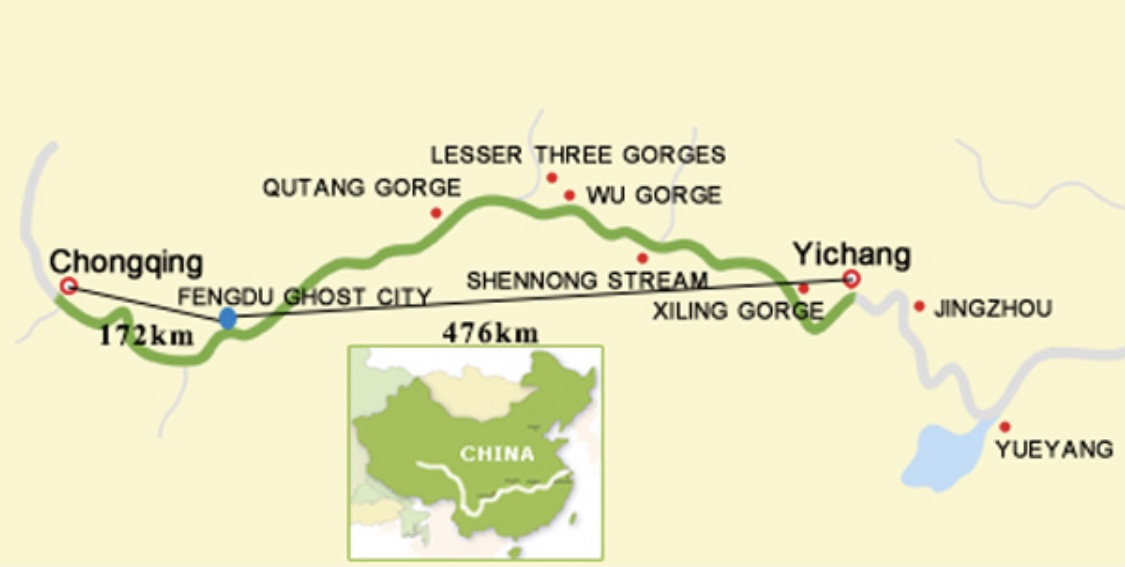
The Yangtze River cruise goes both up River and down River. The time of year, depends on which way the tour goes.
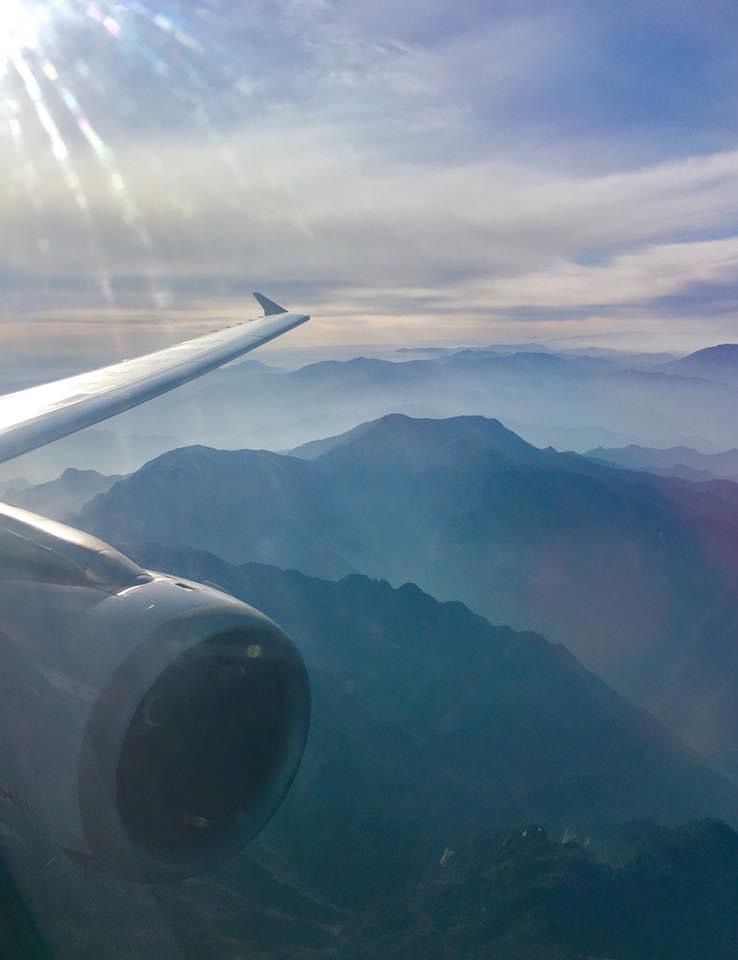
In the afternoon, we flew from Chongqing to Xian, China, and it was a real treat to fly so close to this mountain range. It really was stunning to see!
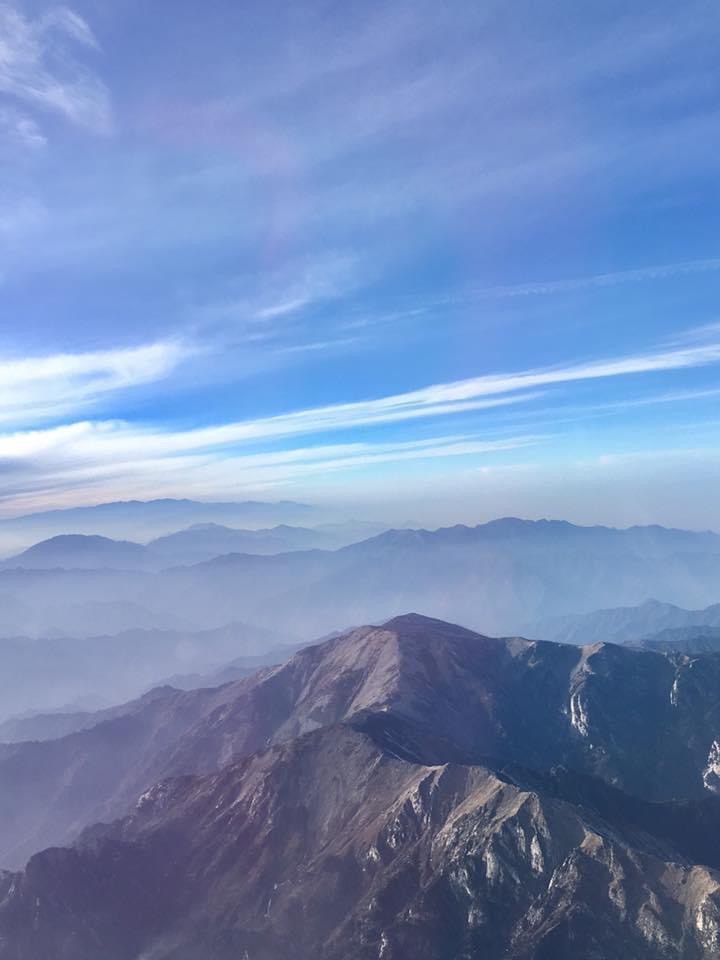
The Qinling or Qin Mountains, formerly known as the Nanshan “Southern Mountains,” and sometimes called the “Szechuan Alps,” are a major east-west mountain range in southern Shaanxi Province, China.
The mountains provide a natural boundary between North and South China and support a huge variety of plant and wildlife, some of which are found nowhere else on earth.
Click on this link to see all the photos from our Yangtze River Cruise
https://picsbypen.smugmug.com/Places/AsiaLife/China/Yangtze-River/
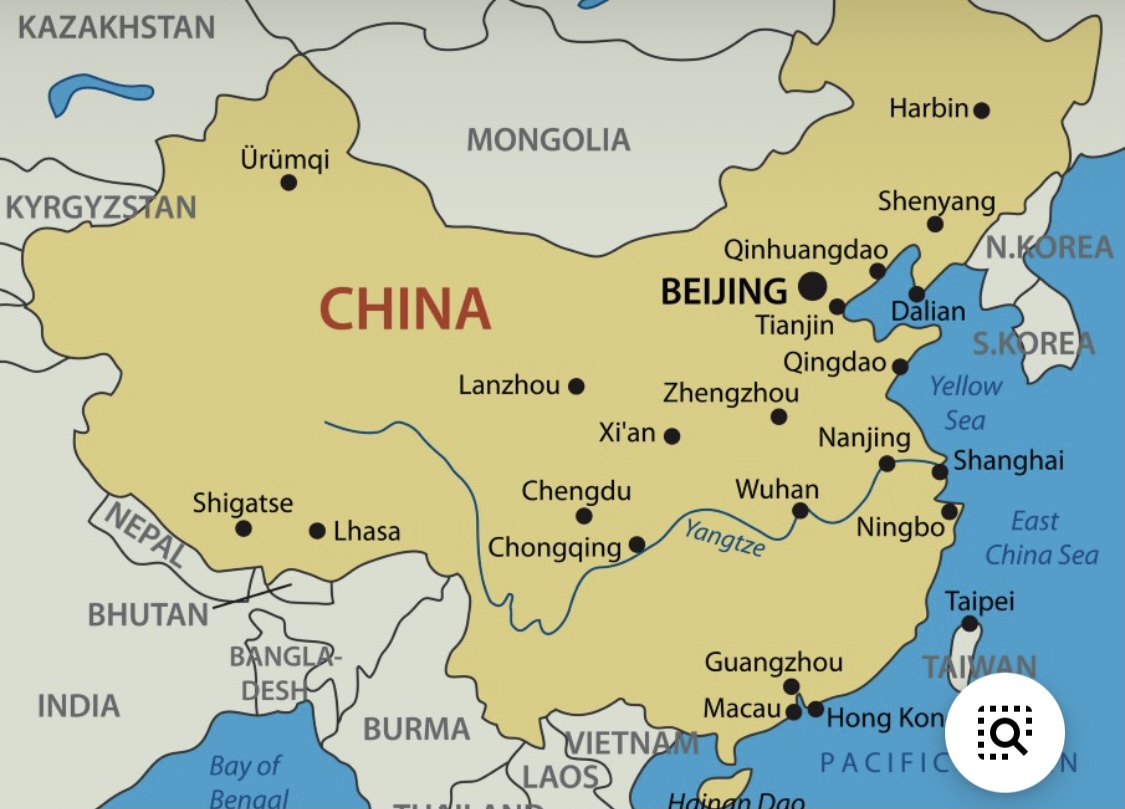
When we reach our Xian, China, we are most excited to visit the Terracotta Soldiers. We we will also take a class in Chinese calligraphy, and enjoy a few other activities.
After that, we fly from Xian, China to Hong Kong 🇭🇰, where we will stay through Christmas and New Years, before jetting off to Thailand 🇹🇭
Before we left on this trip to China 🇨🇳, we had a bit of a dilemma, concerning our 10-year Chinese Visa we got for this current visit to China; here is why: our future travel plans have us traveling from Kathmandu, Nepal to Lhasa, Tibet (China again) in May 2018; since China and Nepal do not get along, we were told we would have to forfeit our 10-year Visa if we fly directly from Nepal to Tibet (which is an easy 2 hour flight). In order to keep our Chinese Visa, we would need to leave Nepal, fly to any other Chinese city (other than Lhasa), then fly from that other Chinese city to Lhasa. This looks like a 17 hour ordeal, and way more money for airfare, and LONG layovers to boot, PLUS, this round-about flight schedule actually lands in Lhasa first- directly from a Kathmandu, Nepal. Wha????….But, same rule applies; can’t get off of course, unless we choose to lose our Chinese Visa)
Anywayzzzz, we have decided that we will forgo our Chinese Visa in May, and apply for a travel permit and temporarily Chinese Visa to enter Tibet from Nepal, when the time comes. We feel no angst about it whatsoever now, as we are “filled-up” on our China experience we have had, and do not see any more China travel in our future.
We feel so lucky to be doing what we are getting to do now! Besides, there are SO MANY new places in the world we must see, and explore, yet!
About Us

About Us
Hello and Welcome to our Travel Blog Website, We enjoy writing about our experiences and taking photos of our adventuring along the way. Our names are: Daryl and Pen, but Daryl calls me “Bunny.” We met, quite randomly, whilst both traveling in Thailand with friends. We happened to be in the same travel group, and […]