


“Uganda 🇺🇬 ~Ziwa Rhino Sanctuary”
Two species of Rhinos once roamed the savannahs and woodlands of Uganda. Today, the wild Rhinos are gone from Uganda. We would track, on foot, for about two hours to find and observe about seven Rhinos of varying ages. It was a real thrill to be so close. In our briefing, we were told to keep close to trees and bushes just in case we got charged, but we had no issues. The Rhino family ambles right past us, and we followed them for a bit.
With greater stability in protected areas and recent wildlife legislation enacted, to ensure the protection of wildlife, Rhino Fund Uganda has created a sanctuary for the breeding of rhinos and the reintroduction of them, back into Uganda’s wildlife scene. When that time comes, the Rhino will be reintroduced into Uganda’s protected areas. Rhino Fund has launched an education and awareness campaign to inform people about the protection of the highly endangered species.

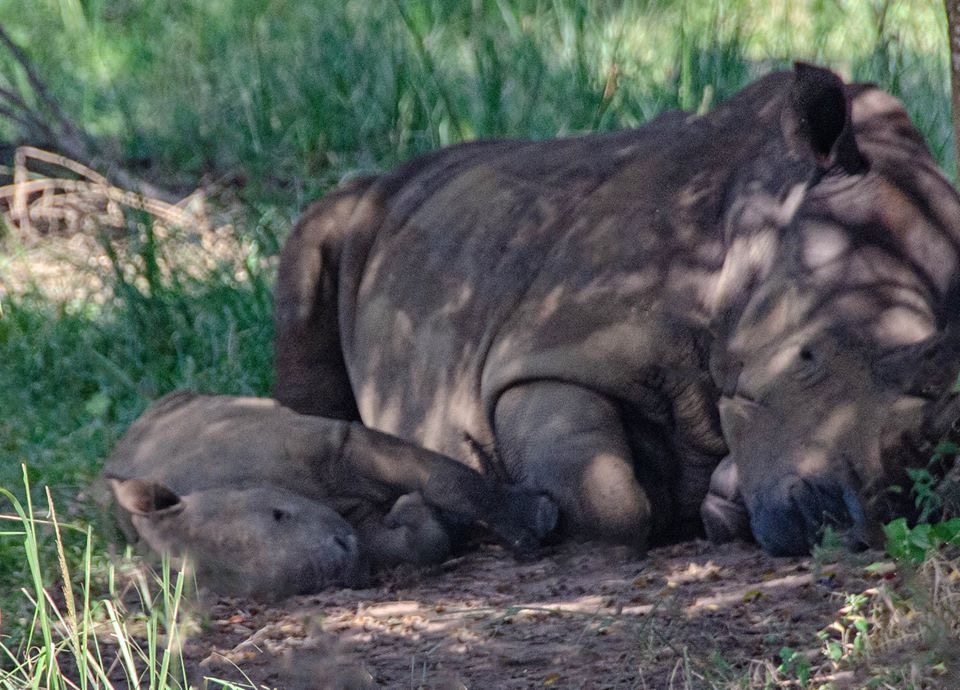


The rhino species of Black and White rhinoceros were present in Uganda, at one time. The Eastern Black in the North and Northwest, and the Northern White in the Northwest on the west bank of the River Nile. After years of civil unrest, and poaching, the rhinos became extinct in Uganda by 1983. The unstable governments of Amin in 1970s, and Obote II during the 1980s, saw a lot of wildlife poached. National parks became the seat of the rebel activities and wild game was hunted with impunity. Rhinos being popular for their horns for those who believe they have medicinal healing properties, come mostly from the Asian world. Many theories have come up with the magic, for which these horns can produce; such as curing impotence in manhood. These theories have led to the hunting and slaughtering of these animals, leading to their extinction, in what used to be their habitats. New measures will be put in place, to ensure the few Rhinos which are still surviving, can multiply to restock the numbers.
After the necessary feasibility studies were done by rhino specialists, and with the support of numerous organizations and independent donors, a 14,000 acre breeding sanctuary for black and white rhinoceros was established by RFU. This sanctuary was named Ziwa Rhino Sanctuary and is centrally located in Uganda. At present, this sanctuary is home to the Southern White Rhinos. The rhinos were put on Ziwa Ranch, which later became Ziwa Rhino Sanctuary, as a holding ground, until UWA prepares a safe place for them in the wild.
Translocation began in 2002. Two White rhinos were successfully translocated from Kenya. These two rhinos are at UWEC in Entebbe for educational purposes. Four more Southern White Rhino arrived from Solio ranch in Kenya in July 2005, then two Southern White Rhino arrived from Disney Animal Kingdom in Florida, USA in September 2006. By 2009 and 2010, three rhino calves were born at the Ziwa Rhino Sanctuary, and they continue to thrive and multiply.
The objective of the project is to reintroduce big numbers in the wild once these numbers increase.. When this breeding is successfully sustained at Ziwa Rhino Sanctuary, and the numbers bred become large enough (20 breeding rhino), then releasing the rhinos back into the National Parks in Uganda will begin. Achieving all this will contribute to Ugandas Safaris. At this time many tourists on their way to Murchison falls national park tour visit this sanctuary for rhino viewing. This is done by offering “on-foot” rhino tracking. This has increased tourist numbers in Uganda.
The success of Ziwa Rhino Sanctuary will play a key role in the eventual reintroduction of the rhino, back into the wild in Uganda’s National Parks for Uganda safaris. This will boost tourism on a National level, as it will provide facilities to attract tourists and visitors; enhancing Uganda as a tourist destination. Being one of the Big Five, the rhinoceros represents a welcome addition to safari itineraries. Rhinos need good security since they are prone to poaching. Rhino poaching statistics in South Africa alone at 333 rhino poached in 2010 and over 140 rhino poached up to the end of April 2011, it is not possible to just leave rhino on a piece of land. Sanctuaries have well trained rangers, that monitor the rhino; 24 hours-a/day and this project is run with good management and solid structures.
As RFU does not receive Government or UWA funding, and rely on International and other funding, “on-foot” Rhino tracking has become an activity that tour operators have added into their itineraries, which tourists can enjoy. The income from the rhino tracking assists RFU with their annual operating costs. Well done for the good job on the part of the Rhino Fund Uganda (RFU).
Archive Blog Posts of Our Country Visits
About Us

About Us
Hello and Welcome to our Travel Blog Website, We enjoy writing about our experiences and taking photos of our adventuring along the way. Our names are: Daryl and Pen, but Daryl calls me “Bunny.” We met, quite randomly, whilst both… Read More