


“Ethiopia 🇪🇹 ~Lalibela Rock Churches”
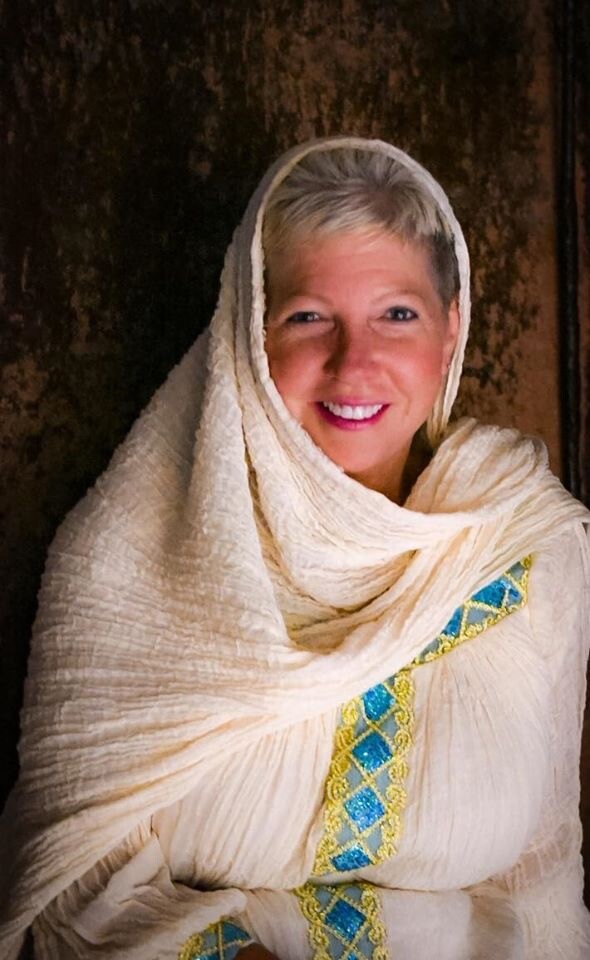
We saw such incredible architecture, today, and I am still in awe of what I witnessed. There are 13 Rock Churches in all, and most of them are connected by a series of tunnels and walkways, cut through the stone….It was a lot to take on in one day, but at $50 pp and $40 for a required guide, we had to make the best of it. It was hot, dusty, and the well worn stone walkways and stairs were so slippery, we had to move very slowly, so as not to fall. There was much to see, activity wise, and most of the people were locals, with a few of us tourists mixed in. Morning was the best time; get started, early, and finish by the time the number of visitors grew to a point, it made it difficult to get in and out of the churches, withouts bumping into others, or standing outside the small entrances in the hot sun, waiting a turn. Im not sure how many churches we saw, but it was most of them, after several hours time.
To properly photograph these rock churches, one should have a tripod and more time. Flash is not allowed, due to the old paintings and frescos, so it was very dark, most of the time, while we explored. A few of the churches had electricity in them, but most did not; unchanged from 1,000 years ago….regardless, I got some good shots, and made the best of the light that we did have. One time, as we walked through a tunnel, to another cave, it was pitch black. Daryl is so tall, that we finally convinced our guide, we were not “feeling” our way very well, and we got cell phone flashlights
Priests and Monks were aplenty, and conducting ceremonial blessings, and healings…..it was very interesting to watch and listen to.
I had a fabulous birthday, exploring the ancient Rock-Hewn Churches of Ethiopia. It was a great way to end our northern adventures of Ethiopia.


Lauded as the most beautiful church in Lalibela, Saint George Church has often been featured in pictures and books. You’ll most probably recognise it instantly from its perfect cross shape that can be seen from an elevated ground.
Thanks to its two-meter thick rock ceiling, this particular church has miraculously withstood centuries of environmental wear and tear. It is the only church that is not covered by a tarp (from UNESCO). This impressive monolithic church (lone-standing) was the last church to be built in the area.
Despite an impressive architecture, the church’s interior is quite humble, sporting an altar, a few paintings and a prayer hall.

Today, the World Heritage Site is highly protected by UNESCO. What set the churches here apart from other monuments like Petra is that they are still active and fully-functioning. Pilgrims all over the country visit and locals come to pray on a daily basis.


Ethiopian Orthodox Christians believe that the churches were built during his reign, circa 1181-1221, but scientists don’t believe that it was possible to build churches, spanning a wide area and featuring different architectural styles, in such a short time frame.
Even until today, experts cannot confirm the exact duration that it took to build these spectacular rock churches.
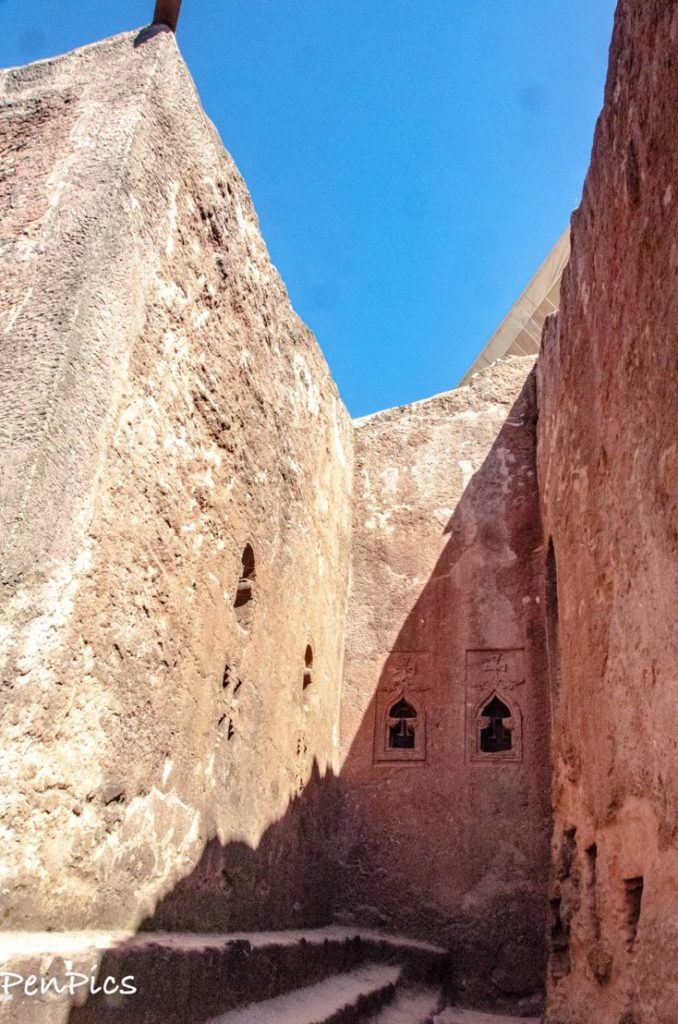
This church has a similar structure to that of its twin church of Bet Golgotha. It has the only cruciform pillars in the Lalibela churches. The church is erected on a base type Axumite three tiers.
In order to access the church, you’ll have to walk along the trench and climb up the narrow steps.

This one has a particularly striking exterior that resembles the style of Aksumite buildings. It’s said to be the royal family chapel.
The perfectly monolithic church sports finely carved strips on its exterior, as well as blind windows that represent the Noah’s Ark. Again its interior is rather blend, except for the Aksumite frieze atop the arches.


This tiny chapel carved into the northern wall surrounding Bet Maryam is quite a nondescript church that features a small prayer hall and a separate chanting room. Its interior also has four pillars, which represent the four evangelists.

Next to the Bete Medhane Alem is the St Mary Church (you have to cross a short tunnel to get there). Of all the churches in Lalibela, this one has probably the most beautiful frescoes and carvings on its ceiling.
Said to be the first church that was built, it’s been immaculately preserved, especially on the inside. The church is the most popular among pilgrims as it’s dedicated to Virgin Mary, who is particularly worshipped by Ethiopians.

Located at the entrance of the group of south-eastern churches, this impressive twin church is the only one that’s accessible from its top, via a rock bridge known as the “Way to Heaven”. Its architecture and layout are very different to the other churches, featuring an irregular floor plan rather than a cross-shaped layout. This has led scholars to think that this may have been a fortified palace rather than a church for the Aksumite royalty from as early as the 7th century.


The largest church on the site is often the first church that most people visit as it’s the closest to the entrance and ticket office. It is surrounded by 37 colonnades, a few of which have been crumbled (you can see their remains by the side of the church).
Fully restored in 1954 by the Ministry of Civil Engineering. The church itself has a layout that resembles that of the ancient Aksum Cathedral (further north in Ethiopia where Christianity was first introduced) which was destroyed in the 16th century.
The covers that were put over many of the churches to protect them, they are discovering is causing more harm than good. The structures are drying out and cracking, as a result of not enough moisture. We were told the covers are soon to be removed…

Another church thought to have started as something different, Bet Merkorios is believed to have been used as a prisoner or justice court due to the discovery of ankle shackles here. It’s connected to Bet Gabriel-Rufael by a series of intriguing tunnels and trenches — and wandering along these tunnels is an experience on its own. As a large part of the church has collapsed, it’s been restored and supported by several ugly but necessary brick walls.


Another small chapel found in Bet Maryam’s courtyard (carved into the southern wall), this small church was constructed in memory of the maiden nuns martyred in the orders of 4th century Roman emperor Julian.


Priests covered in decorative cloth, chant and pray in Ge’ez (an ancient language that predates the modern-day Amharic language in Ethiopia), while women also dressed in white fall to their knees and offer their prayers with their foreheads touching the rock floor. The atmosphere here is both spiritual and hypnotising.


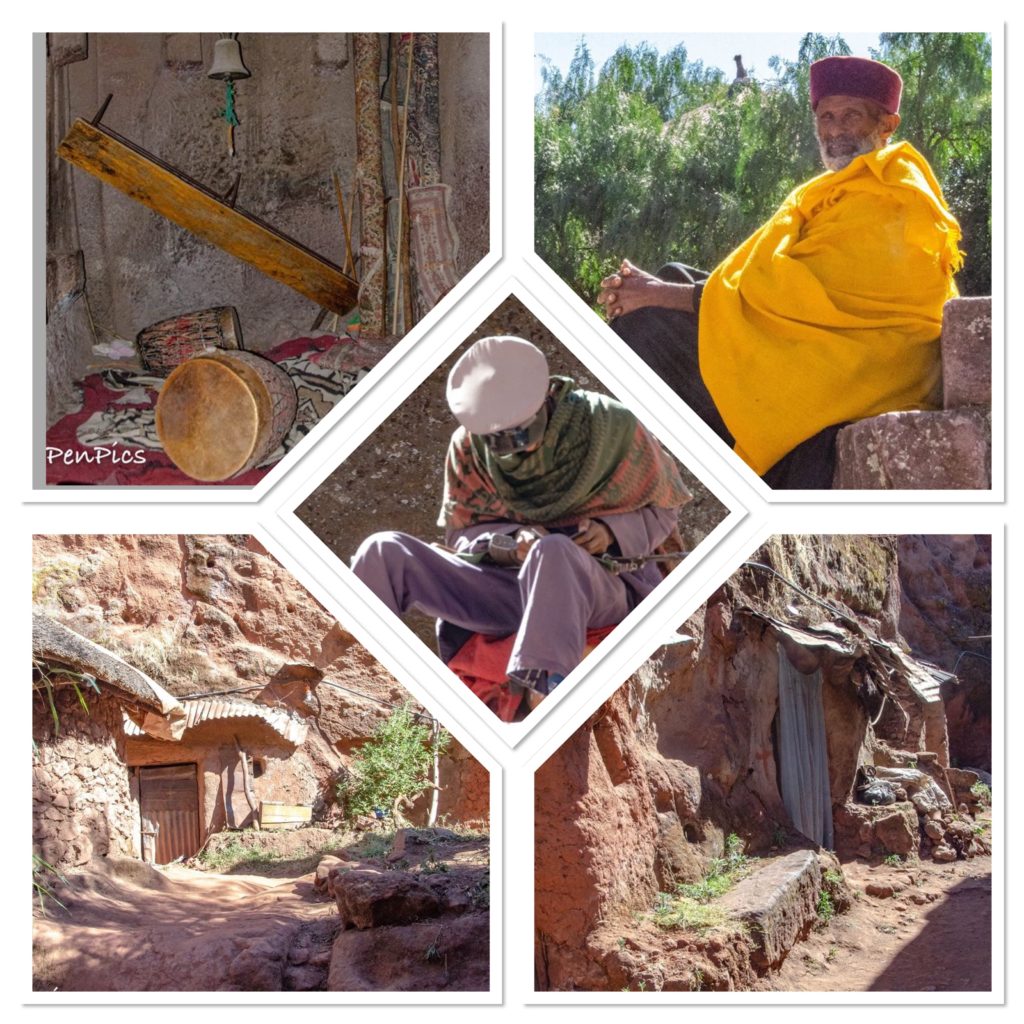

Bottom Left: This ceremonial well is still used, today. We were told that if a woman is having a hard time conceiving a child, she gets a rope tied around her, and dunked three times, to heal the infertility….the depth of this well is deeper than the heights of the church
Archive Blog Posts of Our Country Visits
About Us

About Us
Hello and Welcome to our Travel Blog Website, We enjoy writing about our experiences and taking photos of our adventuring along the way. Our names are: Daryl and Pen, but Daryl calls me “Bunny.” We met, quite randomly, whilst both… Read More