


“Turkey, Mount Nemrut”
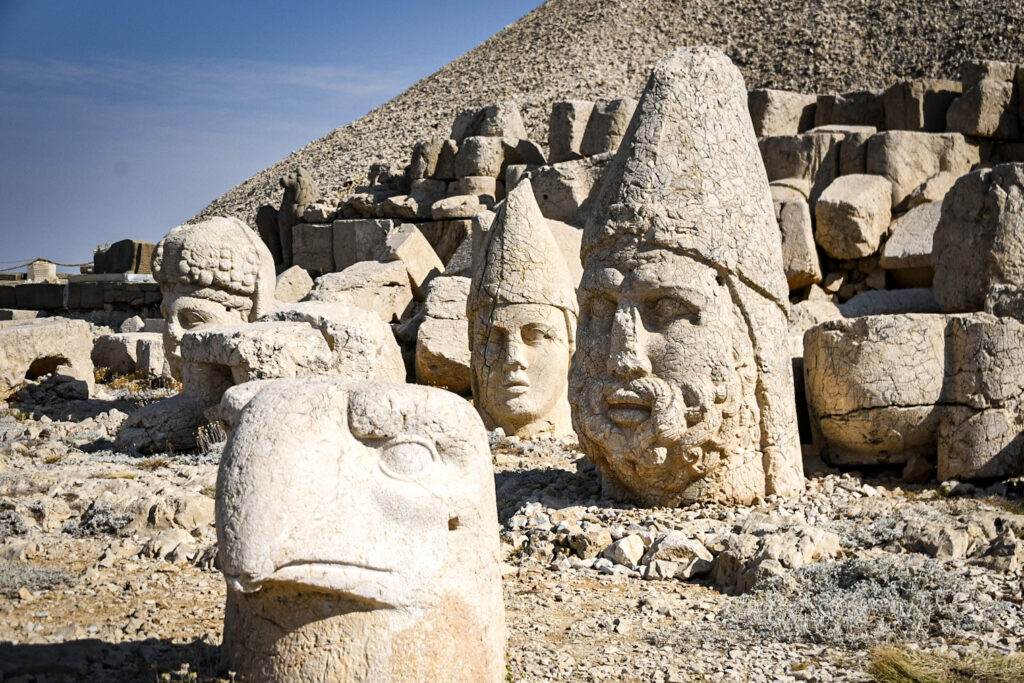
We left Cappadocia and start a long journey that leads us to a mysterious mountain. A seemingly out of place monument, that now is in the middle of deserted land, that thousands of years ago was near important civilization centers.
We finally head up into the mountains near our destination. The landscape tells a tale of the volcanic geological formation of this country. Volcanic rifts crack open the crust, with hot magma bubbling over the surface. During the same era, volcanos are blasting out blobs of rock that solidified in the air and on the surface flows. Intermittent ash layers fall and forming tufa.
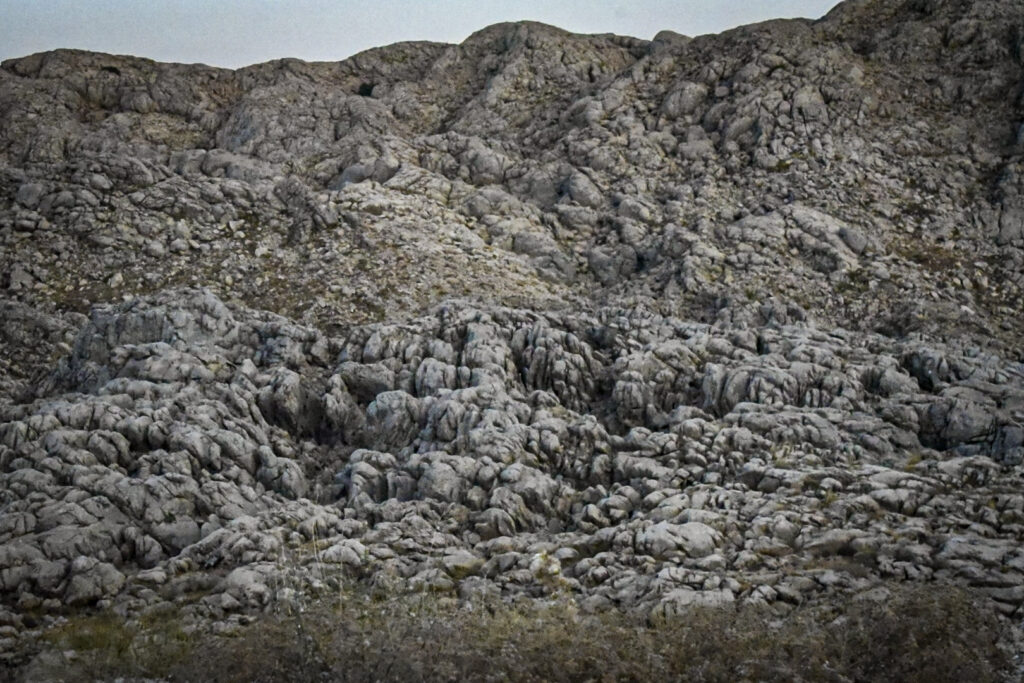
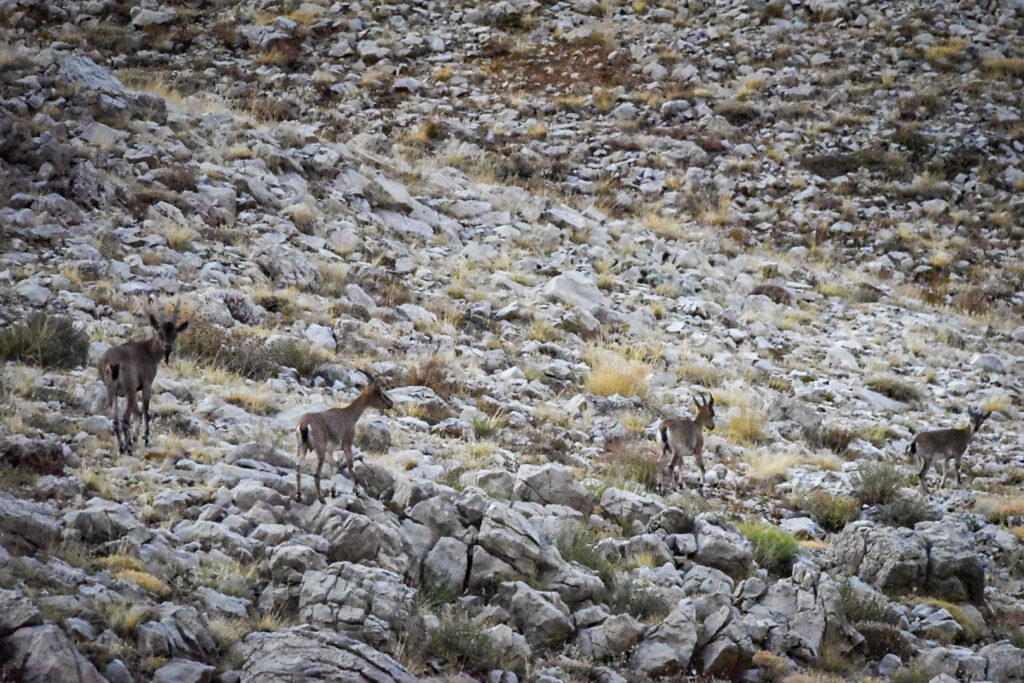
We pass areas that look like brains as we get closer to Mount Nemrut. Heading up switchbacks, we come across a family of rare wild mountain goats called Ibex.
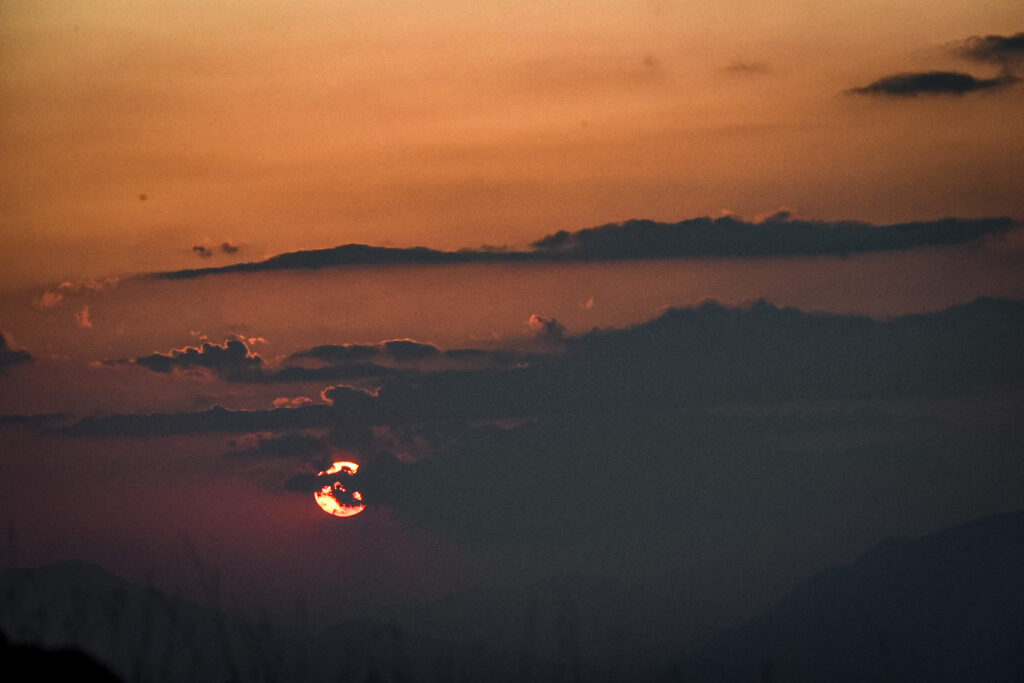
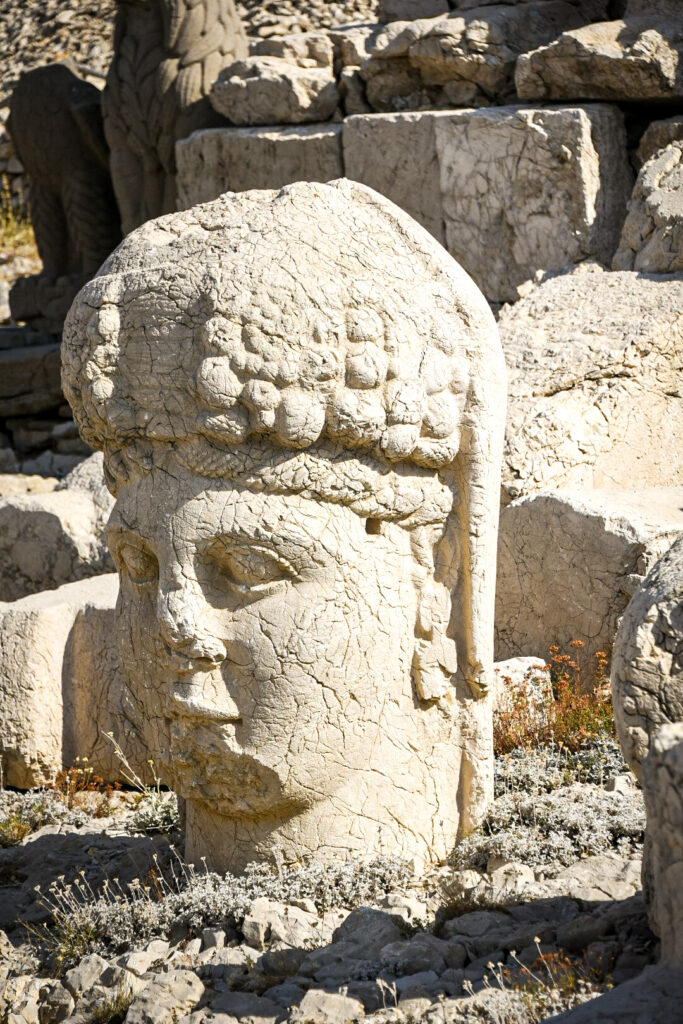
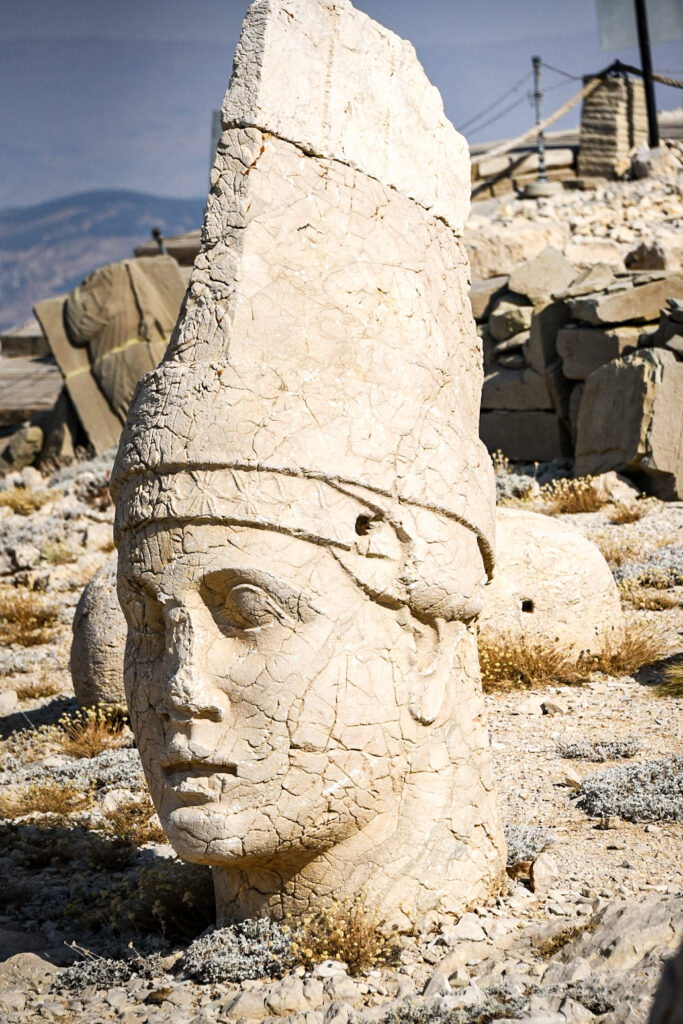
We are running out of time with twilight coming shortly. Switchbacks start as the paved road ends. Like a madman I maneuver our car with rocks propelled away from us. We are there, we jump out and as quick as we are able, we tread uphill the final distance. The sun is setting as we race up the final steps. We make it to the pinnacle with six statues of Zeus flanked by Apollo, Commagene, Heracles, and Antiechus. With light waning, we quickly photograph the heads that are displayed below the thrones above.
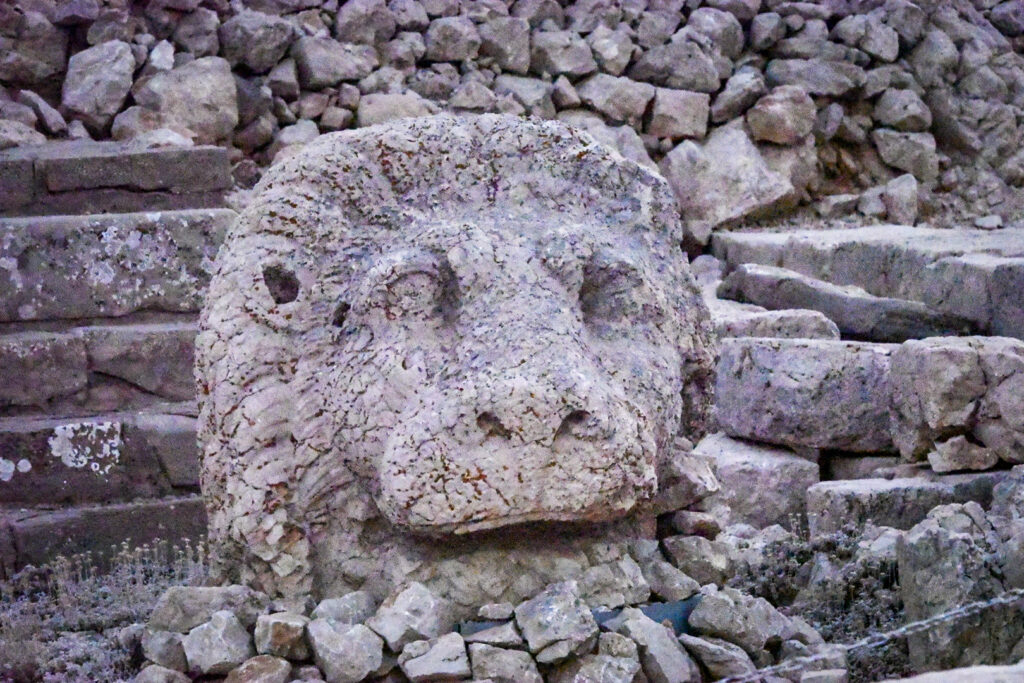
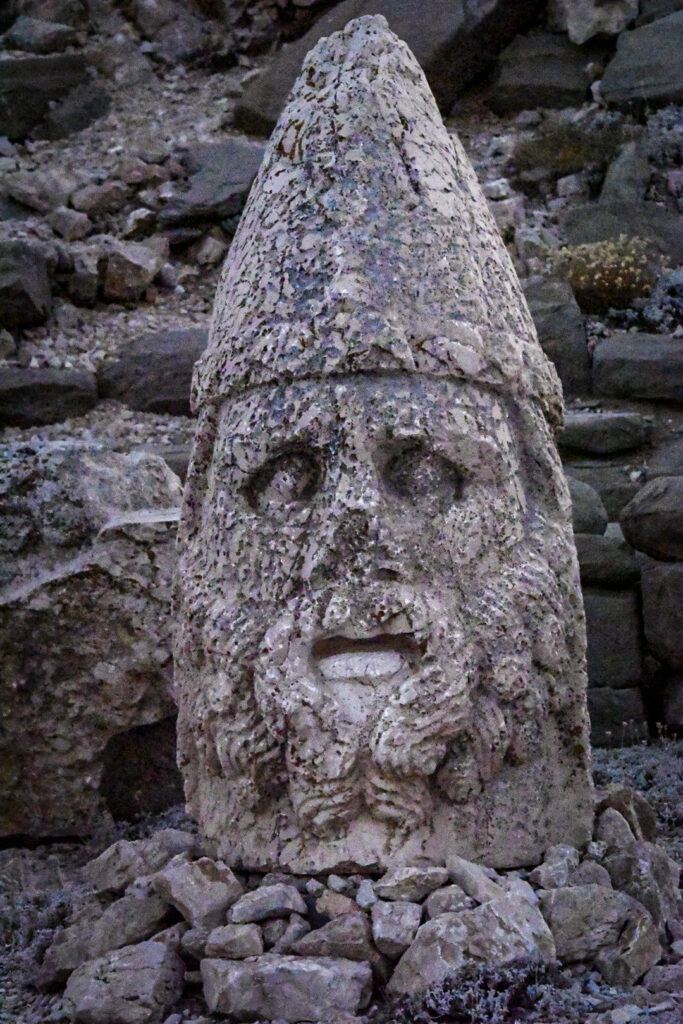
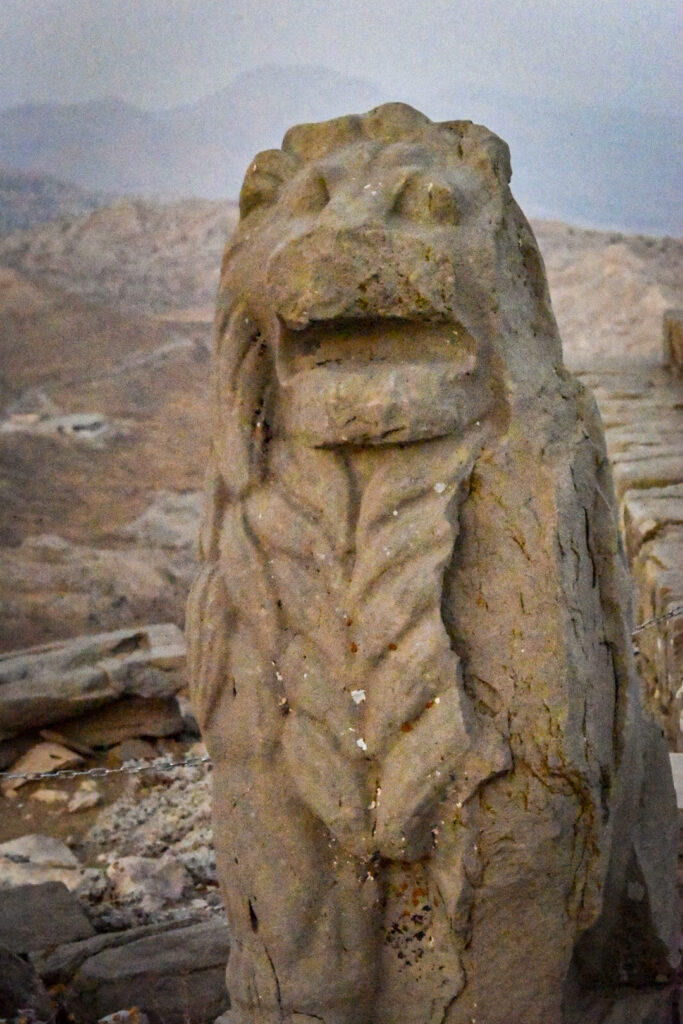
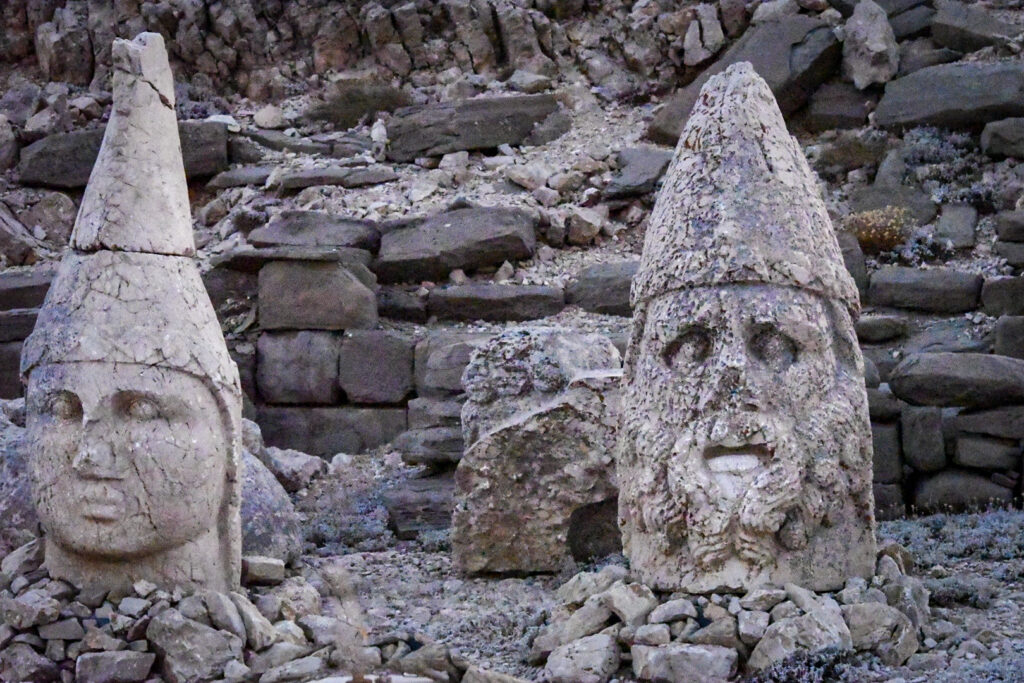
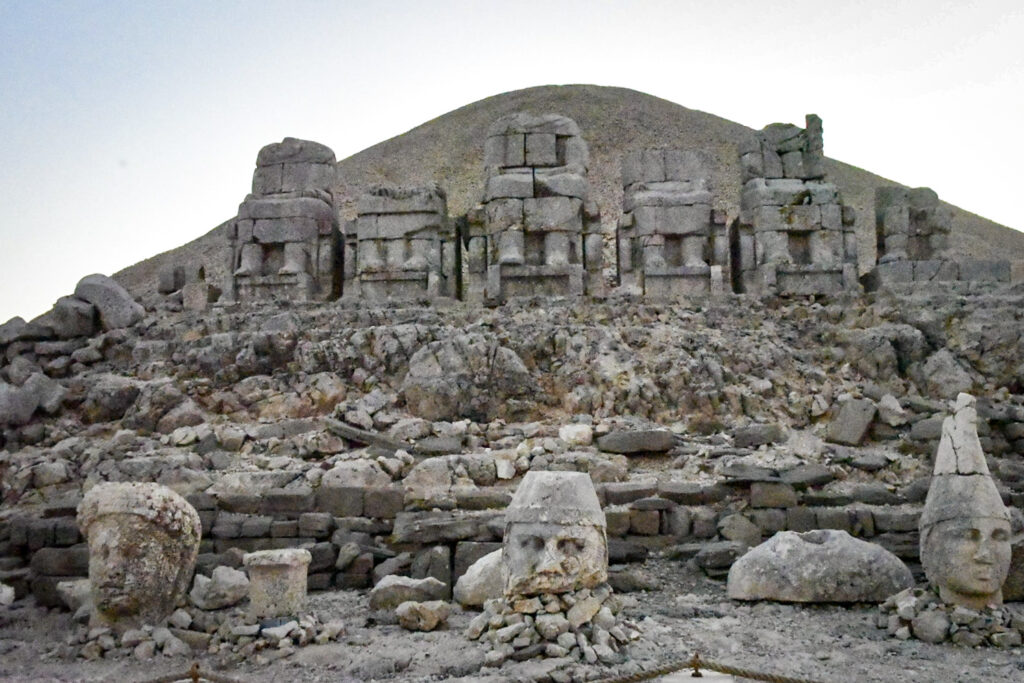
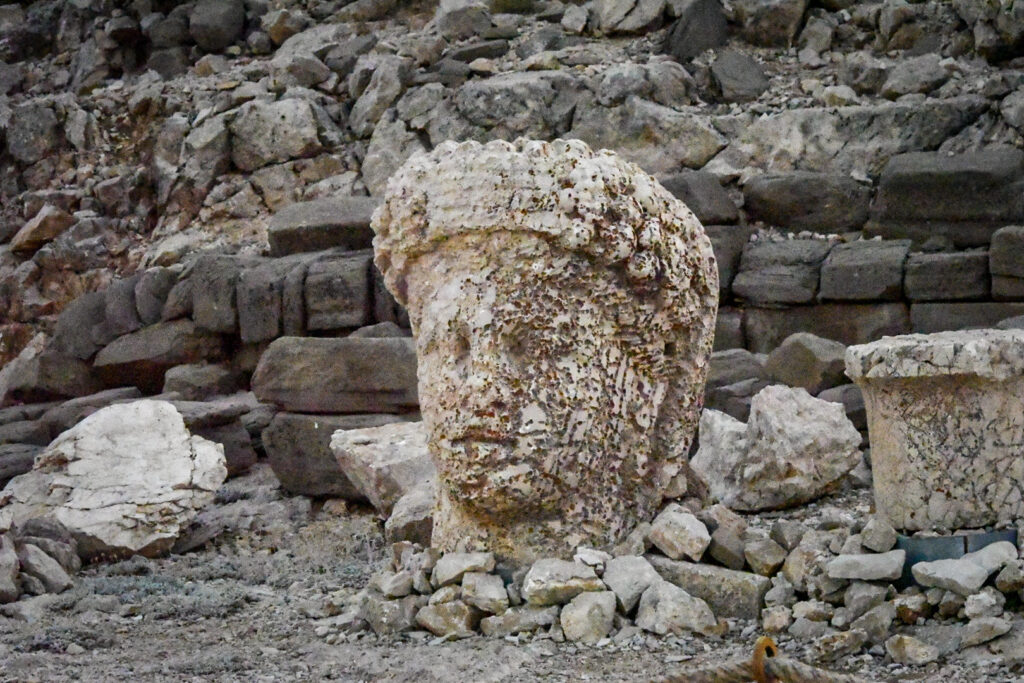
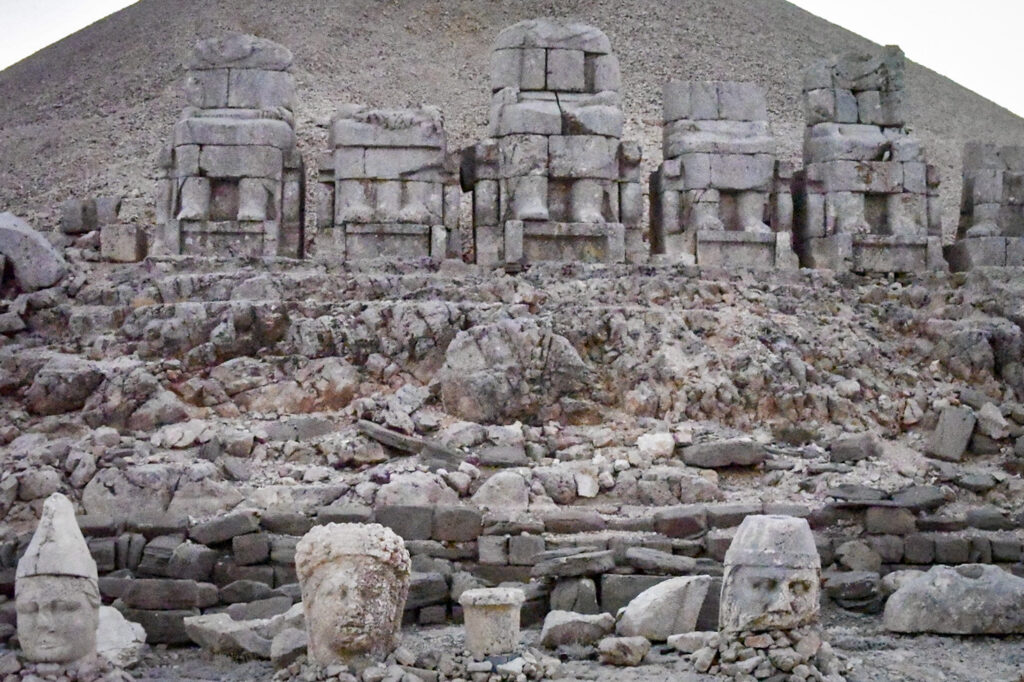
There was a wood beam pathway that lead to the sunset view. The twilight had come and the view was evolving into a blue-tinged clouded scene.
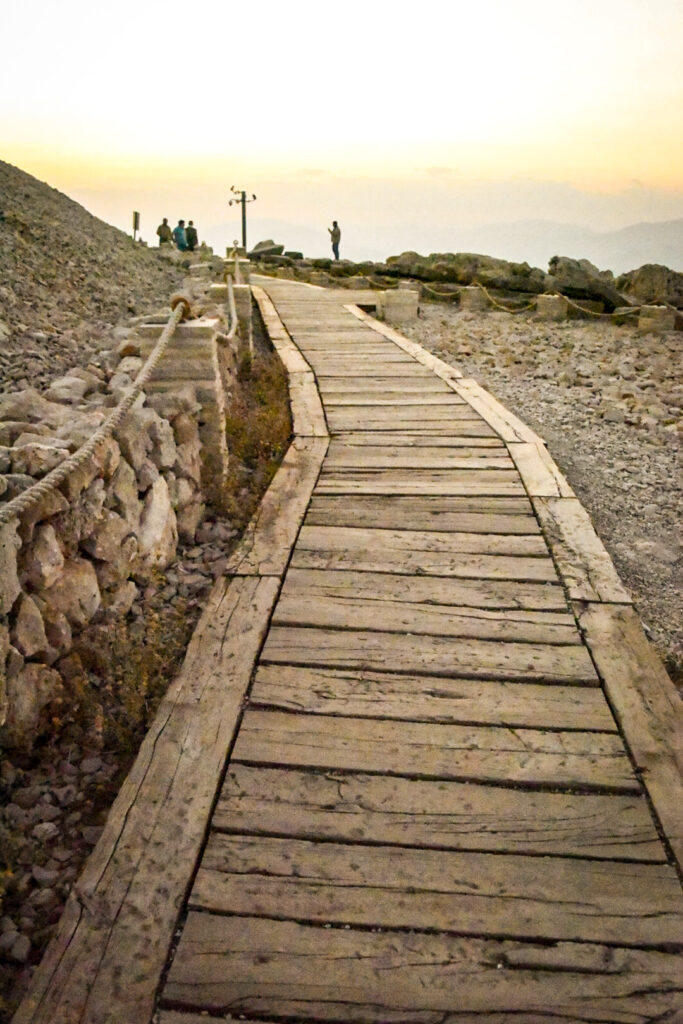
We exited the mountain in darkness with starlight and a rising moon, lighting the abyss. Finding a hotel and a restaurant was our immanent goal. Our ninety minute journey down a paved road with nothing but rocks could be seen, past our headlights.
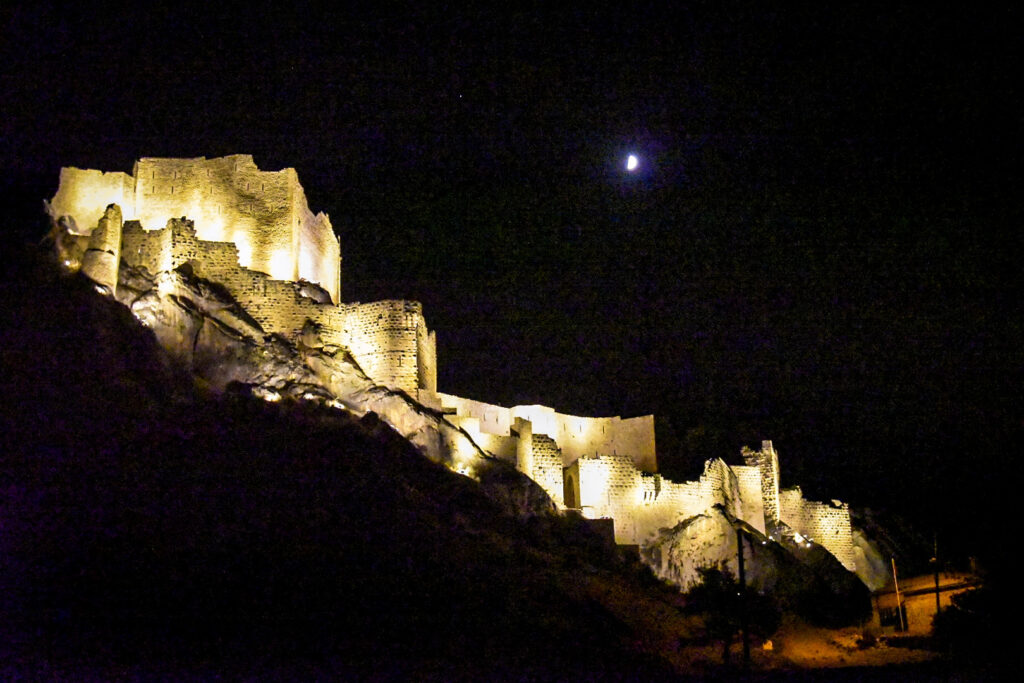
Soon, up ahead, was a twelfths century castle named Kaht. It was lit up on top of a hill. A small village was bellow, but no restaurants or hotels. Our maps lead us to a newly built hotel in the middle of nowhere.
The next morning, we head back to the other side of Mount Nemrut to see what we missed. Road closures that made a long trip out, was over and we arrived quickly that morning. A short walk up thousands of steps had benches that I took advantage of, every other one.
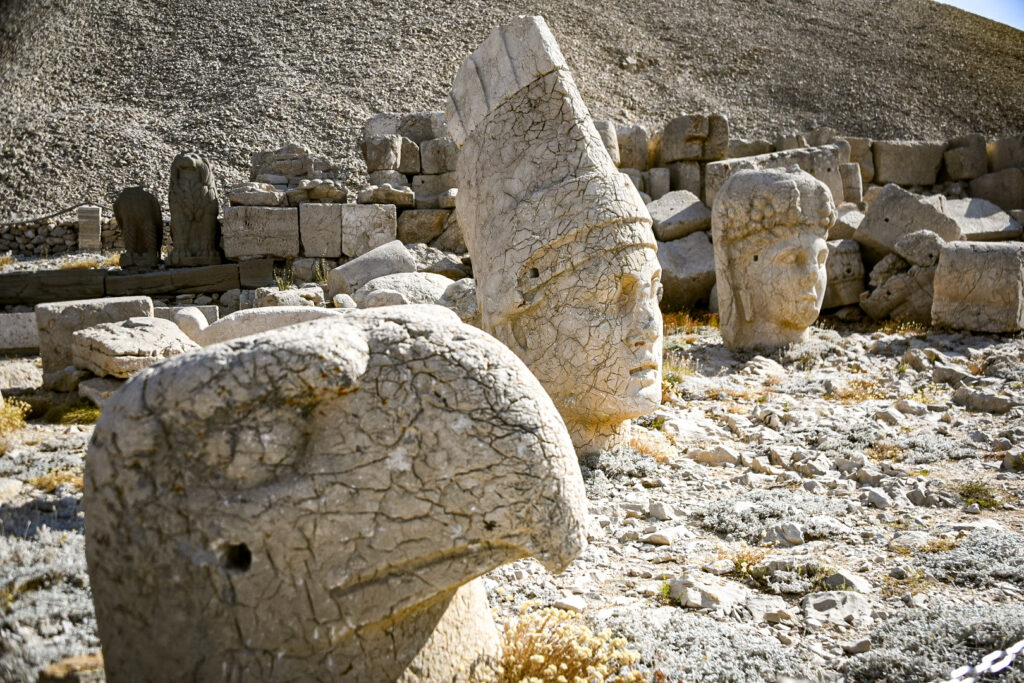
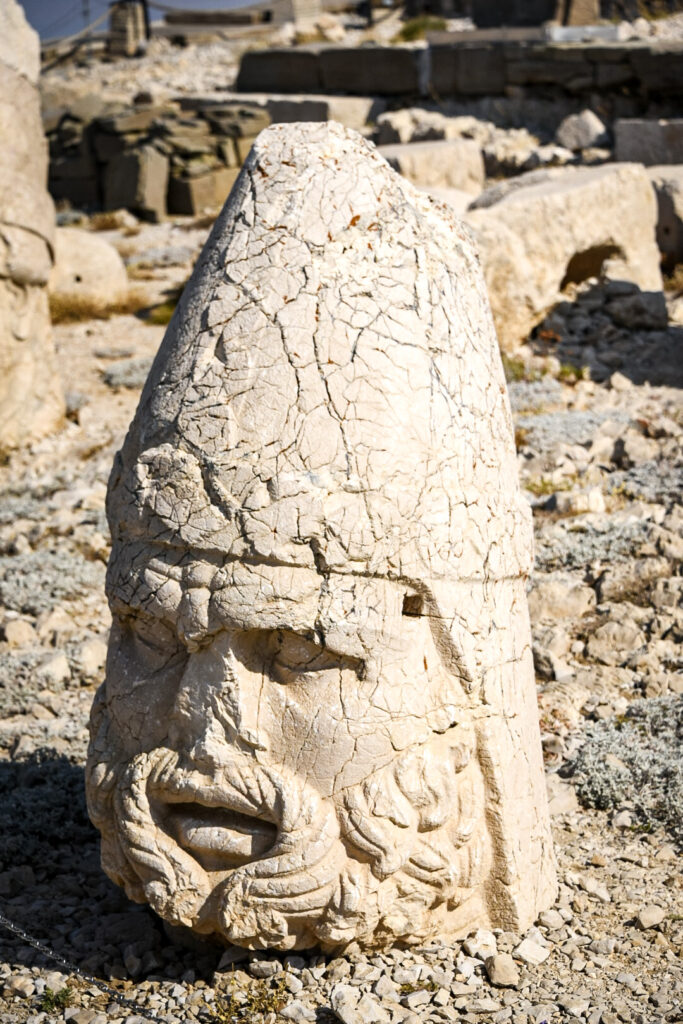
The open-air museum was amazing with many statues and heads laying at the base of their pediments.
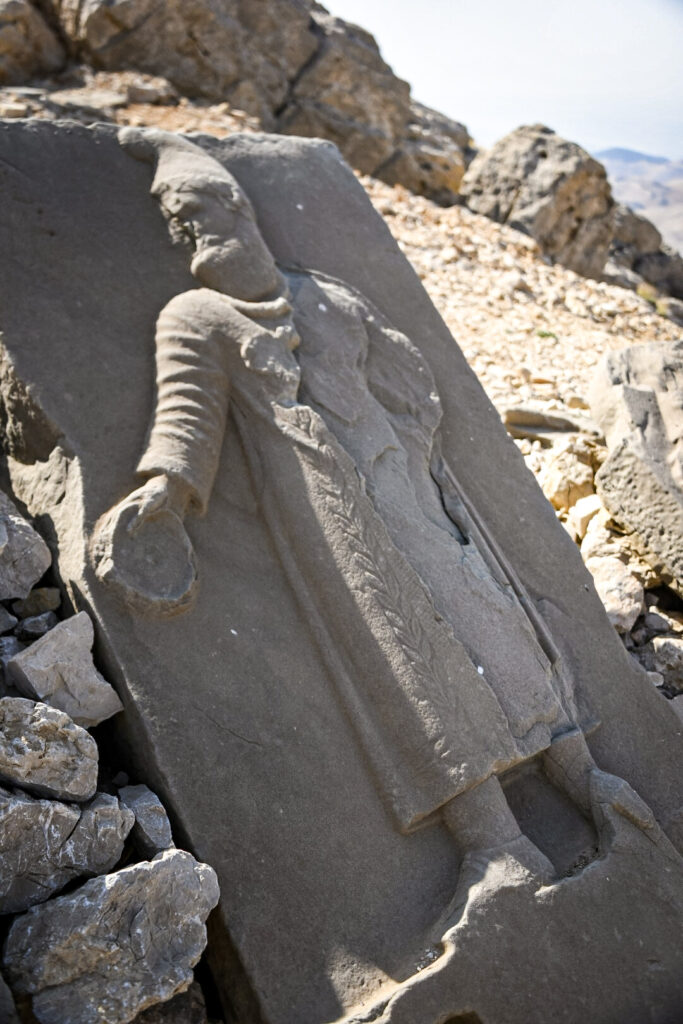
The mountain was covered by stones and boulder fragments that were blasted out of nearby rifts and volcanos. The boulders looked like they solidified in the air with molten flow, like features and fractured cracks covering the surfaces. The heads were carved from these boulders, giving them a textured surface with very unique looks.
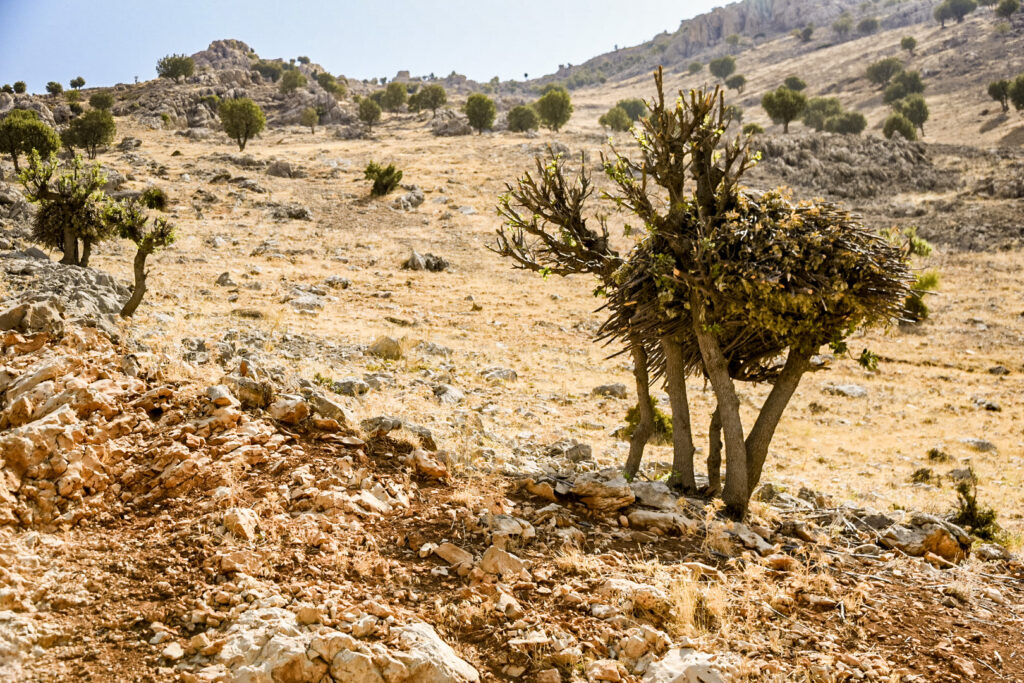
Heading down the canyons in treeless slopes, we find diminutive trees trimmed of all their branches. The locals stacked the branches in trees or in circular piles for cooking fuel. The mountains that flanked the canyons was terribly rugged with little life.
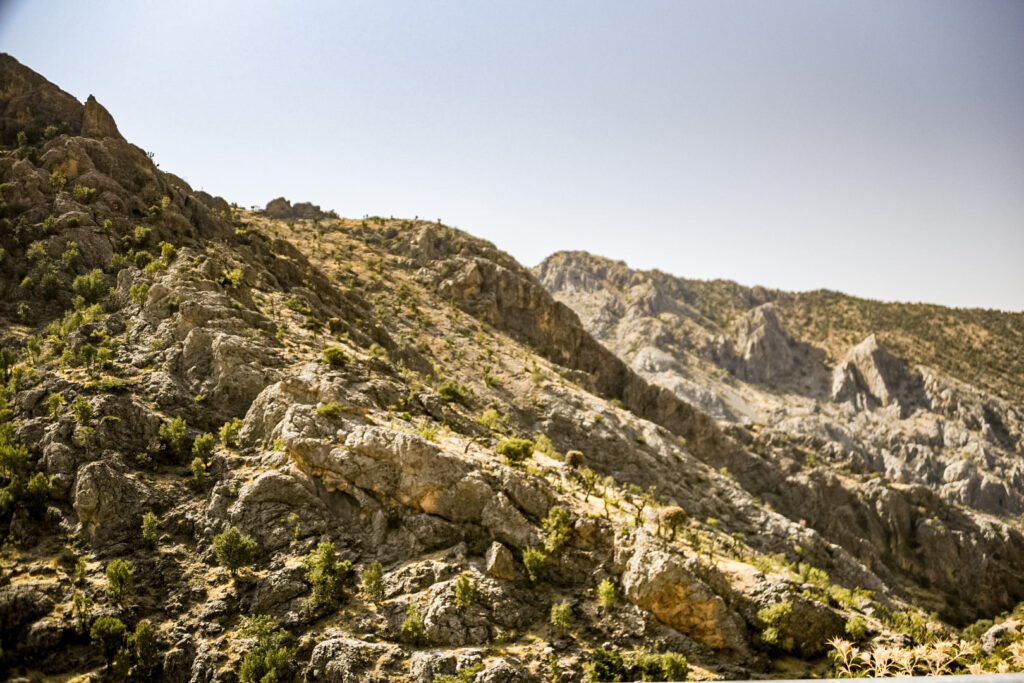
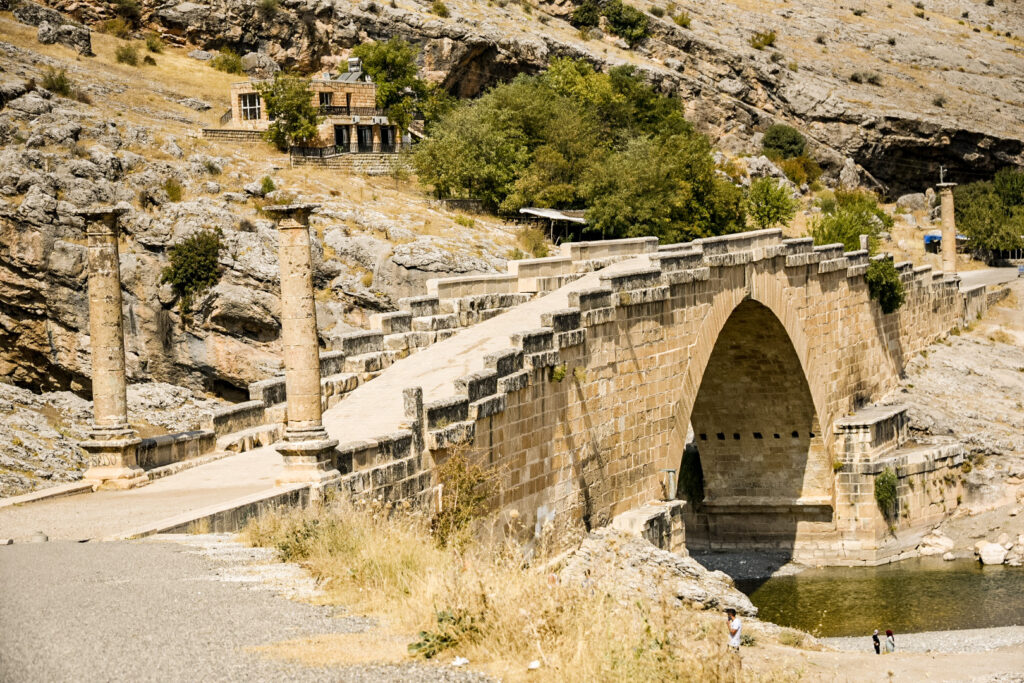
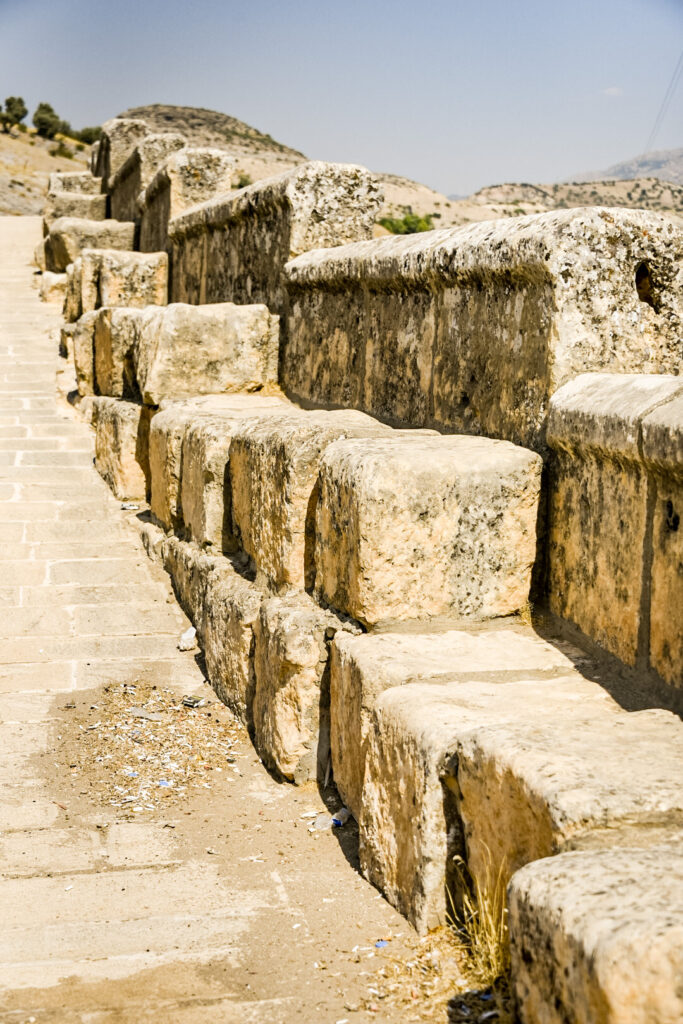
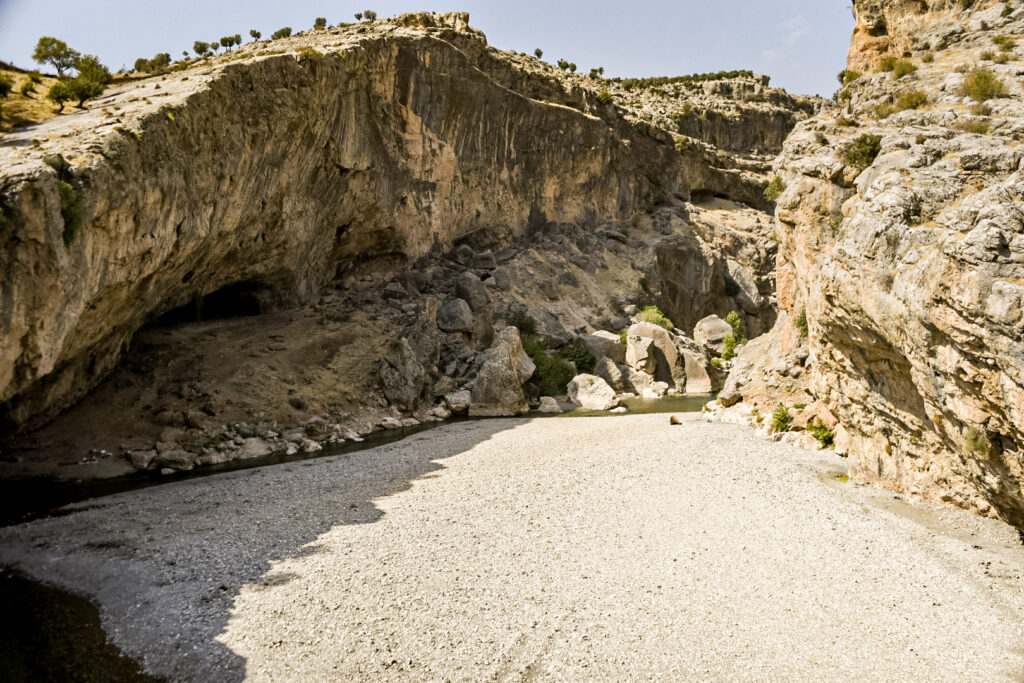
We cross a river and in the distance was a Roman Cendere Bridge from 212 AD. It traversed a majestic canyon that looked like an earthquake had torn it apart. Huge stones formed the bridge with twin Roman columns at each end of the bridge.
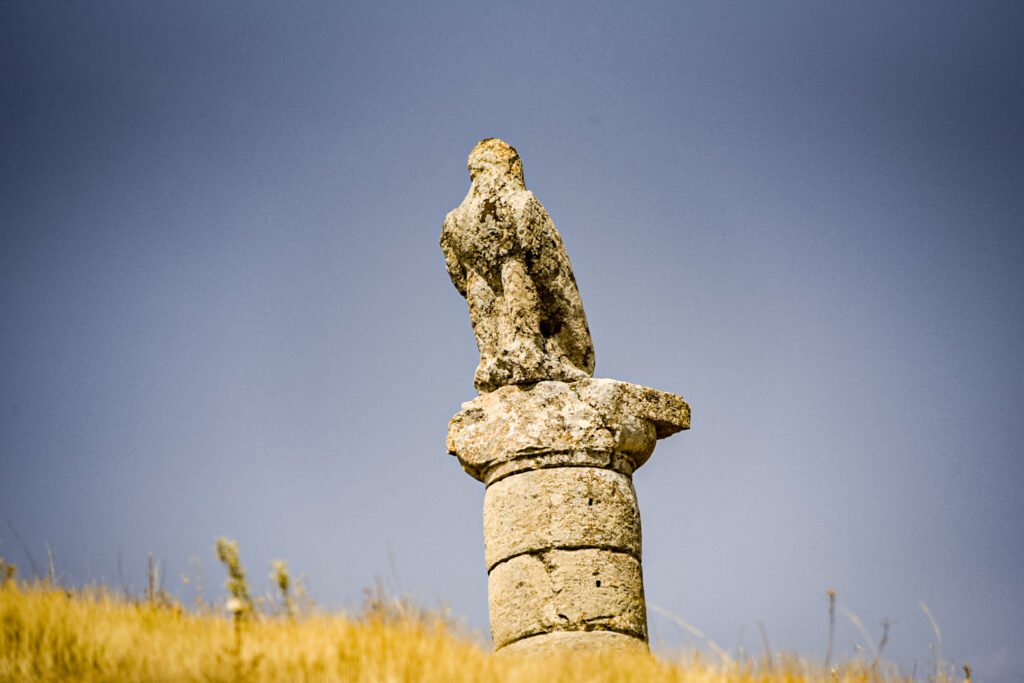
As we drive we see monuments rising above the hillsides. An eagle and some undefined statues could be seen with only a dirt road access to a construction site. Maybe a future tourist point. Tomorrow Gobekli Tepi will be our destination.
About Us

About Us
Hello and Welcome to our Travel Blog Website, We enjoy writing about our experiences and taking photos of our adventuring along the way. Our names are: Daryl and Pen, but Daryl calls me “Bunny.” We met, quite randomly, whilst both traveling in Thailand with friends. We happened to be in the same travel group, and […]